

DoorDash is an online food ordering and delivery platform founded by Tony Xu, Stanley Tang, Andy Fang, and Evan Moore in 2013. Together with its subsidiaries, DoorDash has a 56% market share in food delivery and a further 60% in the convenience delivery sector.
DoorDash reported it had more than 20 million active users and processed $9.9 billion in gross order volume during the first quarter of 2021. While these are impressive figures in isolation, it should be noted that the platform struggles in large American cities such as Boston, New York City, Chicago, and to a lesser extent Los Angeles. The company also faces competition across the many international markets it operates in.
| Competitor | Description | Key Insights | Competitive Overlap | Differentiation |
|---|---|---|---|---|
| Uber Eats | A food delivery platform owned by Uber that allows users to order food from local restaurants and have it delivered to their location. Uber Eats competes with DoorDash in the food delivery market. | Uber Eats offers food delivery services from local restaurants, partnering with a wide range of eateries to provide a diverse menu selection. | Both provide food delivery services from local restaurants, competing for customers and restaurant partnerships. | Uber Eats’ association with the Uber ride-sharing platform and a vast user base. |
| Grubhub | An online and mobile food ordering and delivery marketplace that connects diners with local restaurants. Grubhub competes with DoorDash in the food delivery market. | Grubhub offers food delivery and pickup services, allowing users to order from a variety of restaurants and cuisines in their area. | Both operate as food delivery platforms connecting users with local restaurants, competing for restaurant partnerships and customers. | Grubhub’s focus on partnerships with independent restaurants and diverse menu options. |
| Postmates | A food delivery and courier service that allows users to order food, groceries, and other goods from local businesses. Postmates competes with DoorDash in the on-demand delivery market. | Postmates provides on-demand delivery services for food, groceries, and various products from local stores, offering a wide range of delivery options. | Both offer on-demand delivery services, competing for users and partnerships with local businesses. | Postmates’ versatility in delivering various types of goods and products. |
| Instacart | An on-demand grocery delivery and pickup service that partners with grocery stores to deliver groceries and household essentials to customers. Instacart competes with DoorDash in the grocery delivery market. | Instacart connects users with grocery stores in their area, allowing them to order groceries and household items for delivery or pickup. | Both operate in the delivery of groceries and essentials, competing for users and partnerships with grocery retailers. | Instacart’s specialization in grocery delivery and partnerships with major grocery chains. |
| Amazon Fresh | A grocery delivery and pickup service offered by Amazon, allowing Prime members to order groceries and household items online. Amazon Fresh competes with DoorDash in the grocery delivery market. | Amazon Fresh provides grocery delivery and pickup services, primarily targeting Amazon Prime members, offering a wide selection of grocery products. | Both compete in the grocery delivery market, aiming to serve online shoppers with a variety of grocery items. | Amazon Fresh’s association with Amazon’s e-commerce ecosystem and Prime membership benefits. |
| Caviar | A premium food delivery service that offers curated menus and high-end restaurant options for delivery. Caviar competes with DoorDash in the upscale food delivery market. | Caviar focuses on delivering high-quality food from upscale restaurants, offering curated menus and specialized delivery services. | Both operate in the food delivery market but target a more upscale and curated dining experience, competing for premium restaurant partnerships. | Caviar’s specialization in upscale dining and curated menus. |
| Eat24 | An online food ordering and delivery platform that partners with local restaurants to provide delivery services. Eat24 competes with DoorDash in the food delivery market. | Eat24 offers food delivery and pickup services, connecting users with a variety of local restaurants for convenient ordering. | Both provide food delivery services from local restaurants, competing for users and restaurant partnerships. | Eat24’s focus on providing a wide range of restaurant options for users. |
| GoPuff | An on-demand delivery service that specializes in delivering convenience store items, snacks, and household essentials to customers. GoPuff competes with DoorDash in the convenience and quick delivery market. | GoPuff offers delivery of convenience store items, snacks, and everyday essentials, providing quick delivery options for users. | Both operate in the convenience and quick delivery market, targeting users looking for fast access to everyday products. | GoPuff’s specialization in delivering convenience store items and quick delivery times. |
| Shipt | A grocery delivery service owned by Target, offering same-day delivery of groceries and household essentials from Target and other retailers. Shipt competes with DoorDash in the grocery delivery market. | Shipt partners with Target and various retailers to provide same-day delivery of groceries, household items, and more to customers’ doorsteps. | Both compete in the grocery delivery market, focusing on delivering groceries and essential items from retailers. | Shipt’s association with Target and its focus on grocery delivery. |
| Rappi | A Colombian on-demand delivery and digital marketplace that offers food delivery, groceries, and various goods and services. Rappi competes with DoorDash in the on-demand delivery market. | Rappi provides a wide range of on-demand services, including food delivery, groceries, pharmacy items, and more, aiming to be a one-stop-shop for users. | Both operate in the on-demand delivery market, providing various delivery services to meet user needs. | Rappi’s emphasis on being a versatile digital marketplace with diverse offerings. |
Uber Eats

No analysis of DoorDash competitors would be complete without first mentioning Uber Eats.
After DoorDash, Uber Eats is the largest provider of food delivery services in the United States with a 24% market share.
Uber Eats is a significant threat because of parent company Uber and the infrastructure it developed for the rideshare industry. Coupled with a penchant for innovation and beneficial partnerships, this has allowed Uber’s diverse product portfolio to thrive and reach a global audience.
Grubhub
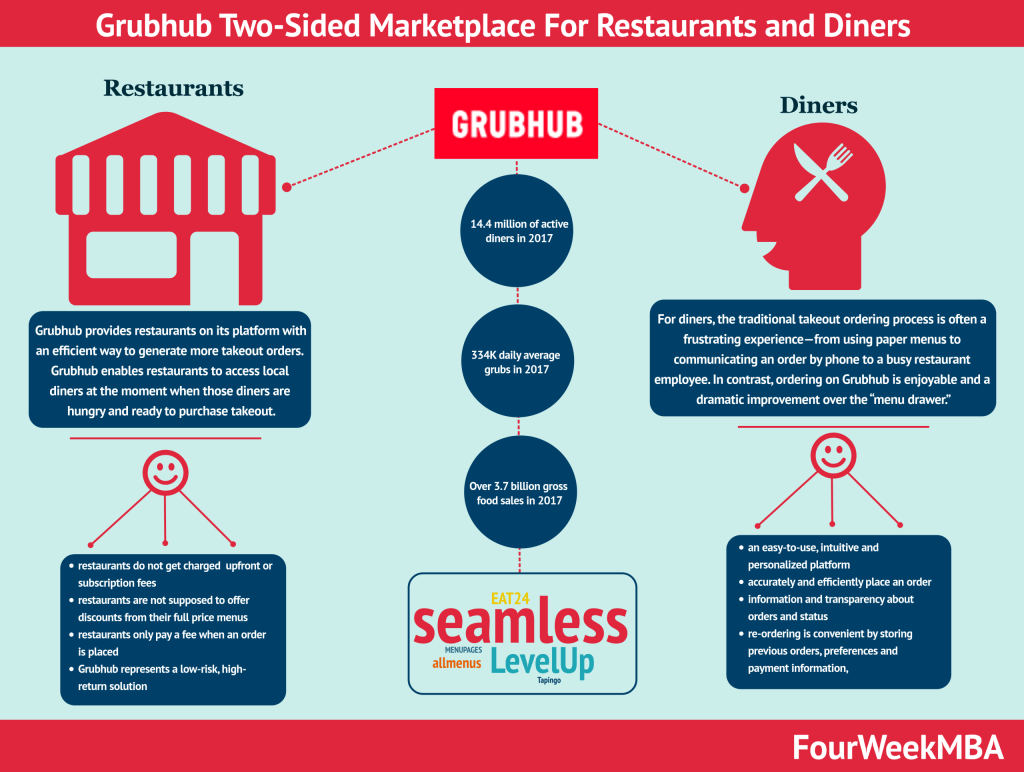
Grubhub is an online and mobile food ordering and delivery platform connecting diners with local restaurants. The platform was created by Mike Evans and Matt Maloney as an alternative to paper menus in 2004.
Since it was founded, Grubhub has made several important acquisitions. These include food delivery company DiningIn, corporate food delivery company Aliso Viejo, and the Yelp-owned home-delivery brand Eat24.
At the time of writing, Grubhub had a 15% market share in the United States.
Postmates

Postmates is a food delivery service with a particular focus on quick-commerce. The platform delivers food, groceries, alcohol, and virtually any other conceivable item to homes and businesses.
Postmates delivery fees tend to be higher than those offered by DoorDash. However, the company does deliver 24/7 and to any location.
Uber acquired Postmates for $2.65 billion in December 2020, effectively bolstering its food delivery market share in the U.S. to approximately 29%.
Seamless
Powered by Grubhub, Seamless is an online food ordering service allowing customers to order restaurant food from a website or mobile.
The platform offers new users a two-week trial period, where they can also use gift vouchers and coupons to order from some of the largest restaurant chains in North America.
As the name suggests, Seamless prides itself on being easy to use. Food categories are represented by visible icons, with clear and transparent information regarding the checkout process, delivery estimates, customer reviews, and minimum order fees (if applicable).
Waitr
Waitr is a prepared food delivery company founded by Christopher Meaux in 2008.
Meaux created the Waitr platform after pitching the idea at the Seed Center Business Incubator in Lake Charles, Louisiana. Waitr quickly spread across Louisiana and the southern United States where it has remained a dominant force ever since.
Waitr was purchased by billionaire Tilman Fertitta in a $308 million reverse takeover in 2018. Later that year, Waitr acquired Minneapolis-based restaurant food delivery service Bite Squad for $318 million.
Today, Waitr’s hyperlocal approach helps the company deliver a level of service for merchants and buyers that is sorely lacking in larger DoorDash competitors.
Key takeaways:
- DoorDash is an online food ordering and delivery platform founded by Tony Xu, Stanley Tang, Andy Fang, and Evan Moore in 2013. In North America, the company has a 56% market share in food delivery and a further 60% in the convenience delivery sector.
- Uber Eats is the main DoorDash competitor, leveraging its pre-existing ride share infrastructure and international reach. Uber Eats was also strengthened by the acquisition of rival service Postmates in late 2020.
- Thanks to multiple acquisitions, Grubhub is the third-largest player in the United States food delivery industry. Seamless and Waitr are smaller competitors known for their intuitive platform and exemplary customer service, respectively.
Key Competitors of DoorDash:
- Uber Eats:
- Uber Eats is the second-largest food delivery service in the United States with a 24% market share.
- Leverages the infrastructure of parent company Uber and its international reach.
- Operates as a three-sided marketplace connecting restaurants, drivers, and customers.
- Grubhub:
- Grubhub is an online food ordering and delivery platform with a 15% market share in the United States.
- Acquired several companies, including DiningIn, Eat24, and others.
- Connects diners with local restaurants, offering food delivery services.
- Postmates:
- Postmates focuses on quick-commerce delivery of food, groceries, and various items.
- Offers a subscription service (Unlimited) for free delivery on orders above $12.
- Acquired by Uber, increasing Uber’s food delivery market share to approximately 29%.
- Seamless:
- Powered by Grubhub, Seamless is an online food ordering service.
- Offers a two-week trial period, gift vouchers, and coupons for ordering from North American restaurant chains.
- Emphasizes easy-to-use platform design and transparent information for users.
- Waitr:
- Waitr is a prepared food delivery company with a hyperlocal approach.
- Founded in 2008 and quickly spread across the southern United States.
- Acquired by Tilman Fertitta and later acquired restaurant food delivery service Bite Squad.
Read Next: DoorDash Business Model, Uber Eats Business Model, Postmates Business Model, Food Delivery Business Models, Last-Mile Delivery Industry, Uber Competitors, Starbucks Competitors, Coca-Cola Competitors, Pepsi Competitors, Disney Competitors, Peloton Competitors, IBM Competitors, Google Competitors, Airbnb Competitors, Salesforce Competitors, Nike Competitors, YouTube Competitors, Zoom Competitors, Tesla Competitors, Amazon Competitors.
Related Visual Stories


Read Next: Uber Eats Business Model, McDonald’s Business Model, OpenTable Business Model, Amazon Business Model, TripAdvisor Business Model.
Main Free Guides:


