Yelp’s value proposition centers around helping consumers discover and choose local businesses by providing user-generated reviews, ratings, and detailed inform
Customer Segments
Yelp serves various customer segments, including: 1. Consumers: Individuals looking for local businesses and reading reviews. 2. Local Businesses: Businesses ai
Distribution Strategy
Yelp’s distributionstrategy relies on its mobile app and website, which enable users to access reviews, ratings, and business information. The platform also pa
Revenue Streams
Yelp generates revenue through several streams: 1. Advertising: Offers paid advertising options for businesses to increase visibility. 2. Business Page Upgrades
Marketing Strategy
Yelp’s marketingstrategy includes search engine optimization (SEO), email marketing, partnerships, and word-of-mouth promotion. The platform ensures its conten
Organization Structure
Yelp’s organizational structure includes teams dedicated to technology development, community management, advertising sales, marketing, partnerships, and data a
Competitive Advantage
Yelp’s competitive advantage arises from its vast user-generated content, trusted platform, strong online visibility, and partnerships with search engines. Vast
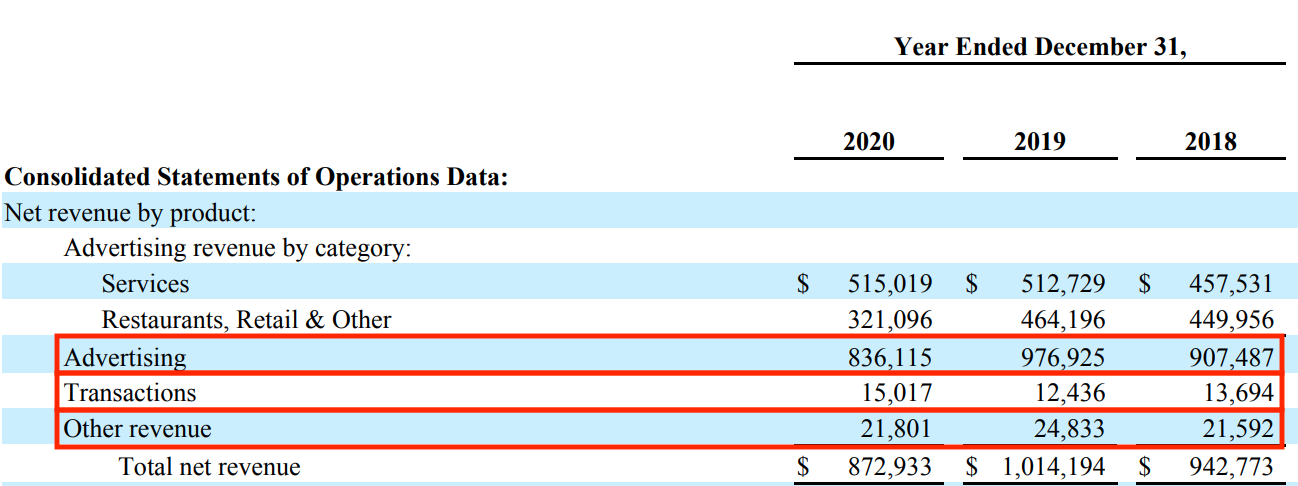
Yelp works as a sort of social network platform for reviews of local businesses. Yelp mostly makes money from advertising based on the cost-per-click where businesses can deliver targeted site-wide ads to users. It also makes money via transaction revenues (commissions on deals) and subscriptions (like Reservations and Waitlist).
Business Model Element
Analysis
Implications
Examples
Value Proposition
Yelp’s value proposition centers around helping consumers discover and choose local businesses by providing user-generated reviews, ratings, and detailed information. For Consumers, Yelp offers: – Trusted Reviews: Access to user-generated reviews for informed decision-making. – Business Information: Comprehensive details about businesses. – User Community: A platform to share experiences and connect with others. For Businesses, Yelp provides: – Online Presence: A platform to showcase their products/services. – Advertising Opportunities: Paid advertising options for increased visibility. Yelp empowers consumers to make informed choices and assists businesses in reaching their target audience.
Provides consumers with valuable information to make informed decisions about local businesses. Fosters a user community for sharing experiences and recommendations. Offers businesses an online presence and advertising opportunities for increased visibility. Attracts consumers seeking trustworthy reviews and businesses looking to enhance their online presence. Creates a space for user engagement and recommendations.
– Trusted reviews support informed consumer choices. – Business information helps users find relevant services. – User community fosters engagement and recommendations. – Online presence benefits businesses’ visibility. – Advertising options provide revenue streams.
Customer Segments
Yelp serves various customer segments, including: 1. Consumers: Individuals looking for local businesses and reading reviews. 2. Local Businesses: Businesses aiming to establish an online presence and advertise. 3. Advertisers: Companies interested in paid advertising on Yelp. Yelp caters to the needs of both consumers and businesses, creating a symbiotic relationship between them.
Focuses on diverse customer segments, including consumers, local businesses, and advertisers. Customizes features and offerings to meet the unique needs and objectives of each group. Provides a versatile platform for local business discovery and promotion.
– Serving diverse customer segments broadens Yelp’s user base. – Tailoring services enhances customer engagement and satisfaction. – Supports local business discovery and promotion.
Distribution Strategy
Yelp’s distribution strategy relies on its mobile app and website, which enable users to access reviews, ratings, and business information. The platform also partners with search engines to appear in local search results, increasing its online visibility. Additionally, Yelp uses email marketing to engage with users and inform them about local businesses.
Primarily utilizes distribution through its mobile app and website, offering easy access for users. Enhances online visibility by partnering with search engines for local search results. Engages with users through email marketing, promoting businesses and reviews. Ensures accessibility and user engagement with its platform.
– Mobile app and website align with user preferences. – Partnering with search engines expands visibility. – Email marketing fosters user engagement and promotes businesses.
Revenue Streams
Yelp generates revenue through several streams: 1. Advertising: Offers paid advertising options for businesses to increase visibility. 2. Business Page Upgrades: Allows businesses to enhance their profile with additional features. 3. Reservations and Transactions: Enables users to book appointments and order food through the platform. 4. Yelp Deals: Offers discounts and promotions from local businesses. Advertising is the primary source of revenue for Yelp.
Relies on revenue from: 1. Paid advertising options for businesses. 2. Business page upgrades with additional features. 3. Reservations and transactions for bookings and orders. 4. Yelp Deals with discounts and promotions. Focuses on advertising as the primary income source.
– Advertising options provide businesses with increased visibility. – Business page upgrades enhance profiles. – Reservations and transactions support user engagement. – Yelp Deals offer value to consumers and businesses.
Marketing Strategy
Yelp’s marketing strategy includes search engine optimization (SEO), email marketing, partnerships, and word-of-mouth promotion. The platform ensures its content ranks high in search engine results, driving organic traffic. Email marketing keeps users engaged and informed about local businesses. Partnerships with other platforms extend Yelp’s reach. Word-of-mouth referrals from satisfied users play a significant role in attracting new users.
Utilizes SEO to improve organic visibility in search engine results, driving user traffic. Engages users through email marketing, promoting businesses and user reviews. Collaborates with other platforms to extend its reach and presence. Attracts new users through word-of-mouth referrals from satisfied users. Effectively promotes its services as a valuable resource for discovering local businesses.
– SEO drives organic user traffic. – Email marketing fosters user engagement. – Partnerships extend the platform’s reach. – Word-of-mouth referrals contribute to user growth. – Promoting businesses benefits both consumers and advertisers.
Organization Structure
Yelp’s organizational structure includes teams dedicated to technology development, community management, advertising sales, marketing, partnerships, and data analytics. Technology development teams focus on platform enhancements. Community management teams assist users and businesses. Advertising sales teams manage partnerships with advertisers. Marketing teams promote Yelp’s services. Partnerships and data analytics teams collaborate with other platforms. This structure supports innovation, user satisfaction, and data-driven strategies.
Employs specialized teams for technology development, community management, advertising sales, marketing, partnerships, and data analytics. Enhances the platform through technology development teams. Assists users and businesses through community management teams. Manages partnerships with advertisers through advertising sales teams. Promotes services through marketing teams. Collaborates with other platforms through partnerships and data analytics teams. Supports innovation, user satisfaction, and data-driven approaches.
– Specialized teams drive platform innovation and improvement. – Community management builds trust and addresses user needs. – Advertising sales secure brand partnerships. – Marketing promotes services effectively. – Partnerships extend the service ecosystem. – Data analytics inform strategic decisions and optimizations.
Competitive Advantage
Yelp’s competitive advantage arises from its vast user-generated content, trusted platform, strong online visibility, and partnerships with search engines. Vast User-Generated Content: A wealth of user reviews and ratings provide comprehensive information. Trusted Platform: Offers a trusted environment for user reviews and recommendations. Online Visibility: High search engine rankings drive organic traffic. Search Engine Partnerships: Partners with search engines for local search results, enhancing visibility.
Derives a competitive advantage from: – Extensive user-generated content that benefits consumers. – A trusted platform that fosters user engagement. – High online visibility through search engine optimization. – Partnerships with search engines for increased visibility. Sets itself apart in the local business discovery space by providing comprehensive information, trustworthiness, and strong online presence.
– User-generated content supports informed decisions. – Trust enhances user engagement and platform integrity. – Online visibility attracts organic traffic. – Search engine partnerships amplify visibility and user reach.
Origin Story
Yelp is an online review platform allowing consumers to evaluate a range of businesses, including restaurants, cafes, home repair services, and hotels.
The platform was established in 2004 by two former PayPal employees in Jeremy Stoppelman and Russel Simmons. With a meager $1 million in funding, Yelp originally intended to serve relevant business reviews to consumers living nearby.
As of March 2021, the platform still received more than a hundred million unique monthly visits making it still among the a hundred most popular sites in the US. Users can browse reviews, opening hours, location, price range, and other relevant business information. Many now consider Yelp a social media website where local businesses and users come together to form a vibrant and interactive online community.
Yelp revenue generation
Yelp derives much of its revenue through targeted advertisements in the same way that other social media sites such as Facebook, Twitter, and Pinterest do.
Advertising Revenues
As the company explains in its 10K:
We generate advertising revenue from the sale of our advertising products — including enhanced listing pages and performance and impression based advertising in search results and elsewhere on our platform — to businesses of all sizes, from single-location local businesses to multi-location national businesses. Advertising revenue also includes revenue generated from the resale of our advertising products by certain partners and monetization of remnant advertising inventory through third-party ad networks.
Businesses use Yelp advertisements to target consumers who live in their local area based on a cost-per-click (CPC) model. That is, Yelp charges each business a fee every time one of its ads is clicked on. These ads are targeted according to the industry the business operates in. For example, more lucrative businesses such as law firms pay a higher CPC amount than a restaurant. They can also be targeted according to the demographic of the consumer.
Profile pages can also be upgraded to offer targeted advertising. Yelp offers two options:
Branded profiles – which include features such as enhanced call-to-action (CTA) buttons, a dedicated About section, video functionality, and photo slideshows.
Enhanced profiles – offering all of the above plus the ability for a business to remove competitor ads.
Each of these profile options attracts a monthly subscription fee that is inversely proportional to ad spend. The more a business spends on Yelp advertising, the lower the fee.
Transaction Revenues
Yelp also makes money from commissions on transactions it facilitates for third parties. Note that transaction revenue comprises less than 10% of total revenue.
This revenue can be grouped into four main categories:
Yelp Deals – encompassing prepaid vouchers consumers can use to shop at a particular business. Yelp receives a commission only once the voucher is redeemed.
Gift certificates – which work in a similar way to Yelp Deal vouchers and are gifted to others.
Grubhub and Eat24 integration – Yelp receives a commission for any food order on its platform facilitated by complementary platforms in Grubhub and Eat24.
Yelp platform – consumers can buy a range of products or services on the Yelp platform through diverse partner integration. This allows Yelp to facilitate transactions and collect a fee across multiple devices.
Subscription Services And Other Revenues
Another chunk of revenues is generated through subscription services, including Yelp Reservations and Waitlist.
Beyond that, Yelp also makes money via its Knowledge program, providing access to Yelp data for a licensing fee.
Revenue Streams (Financial Model)
Advertising Yelp generates substantial revenue by selling advertising space to local businesses. Businesses can promote their services through sponsored listings and display ads, reaching a larger audience on Yelp’s platform.
Transaction Fees Yelp earns revenue from transaction fees for services such as Yelp Reservations and Yelp Deals. These services facilitate bookings and special offers, adding value for both businesses and users.
Business Subscriptions Yelp offers premium subscriptions that provide businesses with enhanced profiles and features. These subscriptions offer tools for better visibility and customer engagement, creating an additional revenue stream for Yelp.
Products and Services (Technological Model)
Business Listings Yelp provides comprehensive listings of local businesses across various categories. These listings include essential information such as contact details, business hours, and customer reviews, helping users find the right local services.
User Reviews The platform allows users to write and read reviews of local businesses. User reviews are a cornerstone of Yelp’s service, providing valuable insights and ratings that help other users make informed decisions.
Reservation Services Yelp offers tools for making reservations at restaurants and other businesses. This service simplifies the booking process for users and helps businesses manage reservations efficiently.
Deals and Offers Yelp provides special deals and offers from local businesses. These deals incentivize users to try new services and help businesses attract more customers.
Ecosystem (Distribution Model)
Local Business Partnerships Yelp collaborates with local businesses to enhance their online presence. By partnering with businesses, Yelp can offer a wide range of services and promotions, benefiting both parties.
Integration with Social Media Yelp integrates its services with popular social media platforms. This integration allows users to share reviews and recommendations, increasing Yelp’s visibility and user engagement.
Mobile Application Yelp provides a mobile app for users to access Yelp on the go. The app offers all the functionalities of the website, including search, reviews, reservations, and deals, enhancing user convenience.
Community Engagement Yelp builds and maintains an engaged community of users and reviewers. Community engagement is fostered through features like reviews, ratings, and social interactions, creating a vibrant user base.
User Value (Value Model)
Trusted Reviews Yelp provides trusted reviews and ratings of local businesses. Users rely on these reviews to find quality services, making Yelp a valuable resource for local information.
Convenience Yelp offers a convenient platform for finding and reviewing local businesses. The easy-to-use interface and comprehensive information make it simple for users to discover new places and share their experiences.
Exclusive Deals Yelp provides access to exclusive deals and offers from local businesses. These deals add value for users and encourage them to explore new services.
Community Insights Yelp delivers valuable insights and recommendations from the local community. User-generated content offers diverse perspectives and helps others make better-informed choices.
Conclusion
The Yelp business model is a comprehensive framework that drives its success in the local business review industry. By leveraging diverse revenue streams, offering a wide range of products and services, fostering a robust ecosystem, and providing significant user value, Yelp maintains its leadership position and continues to grow. This detailed understanding of Yelp’s business model highlights the strategic elements that contribute to its dominance in the market.
Key takeaways
Yelp is an online review platform created to provide reviews for businesses close to the user searching for them.
Over 90% of Yelp revenue is generated by advertising based on the cost-per-click (CPC) model. Businesses can deliver targeted site-wide ads based on location and user demographics. Advertising is also offered on business profile pages, with Yelp charging fees according to the industry and level of ad spend.
Yelp also generates revenue as a result of facilitating transactions with vouchers, gift certificates, and complimentary local platforms. It also facilitates transactions through partner integration on the Yelp app and website.
Key Highlights
Yelp’s Functionality: Yelp is an online review platform where users can review and evaluate local businesses, including restaurants, cafes, home services, and hotels.
Founders and Origin: Founded in 2004 by former PayPal employees Jeremy Stoppelman and Russel Simmons, Yelp aimed to provide relevant business reviews to nearby consumers.
Continued Popularity: As of March 2021, Yelp still receives over a hundred million unique monthly visits, positioning it among the top 100 most visited sites in the US.
Social Media Aspect: Yelp is considered a social media website, acting as an interactive online community connecting local businesses and users.
Advertising Revenue: Yelp generates a significant portion of its revenue through targeted advertisements similar to other social media platforms like Facebook and Twitter.
Advertising Products: Businesses of all sizes can purchase advertising products on Yelp, including enhanced listing pages and performance-based advertising in search results.
Cost-Per-Click Model: Yelp charges businesses based on a cost-per-click (CPC) model, where businesses pay a fee every time their ad is clicked. CPC varies based on the industry and demographic.
Profile Upgrades: Businesses can upgrade their profile pages to include features like enhanced call-to-action buttons, dedicated About sections, video functionality, and photo slideshows. This incurs a monthly subscription fee.
Transaction Revenues: Yelp earns commissions from transactions it facilitates for third parties, such as Yelp Deals, gift certificates, and integration with platforms like Grubhub and Eat24.
Subscription Services: Subscription services like Yelp Reservations and Waitlist contribute to Yelp’s revenue stream.
Knowledge Program: Yelp offers its data through its Knowledge program for a licensing fee, generating additional revenue.
Diverse Revenue Streams: While over 90% of Yelp’s revenue comes from advertising, transaction revenues, subscription services, and the Knowledge program contribute to its overall financial health.
Balanced Model: Yelp employs a combination of advertising, transactions, subscriptions, and data access to create a diversified revenue model.
Business Engagement: Yelp’s business model relies on user-generated content and businesses’ engagement with advertising and subscription services.
Consumer Engagement: Yelp is a go-to platform for consumers seeking local business reviews, enhancing its appeal and relevance.
A platform business model generates value by enabling interactions between people, groups, and users by leveraging network effects. Platform business models usually comprise two sides: supply and demand. Kicking off the interactions between those two sides is one of the crucial elements for a platform business model success.
A marketplace is a platform where buyers and sellers interact and transact. The platform acts as a marketplace that will generate revenues in fees from one or all the parties involved in the transaction. Usually, marketplaces can be classified in several ways, like those selling services vs. products or those connecting buyers and sellers at B2B, B2C, or C2C level. And those marketplaces connecting two core players, or more.
A network effect is a phenomenon in which as more people or users join a platform, the more the value of the service offered by the platform improves for those joining afterward.
In an asymmetric businessmodel, the organization doesn’t monetize the user directly, but it leverages the data users provide coupled with technology, thus have a key customer pay to sustain the core asset. For example, Google makes money by leveraging users’ data, combined with its algorithms sold to advertisers for visibility.
In an asymmetric businessmodel, the organization doesn’t monetize the user directly, but it leverages the data users provide coupled with technology, thus having a key customer pay to sustain the core asset. For example, Google makes money by leveraging users’ data, combined with its algorithms sold to advertisers for visibility. This is how attention merchants make monetize their business models.
The wholesale model is a selling model where wholesalers sell their products in bulk to a retailer at a discounted price. The retailer then on-sells the products to consumers at a higher price. In the wholesale model, a wholesaler sells products in bulk to retail outlets for onward sale. Occasionally, the wholesaler sells direct to the consumer, with supermarket giant Costco the most obvious example.
A retail business model follows a direct-to-consumer approach, also called B2C, where the company sells directly to final customers a processed/finished product. This implies a business model that is mostly local-based, it carries higher margins, but also higher costs and distribution risks.
A B2B2C is a particular kind of business model where a company, rather than accessing the consumer market directly, it does that via another business. Yet the final consumers will recognize the brand or the service provided by the B2B2C. The company offering the service might gain direct access to consumers over time.
The term “crowdsourcing” was first coined by Wired Magazine editor Jeff Howe in a 2006 article titled Rise of Crowdsourcing. Though the practice has existed in some form or another for centuries, it rose to prominence when eCommerce, social media, and smartphone culture began to emerge. Crowdsourcing is the act of obtaining knowledge, goods, services, or opinions from a group of people. These people submit information via social media, smartphone apps, or dedicated crowdsourcing platforms.
While the term has been coined by Andrew Lampitt, open-core is an evolution of open-source. Where a core part of the software/platform is offered for free, while on top of it are built premium features or add-ons, which get monetized by the corporation who developed the software/platform. An example of the GitLab open core model, where the hosted service is free and open, while the software is closed.
Open source is licensed and usually developed and maintained by a community of independent developers. While the freemium is developed in-house. Thus the freemium give the company that developed it, full control over its distribution. In an open-source model, the for-profit company has to distribute its premium version per its open-source licensing model.
The freemium – unless the whole organization is aligned around it – is a growth strategy rather than a business model. A free service is provided to a majority of users, while a small percentage of those users convert into paying customers through the sales funnel. Free users will help spread the brand through word of mouth.
A freeterprise is a combination of free and enterprise where free professional accounts are driven into the funnel through the free product. As the opportunity is identified the company assigns the free account to a salesperson within the organization (inside sales or fields sales) to convert that into a B2B/enterprise account.
In a franchained business model (a short-term chain, long-term franchise) model, the company deliberately launched its operations by keeping tight ownership on the main assets, while those are established, thus choosing a chain model. Once operations are running and established, the company divests its ownership and opts instead for a franchising model.
Gennaro is the creator of FourWeekMBA, which reached about four million business people, comprising C-level executives, investors, analysts, product managers, and aspiring digital entrepreneurs in 2022 alone | He is also Director of Sales for a high-tech scaleup in the AI Industry | In 2012, Gennaro earned an International MBA with emphasis on Corporate Finance and Business Strategy.