ZMET, the Zaltman Metaphor Elicitation Technique, is a qualitative market-research method developed by Gerald Zaltman of Harvard Business School in the early 1990s and patented as a metaphor elicitation method in 1995. Participants bring pictures that express their thoughts and feelings about a topic, and long one-to-one interviews use them to surface the metaphors and mental models that shape how people see a brand or product.
How a ZMET study runs
Collect images
Participants gather pictures about the topic beforehand
→
Tell the stories
One-to-one interviews probe what each image means
→
Sort and probe
Grouping, missing images and sensory metaphors
→
Consensus map
Shared constructs and links across participants
Pictures open the door; the interview finds the metaphor behind them.
Participants choose their own pictures, which lets them express thoughts they may struggle to put into words when asked directly.
02
Probe in depth
Interviewers ask participants to tell the story of each image, sort images into groups, describe pictures they could not find and name sensory associations such as sounds, colours or smells.
03
Build mental models
The constructs people mention, and how they link, are mapped for each participant.
04
Synthesise a consensus map
Individual maps are combined into a shared map of the ideas most participants hold, which guides positioning and advertising.
Where you see it today
Still a commercial method
ZMET is a registered method owned by the consultancy Olson Zaltman, which describes its work as uncovering the unconscious meanings that drive behaviour. Decades after the patent, the method is still sold as a commercial research service.
Why researchers went beyond surveys
Zaltman argued that widely used research methods fit poorly with how customers and managers actually think, and called for methods built on insights from several disciplines (Zaltman, 1997). That critique still explains why companies pair dashboards with in-depth interviews.
AI-moderated interviews
Software that runs and transcribes interviews with an AI moderator, and multimodal models that can describe images, make it cheaper to run image-based qualitative studies at scale. Interpreting which metaphors matter, and checking the AI’s coding, remains a human job.
Synthetic respondents, with caution
Researchers have shown that language models conditioned on demographic backstories can reproduce some patterns of human survey answers (Argyle et al., 2023). Whether such simulations can replace the personal stories and images that ZMET relies on is debated.
ZMET vs other qualitative methods
ZMET
What it capturesDeep metaphors and mental models, prompted by participants' own images
Typical outputConsensus map of shared constructs
Focus group
What it capturesGroup reactions and language
Typical outputThemes and quotes, shaped by group dynamics
Laddering interview
What it capturesLinks from product attributes to personal values
Typical outputMeans-end chains
Ethnography
What it capturesBehaviour in its real setting
Typical outputField notes and observed practices
Jobs to be done interview
What it capturesThe progress customers are trying to make
Typical outputJob statements and switching triggers
How to use it
Use it when you need to know why people feel as they do about a category, not how many prefer option A.
Ask participants to bring their own images, and give them time before the interview to collect them.
Probe each image with 'tell me more' rather than leading questions.
Look for metaphors that recur across participants before building positioning or campaigns on them.
If you use AI to transcribe or code interviews, have a researcher check the coding against the transcripts.
The Business Engineer lens
Markets are shaped by the stories customers already carry, and AI makes it cheaper to listen to many of them. The Business Engineer looks at how companies find those narratives and turn them into positioning that competitors find hard to copy.
Zaltman Metaphor Elicitation Technique, a qualitative research method developed by Gerald Zaltman at Harvard Business School.
How does ZMET work?
Participants collect images about a topic, then in-depth one-to-one interviews use those images to uncover the metaphors and mental models behind their views, which are combined into a consensus map.
Who owns ZMET?
The method is a registered technique of the consultancy Olson Zaltman; the original metaphor elicitation method was patented in 1995 with Gerald Zaltman as inventor.
Can AI run ZMET studies?
AI can help moderate, transcribe and code interviews and describe images, but interpreting which metaphors matter still needs human researchers.
Our earlier explainer follows below, cleaned up and reformatted for mobile.
BUSINESS CONCEPT
ZMET
ZMET, short for Zaltman Metaphor Elicitation Technique, is a qualitative research method developed by Dr. Gerald Zaltman, a prominent scholar in marketing and consumer behavior. ZMET is designed to unearth deep insights and hidden emotions by exploring the metaphors that people use to describe their thoughts, feelings, and experiences. It is based on the premise that metaphors reveal underlying beliefs, values, and perceptions that may not be accessible through conventional questioning.
Visual Overview
Key Components
Understanding ZMET:
What is ZMET (Zaltman Metaphor Elicitation Technique)?
Why ZMET Matters:
Understanding ZMET is essential for recognizing its impact on market research, brand strategy development, and consumer behavior analysis.
Challenges in Understanding ZMET:
Understanding the limitations and challenges associated with ZMET is essential for researchers and practitioners aiming to leverage its benefits effectively.
ZMET in Action:
To understand ZMET better, let's explore how it operates in real-world scenarios and what it reveals about its impact on market research, brand strategy development, and consumer behavior analysis.
Legacy and Relevance Today:
In conclusion, ZMET (Zaltman Metaphor Elicitation Technique) remains a valuable qualitative research method for gaining deep insights into consumer perceptions, motivations, and emotional connections in market research, brand strategy development,…
Strengths
—
Limitations
✗Subjectivity: Interpretation of metaphors can be subjective, and researchers may bring their biases to the analysis.
✗Expertise: Skilled researchers are required to analyze metaphorical data effectively, and their interpretations may vary.
✗Small Samples: ZMET is typically conducted with a small number of participants, making it challenging to generalize findings to larger…
✗Context Dependency: The effectiveness of ZMET may vary depending on the cultural, social, or demographic context of participants.
When To Use
▶It has become particularly useful for modern IT management in hybridized, distributed, and dynamic environments
Real-World Examples
AmazonAppleGoogleNikeSpotifyTarget
Quick Answers
What are the why zmet matters?
Understanding ZMET is essential for recognizing its impact on market research, brand strategy development, and consumer behavior analysis. Recognizing the benefits and limitations of this qualitative research technique informs strategies for gaining profound insights.
What are the challenges in understanding zmet?
Understanding the limitations and challenges associated with ZMET is essential for researchers and practitioners aiming to leverage its benefits effectively.
What is Process Steps in ZMET?
Interview: The ZMET process begins with in-depth interviews with participants. During these interviews, researchers encourage participants to express their perceptions, emotions, and thoughts related to a specific topic or subject..
Key Insight
The legacy of ZMET continues to shape discussions about consumer insights, brand strategy, and marketing effectiveness. While challenges related to interpretation complexity and limited generalizability exist, its role in uncovering hidden insights and emotions remains as relevant today as ever.
Exec Package + Claude OS Master Skill | Business Engineer Founding Plan
FourWeekMBA x Business Engineer | Updated 2026
ZMET, short for Zaltman Metaphor Elicitation Technique, is a qualitative research method developed by Dr. Gerald Zaltman, a prominent scholar in marketing and consumer behavior. ZMET is designed to unearth deep insights and hidden emotions by exploring the metaphors that people use to describe their thoughts, feelings, and experiences. It is based on the premise that metaphors reveal underlying beliefs, values, and perceptions that may not be accessible through conventional questioning.
ZMET is a qualitative research method involving metaphorical responses, visual exploration, and deep insights. It includes interviewing, metaphor elicitation, image selection, and interpretation. ZMET yields in-depth understanding, rich data, and creative expression, yet challenges interpretation complexity and resource demands. Examples include product design and branding analysis.
Understanding ZMET:
What is ZMET (Zaltman Metaphor Elicitation Technique)?
ZMET, short for Zaltman Metaphor Elicitation Technique, is a qualitative research method developed by Dr. Gerald Zaltman, a prominent scholar in marketing and consumer behavior. ZMET is designed to unearth deep insights and hidden emotions by exploring the metaphors that people use to describe their thoughts, feelings, and experiences. It is based on the premise that metaphors reveal underlying beliefs, values, and perceptions that may not be accessible through conventional questioning.
Key Elements of ZMET:
Metaphor Exploration: ZMET involves a structured process of metaphor exploration, where participants are asked to select and discuss images that represent their thoughts and feelings on a particular topic.
Deep Insights: ZMET aims to go beyond surface-level responses and uncover subconscious associations, emotions, and motivations that influence behavior.
Visual and Verbal: Participants use both visual and verbal language to express their metaphors, providing a rich dataset for analysis.
Why ZMET Matters:
Understanding ZMET is essential for recognizing its impact on market research, brand strategy development, and consumer behavior analysis. Recognizing the benefits and limitations of this qualitative research technique informs strategies for gaining profound insights.
The Impact of ZMET:
Market Research: ZMET helps researchers gain a deeper understanding of consumer perceptions, motivations, and emotional connections to products and brands.
Brand Strategy: ZMET informs brand strategists about the symbolic meanings and associations that consumers attach to their brands.
Consumer Behavior Analysis: ZMET provides insights into the underlying drivers of consumer behavior, helping businesses tailor their marketing efforts more effectively.
Benefits of Understanding ZMET:
Deeper Insights: ZMET uncovers subconscious thoughts and emotions that participants may not be consciously aware of, providing a holistic view of their perspectives.
Enhanced Marketing Strategies: Businesses can develop more emotionally resonant marketing campaigns and product designs by leveraging ZMET insights.
Challenges of Understanding ZMET:
Interpretation Complexity: Analyzing metaphorical data can be complex and subjective, requiring skilled researchers.
Limited Generalizability: ZMET is often used with a small sample size, limiting the generalizability of findings.
Challenges in Understanding ZMET:
Understanding the limitations and challenges associated with ZMET is essential for researchers and practitioners aiming to leverage its benefits effectively.
Interpretation Complexity:
Subjectivity: Interpretation of metaphors can be subjective, and researchers may bring their biases to the analysis.
Expertise: Skilled researchers are required to analyze metaphorical data effectively, and their interpretations may vary.
Limited Generalizability:
Small Samples: ZMET is typically conducted with a small number of participants, making it challenging to generalize findings to larger populations.
Context Dependency: The effectiveness of ZMET may vary depending on the cultural, social, or demographic context of participants.
ZMET in Action:
To understand ZMET better, let’s explore how it operates in real-world scenarios and what it reveals about its impact on market research, brand strategy development, and consumer behavior analysis.
Market Research:
Scenario: A consumer goods company wants to understand how consumers perceive their new line of eco-friendly cleaning products.
ZMET in Action:
Metaphor Exploration: Participants are asked to select images that represent their thoughts and feelings about the eco-friendly cleaning products.
Deep Insights: Participants reveal metaphors like “a breath of fresh air” and “a step toward a cleaner world,” indicating the emotional connection and environmental values associated with the products.
Result: The company uses these insights to develop marketing campaigns that emphasize the emotional and environmental benefits of their products.
Brand Strategy Development:
Scenario: An established automobile manufacturer is rebranding to attract a younger audience.
ZMET in Action:
Metaphor Exploration: Participants are tasked with selecting images and discussing their thoughts and emotions regarding the brand’s new image.
Deep Insights: Participants express metaphors like “a bold adventure” and “unleashing potential,” revealing a desire for excitement and self-expression associated with the brand.
Result: The manufacturer incorporates these insights into its branding, emphasizing adventure and personal growth in its messaging.
Consumer Behavior Analysis:
Scenario: A tech company aims to understand why some users abandon its mobile app after initial downloads.
ZMET in Action:
Metaphor Exploration: Users are invited to choose images that represent their experiences with the app and discuss their feelings.
Deep Insights: Participants describe their experiences with metaphors like “a maze without an exit” and “a cluttered room,” indicating frustration and difficulty navigating the app.
Result: The company redesigns the app’s user interface based on these insights, resulting in improved user retention.
Process Steps in ZMET:
Interview: The ZMET process begins with in-depth interviews with participants. During these interviews, researchers encourage participants to express their perceptions, emotions, and thoughts related to a specific topic or subject.
Metaphor Elicitation: Participants are asked to create metaphors that represent their thoughts and feelings about the topic under investigation. Metaphors are effective tools for conveying abstract or complex ideas in a more concrete and relatable way.
Image Selection: After generating metaphors, participants are presented with a set of images and asked to select those that resonate with their metaphors. These images help to visualize and enrich the metaphors.
Image Explanation: Participants are prompted to explain the connections between the selected images and their metaphors. This step provides context and deeper insights into the chosen visual representations.
Interpretation: Researchers analyze the collected metaphors, images, and explanations to extract insights and patterns. This interpretation phase involves skilled analysis to decode the hidden meanings and sentiments expressed by participants.
Examples of ZMET Applications:
Product Design: ZMET can be employed to understand consumers’ emotional responses to a new product. Participants may use metaphors and images to express their thoughts about the product’s features, design, and usability.
Branding Analysis: ZMET is valuable for exploring the emotional associations and perceptions associated with a brand. Participants can use metaphors and visuals to convey their feelings, memories, and beliefs related to a particular brand or logo.
Legacy and Relevance Today:
In conclusion, ZMET (Zaltman Metaphor Elicitation Technique) remains a valuable qualitative research method for gaining deep insights into consumer perceptions, motivations, and emotional connections in market research, brand strategy development, and consumer behavior analysis. Its focus on metaphors as a window into the subconscious provides a unique and powerful tool for understanding human behavior and decision-making.
The legacy of ZMET continues to shape discussions about consumer insights, brand strategy, and marketing effectiveness. While challenges related to interpretation complexity and limited generalizability exist, its role in uncovering hidden insights and emotions remains as relevant today as ever. By considering ZMET, researchers and practitioners can access the deeper layers of human cognition and emotion, leading to more informed decision-making, effective marketing strategies, and enhanced consumer experiences.
Key Highlights of ZMET (Zaltman Metaphor Elicitation Technique):
Metaphorical Insights: ZMET captures deep insights by tapping into participants’ metaphorical thinking to express complex emotions and perceptions.
Visual Exploration: Visual elements like images enhance the exploration of feelings and thoughts beyond verbal expression.
Rich Qualitative Data: ZMET generates qualitative data that goes beyond surface-level responses, providing a nuanced understanding of participants’ experiences.
Creative Expression: Participants engage in creative expression by using metaphors and visuals to convey their thoughts and emotions.
Complex Analysis: The interpretation of metaphors and images requires skilled researchers to derive meaningful insights.
Resource Intensive: ZMET demands significant time and effort for conducting interviews, analyzing data, and creating visual materials.
Applications: ZMET finds application in understanding product perceptions, branding emotions, and other scenarios where uncovering deep insights is crucial.
Metaphor Analysis
Description– Metaphor analysis involves the exploration of metaphors, symbols, and imagery to uncover underlying meanings, emotions, and beliefs. ZMET utilizes metaphors to elicit deep insights into individuals’ thoughts, feelings, and experiences related to a particular topic or subject. Metaphor analysis helps researchers and practitioners understand complex phenomena, uncover subconscious perceptions, and gain deeper insights into human cognition and behavior.
When to Apply– When conducting qualitative research, market analysis, or consumer insights studies. – Applying metaphor analysis to uncover hidden meanings, emotions, and motivations underlying individuals’ perceptions, preferences, and decision-making processes.
Qualitative Research
Description– Qualitative research methods involve the collection and analysis of non-numerical data, such as interviews, observations, and textual analysis, to gain insights into human behavior, attitudes, and experiences. ZMET is a qualitative research technique that utilizes visual metaphors to elicit rich, nuanced data about individuals’ thoughts, feelings, and perceptions related to a specific topic or domain. Qualitative research enables researchers to explore complex phenomena, generate hypotheses, and gain deep insights into human cognition and behavior.
When to Apply– When exploring complex topics, understanding consumer preferences, or uncovering underlying motivations and attitudes. – Conducting qualitative research studies using ZMET or similar techniques to gather in-depth insights, perspectives, and experiences from participants in diverse contexts or domains.
Consumer Insights
Description– Consumer insights refer to the deep understanding of consumers’ behaviors, needs, preferences, and motivations that drive their purchasing decisions and brand interactions. ZMET is used in consumer research and market analysis to uncover underlying emotions, values, and associations that influence consumer perceptions and behaviors. Consumer insights help organizations develop targeted marketing strategies, product designs, and communication messages that resonate with their target audience.
When to Apply– When conducting market research, brand analysis, or consumer behavior studies. – Leveraging ZMET to gain deep consumer insights, understand brand perceptions, and identify opportunities for innovation and differentiation in the marketplace.
Market Research
Description– Market research involves the systematic gathering, analysis, and interpretation of data related to markets, competitors, customers, and trends to inform business decision-making and strategy development. ZMET is used in market research to uncover consumer attitudes, emotions, and perceptions that shape their preferences, purchasing behavior, and brand loyalty. Market research provides organizations with actionable insights to identify market opportunities, assess competitive threats, and optimize their marketing strategies and product offerings.
When to Apply– When evaluating market trends, consumer preferences, or brand positioning strategies. – Integrating ZMET into market research methodologies to gain deeper insights into consumer motivations, preferences, and decision-making processes to inform strategic business decisions.
Brand Perception
Description– Brand perception refers to how consumers perceive and interpret a brand’s identity, values, personality, and reputation. ZMET is used in brand research and brand strategy development to uncover the underlying meanings, associations, and emotions that consumers attach to a brand. Brand perception research helps organizations understand how their brand is perceived in the marketplace, identify brand strengths and weaknesses, and develop strategies to enhance brand equity and resonance with consumers.
When to Apply– When assessing brand image, brand positioning, or brand identity strategies. – Employing ZMET to explore consumers’ subconscious associations, emotions, and beliefs related to a brand to inform brand development, communication, and marketing initiatives.
Emotion Analysis
Description– Emotion analysis involves the identification, measurement, and interpretation of emotional responses expressed by individuals in response to stimuli, such as images, messages, or experiences. ZMET is used in emotion analysis to elicit and analyze deep emotional reactions and associations related to a particular topic, product, or brand. Emotion analysis helps researchers understand the emotional drivers of consumer behavior, assess emotional responses to marketing stimuli, and design emotionally resonant brand experiences.
When to Apply– When evaluating advertising campaigns, product designs, or customer experiences. – Applying ZMET to elicit and analyze emotional responses, associations, and motivations underlying consumer behavior to inform marketing strategies, product development, and brand storytelling efforts.
Psychological Profiling
Description– Psychological profiling involves the analysis of individuals’ personality traits, values, motivations, and cognitive processes to gain insights into their behavior and decision-making patterns. ZMET is used in psychological profiling to uncover individuals’ deep-seated beliefs, values, and aspirations through visual metaphors and storytelling techniques. Psychological profiling helps marketers and researchers segment audiences, personalize marketing messages, and tailor product offerings to match consumers’ psychological profiles and preferences.
When to Apply– When developing consumer personas, segmentation strategies, or targeted marketing campaigns. – Employing ZMET as a tool for psychological profiling to uncover consumers’ underlying motivations, values, and aspirations and tailor marketing strategies and communications to resonate with their psychological profiles.
Narrative Inquiry
Description– Narrative inquiry is a qualitative research approach that focuses on understanding individuals’ lived experiences, stories, and narratives to gain insights into their perceptions, beliefs, and meanings. ZMET incorporates narrative inquiry techniques to elicit and analyze participants’ stories and personal experiences related to a specific topic or domain. Narrative inquiry enables researchers to explore complex phenomena, uncover subjective meanings, and capture rich, contextualized data about individuals’ lived experiences.
When to Apply– When exploring personal narratives, life experiences, or subjective perceptions related to a specific phenomenon or topic. – Integrating narrative inquiry techniques into ZMET studies to elicit and analyze participants’ stories, experiences, and perspectives to gain deeper insights into their subjective realities and lived experiences.
Market Segmentation
Description– Market segmentation involves dividing a heterogeneous market into distinct groups of consumers with similar needs, preferences, and characteristics. ZMET is used in market segmentation research to identify common themes, motivations, and desires among different consumer segments through the analysis of visual metaphors and storytelling data. Market segmentation helps organizations target specific customer groups, customize marketing strategies, and develop products and services that meet the unique needs and preferences of different consumer segments.
When to Apply– When identifying target markets, developing marketing strategies, or launching new products or services. – Utilizing ZMET to uncover common themes, motivations, and desires among different consumer segments and inform market segmentation strategies and targeted marketing initiatives.
Product Innovation
Description– Product innovation involves the development and introduction of new or improved products and services that meet customer needs, solve problems, or create value in the marketplace. ZMET is used in product innovation research to uncover latent consumer needs, desires, and aspirations that can inspire new product concepts and designs. Product innovation research helps organizations identify market opportunities, generate innovative ideas, and develop products that resonate with consumers and differentiate from competitors.
When to Apply– When conducting product ideation sessions, concept testing, or new product development initiatives. – Applying ZMET to gather insights into consumers’ unmet needs, aspirations, and desires to inspire product innovation, drive product differentiation, and create meaningful value propositions for target customers.
AIOps is the application of artificial intelligence to IT operations. It has become particularly useful for modern IT management in hybridized, distributed, and dynamic environments. AIOps has become a key operational component of modern digital-based organizations, built around software and algorithms.
Agile started as a lightweight development method compared to heavyweight software development, which is the core paradigm of the previous decades of software development. By 2001 the Manifesto for Agile Software Development was born as a set of principles that defined the new paradigm for software development as a continuous iteration. This would also influence the way of doing business.
Agile Program Management is a means of managing, planning, and coordinating interrelated work in such a way that value delivery is emphasized for all key stakeholders. Agile Program Management (AgilePgM) is a disciplined yet flexible agile approach to managing transformational change within an organization.
Agile project management (APM) is a strategy that breaks large projects into smaller, more manageable tasks. In the APM methodology, each project is completed in small sections – often referred to as iterations. Each iteration is completed according to its project life cycle, beginning with the initial design and progressing to testing and then quality assurance.
Agile Modeling (AM) is a methodology for modeling and documenting software-based systems. Agile Modeling is critical to the rapid and continuous delivery of software. It is a collection of values, principles, and practices that guide effective, lightweight software modeling.
Agile Business Analysis (AgileBA) is certification in the form of guidance and training for business analysts seeking to work in agile environments. To support this shift, AgileBA also helps the business analyst relate Agile projects to a wider organizational mission or strategy. To ensure that analysts have the necessary skills and expertise, AgileBA certification was developed.
Agile leadership is the embodiment of agile manifesto principles by a manager or management team. Agile leadership impacts two important levels of a business. The structural level defines the roles, responsibilities, and key performance indicators. The behavioral level describes the actions leaders exhibit to others based on agile principles.
The andon system alerts managerial, maintenance, or other staff of a production process problem. The alert itself can be activated manually with a button or pull cord, but it can also be activated automatically by production equipment. Most Andon boards utilize three colored lights similar to a traffic signal: green (no errors), yellow or amber (problem identified, or quality check needed), and red (production stopped due to unidentified issue).
Bimodal Portfolio Management (BimodalPfM) helps an organization manage both agile and traditional portfolios concurrently. Bimodal Portfolio Management – sometimes referred to as bimodal development – was coined by research and advisory company Gartner. The firm argued that many agile organizations still needed to run some aspects of their operations using traditional delivery models.
Business innovation is about creating new opportunities for an organization to reinvent its core offerings, revenue streams, and enhance the value proposition for existing or new customers, thus renewing its whole business model. Business innovation springs by understanding the structure of the market, thus adapting or anticipating those changes.
Business model innovation is about increasing the success of an organization with existing products and technologies by crafting a compelling value proposition able to propel a new business model to scale up customers and create a lasting competitive advantage. And it all starts by mastering the key customers.
A consumer brand company like Procter & Gamble (P&G) defines “Constructive Disruption” as: a willingness to change, adapt, and create new trends and technologies that will shape our industry for the future. According to P&G, it moves around four pillars: lean innovation, brand building, supply chain, and digitalization & data analytics.
That is a process that requires a continuous feedback loop to develop a valuable product and build a viable business model. Continuous innovation is a mindset where products and services are designed and delivered to tune them around the customers’ problem and not the technical solution of its founders.
A design sprint is a proven five-day process where critical business questions are answered through speedy design and prototyping, focusing on the end-user. A design sprint starts with a weekly challenge that should finish with a prototype, test at the end, and therefore a lesson learned to be iterated.
Tim Brown, Executive Chair of IDEO, defined design thinking as “a human-centered approach to innovation that draws from the designer’s toolkit to integrate the needs of people, the possibilities of technology, and the requirements for business success.” Therefore, desirability, feasibility, and viability are balanced to solve critical problems.
DevOps refers to a series of practices performed to perform automated software development processes. It is a conjugation of the term “development” and “operations” to emphasize how functions integrate across IT teams. DevOps strategies promote seamless building, testing, and deployment of products. It aims to bridge a gap between development and operations teams to streamline the development altogether.
Product discovery is a critical part of agile methodologies, as its aim is to ensure that products customers love are built. Product discovery involves learning through a raft of methods, including design thinking, lean start-up, and A/B testing to name a few. Dual Track Agile is an agile methodology containing two separate tracks: the “discovery” track and the “delivery” track.
eXtreme Programming was developed in the late 1990s by Ken Beck, Ron Jeffries, and Ward Cunningham. During this time, the trio was working on the Chrysler Comprehensive Compensation System (C3) to help manage the company payroll system. eXtreme Programming (XP) is a software development methodology. It is designed to improve software quality and the ability of software to adapt to changing customer needs.
Feature-Driven Development is a pragmatic software process that is client and architecture-centric. Feature-Driven Development (FDD) is an agile software development model that organizes workflow according to which features need to be developed next.
A Gemba Walk is a fundamental component of lean management. It describes the personal observation of work to learn more about it. Gemba is a Japanese word that loosely translates as “the real place”, or in business, “the place where value is created”. The Gemba Walk as a concept was created by Taiichi Ohno, the father of the Toyota Production System of lean manufacturing. Ohno wanted to encourage management executives to leave their offices and see where the real work happened. This, he hoped, would build relationships between employees with vastly different skillsets and build trust.
GIST Planning is a relatively easy and lightweight agile approach to product planning that favors autonomous working. GIST Planning is a lean and agile methodology that was created by former Google product manager Itamar Gilad. GIST Planning seeks to address this situation by creating lightweight plans that are responsive and adaptable to change. GIST Planning also improves team velocity, autonomy, and alignment by reducing the pervasive influence of management. It consists of four blocks: goals, ideas, step-projects, and tasks.
The ICE Scoring Model is an agile methodology that prioritizes features using data according to three components: impact, confidence, and ease of implementation. The ICE Scoring Model was initially created by author and growth expert Sean Ellis to help companies expand. Today, the model is broadly used to prioritize projects, features, initiatives, and rollouts. It is ideally suited for early-stage product development where there is a continuous flow of ideas and momentum must be maintained.
An innovation funnel is a tool or process ensuring only the best ideas are executed. In a metaphorical sense, the funnel screens innovative ideas for viability so that only the best products, processes, or business models are launched to the market. An innovation funnel provides a framework for the screening and testing of innovative ideas for viability.
According to how well defined is the problem and how well defined the domain, we have four main types of innovations: basic research (problem and domain or not well defined); breakthrough innovation (domain is not well defined, the problem is well defined); sustaining innovation (both problem and domain are well defined); and disruptive innovation (domain is well defined, the problem is not well defined).
The innovation loop is a methodology/framework derived from the Bell Labs, which produced innovation at scale throughout the 20th century. They learned how to leverage a hybrid innovation management model based on science, invention, engineering, and manufacturing at scale. By leveraging individual genius, creativity, and small/large groups.
The Agile methodology has been primarily thought of for software development (and other business disciplines have also adopted it). Lean thinking is a process improvement technique where teams prioritize the value streams to improve it continuously. Both methodologies look at the customer as the key driver to improvement and waste reduction. Both methodologies look at improvement as something continuous.
A startup company is a high-tech business that tries to build a scalable business model in tech-driven industries. A startup company usually follows a lean methodology, where continuous innovation, driven by built-in viral loops is the rule. Thus, driving growth and building network effects as a consequence of this strategy.
As pointed out by Eric Ries, a minimum viable product is that version of a new product which allows a team to collect the maximum amount of validated learning about customers with the least effort through a cycle of build, measure, learn; that is the foundation of the lean startup methodology.
Kanban is a lean manufacturing framework first developed by Toyota in the late 1940s. The Kanban framework is a means of visualizing work as it moves through identifying potential bottlenecks. It does that through a process called just-in-time (JIT) manufacturing to optimize engineering processes, speed up manufacturing products, and improve the go-to-market strategy.
Jidoka was first used in 1896 by Sakichi Toyoda, who invented a textile loom that would stop automatically when it encountered a defective thread. Jidoka is a Japanese term used in lean manufacturing. The term describes a scenario where machines cease operating without human intervention when a problem or defect is discovered.
The PDCA (Plan-Do-Check-Act) cycle was first proposed by American physicist and engineer Walter A. Shewhart in the 1920s. The PDCA cycle is a continuous process and product improvement method and an essential component of the lean manufacturing philosophy.
RAD was first introduced by author and consultant James Martin in 1991. Martin recognized and then took advantage of the endless malleability of software in designing development models. Rapid Application Development (RAD) is a methodology focusing on delivering rapidly through continuous feedback and frequent iterations.
Retrospective analyses are held after a project to determine what worked well and what did not. They are also conducted at the end of an iteration in Agile project management. Agile practitioners call these meetings retrospectives or retros. They are an effective way to check the pulse of a project team, reflect on the work performed to date, and reach a consensus on how to tackle the next sprint cycle. These are the five stages of a retrospective analysis for effective Agile project management: set the stage, gather the data, generate insights, decide on the next steps, and close the retrospective.
Scaled Agile Lean Development (ScALeD) helps businesses discover a balanced approach to agile transition and scaling questions. The ScALed approach helps businesses successfully respond to change. Inspired by a combination of lean and agile values, ScALed is practitioner-based and can be completed through various agile frameworks and practices.
The SMED (single minute exchange of die) method is a lean production framework to reduce waste and increase production efficiency. The SMED method is a framework for reducing the time associated with completing an equipment changeover.
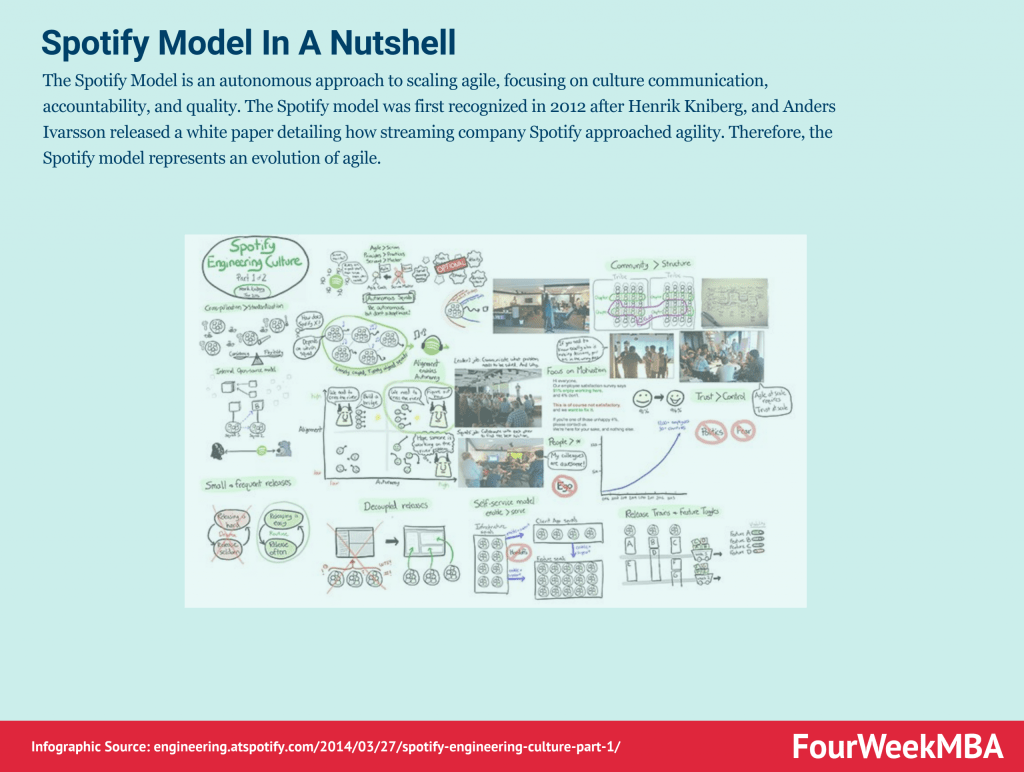
The Spotify Model is an autonomous approach to scaling agile, focusing on culture communication, accountability, and quality. The Spotify model was first recognized in 2012 after Henrik Kniberg, and Anders Ivarsson released a white paper detailing how streaming company Spotify approached agility. Therefore, the Spotify model represents an evolution of agile.
As the name suggests, TDD is a test-driven technique for delivering high-quality software rapidly and sustainably. It is an iterative approach based on the idea that a failing test should be written before any code for a feature or function is written. Test-Driven Development (TDD) is an approach to software development that relies on very short development cycles.
Timeboxing is a simple yet powerful time-management technique for improving productivity. Timeboxing describes the process of proactively scheduling a block of time to spend on a task in the future. It was first described by author James Martin in a book about agile software development.
Scrum is a methodology co-created by Ken Schwaber and Jeff Sutherland for effective team collaboration on complex products. Scrum was primarily thought for software development projects to deliver new software capability every 2-4 weeks. It is a sub-group of agile also used in project management to improve startups’ productivity.
Scrumban is a project management framework that is a hybrid of two popular agile methodologies: Scrum and Kanban. Scrumban is a popular approach to helping businesses focus on the right strategic tasks while simultaneously strengthening their processes.
Scrum anti-patterns describe any attractive, easy-to-implement solution that ultimately makes a problem worse. Therefore, these are the practice not to follow to prevent issues from emerging. Some classic examples of scrum anti-patterns comprise absent product owners, pre-assigned tickets (making individuals work in isolation), and discounting retrospectives (where review meetings are not useful to really make improvements).
Scrum at Scale (Scrum@Scale) is a framework that Scrum teams use to address complex problems and deliver high-value products. Scrum at Scale was created through a joint venture between the Scrum Alliance and Scrum Inc. The joint venture was overseen by Jeff Sutherland, a co-creator of Scrum and one of the principal authors of the Agile Manifesto.
Six Sigma is a data-driven approach and methodology for eliminating errors or defects in a product, service, or process. Six Sigma was developed by Motorola as a management approach based on quality fundamentals in the early 1980s. A decade later, it was popularized by General Electric who estimated that the methodology saved them $12 billion in the first five years of operation.
Stretch objectives describe any task an agile team plans to complete without expressly committing to do so. Teams incorporate stretch objectives during a Sprint or Program Increment (PI) as part of Scaled Agile. They are used when the agile team is unsure of its capacity to attain an objective. Therefore, stretch objectives are instead outcomes that, while extremely desirable, are not the difference between the success or failure of each sprint.
The Toyota Production System (TPS) is an early form of lean manufacturing created by auto-manufacturer Toyota. Created by the Toyota Motor Corporation in the 1940s and 50s, the Toyota Production System seeks to manufacture vehicles ordered by customers most quickly and efficiently possible.
The Total Quality Management (TQM) framework is a technique based on the premise that employees continuously work on their ability to provide value to customers. Importantly, the word “total” means that all employees are involved in the process – regardless of whether they work in development, production, or fulfillment.
The waterfall model was first described by Herbert D. Benington in 1956 during a presentation about the software used in radar imaging during the Cold War. Since there were no knowledge-based, creative software development strategies at the time, the waterfall method became standard practice. The waterfall model is a linear and sequential project management framework.
ZMET, short for Zaltman Metaphor Elicitation Technique, is a qualitative research method developed by Dr. Gerald Zaltman, a prominent scholar in marketing and consumer behavior. ZMET is designed to unearth deep insights and hidden emotions by exploring the metaphors that people use to describe their thoughts, feelings, and experiences.
What are the why zmet matters?
Understanding ZMET is essential for recognizing its impact on market research, brand strategy development, and consumer behavior analysis. Recognizing the benefits and limitations of this qualitative research technique informs strategies for gaining profound insights.
What are the challenges in understanding zmet?
Understanding the limitations and challenges associated with ZMET is essential for researchers and practitioners aiming to leverage its benefits effectively.
What is ZMET in Action?
To understand ZMET better, let's explore how it operates in real-world scenarios and what it reveals about its impact on market research, brand strategy development, and consumer behavior analysis.
What is Process Steps in ZMET?
Interview: The ZMET process begins with in-depth interviews with participants. During these interviews, researchers encourage participants to express their perceptions, emotions, and thoughts related to a specific topic or subject.. Metaphor Elicitation: Participants are asked to create metaphors that represent their thoughts and feelings about the topic under investigation.
What are the examples of zmet applications?
Product Design: ZMET can be employed to understand consumers' emotional responses to a new product. Participants may use metaphors and images to express their thoughts about the product's features, design, and usability.. Branding Analysis: ZMET is valuable for exploring the emotional associations and perceptions associated with a brand.
What is Legacy and Relevance Today?
In conclusion, ZMET (Zaltman Metaphor Elicitation Technique) remains a valuable qualitative research method for gaining deep insights into consumer perceptions, motivations, and emotional connections in market research, brand strategy development, and consumer behavior analysis. Its focus on metaphors as a window into the subconscious provides a unique and powerful tool for understanding human behavior and decision-making.
Gennaro Cuofano is a CRO and tech executive who has worked in AI since late 2015, starting with bringing NLP, natural-language generation, voice and chatbot products to the marketing industry. His background is in law and finance: he holds a Master's degree in Law and an International MBA with an emphasis on corporate finance (LUISS Business School and the University of San Diego, 2012), and worked as a financial analyst at a real-estate investment firm in San Diego and as an assistant controller. His work focuses on business model strategy, business engineering and, more broadly, structural analysis: how companies make money, read from their own filings. He created FourWeekMBA and leads research there and at The Business Engineer, his newsletter on AI and business strategy, with over 95,000 subscribers and more than 1,000 published analyses. His writing has also appeared on Entrepreneur, HackerNoon and Search Engine People. Find him on LinkedIn and Substack. See how we source.
Scroll to Top
Discover more from FourWeekMBA
Subscribe now to keep reading and get access to the full archive.