Twitch started in 2007 as Justin.tv, broadcasting the life of Justin Kan, one of its co-founders, used to prove the concept of enabling anyone to broadcast their lives on the web. Once pivoted, Twitch quickly grew, and by 2014 it was acquired by Amazon for almost a billion dollars. Titch now makes money via subscriptions, bits, advertising, and merchandising.
How Twitch pivoted from Justin.tv, to become among the most successful streaming services, bought for a billion by Amazon.
Twitch is a North American live streaming service with a focus on esports broadcasting and video game streaming. Twitch was founded as a spin-off to Justin.tv. Founders Justin Kan and Emmett Shear noted that the gaming category on Justin.tv was the most-watched category on the site.
Three years after Twitch was founded, it was identified as the fourth-largest source of peak internet traffic in the United States. As a result, the parent company of Justin.tv was rebranded as Twitch Interactive and Justin.tv was shut down.
Twitch Interactive was then acquired by Amazon for $970 million, enabling the platform to become integrated with Amazon Prime.
Twitch continues to dominate the gaming and esports streaming market, boasting over a hundred million actively monthly users. The platform has since expanded to offer creative content, music broadcasts, and affiliate programs for streamers.
To understand Twitch’s origins, it is important to travel back to 2007 when founders Justin Kan and Emmett Shear launched the video broadcast service Justin.tv. The first broadcast showed Kan as he went about his daily life and in 2008, the platform was divided into several categories such as Music & Radio, News & Tech, Animals, Sports, and Entertainment.
Over the next four years, Justin.tv became popular thanks to hordes of users who illegally streamed sports matches and other copyrighted content. When the practice was eventually outlawed, it left Kan and Shear with business whose major drawcard had been surrendered almost overnight.
Justin.tv pivots
Kan and Shear knew that people loved to watch live streams of sports, but they wondered if they could find a sport that didn’t belong to anyone, so to speak.
The answer, as it turned out, was right under their noses. Gamers on Justin.tv had carved out a small but passionate niche on the platform, but the pair had always considered them a nuisance. In the early 2010s, video game streaming was poorly misunderstood and somewhat maligned because it required a lot of bandwidth.
In a 2012 interview with Fast Company, Kan explained that while he didn’t understand the practice, he did acknowledge that streaming could become a viable source of revenue: “It’s advertiser friendly. When you have a webcam, anything can happen. Gaming is much more controlled. “
TwitchTV is launched
With the gaming category on Justin.tv the most watched on the site, Kan and Shear were encouraged to launch TwitchTV as a spin-off to Justin.tv in June 2011. The name “Twitch” was a reference to twitch gameplay – a specific type of scenario that tests a player’s response time.
Three years after Twitch was founded, it was identified as the fourth-largest source of peak internet traffic in the United States at around 1.8% – a number that eclipsed the likes of Amazon, Facebook, and Valve.
The parent company of Justin.tv was rebranded as Twitch Interactive and Justin.tv was shut down. Ultimately, the move reflected the importance of Twitch as the company’s main business over Justin.tv itself.
Amazon acquisition
Twitch Interactive was then acquired by Amazon for $970 million in an all-cash deal, enabling the platform to become integrated with Amazon Prime. According to Forbes,Google was in talks to acquire the platform but later backed out over concerns that ownership of both Twitch and YouTube could raise anti-trust issues. The deal was completed on September 25, 2014.
Under Amazon’s ownership, Shear continued as CEO of Twitch Interactive and noted that the company would take advantage of Amazon’s existing relationships with big media players. Later in 2014, Twitch acquired e-sports team owner GoodGame Agency and, in 2016, introduced the microtransaction emoticons known as “Bits”.
2016 also saw the introduction of Twitch Prime, a service for Amazon Prime subscribers with additional perks such as exclusive add-on content, ad-free streaming, and game discounts.
Today, twitch continues to dominate the gaming and esports streaming market, boasting over 100 million active monthly users with 30% of those daily active users (DAUs). The platform has since expanded to offer creative content, music broadcasts, and affiliate programs for streamers.
The Amazon acquisition explained by Twitch co-founder
Justin Kan, co-founder of Twitch explains how he sold the company to Amazon for almost a billion dollars!
Now Twitch is part of the Amazon’s empire:
In 2014, Twitch was bought by Amazon for $970 million. Therefore Twitch is part of Amazon, comprising other subsidiaries bought over the years, like Audible, Whole Foods, and Zappos (in total, Amazon has 12 subsidiaries). Therefore, as of 2020, Twitch is a multi-billion dollar company, making money primarily via advertising through its video streaming platform (creators use Twitch today across many other verticals). Amazon is a consumer e-commerce platform with a diversified business model spanning e-commerce, cloud, advertising, streaming, and more. Over the years, Amazon acquired several companies. As it operates across several industries, Amazon has a wide range of competitors across each of those industries. For instance, Amazon’s E-commerce competes with Shopify, Wix, Google, Etsy, eBay, BigCommerce.
Twitch revenue generation
Twitch has an extensive revenue generation model – despite being predominantly a freemium product. Without further ado, let’s delve into the finer details.
Subscriptions
To show their support for a favorite creator, Twitch users can subscribe to their channel.
There are three, tiered options, with the latter two accommodating those who generally wish to provide more support:
$4.99/month is the minimum amount, giving subscribers access to creator emotes (Twitch-specific emoticons) and other benefits which each creator can define.
$9.99/month – offering one extra emote.
$24.99/month – offering two extra emotes.
Irrespective of the plan chosen, Twitch takes 50% of the total revenue. In limited scenarios, Twitch allows popular creators to keep 100% of the subscriptionrevenue as an incentive to keep them on the platform.
Bits
Bits are essentially Twitch currency and can be bought on the platform by users to cheer for creators using emoticons in live chat.
The more Bits a user purchases, the more noticeable their cheering becomes in a chat.
100 bits can be purchased for $1.40, with 25,000 bits available for $308. The creators themselves receive $0.01 for each bit that is used in their chat.
Advertising
Twitch also incorporates video advertising on live streams and pre-recorded content.
The company first negotiates with an advertiser and then the creator receives a portion of the advertising revenue. The total amount a creator receives is dependent on their CPM (Cost Per Mile), or a fixed price per one thousand views.
Twitch works with each creator to agree on a unique CPM. Confidentiality clauses mean that exact CPM rates are hard to quantify.
Merchandise
Merchandising is a hallmark of the acquisition by Amazon in 2014.
Fans can purchase Twitch-branded merchandise via the Amazon website. This merchandise is exclusive in the sense that it cannot be purchased elsewhere. Clothing is the most popular form of merchandise, but Twitch fans can also purchase gift cards and pet accessories.
Amazon Prime integration makes these purchases exceedingly easy. Such is the popularity of Twitch that profit margins are also high.
Key takeaways
Twitch is a live streaming video platform founded by Justin Kan and Emmett Shear. The platform was created after Kan and Shear noted the surge in video game streaming popularity on Justin.tv.
After becoming the fourth largest source of peak internet traffic in 2014, Twitch was acquired by Amazon. Its product range quickly expanded to include music broadcasting, affiliate programs, and other creative content.
Twitch makes money by offering creator subscription plans. Fans can also purchase in-house currency to show their support using proprietary emoticons. Twitch also makes money on exclusive, high-margin merchandise.
Key Highlights
Origin and Pivot: Twitch originated as a spin-off from Justin.tv, which initially broadcasted Justin Kan’s daily life. However, after realizing the popularity of gaming streams on the platform, founders Justin Kan and Emmett Shear pivoted to focus on video game streaming and esports.
Early Growth: Twitch quickly gained popularity in the gaming community, becoming a significant source of internet traffic. Within three years of its founding, it became the fourth-largest source of peak internet traffic in the United States.
Rebranding and Amazon Acquisition: Due to Twitch’s rapid growth and success, its parent company, Justin.tv, was rebranded as Twitch Interactive, and Justin.tv was shut down. In 2014, Amazon acquired Twitch Interactive for $970 million in an all-cash deal, integrating the platform with Amazon Prime.
Expansion and Diversification: Under Amazon’s ownership, Twitch continued to expand beyond gaming and esports streaming. It introduced creative content, music broadcasts, and affiliate programs for streamers, diversifying its content offerings.
Revenue Generation Model:
Subscriptions: Twitch offers three subscription tiers for users to support their favorite creators. Subscribers receive benefits such as creator-specific emotes. Twitch takes a 50% cut of subscriptionrevenue.
Bits: Bits are Twitch’s virtual currency that users can purchase to cheer for creators using emoticons in chat. Creators receive $0.01 for each bit used in their chat.
Advertising: Twitch incorporates video advertising on live streams and pre-recorded content. Creators receive a portion of the advertising revenue based on their CPM (Cost Per Mile).
Merchandise: Amazon’s acquisition facilitated the sale of Twitch-branded merchandise through the Amazon website. This exclusive merchandise includes clothing, gift cards, and pet accessories.
Integration with Amazon Prime: Amazon Prime subscribers also receive Twitch Prime benefits, such as exclusive add-on content, ad-free streaming, and game discounts, further integrating the two platforms.
Ongoing Dominance: Twitch continues to dominate the gaming and esports streaming market, boasting over 100 million active monthly users and expanding its content offerings beyond gaming.
Amazon’s Empire: As of 2023, Twitch is one of Amazon’s subsidiaries, contributing to the company’s diversified business model that spans e-commerce, cloud services, advertising, streaming, and more.
Business Model Element
Analysis
Implications
Examples
Value Proposition
Twitch’s value proposition revolves around offering a platform for creators to live stream content, interact with viewers in real time, and build communities around shared interests. For viewers, it provides an immersive and interactive experience to watch their favorite streamers play games, create art, or engage in other activities. Viewers can chat with streamers and fellow viewers, subscribe to channels, and participate in virtual events. Creators benefit from a platform that allows them to share their passion and content while monetizing through various income streams, including ads, subscriptions, and donations from their audience. The platform fosters a sense of belonging, entertainment, and engagement for both creators and viewers.
Provides a live streaming platform for creators and viewers. Enables real-time interaction between creators and viewers. Supports community building around shared interests. Offers immersive and interactive viewing experiences. Monetization opportunities for creators through ads, subscriptions, and donations. Fosters a sense of belonging, entertainment, and engagement. Attracts creators seeking a platform to share content and engage with audiences. Engages viewers by offering interactive and entertaining experiences. Drives user engagement through live chat, subscriptions, and virtual events.
– Twitch’s value proposition caters to both creators and viewers, creating a mutually beneficial ecosystem. – Real-time interaction and community building are central to the platform’s success. – Multiple monetization options incentivize creators to use the platform. – A sense of belonging and engagement fosters viewer loyalty and continuous interaction.
Customer Segments
Twitch targets two primary customer segments: creators and viewers. Creators include gamers, esports professionals, artists, musicians, and other content creators who want to share their content and engage with an audience. Creators range from amateur enthusiasts to professional streamers and esports players. Viewers encompass individuals interested in gaming, esports, art, music, and various other forms of content. Twitch caters to a diverse global audience, appealing to both casual viewers and dedicated fans of specific creators or communities.
Targets creators and viewers. Creators include gamers, esports professionals, artists, musicians, and content creators. Encompasses a range of creators, from amateurs to professionals. Viewers consist of individuals interested in gaming, esports, art, music, and various content genres. Appeals to a diverse global audience, including casual viewers and dedicated fans.
– Catering to a broad range of creators and content genres enhances the platform’s diversity and appeal. – Attracting both amateur and professional creators ensures a constant influx of content. – Serving a global audience expands Twitch’s market reach and user base.
Distribution Strategy
Twitch’s distribution strategy is primarily digital, relying on its website and dedicated mobile applications. Users can access Twitch on various platforms, including Windows, macOS, iOS, Android, and gaming consoles. The platform ensures that it is accessible to users across devices, enabling creators to reach audiences wherever they are. Twitch also provides tools and APIs for creators to integrate Twitch functionality into their own applications and websites, expanding its reach even further. Additionally, the platform forms partnerships with game developers and publishers to enable in-game integration, enhancing the gaming experience.
Relies on a digital distribution strategy through its website and mobile applications. Offers access on various platforms, including Windows, macOS, iOS, Android, and gaming consoles. Ensures accessibility to users across devices. Provides tools and APIs for creators to integrate Twitch functionality. Forms partnerships with game developers and publishers for in-game integration. Expands reach and accessibility through platform integrations and partnerships. Enhances the gaming experience through in-game integration.
– Digital distribution simplifies access to Twitch’s platform, eliminating the need for physical distribution channels. – Accessibility on multiple platforms ensures broad accessibility and user convenience. – Tools and APIs empower creators to extend Twitch functionality to their own applications and websites, fostering innovation. – Partnerships with game developers enhance the gaming experience and drive user engagement.
Revenue Streams
Twitch generates revenue through various streams, including advertising, subscriptions, virtual goods, and partnerships. Advertising includes display ads, video ads, and sponsored content that run on the platform. Creators earn a share of ad revenue when ads are shown on their streams. Subscriptions allow viewers to subscribe to a creator’s channel for additional benefits and ad-free viewing, with a portion of the subscription fee going to the creator. Viewers can also purchase virtual goods, such as emotes and bits, to support creators during live streams. Twitch forms partnerships with game developers and publishers to offer in-game content and rewards, earning a share of revenue from these transactions.
Relies on revenue from: 1. Advertising, including display and video ads, and sponsored content. 2. Subscriptions, with a portion going to creators. 3. Virtual goods, such as emotes and bits. 4. Partnerships with game developers for in-game content. Ensures income through diverse revenue streams. Shares ad revenue with creators, incentivizing content creation. Enhances viewer engagement through subscriptions and virtual goods. Forms partnerships to offer in-game content, expanding revenue opportunities.
– Multiple revenue streams provide stability and diversification for the platform. – Sharing ad revenue with creators incentivizes content creation and quality. – Subscriptions and virtual goods enhance viewer engagement and enable direct support for creators. – Partnerships with game developers create additional monetization opportunities and enhance the gaming experience.
Marketing Strategy
Twitch’s marketing strategy includes content creation, events, influencer partnerships, and social media engagement. The platform promotes its creators and their content through featured channels, recommended streams, and curated content categories. Twitch hosts events like TwitchCon to engage with the community and showcase creators. Influencer partnerships involve collaborating with popular streamers to reach wider audiences. Social media engagement encourages users to share their favorite streams and moments, promoting user-generated content. Additionally, Twitch offers its own advertising solutions to advertisers looking to reach the platform’s gaming and entertainment-focused audience.
Utilizes content creation, events, influencer partnerships, and social media engagement for marketing. Promotes creators through featured channels, recommended streams, and curated content. Hosts events like TwitchCon to engage with the community and showcase creators. Collaborates with popular streamers through influencer partnerships. Encourages social media sharing of favorite streams and moments. Offers advertising solutions to reach gaming and entertainment-focused audiences. Focuses on building awareness, engaging the community, and attracting users through various marketing channels.
– Promoting creators and their content increases visibility and engagement on the platform. – Events like TwitchCon strengthen the community and foster connections between creators and viewers. – Influencer partnerships leverage popular streamers’ reach to expand Twitch’s audience. – Social media sharing drives user-generated content and word-of-mouth marketing. – Advertising solutions attract advertisers looking to reach Twitch’s unique audience.
Organization Structure
Twitch operates with a structure that includes teams responsible for product development, content moderation, marketing, partnerships, user experience (UX) design, customer support, and business operations. Product development teams focus on enhancing the platform’s features and capabilities. Content moderation teams ensure a safe and inclusive environment. Marketing teams handle promotional efforts and user acquisition. Partnerships teams collaborate with game developers and creators. UX design teams work on optimizing the platform’s user interface. Customer support teams assist users with inquiries and issues. Business operations teams manage financial and administrative aspects.
Employs a structure with specialized teams for product development, content moderation, marketing, partnerships, UX design, customer support, and business operations. Ensures continuous enhancement of platform features and capabilities. Focuses on maintaining a safe and inclusive environment through content moderation. Manages promotional efforts and user acquisition through marketing teams. Collaborates with game developers and creators through partnerships teams. Optimizes the user interface for improved user experience. Assists users with inquiries and issues through dedicated customer support teams. Manages financial and administrative aspects through business operations teams.
– Specialized teams contribute to ongoing platform improvement, user satisfaction, and safety. – Content moderation teams play a crucial role in maintaining a positive user experience. – Marketing and user acquisition efforts drive platform growth and audience expansion. – Partnerships with game developers and creators enhance the content offerings and monetization opportunities.
Competitive Advantage
Twitch’s competitive advantage is derived from its strong community, interactive features, and focus on live content. It has established itself as the leading platform for live streaming in gaming, esports, and creative content. The real-time interaction between creators and viewers fosters engagement and loyalty. The platform’s diverse content, including gaming, music, and art, appeals to a broad audience. Twitch’s monetization options, such as ads, subscriptions, and virtual goods, provide creators with revenue opportunities. Partnerships with game developers enhance the gaming experience and expand the platform’s offerings. Overall, Twitch’s unique blend of community, live interaction, and diverse content keeps it at the forefront of the live streaming industry.
Derives a competitive advantage from: – A strong community of creators and viewers. – Real-time interaction between creators and viewers. – Diverse content appealing to a broad audience. – Monetization options for creators through ads, subscriptions, and virtual goods. – Partnerships with game developers enhancing the gaming experience. – Leading position in live streaming for gaming, esports, and creative content.
– Twitch’s focus on live content and real-time interaction sets it apart from traditional video platforms. – A wide range of content categories broadens its appeal and user base. – Multiple monetization options incentivize creators and ensure a constant influx of content. – Partnerships with game developers and in-game integrations enhance the gaming experience and drive engagement. – Its leading position establishes trust and credibility among users and advertisers alike.
Discord makes money in several ways. From its Discord Store, where users can buy premium games, to the seller shops, that primarily works with a 90/10 revenue share for developers and game sellers. And the ability for sellers to get more visibility on the platform by adding features to the game visibility.
Roblox is an online gaming platform where users can create avatars and explore various gaming experiences. Each experience will be monetized based on how its developer has structured the game. For instance, free games allow users to spend the platform’s currency, called Robux, to get specific enhancements or purchase items like clothing accessories for the avatars, simulated gestures from the Roblox Avatar Marketplace. Therefore, Roblox makes money by earning a commission on each transaction and through its internal ad network.
Instagram makes money via visual advertising. As part of Facebook products, the company generates revenues for Facebook Inc. overall businessmodel. Acquired by Facebook for a billion dollar in 2012, today Instagram is integrated into the overall Facebook business strategy. In 2018, Instagram founders, Kevin Systrom and Mike Krieger, left the company, as Facebook pushed toward tighter integration of the two platforms.
TikTok is the Chinese creative social media platform driven by short-form video content enabling users to interact and generate content at scale. TikTok primarily makes money through advertising, and it generated $4.6 billion in advertising revenues in 2021, thus making it among the most popular attention-based business models or attention merchants.
Spotify is a two-sided marketplace where artists and music fans engage. Spotify has a free ad-supported service and a paid membership. Founded in 2008 with the belief that music should be universally accessible, it generated €9.66 billion in 2021. Of these revenues, 87.5% or €8.46 billion came from premium memberships, while over 12.5% or €1.2 billion came from ad-supported members.
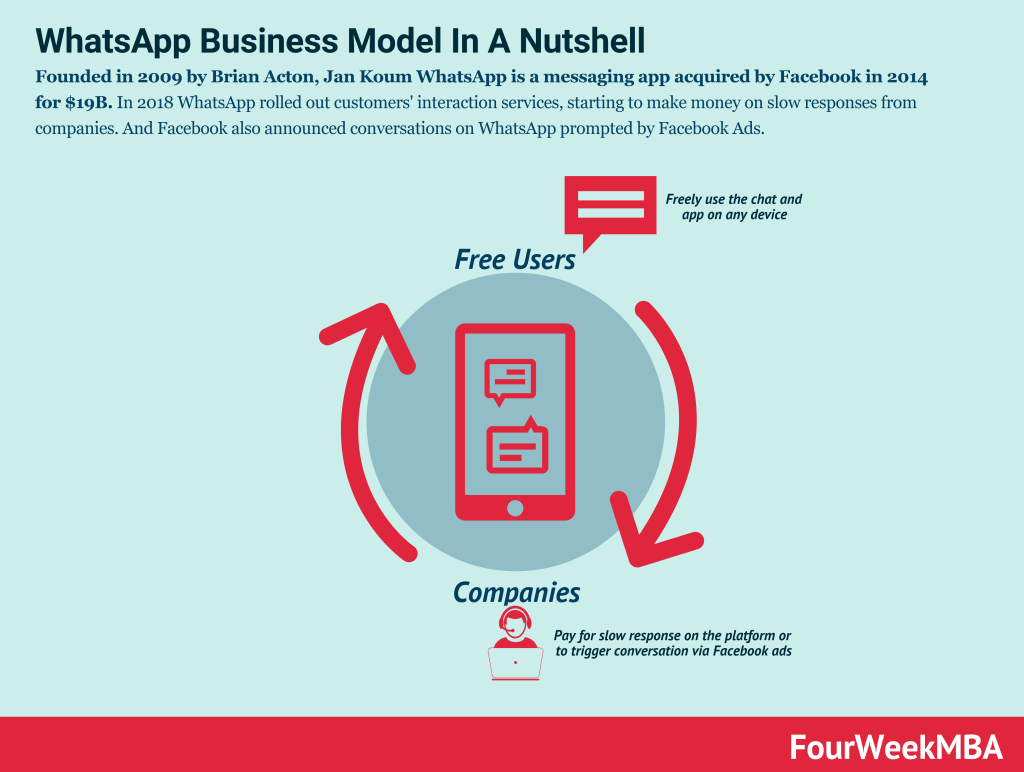
Founded in 2009 by Brian Acton, Jan Koum WhatsApp is a messaging app acquired by Facebook in 2014 for $19B. In 2018 WhatsApp rolled out customers’ interaction services, starting to make money on slow responses from companies. And Facebook also announced conversations on WhatsApp prompted by Facebook Ads.
Reddit is a social news and discussion website that also rates web content. The platform was created in 2005 after founders Alexis Ohanian and Steve Huffman met venture capitalist Paul Graham and pitched the company as the “front page of the internet.” Reddit makes money primarily via advertising. It also offers premium membership plans.
Twitter makes money in two ways: advertising and data licensing. In 2021, Twitter generated $4.5 billion from advertising and $570 million from data licensing. While Twitter generated $5 billion in total revenues, it lost 221 million.
Pinterest makes money by selling advertising for marketers and companies that can gain visibility for their brands and more sales for their shops. In 2021, Pinterest generated$2.58 a billion in advertising revenue, with 431 million monthly active users and a net income of $316 million.
Telegram is a messaging app emphasizing privacy and encryption, launched in 2013. It doesn’t make money yet, while it raised over $1.7 billion in Initial Coin Offerings throughout 2018, halted by the SEC in 2019. Telegram wants to keep the app 100% free while trying to sustain its growth.
Snapchat is a camera company, which business model moves across three industries: social media, content marketing, and AR. Snapchat generates most of its revenue from several ad formats (AR Ads, Snap Ads, Sponsored Geolifters, and Sponsored Lenses). The company also produces Spectacles, a set of AR glasses enabling content creators to produce interactive experiences through Snapchat.
Facebook, the main product of Meta, is an attention merchant. As such, its algorithms condense the attention of over 2.91 billion monthly active users as of June 2021. Meta generated $117.9 billion in revenues in 2021, $114.9 billion was from advertising (97.4% of the total revenues) and over $2.2 billion from Reality Labs (the augmented and virtual reality products arm).
Gennaro is the creator of FourWeekMBA, which reached about four million business people, comprising C-level executives, investors, analysts, product managers, and aspiring digital entrepreneurs in 2022 alone | He is also Director of Sales for a high-tech scaleup in the AI Industry | In 2012, Gennaro earned an International MBA with emphasis on Corporate Finance and Business Strategy.