Capital structure is a crucial aspect of financial management for companies. It represents the mix of debt and equity used to finance operations and investments. Several theories have emerged over the years to help firms determine their optimal capital structure. These theories offer insights into the trade-offs involved in financing decisions, but they also have limitations and implications for real-world financial management.
Proposes that in a world without taxes, bankruptcy costs, or information asymmetry, the capital structure is irrelevant to a firm’s value.
Implications:
In a perfect world, investors are indifferent to debt or equity.
Real-world factors like taxes and financial distress costs make capital structure decisions relevant.
Trade-off Theory:
Characteristics:
Firms must balance the benefits of tax shields from debt with the costs of financial distress.
Implications:
Optimal capital structure varies based on the firm’s ability to utilize tax advantages and manage the risk of financial distress.
Firms may target a specific debt-equity ratio to maximize value.
Pecking Order Theory:
Characteristics:
Firms prefer internal financing, followed by debt, and issue equity as a last resort.
Based on information asymmetry and signaling.
Implications:
Explains the financing hierarchy used by companies.
Equity issuances signal undervaluation, potentially leading to adverse selection.
Agency Cost Theory:
Characteristics:
Focuses on conflicts of interest between shareholders and management.
Debt can help mitigate agency problems.
Implications:
Debt acts as a disciplining mechanism on management.
High debt levels may align management’s interests with shareholders.
Market Timing Theory:
Characteristics:
Firms time their equity issuances to exploit favorable market conditions.
Implications:
Suggests that external factors like market sentiment influence capital structure decisions.
Firms try to raise equity when their stock is overvalued.
Real-World Applications:
Corporate Finance:
Companies use these theories to optimize their financial structure.
Evaluate tax benefits, costs of financial distress, and signaling effects.
Investment Analysis:
Investors and analysts assess a firm’s capital structure to understand its financial health and risk.
Optimal capital structure can impact a company’s stock valuation.
Key Highlights of Capital Structure Theories:
Modigliani-Miller Theorem: This foundational theory posits that in an ideal world without taxes, bankruptcy costs, or information asymmetry, a firm’s capital structure is irrelevant to its value. It highlights the role of real-world factors in determining capital structure decisions.
Trade-off Theory: Firms must strike a balance between the benefits of tax shields from debt and the costs of financial distress. The optimal capital structure varies based on a firm’s ability to leverage tax advantages while managing the risk of financial distress.
Pecking Order Theory: This theory reflects how firms prefer internal financing, followed by debt, and issue equity as a last resort. It is rooted in information asymmetry and signaling, with equity issuances signaling potential undervaluation.
Agency Cost Theory: Focused on conflicts of interest between shareholders and management, this theory suggests that debt can act as a disciplining mechanism on management. Higher debt levels may align management’s interests with shareholders.
Market Timing Theory: Firms time their equity issuances to capitalize on favorable market conditions. It highlights the influence of market sentiment on capital structure decisions and the desire to raise equity when stock is overvalued.
Real-World Applications: These theories are used in corporate finance to optimize financial structure, evaluate tax benefits and financial distress costs, and understand signaling effects. They also guide investment analysis by helping investors assess a company’s financial health and risk.
Challenges: Capital structure theories may not fully account for market dynamics and changing conditions. Some theories rely on simplifying assumptions that may not hold in complex financial markets where participants have access to substantial information.
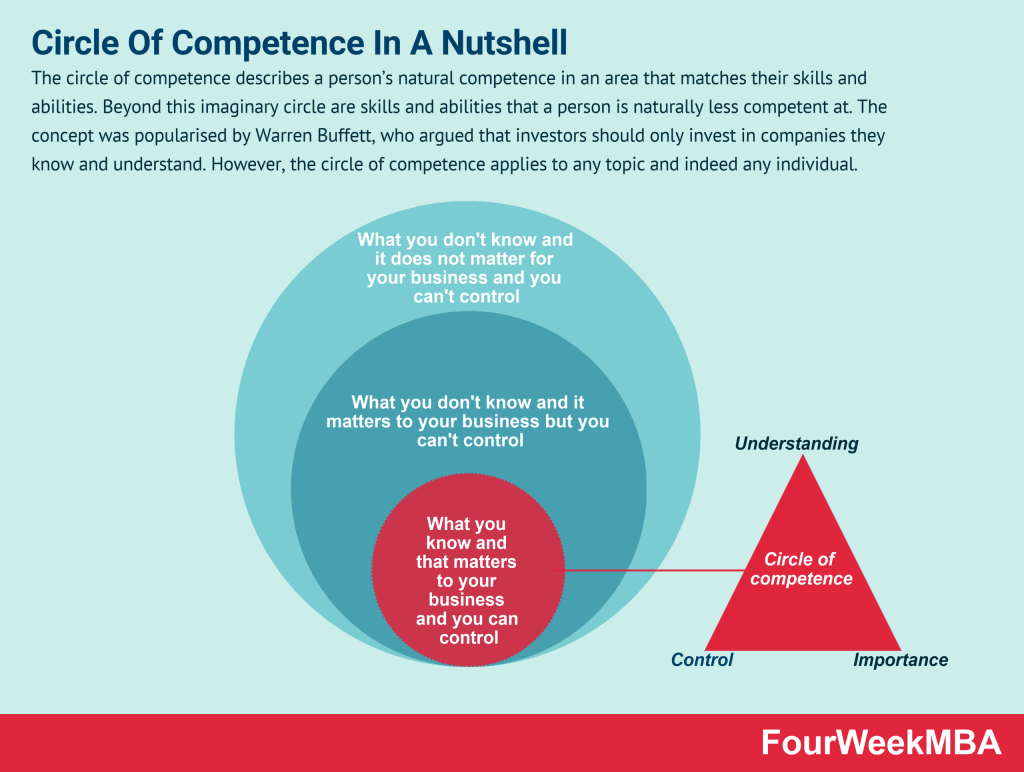
The circle of competence describes a person’s natural competence in an area that matches their skills and abilities. Beyond this imaginary circle are skills and abilities that a person is naturally less competent at. The concept was popularised by Warren Buffett, who argued that investors should only invest in companies they know and understand. However, the circle of competence applies to any topic and indeed any individual.
Economic or market moats represent the long-term business defensibility. Or how long a business can retain its competitive advantage in the marketplace over the years. Warren Buffet who popularized the term “moat” referred to it as a share of mind, opposite to market share, as such it is the characteristic that all valuable brands have.
The Buffet Indicator is a measure of the total value of all publicly-traded stocks in a country divided by that country’s GDP. It’s a measure and ratio to evaluate whether a market is undervalued or overvalued. It’s one of Warren Buffet’s favorite measures as a warning that financial markets might be overvalued and riskier.
Venture capital is a form of investing skewed toward high-risk bets, that are likely to fail. Therefore venture capitalists look for higher returns. Indeed, venture capital is based on the power law, or the law for which a small number of bets will pay off big time for the larger numbers of low-return or investments that will go to zero. That is the whole premise of venture capital.
Foreign direct investment occurs when an individual or business purchases an interest of 10% or more in a company that operates in a different country. According to the International Monetary Fund (IMF), this percentage implies that the investor can influence or participate in the management of an enterprise. When the interest is less than 10%, on the other hand, the IMF simply defines it as a security that is part of a stock portfolio. Foreign direct investment (FDI), therefore, involves the purchase of an interest in a company by an entity that is located in another country.
Micro-investing is the process of investing small amounts of money regularly. The process of micro-investing involves small and sometimes irregular investments where the individual can set up recurring payments or invest a lump sum as cash becomes available.
Meme stocks are securities that go viral online and attract the attention of the younger generation of retail investors. Meme investing, therefore, is a bottom-up, community-driven approach to investing that positions itself as the antonym to Wall Street investing. Also, meme investing often looks at attractive opportunities with lower liquidity that might be easier to overtake, thus enabling wide speculation, as “meme investors” often look for disproportionate short-term returns.
Retail investing is the act of non-professional investors buying and selling securities for their own purposes. Retail investing has become popular with the rise of zero commissions digital platforms enabling anyone with small portfolio to trade.
Accredited investors are individuals or entities deemed sophisticated enough to purchase securities that are not bound by the laws that protect normal investors. These may encompass venture capital, angel investments, private equity funds, hedge funds, real estate investment funds, and specialty investment funds such as those related to cryptocurrency. Accredited investors, therefore, are individuals or entities permitted to invest in securities that are complex, opaque, loosely regulated, or otherwise unregistered with a financial authority.
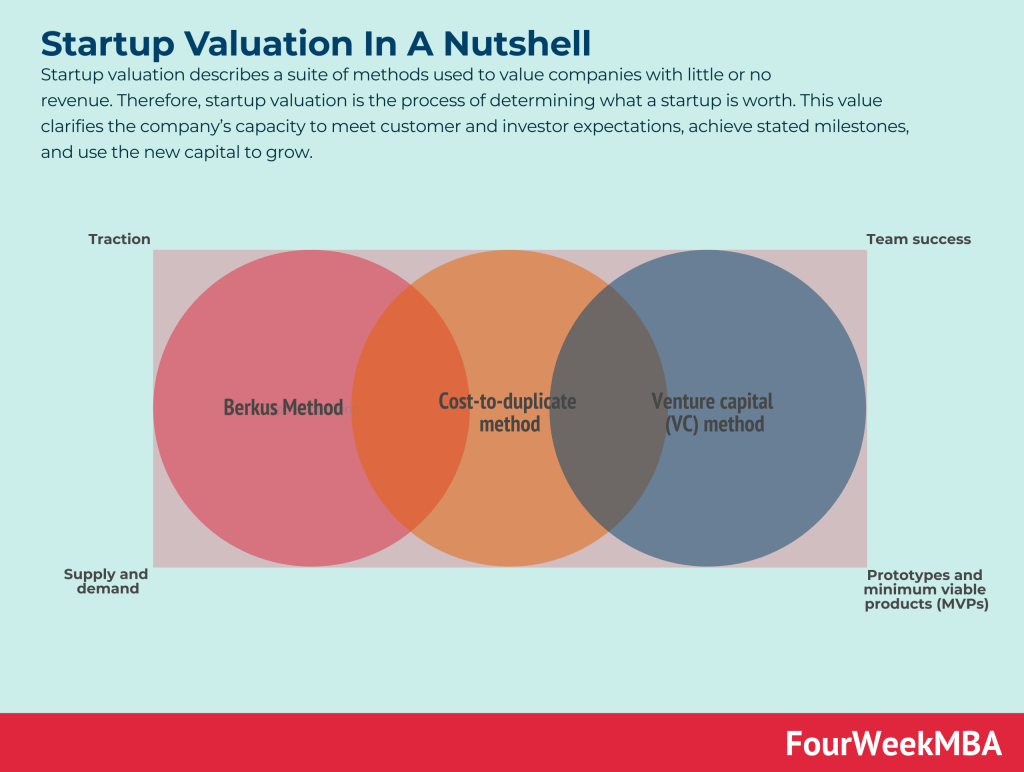
Startup valuation describes a suite of methods used to value companies with little or no revenue. Therefore, startup valuation is the process of determining what a startup is worth. This value clarifies the company’s capacity to meet customer and investor expectations, achieve stated milestones, and use the new capital to grow.
Profit is the total income that a company generates from its operations. This includes money from sales, investments, and other income sources. In contrast, cash flow is the money that flows in and out of a company. This distinction is critical to understand as a profitable company might be short of cash and have liquidity crises.
Double-entry accounting is the foundation of modern financial accounting. It’s based on the accounting equation, where assets equal liabilities plus equity. That is the fundamental unit to build financial statements (balance sheet, income statement, and cash flow statement). The basic concept of double-entry is that a single transaction, to be recorded, will hit two accounts.
The purpose of the balance sheet is to report how the resources to run the operations of the business were acquired. The Balance Sheet helps to assess the financial risk of a business and the simplest way to describe it is given by the accounting equation (assets = liability + equity).
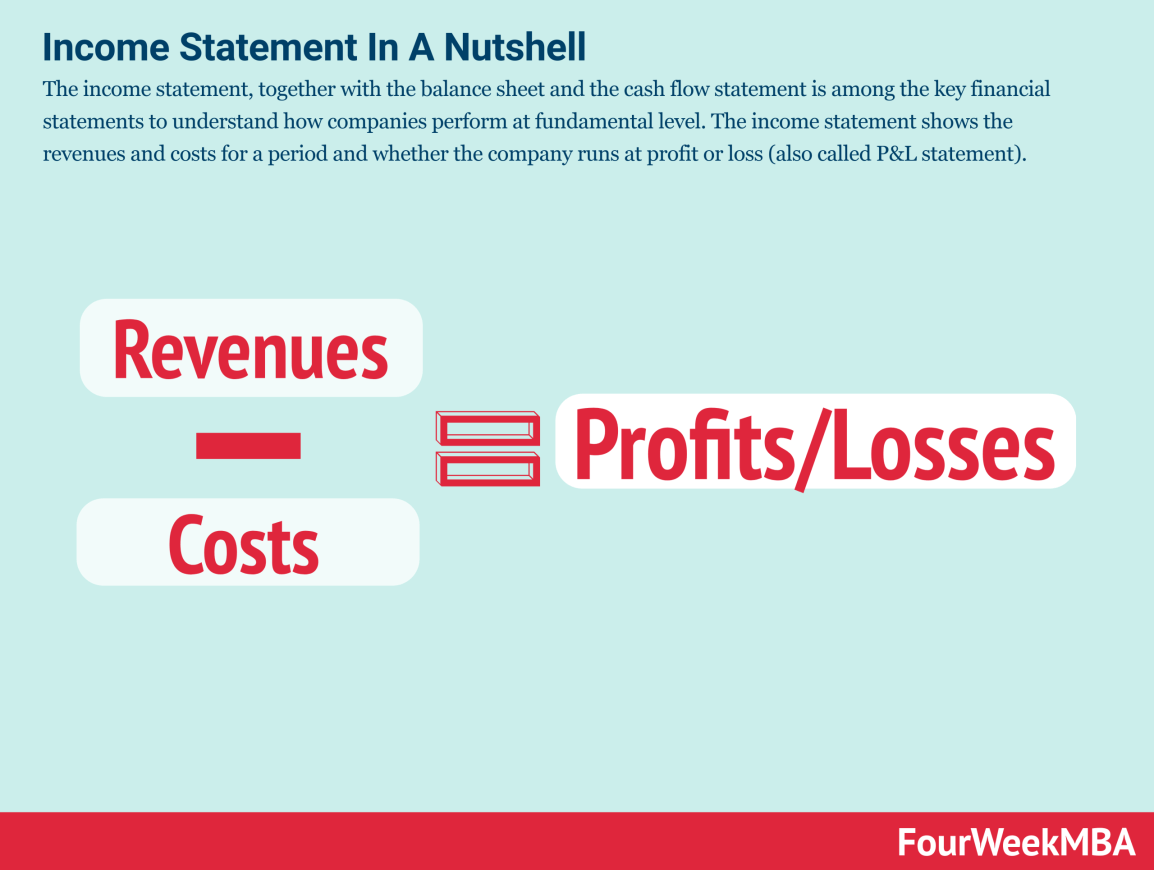
The income statement, together with the balance sheet and the cash flow statement is among the key financial statements to understand how companies perform at fundamental level. The income statement shows the revenues and costs for a period and whether the company runs at profit or loss (also called P&L statement).
The cash flow statement is the third main financial statement, together with income statement and the balance sheet. It helps to assess the liquidity of an organization by showing the cash balances coming from operations, investing and financing. The cash flow statement can be prepared with two separate methods: direct or indirect.
The capital structure shows how an organization financed its operations. Following the balance sheet structure, usually, assets of an organization can be built either by using equity or liability. Equity usually comprises endowment from shareholders and profit reserves. Where instead, liabilities can comprise either current (short-term debt) or non-current (long-term obligations).
Capital expenditure or capital expense represents the money spent toward things that can be classified as fixed asset, with a longer term value. As such they will be recorded under non-current assets, on the balance sheet, and they will be amortized over the years. The reduced value on the balance sheet is expensed through the profit and loss.
Financial statements help companies assess several aspects of the business, from profitability (income statement) to how assets are sourced (balance sheet), and cash inflows and outflows (cash flow statement). Financial statements are also mandatory to companies for tax purposes. They are also used by managers to assess the performance of the business.
Financial modeling involves the analysis of accounting, finance, and business data to predict future financial performance. Financial modeling is often used in valuation, which consists of estimating the value in dollar terms of a company based on several parameters. Some of the most common financial models comprise discounted cash flows, the M&A model, and the CCA model.
Business valuations involve a formal analysis of the key operational aspects of a business. A business valuation is an analysis used to determine the economic value of a business or company unit. It’s important to note that valuations are one part science and one part art. Analysts use professional judgment to consider the financial performance of a business with respect to local, national, or global economic conditions. They will also consider the total value of assets and liabilities, in addition to patented or proprietary technology.
The Weighted Average Cost of Capital can also be defined as the cost of capital. That’s a rate – net of the weight of the equity and debt the company holds – that assesses how much it cost to that firm to get capital in the form of equity, debt or both.
A financial option is a contract, defined as a derivative drawing its value on a set of underlying variables (perhaps the volatility of the stock underlying the option). It comprises two parties (option writer and option buyer). This contract offers the right of the option holder to purchase the underlying asset at an agreed price.
A profitability framework helps you assess the profitability of any company within a few minutes. It starts by looking at two simple variables (revenues and costs) and it drills down from there. This helps us identify in which part of the organization there is a profitability issue and strategize from there.
The Triple Bottom Line (TBL) is a theory that seeks to gauge the level of corporate social responsibility in business. Instead of a single bottom line associated with profit, the TBL theory argues that there should be two more: people, and the planet. By balancing people, planet, and profit, it’s possible to build a more sustainable business model and a circular firm.
Behavioral finance or economics focuses on understanding how individuals make decisions and how those decisions are affected by psychological factors, such as biases, and how those can affect the collective. Behavioral finance is an expansion of classic finance and economics that assumed that people always rational choices based on optimizing their outcome, void of context.
Gennaro Cuofano is a CRO and tech executive who has worked in AI since late 2015, starting with bringing NLP, natural-language generation, voice and chatbot products to the marketing industry. His background is in law and finance: he holds a Master's degree in Law and an International MBA with an emphasis on corporate finance (LUISS Business School and the University of San Diego, 2012), and worked as a financial analyst at a real-estate investment firm in San Diego and as an assistant controller. His work focuses on business model strategy, business engineering and, more broadly, structural analysis: how companies make money, read from their own filings. He created FourWeekMBA and leads research there and at The Business Engineer, his newsletter on AI and business strategy, with over 95,000 subscribers and more than 1,000 published analyses. His writing has also appeared on Entrepreneur (for example, How to Digitize a Family Business in Europe) and HackerNoon. Find him on LinkedIn and Substack. See how we source.