

Kanban is a lean manufacturing framework first developed by Toyota in the late 1940s. The Kanban framework is a means of visualizing work as it moves through identifying potential bottlenecks. It does that through a process called just-in-time (JIT) manufacturing to optimize engineering processes, speed up manufacturing products, and improve the go-to-market strategy.
| Company | Industry | Kanban Application |
|---|---|---|
| Toyota | Manufacturing | Originator of Kanban; uses it for just-in-time manufacturing, optimizing processes, and inventory control. |
| Microsoft | Technology | Utilizes Kanban boards for software development workflows, managing tasks, and visualizing project progress. |
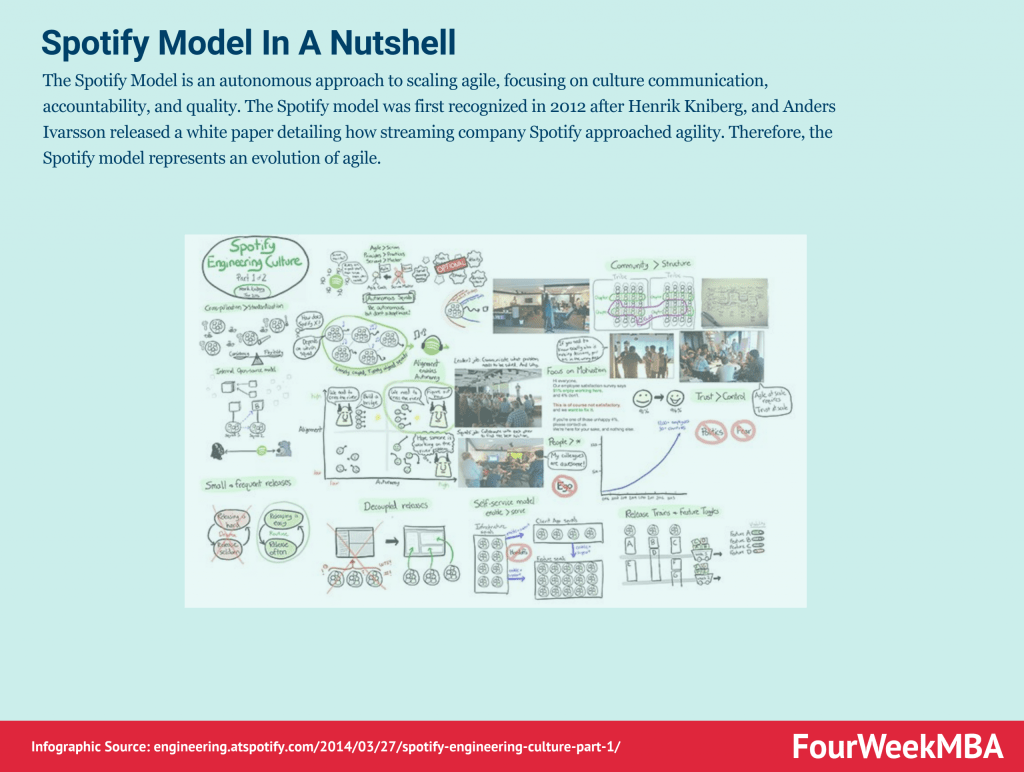
| Spotify | Music Streaming | Applies Kanban to software development and project management, including feature development and bug fixes. |
| Zara | Fashion Retail | Uses Kanban in supply chain management to optimize inventory, reduce lead times, and improve production efficiency. |
| Salesforce | CRM Software | Implements Kanban for managing sales pipelines, customer relationships, and marketing workflows. |
| Starbucks | Retail | Utilizes Kanban in inventory management for coffee beans and supplies, ensuring just-in-time replenishment. |
| Siemens Healthineers | Healthcare | Applies Kanban to manage complex medical device development processes, ensuring efficient workflows and quality control. |
| Boeing | Aerospace | Uses Kanban in aircraft manufacturing for parts production, assembly, and logistics, reducing waste and delays. |
| Atlassian | Software | Provides Kanban tools for project management, software development, and workflow visualization in various industries. |
| Amazon | E-commerce | Implements Kanban in its fulfillment centers to manage inventory and streamline order processing. |
| Intel | Semiconductor | Uses Kanban to control the flow of materials, equipment, and production tasks, optimizing production efficiency. |
| General Electric | Conglomerate | Utilizes Kanban for maintenance and repair operations, ensuring spare parts are available when needed to minimize downtime. |
| Toyota Tsusho | Trading | Toyota’s trading arm utilizes Kanban in trading and supply chain management to enhance logistics and reduce lead times. |
| Adobe | Technology | Employs Kanban for project management and software development, helping teams visualize tasks and track progress. |
| Trello (Atlassian) | Software | Offers Kanban-style project management tools that are widely used across various industries for task tracking and collaboration. |
| Kaiser Permanente | Healthcare | Applies Kanban in patient care, pharmacy operations, and supply chain management to improve efficiency and patient outcomes. |
| Social Media | Uses Kanban boards to manage content development, software engineering, and other projects, facilitating team collaboration. | |
| Hilton Worldwide | Hospitality | Hilton employs Kanban in hotel operations and housekeeping to optimize room turnover, maintenance, and guest services. |
| Siemens | Technology | Siemens applies Kanban in software development and industrial manufacturing to streamline processes and improve product quality. |
Understanding the Kanban framework
Like many lean manufacturing processes, the kanban framework was first developed by Toyota in the late 1940s.
Through a process called just-in-time (JIT) manufacturing, Toyota began to optimize its engineering processes based on a model supermarkets were using to control inventory levels.
Using this model, supermarkets stock just enough product to meet consumer demand.
As inventory levels respond to consumption patterns, the supermarket avoids holding excess stock and the inefficiencies that result.
Removing these process inefficiencies – or project bottlenecks – is central to the kanban framework.
To identify these bottlenecks and increase transparency and collaboration, the entire project is illustrated on a kanban board.
Kanban boards visually depict:
- Tasks that are completed
- Tasks that are currently being performed.
- Future tasks.
This simple approach to defining projects means that external stakeholders or new team members can quickly get up to speed.
Many businesses utilize physical kanban boards while those in software development use virtual boards.
This facilities better collaboration and increases accessibility from multiple locations.
Four core principles of the kanban framework
Kanban principles are based on:
- An emphasis on small and gradual changes to the existing workflow.
- Limiting existing tasks. Here, the team must not take on too much work such that the project is negatively affected.
- Respect for existing roles and responsibilities. The kanban framework improves efficiency in established systems. It does not require that businesses change their operations or culture.
- Leadership. Traditional project management practices stipulate that a project manager must sign off on every task, no matter how menial. However, the kanban framework affords whoever is working on a task the freedom to make their own decisions. This creates a culture of iterative improvement and creates the next generation of leaders.
Implementing the Kanban framework
To apply kanban principles to almost any scenario, kanban management consultant David J. Anderson identified six core practices:
Visualize the workflow
This begins by creating a kanban board with columns for the three types of tasks mentioned in the introduction.
For each type, kanban cards representing specific work items should be assigned.
Cards should be moved from column to column as work on them progresses.
Limit tasks that are currently being performed by setting constraints
This helps avoid multitasking and subsequent process inefficiencies.
Manage flow
Or the movement of work items through each step of the process.
Many businesses make the mistake of micro-managing staff to keep them constantly busy.
But the kanban framework simply focuses on moving the work through the process as quickly and efficiently as possible.
Make management policies explicit
Members of the project team must understand what they are trying to achieve.
Collect feedback
Kanban boards should have a column assigned for daily feedback – whether that be from staff or customers.
This creates agile feedback loops that encourage knowledge transfer between key stakeholders.
Collaborative improvement
With a deeper understanding of the project and potential bottlenecks, organizations using the kanban framework have a collective understanding of problems that need addressing.
Working toward the same goal, they also share a collective vision of future success.
Drawbacks and Limitations of Kanban:
While Kanban offers numerous advantages, it also has certain drawbacks and limitations:
- Limited Structure: Kanban provides flexibility but may lack the structured approach that some projects or organizations require.
- Complexity Management: For complex projects or workflows, it may be challenging to represent all nuances effectively on a Kanban board.
- Dependency Management: Kanban boards may not easily handle complex task dependencies or critical path management.
- Overwhelm: Without proper WIP limits, teams may become overwhelmed, leading to stress and reduced productivity.
- Lack of Project Planning: Kanban is not inherently a project planning tool and may require additional tools or methods for long-term project planning.
What to Expect from Using Kanban:
Using Kanban can lead to several outcomes and benefits:
- Increased Efficiency: Expect improved workflow efficiency, reduced lead times, and faster task completion.
- Reduced Waste: Kanban helps identify and eliminate bottlenecks and wasted efforts, leading to resource optimization.
- Enhanced Visibility: Gain a clear and real-time view of work progress and bottlenecks, facilitating better decision-making.
- Improved Collaboration: Teams collaborate more effectively when work is visualized and WIP limits are set.
- Continuous Improvement: Kanban fosters a culture of continuous improvement, leading to ongoing process enhancements.
Relevance in Modern Workflow and Project Management:
Kanban remains highly relevant in modern workflow and project management, including:
- Agile Methodologies: Kanban is often used in conjunction with Agile methodologies like Scrum and Lean to manage work within sprints or iterations.
- Remote Work: It is well-suited for remote work environments, providing visibility and collaboration tools for distributed teams.
- Service Industries: Service-oriented industries, such as healthcare, use Kanban to manage patient care and administrative tasks.
- Product Development: Kanban is applied to product development and release management to streamline processes and reduce time to market.
- Personal Productivity: Individuals use personal Kanban boards to manage tasks, projects, and daily activities.
Conclusion:
Kanban is a powerful and adaptable framework for optimizing workflows, enhancing productivity, and driving continuous improvement.
Its principles of visualizing work, setting WIP limits, managing flow, and fostering a culture of learning make it a valuable tool for organizations of all sizes and industries.
While recognizing its limitations, many organizations continue to leverage Kanban as a fundamental approach in modern workflow and project management to streamline processes and achieve operational excellence.
Kanban framework examples
In truth, kanban frameworks take many forms depending on the particular business, industry, or project at hand.
Below we will list some of the most common applications.
IT
Kanban is a favorite of IT operations teams because of the enormous amount of tasks their departments need to deal with.
Boards are used to visualize workflows with columns used to better differentiate flow stages.
Some also use swimlanes to acquire a deeper understanding of the work’s importance and avoid priority conflicts.
In truth, many IT departments seek to process more work than their capacity allows.
The result is invisible work which causes longer lead and cycle times and causes unhappiness among customers and managers alike.
Effective structuring of the kanban board to provide a holistic overview of operation is key.
Software development
Kanban boards designed for development teams display workflows comprised of many functional steps and their associated columns.
Swimlanes can also be effective in software development as a way to visually represent the different classes of work.
For example, some tasks will involve work on defects, while others will be related to product features.
Small teams or those that are new to kanban may choose a simple workflow that consists of basic steps such as design, development, code review, testing, and deployment.
More advanced teams may want to combine their workflows with quality assurance or customer support.
Sales
Small to medium-sized businesses can use kanban boards to move customers through an entire pipeline – whether that be one related to sales or marketing.
This is an easy way to spot bottlenecks and call upon an Account Executive or SDR to intervene.
Since kanban boards provide a complete overview of the entire customer journey and sales funnel, teams can also avoid sending the same emails twice.
On that note, kanban workflows can illustrate simple sales pipelines with a Qualification, Proposal, and Sale step.
As these workflows become more complex over time, additional steps such as Presentation, Evaluation, Negotiation, and Closing can be added.
Portfolio level
Teams who are focused on day-to-day tasks can sometimes become overwhelmed and lose sight of the bigger, strategic-level picture.
Portfolio kanban frameworks help these teams plan long-term activities and strategies and are an ideal way to appreciate the strategic evolution of the team, department, or company itself.
Portfolio boards vary according to the size of the team or the focus of the work.
Product development teams use two swimlanes to prioritize their initiatives, while project management teams break initiatives down into smaller pieces that are represented by small colored squares.
UX teams and designers
Some UX teams and designers use kanban boards that are divided into:
- Design-related tasks – user research, design reviews, etc.
- Administrative tasks – meeting the client, signing a contract, and so forth.
Workflows can also be divided into phases such as Draft, Wireframes, Mockups, and Prototypes.
This allows teams to move individual tasks from the ideation phase through to the final product.
Kanban vs. Scrum

Kanban and Scrum are agile project management methodologies enabling quick iterations, short development cycles, and team productivity.
Thus, both tools are extremely useful and essential in the agile development framework.
Kanban vs. Kaizen

Similarly to Kanban, Kaizen also focussed on removing defects from production.
Though Kanban has found a much wider application also in the software development industry, where it has become a popular tool for project management.
Kaizen moves along a few key principles:
- 1. Small incremental changes
- 2. Employees are active participants and provide ideas and solutions
- 3. Accountability and ownership of new processes/changes
- 4. Feedback, dialogue, open communication
- 5. Active monitoring and measuring of changes – positive or negative impact
Key takeaways
- The kanban framework is an illustrative approach to project or product development with a focus on removing bottlenecks.
- The kanban framework analyses project tasks according to whether they are completed, currently being performed, or assigned to a future date. This enables project team members to visualize the workflow and minimize multitasking to prevent bottlenecks.
- The kanban framework is suitable for most industries and does not require that a business change its culture or management practices. The framework also empowers those carrying out the tasks to make important strategic decisions.
Key Highlights of the Kanban Framework:
- Definition and Origin: Kanban is a lean manufacturing framework initially developed by Toyota in the late 1940s. It visualizes work, identifies bottlenecks, and optimizes processes through just-in-time manufacturing.
- Visualizing Work: Kanban uses boards to depict completed, ongoing, and future tasks, aiding transparency, collaboration, and swift onboarding for new team members.
- Four Core Principles:
- Gradual workflow changes.
- Limiting tasks to avoid negative impacts.
- Respecting existing roles and practices.
- Encouraging leadership and decision-making at all levels.
- Implementation Practices: Kanban consultant David J. Anderson identified six practices:
- Visualize the workflow.
- Limit ongoing tasks.
- Manage flow efficiently.
- Make management policies explicit.
- Collect feedback through agile loops.
- Collaborative improvement for problem-solving.
- Examples of Kanban Application:
- IT Operations: For managing tasks and avoiding invisible work.
- Software Development: For complex workflows, including defect fixing and feature development.
- Sales and Marketing: To manage customer pipelines, sales funnels, and identify bottlenecks.
- Portfolio Level: Planning long-term strategies and appreciating strategic evolution.
- UX Teams and Designers: Managing design-related and administrative tasks.
- Kanban vs. Scrum: Kanban and Scrum are both agile methodologies, suitable for quick iterations and team productivity, often used together in the agile development framework.
- Kanban vs. Kaizen: While both focus on process improvement, Kaizen originated from the auto industry, emphasizing small incremental changes and employee participation, whereas Kanban has wider application, particularly in software development and project management.
| Related Frameworks | Description | When to Apply |
|---|---|---|
| Lean Management | Lean Management is a systematic approach to minimizing waste and maximizing value creation in organizational processes. It emphasizes identifying and eliminating activities that do not add value to the customer, streamlining workflows, and continuously improving efficiency and quality. Lean principles include value stream mapping, just-in-time production, flow optimization, pull-based systems, and employee empowerment. By embracing lean practices, organizations can reduce costs, improve productivity, and enhance customer satisfaction. | When organizations seek to streamline operations, eliminate waste, and optimize processes to deliver value to customers more efficiently. Lean management is beneficial for industries across manufacturing, healthcare, services, and information technology, where improving operational efficiency, reducing lead times, and enhancing product or service quality are paramount for achieving competitive advantage and sustaining long-term success. |
| Agile Methodology | Agile Methodology is an iterative approach to project management and software development that emphasizes adaptive planning, evolutionary development, early delivery, and continuous improvement. It enables organizations to respond quickly to changing requirements, deliver value incrementally, and embrace collaboration and flexibility in project execution. Key concepts include sprints, backlogs, daily stand-ups, and retrospectives. Agile methodologies, such as Scrum and Kanban, promote transparency, teamwork, and customer-centricity, resulting in faster delivery of high-quality products or services. | When organizations need to manage complex projects, respond to changing requirements, and deliver value to customers quickly and efficiently. Agile methodologies are widely used in software development, product innovation, marketing campaigns, and organizational change initiatives where flexibility, adaptability, and customer collaboration are essential for achieving project success and meeting evolving business needs. |
| Scrum Framework | Scrum is an Agile framework for managing complex projects. It emphasizes empirical process control, self-organizing teams, and iterative delivery. Scrum uses time-boxed iterations called sprints to deliver incremental value and inspect and adapt through regular ceremonies such as daily stand-ups, sprint planning, sprint review, and sprint retrospective. Scrum provides a structured approach to product development, enabling teams to prioritize work, collaborate effectively, and deliver high-quality products that meet customer needs. | When organizations need a lightweight framework for managing complex projects with rapidly changing requirements. Scrum is well-suited for software development, product launches, and cross-functional team initiatives where flexibility, adaptability, and continuous improvement are essential for delivering value to customers and stakeholders. |
| DevOps | DevOps is a set of practices that combines software development (Dev) and IT operations (Ops) to shorten the systems development life cycle and deliver high-quality software more quickly. It emphasizes automation, collaboration, and integration between development and operations teams to improve deployment frequency, time to market, and product quality. DevOps practices include continuous integration, continuous delivery, automated testing, and monitoring. By adopting DevOps, organizations can accelerate software delivery, increase agility, and enhance customer satisfaction. | When organizations aim to streamline software development processes, improve collaboration between development and operations teams, and accelerate the delivery of high-quality software products or services. DevOps is suitable for organizations of all sizes and industries looking to achieve faster time-to-market, reduce manual intervention, and enhance overall efficiency in software development and deployment processes. |
| Lean Startup | The Lean Startup methodology applies Lean principles to startup and innovation processes. It emphasizes rapid experimentation, validated learning, and iterative product development to bring products to market more efficiently and effectively. Lean Startup advocates for building minimum viable products (MVPs), testing hypotheses with real customers, and using feedback to iterate and improve products. Key concepts include validated learning loops, pivot, and persevere decisions. By adopting Lean Startup principles, startups can reduce the risk of failure, conserve resources, and increase the likelihood of building successful and scalable businesses. | When startups or new ventures aim to validate business ideas, build products, and bring them to market in a lean and iterative manner. The Lean Startup methodology is beneficial for entrepreneurs, innovators, and product teams looking to minimize risk, validate assumptions, and maximize the chances of success in uncertain and rapidly changing markets. |
| Design Thinking | Design Thinking is a human-centered approach to innovation that focuses on understanding user needs, ideation, prototyping, and testing. It emphasizes empathy, creativity, and iterative problem-solving to generate innovative solutions that address user challenges effectively. Design Thinking involves research, ideation workshops, prototyping sessions, and user testing to uncover insights and iterate on solutions. By applying Design Thinking principles, organizations can develop products and services that resonate with users, drive customer satisfaction, and differentiate themselves in the market. | When organizations seek to foster a culture of innovation, empathy, and user-centricity to solve complex problems and create meaningful solutions. Design Thinking is valuable for product development, service design, process improvement, and organizational change initiatives where understanding user needs, generating creative ideas, and prototyping solutions are essential for driving innovation and delivering value to customers. |
| Theory of Constraints (TOC) | The Theory of Constraints is a management philosophy that identifies and addresses the bottlenecks or constraints that limit an organization’s throughput or ability to achieve its goals. TOC emphasizes identifying constraints, exploiting constraints, and subordinating non-constraints to optimize overall system performance. Key concepts include Five Focusing Steps, Drum-Buffer-Rope, and Buffer Management. By applying TOC principles, organizations can improve flow, increase throughput, and achieve higher levels of efficiency and productivity. | When organizations encounter constraints or bottlenecks that hinder their ability to achieve desired outcomes or goals. TOC is applicable across various industries and processes where optimizing system performance, improving flow, and maximizing resource utilization are critical for achieving operational excellence and driving business success. |
| Value Stream Mapping (VSM) | Value Stream Mapping is a Lean management technique used to visualize and analyze the flow of materials and information required to deliver a product or service to customers. It involves mapping the current state and future state of the value stream, identifying waste, and implementing improvements to optimize flow and value delivery. VSM helps organizations understand process inefficiencies, reduce lead times, and improve overall performance. Key concepts include value-added and non-value-added activities, cycle time, and process steps. By using VSM, organizations can streamline operations, eliminate waste, and enhance customer satisfaction. | When organizations aim to identify and eliminate waste, streamline processes, and improve overall efficiency in delivering products or services to customers. VSM is particularly beneficial in manufacturing, healthcare, logistics, and service industries where visualizing value streams and analyzing process flow are essential for identifying improvement opportunities and achieving operational excellence. |
| Business Process Reengineering | Business Process Reengineering (BPR) is a strategy for redesigning and optimizing business processes to achieve significant improvements in performance, efficiency, and quality. It involves radically redesigning processes from scratch rather than making incremental improvements. BPR emphasizes process simplification, automation, and cross-functional collaboration to achieve breakthrough results. Key concepts include process mapping, reengineering teams, and benchmarking. By implementing BPR initiatives, organizations can achieve dramatic improvements in productivity, cost reduction, and customer satisfaction. | When organizations need to address systemic inefficiencies, outdated processes, or significant performance gaps that hinder their ability to achieve strategic objectives. BPR is suitable for industries undergoing major transformations, mergers, or technological disruptions where radical process redesign and organizational restructuring are necessary to adapt to changing market conditions, improve competitiveness, and drive sustainable growth. |
| Continuous Improvement (Kaizen) | Continuous Improvement, often referred to as Kaizen, is a philosophy of incremental and continuous improvement in processes, products, and services. It involves empowering employees to identify and implement small, incremental changes that add up to significant improvements over time. Kaizen emphasizes standardization, waste reduction, and employee engagement to drive continuous learning and innovation. Key concepts include gemba walks, 5S methodology, and quality circles. By embracing Kaizen principles, organizations can foster a culture of continuous improvement, adaptability, and excellence. | When organizations strive to cultivate a culture of continuous improvement, innovation, and employee engagement to drive incremental changes and achieve sustainable growth. Kaizen is applicable across industries and functions where improving processes, reducing waste, and enhancing quality are essential for achieving operational excellence and maintaining a competitive edge in the market. |
| Balanced Scorecard (BSC) | The Balanced Scorecard is a strategic performance management framework that aligns strategic objectives, key performance indicators (KPIs), and initiatives with an organization’s vision and mission. It enables organizations to measure and manage performance across four perspectives: financial, customer, internal processes, and learning and growth. The BSC provides a balanced view of organizational performance and helps translate strategy into action. Key concepts include strategy maps, KPIs, and strategic initiatives. By using the BSC, organizations can track progress, identify areas for improvement, and drive strategic alignment and execution. | When organizations seek to align their strategic objectives with performance measurement and execution. The Balanced Scorecard is valuable for organizations of all sizes and industries looking to translate strategic priorities into actionable goals, monitor performance across multiple dimensions, and drive continuous improvement and innovation. |
What are the 6 rules of Kanban?
Connected Agile & Lean Frameworks




Read Also: Continuous Innovation, Agile Methodology, Lean Startup, Business Model Innovation, Project Management.
Read Next: Agile Methodology, Lean Methodology, Agile Project Management, Scrum, Kanban, Six Sigma.
Main Guides:
- Business Models
- Business Strategy
- Business Development
- Distribution Channels
- Marketing Strategy
- Platform Business Models
- Network Effects
Main Case Studies:


