

Locus of control is a psychological concept describing the extent to which people believe they have control over their life experiences. Whereas in the internal locus of control, people believe that most events can result from their actions (internal-driven). In an external locus of control, people attribute importance to external factors to achieve happiness (external-driven).
| Aspect | Internal Locus of Control | External Locus of Control |
|---|---|---|
| Definition | Internal Locus of Control refers to the belief that individuals have control over their own lives and can influence outcomes through their actions and decisions. | External Locus of Control is the belief that external forces, fate, luck, or other people primarily determine the outcomes of one’s life, and individuals have limited control over events. |
| Origin of Belief | This belief often develops when individuals experience success, receive positive feedback, or have a strong sense of self-efficacy. | External Locus of Control can develop when individuals face repeated failures, experience lack of control in childhood, or have low self-esteem. |
| Attribution of Events | Individuals with an internal locus of control attribute both successes and failures to their efforts, decisions, and abilities. They take responsibility for their actions and outcomes. | Those with an external locus of control tend to attribute successes or failures to external factors such as luck, fate, or powerful others. They may feel like victims of circumstances. |
| Motivation | Internally oriented individuals are often more self-motivated. They believe their actions can lead to positive outcomes, so they are driven to work hard and achieve their goals. | Externally oriented individuals may lack intrinsic motivation because they believe external forces play a significant role, and their efforts might not make a difference. |
| Response to Challenges | Individuals with an internal locus of control are more likely to see challenges as opportunities for growth and problem-solving. They are resilient and persistent in the face of adversity. | Those with an external locus of control may become passive and demotivated when confronted with challenges, as they believe they have little control over the situation. |
| Coping Mechanisms | Internal locus individuals often use active problem-solving and seek social support when facing difficulties. They are more likely to engage in proactive coping strategies. | External locus individuals may resort to avoidance or denial as coping mechanisms, as they may feel overwhelmed by external factors. |
| Health and Well-being | Internal locus of control is associated with better mental and physical health outcomes. These individuals tend to engage in healthier behaviors, such as exercise and stress management. | External locus of control can be linked to higher stress levels and lower overall well-being due to the perception of helplessness in controlling one’s life. |
| Career and Success | Those with an internal locus of control are more likely to set goals, work diligently toward them, and achieve success in various aspects of life, including careers and education. | External locus individuals may struggle to set and achieve goals, feeling that external circumstances are the primary determinants of success or failure. |
| Adaptability | Internal locus individuals tend to adapt more readily to changes and are better equipped to navigate uncertain situations. They believe in their ability to influence outcomes. | Externally oriented individuals may resist change and have difficulty adapting, as they may perceive change as being imposed on them by external factors. |
| Self-Determination | Individuals with an internal locus of control value their autonomy and independence. They prefer making decisions based on their beliefs and values rather than external pressures. | External locus individuals may be more susceptible to external influences and may struggle to assert their own preferences or make independent choices. |
| Psychological Effects | Having an internal locus of control is associated with higher self-esteem, self-confidence, and a sense of agency. | An external locus of control can lead to lower self-esteem, feelings of powerlessness, and reduced self-confidence. |
Locus of Control

Internal Locus of Control
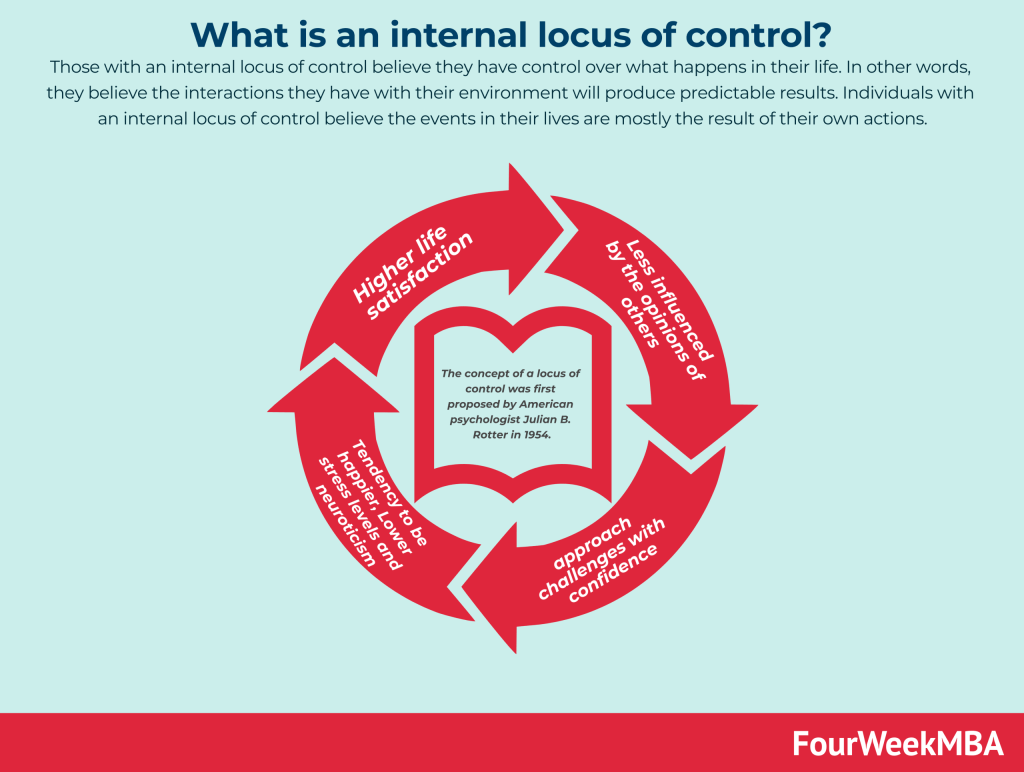
External Locus of Control

Key Similarities between Internal Locus of Control and External Locus of Control:
- Perception of Control: Both internal and external locus of control are psychological beliefs about the extent to which individuals perceive they have control over their life experiences.
- Influence on Behavior: Both beliefs can significantly influence individuals’ attitudes and behaviors in various situations, affecting how they approach challenges and make decisions.
- Individual Differences: Locus of control is a personality trait and can vary among individuals, impacting how they interpret and respond to life events.
Key Differences between Internal Locus of Control and External Locus of Control:
- Source of Control: The main difference lies in the source of control attributed to life events. Individuals with an internal locus of control believe they have control over their outcomes and believe their actions drive their experiences. On the other hand, those with an external locus of control believe external factors, such as luck, fate, or other people, play a more significant role in determining their outcomes.
- Responsibility: Individuals with an internal locus of control tend to take more responsibility for their actions and decisions, as they believe they are in control of the consequences. In contrast, those with an external locus of control may feel less accountable for their actions, as they perceive external factors as more influential.
- Coping Mechanisms: Individuals with an internal locus of control may be more proactive in problem-solving and seeking solutions to challenges, as they believe they have the power to effect change. Those with an external locus of control may be more prone to passivity or reliance on external sources to handle difficulties.
- Perception of Success and Failure: Internals are more likely to attribute their successes to their efforts and abilities, leading to increased self-esteem. Conversely, externals may attribute successes to luck or external factors, potentially leading to reduced self-esteem when facing failures.
- Impact on Well-being: The locus of control can influence individuals’ overall well-being and resilience. Internals may experience higher levels of satisfaction and adaptability, while externals may be more susceptible to feelings of helplessness or victimization.
Case Studies
- Studying for an Exam:
- Internal Locus of Control: “I got an A because I studied hard and understood the material.”
- External Locus of Control: “I got an A because the questions were easy and I got lucky.”
- Job Promotion:
- Internal Locus of Control: “I was promoted because of my hard work and dedication to the company.”
- External Locus of Control: “I was promoted because my boss likes me.”
- Losing a Sports Match:
- Internal Locus of Control: “We lost because we didn’t practice enough.”
- External Locus of Control: “We lost because the referees made bad calls.”
- Relationship Breakup:
- Internal Locus of Control: “We broke up because I need to work on my communication skills.”
- External Locus of Control: “We broke up because they never understood me.”
- Financial Situation:
- Internal Locus of Control: “I’m in debt because I didn’t manage my expenses well.”
- External Locus of Control: “I’m in debt because of the economy.”
- Health & Fitness:
- Internal Locus of Control: “I’m fit because I eat right and exercise regularly.”
- External Locus of Control: “I’m overweight because obesity runs in my family.”
- Public Speaking:
- Internal Locus of Control: “My presentation went well because I was prepared and practiced.”
- External Locus of Control: “My presentation went well because the audience was in a good mood.”
- Starting a Business:
- Acquiring a New Skill:
- Internal Locus of Control: “I learned to play the guitar quickly because I practiced every day.”
- External Locus of Control: “I learned to play the guitar because I had a good teacher.”
- Getting Stuck in Traffic:
- Internal Locus of Control: “I’m late because I didn’t leave early enough.”
- External Locus of Control: “I’m late because of the terrible traffic.”
Key Takeaways:
- Locus of control refers to the belief individuals hold about the extent of control they have over their life experiences.
- Those with an internal locus of control believe they have control over their outcomes, while those with an external locus of control believe external factors largely determine their life experiences.
- The locus of control can significantly influence an individual’s behavior, coping mechanisms, perception of success and failure, and overall well-being. It is an important factor to consider in understanding individual differences and responses to challenges in life.
Key Highlights:
- Concept Origin: Locus of control was introduced by psychologist Julian B. Rotter to determine whether individuals believe they control their destinies.
- Locus of Control Definition: It’s a psychological metric to gauge if individuals think they have power over life events or if these are influenced by external factors.
- Internal Locus: Individuals believe they control their outcomes, attributing successes or failures to their own actions.
- External Locus: Individuals attribute their outcomes to external factors like luck, fate, or others’ actions.
- Behavior Influence: Both internal and external loci can shape individuals’ behaviors, attitudes, and decision-making processes.
- Responsibility & Accountability: Internals generally take more responsibility for their actions, while externals might blame external factors.
- Coping Mechanisms: Internals tend to be proactive problem-solvers, while externals might be more passive, relying on external solutions.
- Well-being Impact: Internal locus often correlates with higher satisfaction and adaptability, whereas an external locus might lead to feelings of helplessness.
- Perception of Outcomes: How one perceives success or failure can be influenced by their locus of control, impacting self-esteem and resilience.
- Significance in Individual Differences: Understanding an individual’s locus of control can provide insights into their reactions, resilience, and coping strategies in various life situations.
| Related Frameworks, Models, or Concepts | Description | When to Apply |
|---|---|---|
| Locus of Control | – Locus of Control refers to an individual’s belief regarding the extent to which they can control events and outcomes in their lives. – It can be classified into internal locus of control (believing that outcomes are largely influenced by one’s actions and decisions) and external locus of control (believing that outcomes are primarily determined by external factors or luck). – Locus of Control influences attitudes, behaviors, and decision-making processes. | – When assessing individual differences in beliefs about control over outcomes. – To understand how individuals perceive and respond to success or failure. – To tailor management approaches, interventions, or motivational strategies based on individuals’ locus of control orientation. |
| Self-Efficacy | – Self-Efficacy refers to an individual’s belief in their ability to succeed in specific situations or accomplish tasks. – It influences motivation, effort, persistence, and resilience in the face of challenges. – Self-Efficacy is domain-specific and can vary across different tasks or situations. | – When assessing an individual’s confidence and belief in their ability to perform tasks or achieve goals. – To identify factors that enhance or diminish self-efficacy beliefs. – To develop interventions or strategies to enhance self-efficacy and performance in specific domains. |
| Attribution Theory | – Attribution Theory examines how individuals interpret and explain the causes of their own and others’ behavior. – It distinguishes between internal attributions (attributing behavior to personal factors or traits) and external attributions (attributing behavior to situational or environmental factors). – Attribution processes influence emotions, motivations, and judgments about oneself and others. | – When analyzing how individuals interpret and explain success or failure. – To understand how attribution processes influence motivation, emotions, and behaviors. – To develop interventions or strategies to promote adaptive attributions and behaviors. |
| Self-Determination Theory (SDT) | – Self-Determination Theory focuses on the motivation behind human behavior and the role of autonomy, competence, and relatedness in fostering intrinsic motivation and well-being. – It proposes that individuals have innate psychological needs for autonomy (feeling in control of one’s actions), competence (feeling capable and effective), and relatedness (feeling connected to others). – SDT distinguishes between intrinsic motivation (engaging in activities for their inherent enjoyment or satisfaction) and extrinsic motivation (engaging in activities for external rewards or avoidance of punishment). | – When exploring the factors that drive motivation and well-being in individuals. – To understand the importance of autonomy, competence, and relatedness in fostering intrinsic motivation. – To design environments, tasks, or interventions that support individuals’ psychological needs and intrinsic motivation. |
| Cognitive Appraisal Theory | – Cognitive Appraisal Theory proposes that individuals’ emotional responses to events are determined by their interpretations or appraisals of the events’ meaning and significance. – It distinguishes between primary appraisal (evaluating the relevance, harm, or threat of an event) and secondary appraisal (evaluating one’s ability to cope with or control the event). – Cognitive appraisals influence emotional experiences, coping strategies, and behavioral responses. | – When examining how individuals interpret and respond to stressful or challenging situations. – To understand the role of cognitive appraisals in shaping emotional responses and coping strategies. – To develop interventions or techniques to modify maladaptive appraisals and promote adaptive coping and resilience. |
| Cognitive Dissonance Theory | – Cognitive Dissonance Theory explores the discomfort individuals experience when their beliefs, attitudes, or behaviors are inconsistent or conflicting. – It proposes that individuals are motivated to reduce cognitive dissonance by changing their beliefs, attitudes, or behaviors to restore consistency. – Cognitive dissonance can arise from decision-making, persuasion, or exposure to conflicting information. | – When examining inconsistencies or conflicts in individuals’ beliefs, attitudes, or behaviors. – To understand the psychological processes underlying cognitive dissonance and its resolution. – To develop interventions or strategies to reduce cognitive dissonance and promote consistency in beliefs, attitudes, or behaviors. |
Read Next:
Read Next: Heuristics, Biases.
Connected Thinking Frameworks
Convergent vs. Divergent Thinking


Read Next: Biases, Bounded Rationality, Mandela Effect, Dunning-Kruger Effect, Lindy Effect, Crowding Out Effect, Bandwagon Effect.
Main Guides:
- Business Models
- Business Strategy
- Marketing Strategy
- Business Model Innovation
- Platform Business Models
- Network Effects In A Nutshell
- Digital Business Models
What are the key components of Internal vs. External Locus of Control?
The key components of Internal vs. External Locus of Control include Definition, Origin of Belief, Attribution of Events, Motivation, Response to Challenges. Definition: Internal Locus of Control refers to the belief that individuals have control over their own lives and can influence… Origin of Belief: This belief often develops when individuals experience success, receive positive feedback, or have a strong sense of…


