Export Credit Agencies (ECAs) play a vital role in facilitating international trade and investment by providing financial and insurance services to support exporters, investors, and project sponsors.
Real-World Examples
Target
Key Insight
Export Credit Agencies (ECAs) play a vital role in facilitating international trade and investment by providing financial and insurance services to support exporters, investors, and project sponsors.
Exec Package + Claude OS Master Skill | Business Engineer Founding Plan
FourWeekMBA x Business Engineer | Updated 2026
Export Credit Agencies (ECAs) are governmental or quasi-governmental institutions that provide financial and insurance services to support international trade and investment.
ECAs aim to promote exports, facilitate access to financing, and manage commercial and political risks for exporters and investors, particularly in challenging or high-risk markets.
ECAs offer various financial products and services, including export credit insurance, guarantees, loans, and project financing, to support export-oriented industries, infrastructure projects, and foreign investment activities.
How Export Credit Agencies Impact International Trade and Investment:
Export Promotion and Market Access:
ECAs promote exports and facilitate market access for domestic companies by providing financing and risk mitigation solutions to support their international trade activities.
Export credit insurance and guarantees offered by ECAs help exporters mitigate commercial and political risks associated with foreign buyers, enabling them to expand their export markets and compete more effectively in the global marketplace.
Financing and Investment Support:
ECAs provide financing and investment support to companies engaged in cross-border trade, infrastructure development, and foreign direct investment (FDI) projects.
Through export credit loans, project finance, and investment guarantees, ECAs help companies secure funding for their international business ventures, particularly in emerging markets where private financing may be limited or costly.
Risk Mitigation and Stability:
ECAs play a critical role in mitigating commercial and political risks for exporters and investors, thereby promoting stability and confidence in international trade and investment.
By covering risks such as non-payment, currency fluctuations, and political instability, ECAs help reduce uncertainties and barriers to trade and investment, encouraging companies to pursue cross-border business opportunities with greater confidence.
Strategies for Export Credit Agencies:
Tailored Financial Products:
ECAs offer a range of tailored financial products and services to meet the specific needs of exporters, investors, and project sponsors.
These products may include export credit insurance, trade finance facilities, investment guarantees, and project finance solutions, designed to address the unique risks and requirements of different types of international transactions and projects.
Partnerships and Cooperation:
ECAs collaborate with other financial institutions, government agencies, and international organizations to leverage resources, expertise, and networks in support of international trade and investment.
Partnerships with commercial banks, development finance institutions, and multilateral agencies enable ECAs to extend their reach, share risks, and mobilize additional financing for exporters and investors, particularly in complex or large-scale projects.
Risk Management and Due Diligence:
ECAs conduct comprehensive risk assessments and due diligence processes to evaluate the creditworthiness and viability of export transactions and investment projects.
Rigorous risk management practices, including credit analysis, project appraisal, and risk mitigation measures, help ECAs identify, assess, and manage risks effectively, ensuring the soundness and sustainability of their financial support activities.
Impact of Export Credit Agencies:
Trade Facilitation and Economic Growth:
ECAs facilitate international trade and economic growth by providing financing and risk mitigation solutions that enable companies to overcome barriers and expand their global market presence.
Increased trade volumes, exports, and investments supported by ECAs contribute to job creation, income generation, and economic development in both exporting and importing countries, fostering prosperity and sustainable development.
Infrastructure Development and Investment Promotion:
ECAs play a crucial role in supporting infrastructure development and promoting foreign investment in key sectors such as energy, transportation, telecommunications, and manufacturing.
By providing financing and insurance for infrastructure projects and large-scale investments, ECAs help address critical infrastructure needs, improve productivity, and enhance competitiveness, while stimulating economic activity and social progress in host countries.
Risk Mitigation and Crisis Resilience:
ECAs enhance resilience and crisis preparedness in the face of economic uncertainties, geopolitical risks, and global challenges by providing risk mitigation tools and financial stability measures.
During times of crisis or market volatility, ECAs can help stabilize trade and investment flows, protect businesses from adverse impacts, and promote confidence and continuity in international commerce, thereby contributing to global economic stability and recovery efforts.
Future of Export Credit Agencies:
Innovation and Digitalization:
ECAs are embracing innovation and digitalization to enhance their operational efficiency, customer experience, and risk management capabilities.
Adoption of digital technologies, data analytics, and fintech solutions enables ECAs to streamline processes, automate workflows, and provide faster, more accessible services to exporters, investors, and project sponsors, while also improving transparency and accountability in their operations.
Sustainability and Responsible Finance:
ECAs are increasingly focusing on sustainability and responsible finance practices to align with global environmental, social, and governance (ESG) standards and principles.
Integration of ESG considerations into ECA policies, investment criteria, and risk assessments helps promote sustainable development outcomes, mitigate environmental and social risks, and support the transition to a low-carbon, resilient economy in line with international sustainability goals and commitments.
Global Cooperation and Coordination:
ECAs are enhancing global cooperation and coordination efforts to address shared challenges, harmonize best practices, and promote greater coherence in international trade and investment policies.
Collaboration among ECAs, governments, and international organizations fosters dialogue, knowledge-sharing, and collective action to strengthen the resilience and effectiveness of export credit and investment support mechanisms, while promoting inclusive and sustainable economic growth in a rapidly changing global landscape.
Conclusion:
Export Credit Agencies (ECAs) play a vital role in facilitating international trade and investment by providing financial and insurance services to support exporters, investors, and project sponsors. Through tailored financial products, risk mitigation measures, and strategic partnerships, ECAs help companies navigate the complexities of cross-border transactions and pursue business opportunities with confidence and stability. As ECAs continue to evolve and innovate in response to changing market dynamics and global challenges, their role in promoting sustainable development, resilience, and prosperity in the global economy remains indispensable.
The idea of a market economy first came from classical economists, including David Ricardo, Jean-Baptiste Say, and Adam Smith. All three of these economists were advocates for a free market. They argued that the “invisible hand” of market incentives and profit motives were more efficient in guiding economic decisions to prosperity than strict government planning.
Positive economics is concerned with describing and explaining economic phenomena; it is based on facts and empirical evidence. Normative economics, on the other hand, is concerned with making judgments about what “should be” done. It contains value judgments and recommendations about how the economy should be.
When there is an increased price of goods and services over a long period, it is called inflation. In these times, currency shows less potential to buy products and services. Thus, general prices of goods and services increase. Consequently, decreases in the purchasing power of currency is called inflation.
Asymmetric information as a concept has probably existed for thousands of years, but it became mainstream in 2001 after Michael Spence, George Akerlof, and Joseph Stiglitz won the Nobel Prize in Economics for their work on information asymmetry in capital markets. Asymmetric information, otherwise known as information asymmetry, occurs when one party in a business transaction has access to more information than the other party.
Autarky comes from the Greek words autos (self)and arkein (to suffice) and in essence, describes a general state of self-sufficiency. However, the term is most commonly used to describe the economic system of a nation that can operate without support from the economic systems of other nations. Autarky, therefore, is an economic system characterized by self-sufficiency and limited trade with international partners.
Creative destruction was first described by Austrian economist Joseph Schumpeter in 1942, who suggested that capital was never stationary and constantly evolving. To describe this process, Schumpeter defined creative destruction as the “process of industrial mutation that incessantly revolutionizes the economic structure from within, incessantly destroying the old one, incessantly creating a new one.” Therefore, creative destruction is the replacing of long-standing practices or procedures with more innovative, disruptive practices in capitalist markets.
Happiness economics seeks to relate economic decisions to wider measures of individual welfare than traditional measures which focus on income and wealth. Happiness economics, therefore, is the formal study of the relationship between individual satisfaction, employment, and wealth.
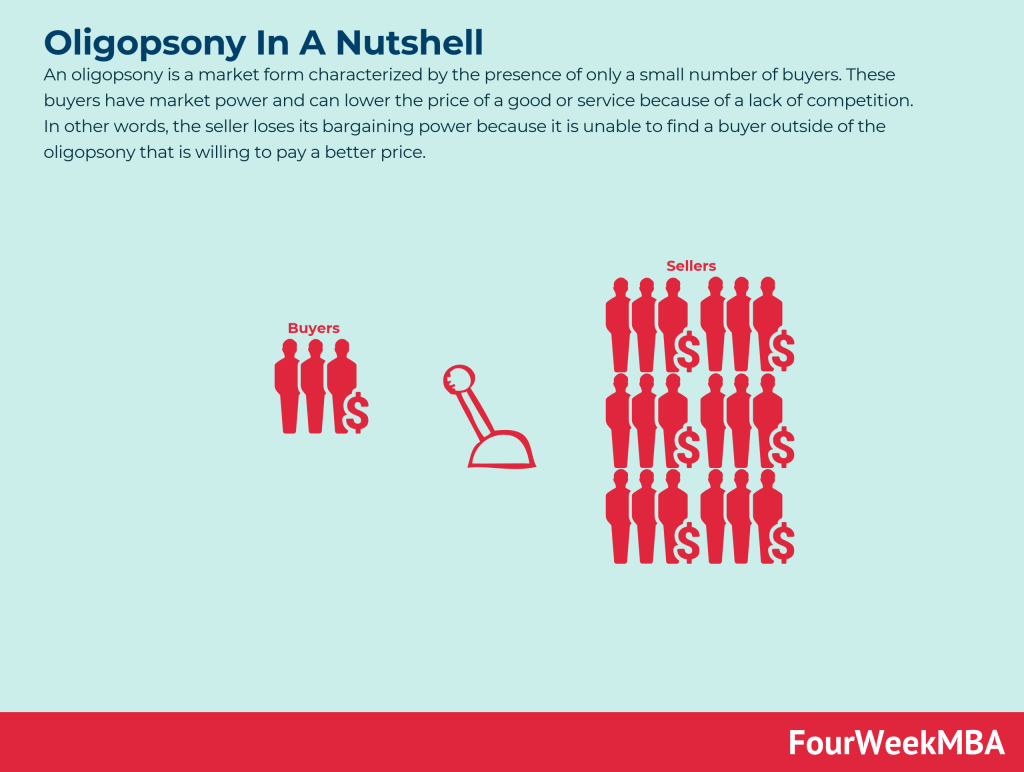
An oligopsony is a market form characterized by the presence of only a small number of buyers. These buyers have market power and can lower the price of a good or service because of a lack of competition. In other words, the seller loses its bargaining power because it is unable to find a buyer outside of the oligopsony that is willing to pay a better price.
The term “animal spirits” is derived from the Latin spiritus animalis, loosely translated as “the breath that awakens the human mind”. As far back as 300 B.C., animal spirits were used to explain psychological phenomena such as hysterias and manias. Animal spirits also appeared in literature where they exemplified qualities such as exuberance, gaiety, and courage. Thus, the term “animal spirits” is used to describe how people arrive at financial decisions during periods of economic stress or uncertainty.
State capitalism is an economic system where business and commercial activity is controlled by the state through state-owned enterprises. In a state capitalist environment, the government is the principal actor. It takes an active role in the formation, regulation, and subsidization of businesses to divert capital to state-appointed bureaucrats. In effect, the government uses capital to further its political ambitions or strengthen its leverage on the international stage.
The boom and bust cycle describes the alternating periods of economic growth and decline common in many capitalist economies. The boom and bust cycle is a phrase used to describe the fluctuations in an economy in which there is persistent expansion and contraction. Expansion is associated with prosperity, while the contraction is associated with either a recession or a depression.
The paradox of thrift was popularised by British economist John Maynard Keynes and is a central component of Keynesian economics. Proponents of Keynesian economics believe the proper response to a recession is more spending, more risk-taking, and less saving. They also believe that spending, otherwise known as consumption, drives economic growth. The paradox of thrift, therefore, is an economic theory arguing that personal savings are a net drag on the economy during a recession.
In simplistic terms, the circular flow model describes the mutually beneficial exchange of money between the two most vital parts of an economy: households, firms and how money moves between them. The circular flow model describes money as it moves through various aspects of society in a cyclical process.
Trade deficits occur when a country’s imports outweigh its exports over a specific period. Experts also refer to this as a negative balance of trade. Most of the time, trade balances are calculated based on a variety of different categories.
A market type is a way a given group of consumers and producers interact, based on the context determined by the readiness of consumers to understand the product, the complexity of the product; how big is the existing market and how much it can potentially expand in the future.
Rational choice theory states that an individual uses rational calculations to make rational choices that are most in line with their personal preferences. Rational choice theory refers to a set of guidelines that explain economic and social behavior. The theory has two underlying assumptions, which are completeness (individuals have access to a set of alternatives among they can equally choose) and transitivity.
The peer-to-peer (P2P) economy is one where buyers and sellers interact directly without the need for an intermediary third party or other business. The peer-to-peer economy is a business model where two individuals buy and sell products and services directly. In a peer-to-peer company, the seller has the ability to create the product or offer the service themselves.
The term “knowledge economy” was first coined in the 1960s by Peter Drucker. The management consultant used the term to describe a shift from traditional economies, where there was a reliance on unskilled labor and primary production, to economies reliant on service industries and jobs requiring more thinking and data analysis. The knowledge economy is a system of consumption and production based on knowledge-intensive activities that contribute to scientific and technical innovation.
In a command economy, the government controls the economy through various commands, laws, and national goals which are used to coordinate complex social and economic systems. In other words, a social or political hierarchy determines what is produced, how it is produced, and how it is distributed. Therefore, the command economy is one in which the government controls all major aspects of the economy and economic production.
How do you protect your rights as a worker? Who is there to help defend you against unfair and unjust work conditions? Both of these questions have an answer, and it’s a solution that many are familiar with. The answer is a labor union. From construction to teaching, there are labor unions out there for just about any field of work.
The bottom of the pyramid is a term describing the largest and poorest global socio-economic group. Franklin D. Roosevelt first used the bottom of the pyramid (BOP) in a 1932 public address during the Great Depression. Roosevelt noted that – when talking about the ‘forgotten man:’ “these unhappy times call for the building of plans that rest upon the forgotten, the unorganized but the indispensable units of economic power.. that build from the bottom up and not from the top down, that put their faith once more in the forgotten man at the bottom of the economic pyramid.”
Glocalization is a portmanteau of the words “globalization” and “localization.” It is a concept that describes a globally developed and distributed product or service that is also adjusted to be suitable for sale in the local market. With the rise of the digital economy, brands now can go global by building a local footprint.
Market fragmentation is most commonly seen in growing markets, which fragment and break away from the parent market to become self-sustaining markets with different products and services. Market fragmentation is a concept suggesting that all markets are diverse and fragment into distinct customer groups over time.
The L-shaped recovery refers to an economy that declines steeply and then flatlines with weak or no growth. On a graph plotting GDP against time, this precipitous fall combined with a long period of stagnation looks like the letter “L”. The L-shaped recovery is sometimes called an L-shaped recession because the economy does not return to trend line growth. The L-shaped recovery, therefore, is a recession shape used by economists to describe different types of recessions and their subsequent recoveries. In an L-shaped recovery, the economy is characterized by a severe recession with high unemployment and near-zero economic growth.
Comparative advantage was first described by political economist David Ricardo in his book Principles of Political Economy and Taxation. Ricardo used his theory to argue against Great Britain’s protectionist laws which restricted the import of wheat from 1815 to 1846. Comparative advantage occurs when a country can produce a good or service for a lower opportunity cost than another country.
The Easterlin paradox was first described by then professor of economics at the University of Pennsylvania Richard Easterlin. In the 1970s, Easterlin found that despite the American economy experiencing growth over the previous few decades, the average level of happiness seen in American citizens remained the same. He called this the Easterlin paradox, where income and happiness correlate with each other until a certain point is reached after at least ten years or so. After this point, income and happiness levels are not significantly related. The Easterlin paradox states that happiness is positively correlated with income, but only to a certain extent.
In Economics, Economies of Scale is a theory for which, as companies grow, they gain cost advantages. More precisely, companies manage to benefit from these cost advantages as they grow, due to increased efficiency in production. Thus, as companies scale and increase production, a subsequent decrease in the costs associated with it will help the organizationscale further.
In Economics, a Diseconomy of Scale happens when a company has grown so large that its costs per unit will start to increase. Thus, losing the benefits of scale. That can happen due to several factors arising as a company scales. From coordination issues to management inefficiencies and lack of proper communication flows.
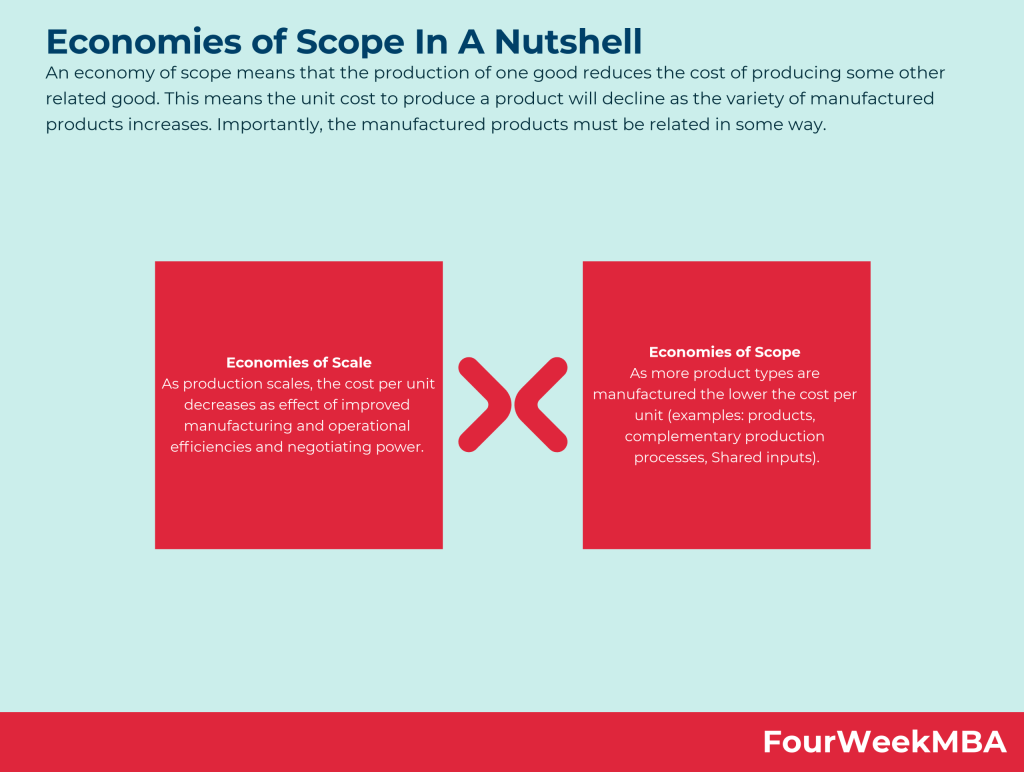
An economy of scope means that the production of one good reduces the cost of producing some other related good. This means the unit cost to produce a product will decline as the variety of manufactured products increases. Importantly, the manufactured products must be related in some way.
Price sensitivity can be explained using the price elasticity of demand, a concept in economics that measures the variation in product demand as the price of the product itself varies. In consumer behavior, price sensitivity describes and measures fluctuations in product demand as the price of that product changes.
Export Credit Agencies (ECAs) play a vital role in facilitating international trade and investment by providing financial and insurance services to support exporters, investors, and project sponsors.
Gennaro Cuofano is a CRO and tech executive who has worked in AI since late 2015, starting with bringing NLP, natural-language generation, voice and chatbot products to the marketing industry. His background is in law and finance: he holds a Master's degree in Law and an International MBA with an emphasis on corporate finance (LUISS Business School and the University of San Diego, 2012), and worked as a financial analyst at a real-estate investment firm in San Diego and as an assistant controller. His work focuses on business model strategy, business engineering and, more broadly, structural analysis: how companies make money, read from their own filings. He created FourWeekMBA and leads research there and at The Business Engineer, his newsletter on AI and business strategy, with over 95,000 subscribers and more than 1,000 published analyses. His writing has also appeared on Entrepreneur (for example, How to Digitize a Family Business in Europe) and HackerNoon. Find him on LinkedIn and Substack. See how we source.