Liquidity Preference Theory explains how interest rates impact money demand, affecting investments. Central banks control rates through money supply, with applications in monetary policy and investment decisions. Simplifications and real-world complexities are considered, influencing financial predictions and behavior.
At its core, the Liquidity Preference Theory posits that individuals and businesses have a preference for holding liquid assets, primarily cash or its equivalent. These liquid assets provide financial security, flexibility, and immediate access to funds in case of unforeseen expenses or opportunities.
The theory introduces the concept of the “liquidity premium,” which represents the additional return or compensation that individuals require to part with their cash and invest it in interest-bearing assets, such as bonds or savings accounts. In other words, it suggests that people will only be willing to forego the liquidity of cash if they are adequately compensated through higher interest rates.
Key components of the Liquidity Preference Theory include:
Three Motives for Holding Cash: Keynes identified three motives that drive individuals and businesses to hold cash:
Transaction Motive: Cash is needed for day-to-day transactions, such as paying bills and making purchases. The transaction motive is influenced by the level of income and the frequency of transactions.
Precautionary Motive: Cash is held as a precautionary measure to cover unexpected expenses or emergencies. The precautionary motive is linked to the uncertainty of future financial needs.
Speculative Motive: Cash is kept on hand to take advantage of investment opportunities that may arise. The speculative motive is tied to expectations of future interest rates and investment returns.
Interest Rates and Liquidity Preference: According to the theory, the higher the interest rate offered on interest-bearing assets, the lower the liquidity preference. Conversely, when interest rates are low, people are more inclined to hold cash because the opportunity cost of doing so is minimal.
The Liquidity Trap
One of the notable implications of the Liquidity Preference Theory is the possibility of a “liquidity trap.” This occurs when nominal interest rates are at or near zero, rendering monetary policy less effective in stimulating economic activity. In a liquidity trap, individuals and businesses prefer to hoard cash rather than invest in bonds or savings accounts because the return on cash is essentially zero.
Key characteristics of a liquidity trap include:
Limited Monetary Policy Tools: Central banks rely on interest rate adjustments to influence economic conditions. However, when interest rates are already near zero, traditional monetary policy tools lose their effectiveness. Central banks may resort to unconventional measures, such as quantitative easing, to stimulate the economy.
Deflationary Pressures: A liquidity trap often coincides with deflationary pressures in the economy. Falling prices can increase the real value of cash holdings, making cash more attractive relative to interest-bearing assets.
Stagnant Economic Activity: During a liquidity trap, investment and consumption may remain subdued, as individuals and businesses prefer to hoard cash rather than spend or invest. This can lead to persistently low economic growth or even recession.
Policy Implications
The Liquidity Preference Theory has several important policy implications, especially for central banks and government authorities:
Monetary Policy: Central banks use the interest rate as a tool to influence economic activity. The Liquidity Preference Theory suggests that lowering interest rates can encourage spending and investment by reducing the opportunity cost of holding cash. Conversely, raising interest rates can curb inflation and discourage excessive borrowing.
Quantitative Easing: In situations where nominal interest rates approach zero, central banks may employ unconventional monetary policies, such as quantitative easing. This involves purchasing financial assets (e.g., government bonds) to inject liquidity into the financial system and lower long-term interest rates.
Fiscal Policy: When monetary policy alone is insufficient to stimulate the economy, fiscal policy can play a complementary role. Government spending and tax policies can directly influence aggregate demand and economic activity.
Expectations Management: Managing public expectations about future economic conditions is crucial. Communication by central banks and policymakers can shape individuals’ and businesses’ expectations, influencing their willingness to spend and invest.
Relevance in Today’s Economic Landscape
The Liquidity Preference Theory remains highly relevant in contemporary economic analysis and policymaking. Here are a few reasons why:
Zero or Near-Zero Interest Rates: In the aftermath of the 2008 global financial crisis and during the COVID-19 pandemic, central banks in various countries implemented zero or near-zero interest rate policies (ZIRP and NIRP). These policy measures aimed to combat economic downturns and stimulate lending and investment, illustrating the practical application of the Liquidity Preference Theory.
Quantitative Easing: Quantitative easing (QE) has become a standard tool in central banks’ arsenals. QE involves large-scale asset purchases to lower long-term interest rates and provide liquidity to financial markets. This unconventional policy aligns with the Liquidity Preference Theory’s idea that monetary authorities can influence interest rates and liquidity conditions.
Economic Uncertainty: Periods of economic uncertainty, such as the global financial crisis and the COVID-19 pandemic, highlight the relevance of the precautionary motive for holding cash. Individuals and businesses prioritize liquidity when faced with uncertainty about future income and expenses.
Policy Debates: The Liquidity Preference Theory continues to inform debates about the effectiveness of monetary and fiscal policies in managing economic crises. Discussions about the potential onset of liquidity traps and the need for unconventional policy measures underscore its enduring significance.
Criticisms and Limitations
While the Liquidity Preference Theory provides valuable insights into interest rate determination and monetary policy, it is not without its criticisms and limitations:
Simplistic Assumptions: Critics argue that the theory’s assumptions about individuals’ motives for holding cash are overly simplistic. Real-world decision-making involves a complex interplay of factors, and people’s financial choices may not neatly fit into the three motives proposed by Keynes.
Neglect of Risk: The theory does not explicitly account for risk considerations in holding cash versus interest-bearing assets. In reality, individuals and businesses assess the risk-return trade-offs when making financial decisions.
Limited Treatment of Expectations: While the theory acknowledges the speculative motive, it does not delve deeply into the role of expectations and how they influence individuals’ and businesses’ willingness to hold cash or invest.
No Consideration of Financial Markets: The theory does not explore the functioning of financial markets and the role of intermediaries, which play a crucial role in the transmission of monetary policy.
Conclusion
The Liquidity Preference Theory introduced by John Maynard Keynes revolutionized our understanding of interest rates and individuals’ and businesses’ financial decisions. It highlights the significance of liquidity, expectations, and interest rates in shaping economic behavior and monetary policy.
In today’s economic landscape, where central banks grapple with low or near-zero interest rates and the possibility of liquidity traps, the theory’s insights continue to guide policymakers in their efforts to stabilize economies and promote growth. While subject to criticism, the Liquidity Preference Theory remains a cornerstone of macroeconomic thought and an essential tool for understanding the dynamics of interest rates and financial markets.
Examples:
Central Bank Actions: Central banks around the world adjust interest rates based on their assessment of money supply conditions and the broader economy.
Investor Behavior: Investor preferences and risk tolerance change based on expectations of future interest rate movements, influencing investment strategies.
Key Highlights – Liquidity Preference Theory:
Interest Rate Impact: The theory explores how changes in interest rates influence the demand for money and investment decisions.
Central Bank Role: Central banks control money supply, affecting interest rates and the economy.
Liquidity Preference Curve: Graphically depicts the relationship between interest rates and money demand.
Money Demand Motives: Individuals hold money for transactions, precaution, and speculation.
Equilibrium and Loanable Funds: Equilibrium is reached when money demanded equals supply; loanable funds market concept introduced.
Monetary Policy Influence: Central banks use theory to formulate policies and stabilize economies.
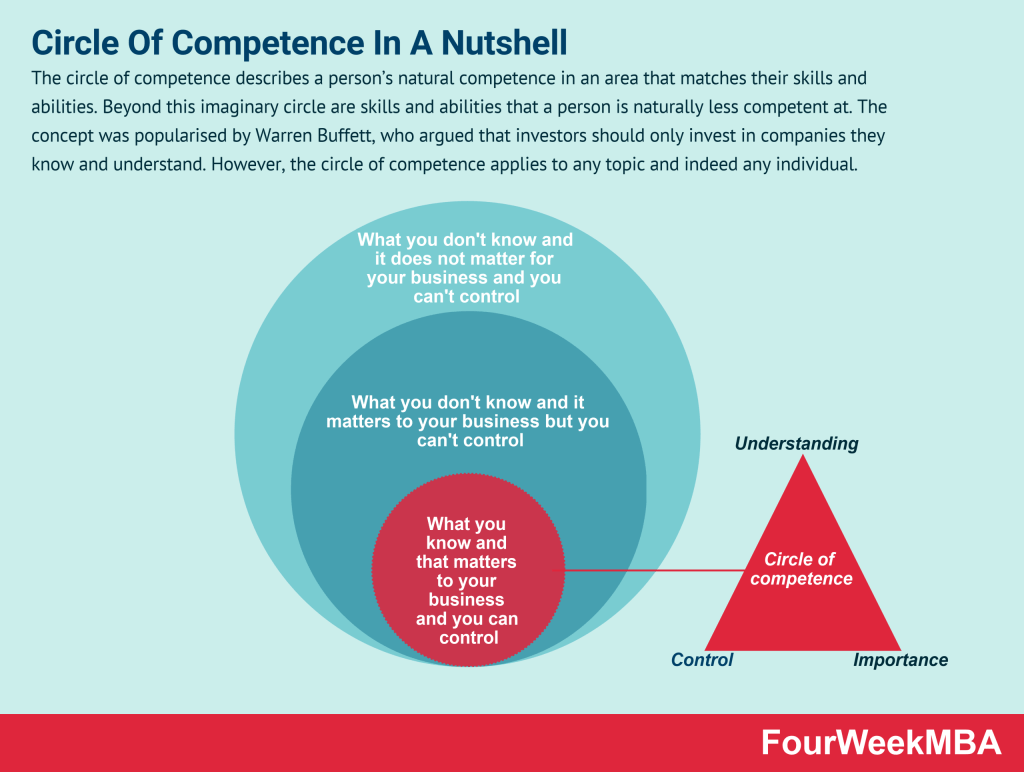
The circle of competence describes a person’s natural competence in an area that matches their skills and abilities. Beyond this imaginary circle are skills and abilities that a person is naturally less competent at. The concept was popularised by Warren Buffett, who argued that investors should only invest in companies they know and understand. However, the circle of competence applies to any topic and indeed any individual.
Economic or market moats represent the long-term business defensibility. Or how long a business can retain its competitive advantage in the marketplace over the years. Warren Buffet who popularized the term “moat” referred to it as a share of mind, opposite to market share, as such it is the characteristic that all valuable brands have.
The Buffet Indicator is a measure of the total value of all publicly-traded stocks in a country divided by that country’s GDP. It’s a measure and ratio to evaluate whether a market is undervalued or overvalued. It’s one of Warren Buffet’s favorite measures as a warning that financial markets might be overvalued and riskier.
Venture capital is a form of investing skewed toward high-risk bets, that are likely to fail. Therefore venture capitalists look for higher returns. Indeed, venture capital is based on the power law, or the law for which a small number of bets will pay off big time for the larger numbers of low-return or investments that will go to zero. That is the whole premise of venture capital.
Foreign direct investment occurs when an individual or business purchases an interest of 10% or more in a company that operates in a different country. According to the International Monetary Fund (IMF), this percentage implies that the investor can influence or participate in the management of an enterprise. When the interest is less than 10%, on the other hand, the IMF simply defines it as a security that is part of a stock portfolio. Foreign direct investment (FDI), therefore, involves the purchase of an interest in a company by an entity that is located in another country.
Micro-investing is the process of investing small amounts of money regularly. The process of micro-investing involves small and sometimes irregular investments where the individual can set up recurring payments or invest a lump sum as cash becomes available.
Meme stocks are securities that go viral online and attract the attention of the younger generation of retail investors. Meme investing, therefore, is a bottom-up, community-driven approach to investing that positions itself as the antonym to Wall Street investing. Also, meme investing often looks at attractive opportunities with lower liquidity that might be easier to overtake, thus enabling wide speculation, as “meme investors” often look for disproportionate short-term returns.
Retail investing is the act of non-professional investors buying and selling securities for their own purposes. Retail investing has become popular with the rise of zero commissions digital platforms enabling anyone with small portfolio to trade.
Accredited investors are individuals or entities deemed sophisticated enough to purchase securities that are not bound by the laws that protect normal investors. These may encompass venture capital, angel investments, private equity funds, hedge funds, real estate investment funds, and specialty investment funds such as those related to cryptocurrency. Accredited investors, therefore, are individuals or entities permitted to invest in securities that are complex, opaque, loosely regulated, or otherwise unregistered with a financial authority.
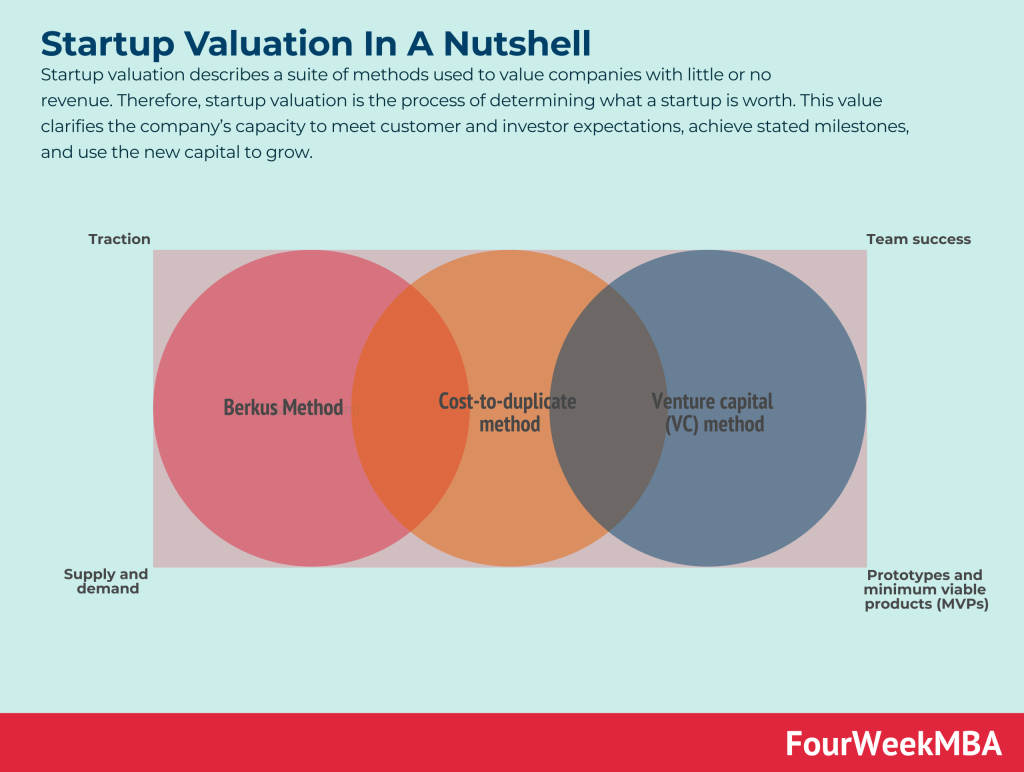
Startup valuation describes a suite of methods used to value companies with little or no revenue. Therefore, startup valuation is the process of determining what a startup is worth. This value clarifies the company’s capacity to meet customer and investor expectations, achieve stated milestones, and use the new capital to grow.
Profit is the total income that a company generates from its operations. This includes money from sales, investments, and other income sources. In contrast, cash flow is the money that flows in and out of a company. This distinction is critical to understand as a profitable company might be short of cash and have liquidity crises.
Double-entry accounting is the foundation of modern financial accounting. It’s based on the accounting equation, where assets equal liabilities plus equity. That is the fundamental unit to build financial statements (balance sheet, income statement, and cash flow statement). The basic concept of double-entry is that a single transaction, to be recorded, will hit two accounts.
The purpose of the balance sheet is to report how the resources to run the operations of the business were acquired. The Balance Sheet helps to assess the financial risk of a business and the simplest way to describe it is given by the accounting equation (assets = liability + equity).
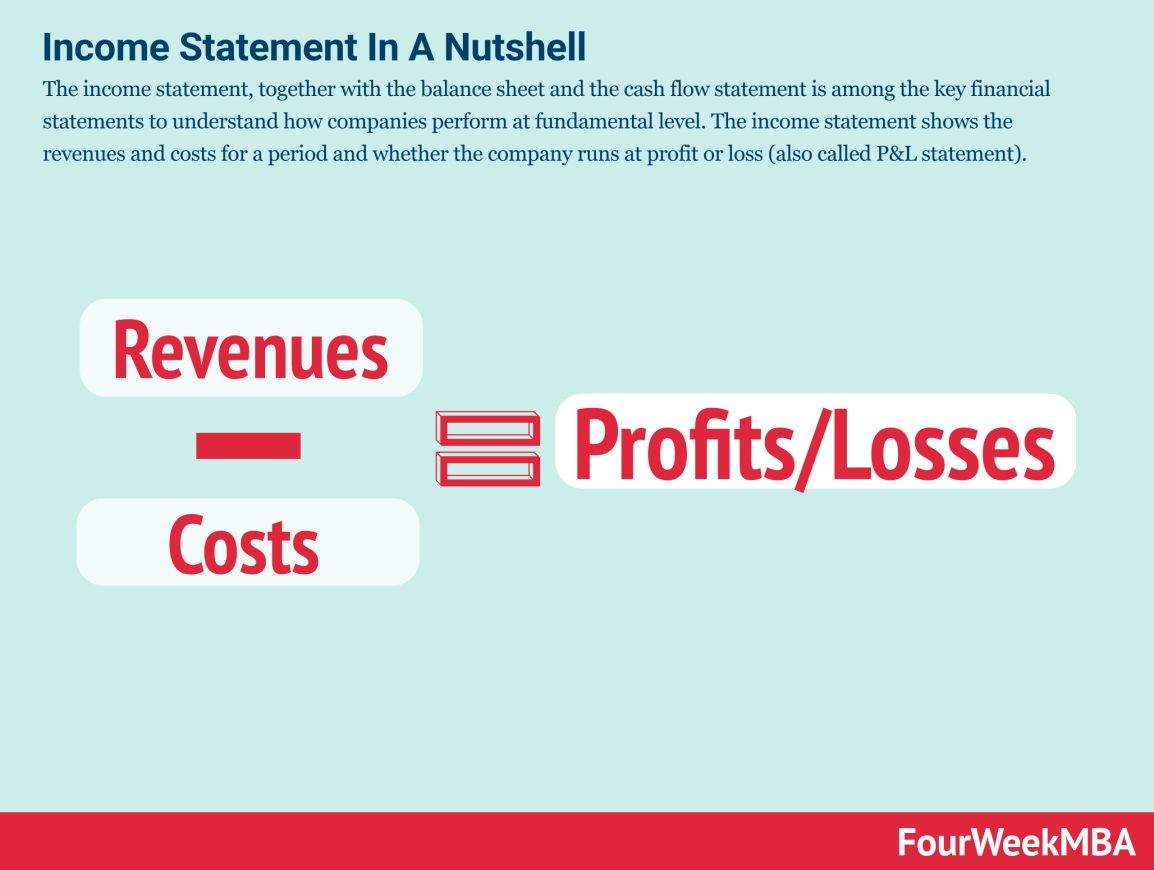
The income statement, together with the balance sheet and the cash flow statement is among the key financial statements to understand how companies perform at fundamental level. The income statement shows the revenues and costs for a period and whether the company runs at profit or loss (also called P&L statement).
The cash flow statement is the third main financial statement, together with income statement and the balance sheet. It helps to assess the liquidity of an organization by showing the cash balances coming from operations, investing and financing. The cash flow statement can be prepared with two separate methods: direct or indirect.
The capital structure shows how an organization financed its operations. Following the balance sheet structure, usually, assets of an organization can be built either by using equity or liability. Equity usually comprises endowment from shareholders and profit reserves. Where instead, liabilities can comprise either current (short-term debt) or non-current (long-term obligations).
Capital expenditure or capital expense represents the money spent toward things that can be classified as fixed asset, with a longer term value. As such they will be recorded under non-current assets, on the balance sheet, and they will be amortized over the years. The reduced value on the balance sheet is expensed through the profit and loss.
Financial statements help companies assess several aspects of the business, from profitability (income statement) to how assets are sourced (balance sheet), and cash inflows and outflows (cash flow statement). Financial statements are also mandatory to companies for tax purposes. They are also used by managers to assess the performance of the business.
Financial modeling involves the analysis of accounting, finance, and business data to predict future financial performance. Financial modeling is often used in valuation, which consists of estimating the value in dollar terms of a company based on several parameters. Some of the most common financial models comprise discounted cash flows, the M&A model, and the CCA model.
Business valuations involve a formal analysis of the key operational aspects of a business. A business valuation is an analysis used to determine the economic value of a business or company unit. It’s important to note that valuations are one part science and one part art. Analysts use professional judgment to consider the financial performance of a business with respect to local, national, or global economic conditions. They will also consider the total value of assets and liabilities, in addition to patented or proprietary technology.
The Weighted Average Cost of Capital can also be defined as the cost of capital. That’s a rate – net of the weight of the equity and debt the company holds – that assesses how much it cost to that firm to get capital in the form of equity, debt or both.
A financial option is a contract, defined as a derivative drawing its value on a set of underlying variables (perhaps the volatility of the stock underlying the option). It comprises two parties (option writer and option buyer). This contract offers the right of the option holder to purchase the underlying asset at an agreed price.
A profitability framework helps you assess the profitability of any company within a few minutes. It starts by looking at two simple variables (revenues and costs) and it drills down from there. This helps us identify in which part of the organization there is a profitability issue and strategize from there.
The Triple Bottom Line (TBL) is a theory that seeks to gauge the level of corporate social responsibility in business. Instead of a single bottom line associated with profit, the TBL theory argues that there should be two more: people, and the planet. By balancing people, planet, and profit, it’s possible to build a more sustainable business model and a circular firm.
Behavioral finance or economics focuses on understanding how individuals make decisions and how those decisions are affected by psychological factors, such as biases, and how those can affect the collective. Behavioral finance is an expansion of classic finance and economics that assumed that people always rational choices based on optimizing their outcome, void of context.
Gennaro is the creator of FourWeekMBA, which reached about four million business people, comprising C-level executives, investors, analysts, product managers, and aspiring digital entrepreneurs in 2022 alone | He is also Director of Sales for a high-tech scaleup in the AI Industry | In 2012, Gennaro earned an International MBA with emphasis on Corporate Finance and Business Strategy.