

The circle of competence describes a person’s natural competence in an area that matches their skills and abilities. Beyond this imaginary circle are skills and abilities that a person is naturally less competent at. The concept was popularised by Warren Buffett, who argued that investors should only invest in companies they know and understand. However, the circle of competence applies to any topic and indeed any individual.
| Aspect | Explanation |
|---|---|
| Circle of Competence | The Circle of Competence is a concept popularized by legendary investor Warren Buffett. It represents the boundary or scope of an individual’s or organization’s expertise and knowledge in a specific area or industry. |
| Warren Buffett’s Insight | Warren Buffett advises investors to stay within their Circle of Competence when making investment decisions. He suggests that investors should focus on industries and companies they understand deeply to make informed and successful investments. |
| Scope of Expertise | An individual or organization’s Circle of Competence defines the areas where they possess deep knowledge, skills, and experience. It encompasses industries, sectors, markets, or specific business activities where they excel and have a competitive advantage. |
| Importance | Recognizing and staying within one’s Circle of Competence is crucial for making informed decisions and avoiding costly mistakes. Straying outside of this circle can lead to poor judgment and investments that are based on incomplete information. |
| Expanding the Circle | While it’s essential to stay within one’s Circle of Competence, individuals and organizations can gradually expand their expertise through learning and experience. Buffett himself has expanded his circle over the years but emphasizes patience and caution. |
| Investment Analogy | In investment, the Circle of Competence is particularly relevant. Buffett suggests that investors should invest in businesses they understand thoroughly, assessing the company’s fundamentals, competitive position, and long-term prospects within their circle. |
| Risk Mitigation | Staying within the Circle of Competence helps mitigate risks associated with unfamiliar industries or activities. It reduces the likelihood of making poor investment decisions based on incomplete or inaccurate information. |
| Examples | Examples of the Circle of Competence in practice include a tech-savvy investor focusing on technology stocks, a healthcare professional investing in pharmaceutical companies, or a retail expert concentrating on the retail industry. |
| Business Application | Beyond investing, the Circle of Competence concept applies to business decisions. Companies should focus on their core competencies and industries where they have expertise to maintain a competitive edge and make sound strategic choices. |
Understanding the circle of competence
It is useful to think of the circle of competence as a small circle within a much larger circle.
The larger circle represents what an individual thinks they know but are far from an expert in.
Conversely, the smaller circle represents what they actually know and could be considered an expert in.
Buffet’s strategy for success in life using the circle of competence relatively simple.
Firstly, it is important that individuals know where the boundary of their inner circle is. Once the boundary has been established, it must not be crossed.
Buffet’s business partner Charlie Munger took the circle of competence one step further.
He argues that a person must clarify their individual strengths and then play to them to have a competitive advantage.
If a person not playing to their strengths comes up against a person who is, they will most likely lose.
However, it is a natural tendency for many individuals to deliberately step outside of their circles or attempt to broaden them.
The circle can be expanded to an extent, but skills are usually industry-specific and non-transferable to other industries.
In business, this is why some organizations divest or outsource operations that don’t align with their core business.
Examples of the circle of competence
In a 1991 lecture to university students, Buffet reflects on the circle of competence of a Russian immigrant who built the largest furniture store in Nebraska.
Buffet noted that this woman understood cash and furniture selling. Therefore, her circle of competence was furniture and specifically a talent for buying large amounts of furniture to turn a profit.
Despite also being a business partner of his, Buffet noted that this woman had no interest in the stock market.
The circle of competence explains why. She was disinterested because she did not understand how it worked.
Indeed, Buffet would later exclaim that “she wouldn’t buy 100 shares of General Motors if it was 50 cents a share.”
Furthermore, consider the Olympic athletes Michael Phelps and Hicham El Guerrouj.
The first is a gold medal-winning swimmer, the second a gold medal-winning runner.
Despite the athletes differing in height by 7 inches, the length of their legs is almost identical. Phelps with relatively short legs and a long torso that is perfect for moving through water.
El Guerrouj has relatively long legs and a short torso that is perfect for long-distance running.
Each man operates within his circle of competence, and each has been highly successful.
If the two were to switch sports and move beyond their circles, it would be highly unlikely that either would succeed to the extent they have.
Key takeaways
- The circle of competence describes the skills that a person has mastered throughout their careers or lives. Outside of this circle are interests, skills, or abilities that they do not competently understand.
- To be successful, individuals must know the boundaries of their circle of competence and stick within these boundaries at all times.
- Depending on the context, a circle of competence can encompass very broad or very specialized skills and abilities in a certain field or industry.
Key Highlights:
- Circle of Competence Overview: The circle of competence refers to an individual’s area of natural competence, where their skills and abilities match the subject matter. This concept, popularized by Warren Buffett, suggests that individuals should focus on what they understand well and avoid areas outside their expertise.
- Understanding the Circle of Competence:
- Imagine a larger circle representing what an individual thinks they know but aren’t experts in, and a smaller circle representing what they truly know and are experts in.
- Buffett’s strategy involves identifying and respecting the boundary of their inner circle, not crossing it.
- Charlie Munger extended the concept by emphasizing playing to one’s strengths for a competitive advantage.
- While skills can be expanded to some extent, they’re often industry-specific and not easily transferable.
- Examples of the Circle of Competence:
- Russian immigrant example: Buffett highlighted a furniture store owner who excelled in cash and furniture selling but had no interest in the stock market due to lack of understanding.
- Athlete examples: Michael Phelps (swimmer) and Hicham El Guerrouj (runner) excel within their respective sports due to their physical attributes that match their circle of competence. Switching sports would likely result in lower success.
- Key Takeaways:
- The circle of competence defines an individual’s mastered skills.
- Staying within this circle is crucial for success.
- The circle’s size and specialization vary based on the context.
- Understanding and respecting one’s circle of competence is key to making informed decisions and achieving success.
| Related Concepts | Description | When to Apply |
|---|---|---|
| Circle of Competence | Circle of Competence refers to the area or domain of expertise, knowledge, skills, and capabilities within which an individual or organization excels and has a deep understanding and proficiency. It represents the boundaries of one’s expertise and encompasses the areas where one can make informed decisions, assess risks, and generate value effectively. By identifying and staying within their circle of competence, individuals and organizations can leverage their strengths, minimize risks, and achieve success by focusing on what they do best and avoiding ventures or activities outside their expertise. Understanding and respecting the circle of competence is essential for making informed decisions, managing risks, and maximizing opportunities for growth and success. | – When making strategic decisions, assessing risks, or pursuing opportunities. – Particularly in personal development, career planning, or business strategy, where understanding one’s circle of competence is essential for making informed decisions and maximizing success. Embracing the concept of the circle of competence enables individuals and organizations to leverage their strengths, minimize risks, and achieve success by focusing on areas where they have deep expertise and proficiency, ultimately making informed decisions and maximizing opportunities for growth and success. |
| Expertise Development | Expertise Development is the process of acquiring, refining, and expanding one’s knowledge, skills, and capabilities within a specific domain or area of expertise. It involves continuous learning, practice, and experience accumulation to deepen understanding and proficiency in one’s field and stay ahead of emerging trends and developments. By investing in expertise development, individuals and organizations can enhance their competencies, credibility, and value proposition, and position themselves as leaders or specialists in their respective fields. Developing expertise enables individuals to expand their circle of competence, seize new opportunities, and achieve excellence in their chosen profession or industry. | – When pursuing personal or professional development goals, acquiring new skills, or advancing in one’s career. – Particularly in education, training, or talent development, where investing in expertise development is essential for career advancement and success. Prioritizing expertise development enables individuals to acquire new skills, deepen knowledge, and expand their capabilities within their chosen domain or field, ultimately enhancing their competencies, credibility, and value proposition and positioning themselves for career growth and success. |
| Risk Management | Risk Management is the process of identifying, assessing, and mitigating risks or uncertainties that may impact the achievement of objectives or the success of an individual, organization, or project. It involves analyzing potential threats, vulnerabilities, or opportunities and implementing strategies, controls, or measures to minimize the likelihood or impact of adverse events and maximize the likelihood of success. By managing risks effectively, individuals and organizations can protect their assets, reputation, and interests, and seize opportunities for growth and innovation. Understanding the circle of competence is essential for risk management as it helps individuals and organizations assess risks accurately, make informed decisions, and avoid ventures or activities outside their expertise that may expose them to unnecessary risks. | – When assessing potential risks, developing risk mitigation strategies, or making decisions under uncertainty. – Particularly in project management, business operations, or investment management, where managing risks is essential for achieving objectives and success. Incorporating the concept of the circle of competence into risk management enables individuals and organizations to assess risks accurately, make informed decisions, and implement effective risk mitigation strategies by focusing on areas where they have expertise and avoiding ventures or activities outside their expertise that may expose them to unnecessary risks, ultimately protecting their assets, reputation, and interests, and maximizing opportunities for growth and success. |
| Strategic Decision Making | Strategic Decision Making is the process of identifying, evaluating, and selecting courses of action that align with an individual’s or organization’s goals, objectives, and priorities. It involves analyzing information, assessing risks and opportunities, and considering alternative options to make informed choices that maximize value and drive success. By making strategic decisions, individuals and organizations can allocate resources effectively, mitigate risks, and capitalize on opportunities to achieve their desired outcomes. Understanding the circle of competence is crucial for strategic decision-making as it helps individuals and organizations assess their capabilities and limitations, evaluate options realistically, and pursue strategies that leverage their strengths and expertise. | – When formulating business strategies, evaluating investment opportunities, or setting personal or organizational goals. – Particularly in strategic planning, business development, or leadership, where making informed decisions is essential for achieving objectives and success. Integrating the concept of the circle of competence into strategic decision-making enables individuals and organizations to assess their capabilities and limitations accurately, evaluate options realistically, and pursue strategies that leverage their strengths and expertise, ultimately maximizing value and driving success in dynamic and competitive environments. |
| Opportunity Identification | Opportunity Identification is the process of recognizing and capitalizing on favorable circumstances, trends, or gaps in the market that have the potential to create value or drive success for an individual, organization, or project. It involves scanning the external environment, analyzing market dynamics, and leveraging internal capabilities and resources to identify opportunities for innovation, growth, or competitive advantage. By identifying and seizing opportunities, individuals and organizations can gain a first-mover advantage, expand their market presence, and achieve sustainable success. Understanding the circle of competence is essential for opportunity identification as it helps individuals and organizations assess their ability to capitalize on opportunities realistically and avoid ventures or activities outside their expertise that may lead to failure or underperformance. | – When conducting market analysis, exploring new business ventures, or developing innovation strategies. – Particularly in entrepreneurship, business development, or market research, where identifying and seizing opportunities is essential for success. Embracing the concept of the circle of competence in opportunity identification enables individuals and organizations to assess their ability to capitalize on opportunities realistically, focus on areas where they have expertise and competitive advantage, and avoid ventures or activities outside their expertise that may lead to failure or underperformance, ultimately maximizing their chances of success and sustainability. |
| Personal Branding | Personal Branding is the process of managing and promoting one’s reputation, expertise, and unique value proposition to establish a distinct and favorable impression in the minds of others. It involves defining one’s identity, values, and strengths, and communicating them consistently across various channels to build credibility, trust, and recognition. By developing a strong personal brand, individuals can differentiate themselves, attract opportunities, and achieve their personal and professional goals. Understanding the circle of competence is crucial for personal branding as it helps individuals identify their unique strengths and expertise and position themselves authentically and effectively in their chosen domain or industry. | – When building professional networks, seeking career advancement opportunities, or establishing thought leadership. – Particularly in career development, entrepreneurship, or networking, where personal branding is essential for visibility and success. Leveraging the concept of the circle of competence in personal branding enables individuals to identify their unique strengths and expertise, communicate their value proposition effectively, and position themselves authentically and credibly in their chosen domain or industry, ultimately attracting opportunities, building credibility, and achieving their personal and professional goals. |
| Competitive Advantage | Competitive Advantage refers to the unique strengths, capabilities, or resources that enable an individual or organization to outperform competitors and achieve superior performance or market position. It can arise from various factors, such as innovation, quality, cost efficiency, or customer service, that differentiate a product, service, or brand from others in the market. By leveraging their competitive advantage, individuals and organizations can attract customers, generate demand, and sustain long-term success in competitive markets. Understanding the circle of competence is essential for competitive advantage as it helps individuals and organizations identify their core competencies and leverage them effectively to create value and differentiate themselves from competitors. | – When developing marketing strategies, positioning products or services, or analyzing market competition. – Particularly in marketing, business strategy, or product development, where achieving competitive advantage is essential for success. Applying the concept of the circle of competence to competitive advantage enables individuals and organizations to identify their core competencies accurately, leverage their unique strengths, and differentiate themselves effectively from competitors by focusing on areas where they have expertise and delivering superior value to customers, ultimately achieving sustainable success and market leadership in competitive environments. |
| Investment Strategy | Investment Strategy is the plan or approach that individuals or organizations adopt to allocate their financial resources in various assets, securities, or ventures to achieve their investment goals and objectives. It involves analyzing investment opportunities, assessing risks and returns, and diversifying portfolios to optimize returns and manage risks effectively. By developing sound investment strategies, individuals and organizations can build wealth, preserve capital, and achieve their financial aspirations. Understanding the circle of competence is critical for investment strategy as it helps investors assess their ability to evaluate investments accurately and avoid ventures or assets outside their expertise that may lead to losses or underperformance. | – When managing personal or organizational investments, assessing investment opportunities, or diversifying portfolios. – Particularly in finance, wealth management, or investment analysis, where developing sound investment strategies is essential for achieving financial goals. Incorporating the concept of the circle of competence into investment strategy enables individuals and organizations to assess their ability to evaluate investments accurately, focus on areas where they have expertise, and avoid ventures or assets outside their expertise that may lead to losses or underperformance, ultimately optimizing returns and achieving financial success in volatile and uncertain markets. |
| Continuous Learning | Continuous Learning is the ongoing process of acquiring new knowledge, skills, and experiences to adapt to changing environments, expand one’s capabilities, and achieve personal and professional growth. It involves seeking opportunities for learning, self-improvement, and skill development through formal education, training programs, informal experiences, or mentorship. By embracing continuous learning, individuals can stay relevant, innovative, and resilient in their careers and enhance their ability to navigate challenges and seize opportunities effectively. Understanding the circle of competence is essential for continuous learning as it helps individuals identify areas for improvement and focus their learning efforts on acquiring skills and knowledge within their expertise or areas of interest. | – When pursuing personal or professional development goals, acquiring new skills, or staying current in one’s field. – Particularly in lifelong learning, career development, or talent management, where embracing continuous learning is essential for staying relevant and competitive. Integrating the concept of the circle of competence into continuous learning enables individuals to identify areas for improvement accurately, focus their learning efforts on acquiring skills and knowledge within their expertise or areas of interest, and achieve personal and professional growth effectively, ultimately staying relevant, innovative, and resilient in their careers and seizing opportunities for success and advancement. |
| Ethical Decision Making | Ethical Decision Making is the process of evaluating and choosing courses of action that align with ethical principles, values, and standards of conduct. It involves considering the potential impact of decisions on stakeholders, society, and the environment and adhering to moral and legal obligations in decision-making processes. By making ethical decisions, individuals and organizations uphold integrity, trust, and accountability, and contribute to positive social and environmental outcomes. Understanding the circle of competence is essential for ethical decision-making as it helps individuals assess their ability to evaluate ethical dilemmas accurately and make informed choices that align with their expertise and values. | – When facing ethical dilemmas, making decisions with moral implications, or establishing ethical guidelines. – Particularly in leadership, governance, or corporate responsibility, where ethical decision-making is essential for maintaining trust and reputation. Applying the concept of the circle of competence to ethical decision-making enables individuals and organizations to assess their ability to evaluate ethical dilemmas accurately, make informed choices that align with their expertise and values, and uphold integrity, trust, and accountability in their actions and decisions, ultimately contributing to positive social and environmental outcomes and maintaining trust and reputation in the long term. |
Connected Business Concepts

Economic Moat

Golden Circle


5 Whys Method

First-Principle Thinking

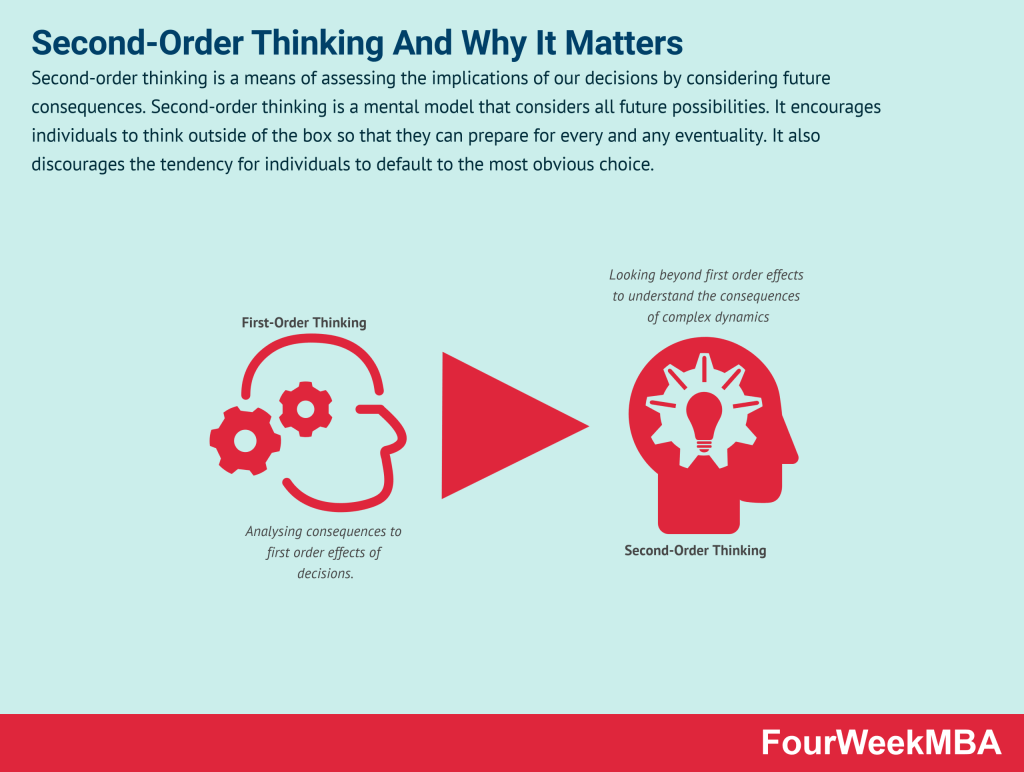
Second-Order Thinking


Main Free Master Guides:
Business Models
Business Strategy
Business Development
Digital Business Models
Distribution Channels
Marketing Strategy
Platform Business Models
Tech Business Models
Learn more:
- Sales Funnel
- Flywheel
- Types of Business Models You Need to Know
- Business Strategy: Definition, Examples, And Case Studies
- Marketing Strategy: Definition, Types, And Examples
- Platform Business Models In A Nutshell
- Network Effects In A Nutshell
- Gross Margin In A Nutshell


