Amazon now runs more than 200 million square feet of fulfillment and warehouse space — but for the first time, that physical footprint is being managed, optimized, and monetized through the same AI infrastructure that powers its cloudbusiness. That convergence is not incremental. It is a fundamental restructuring of how Amazon creates and captures value.
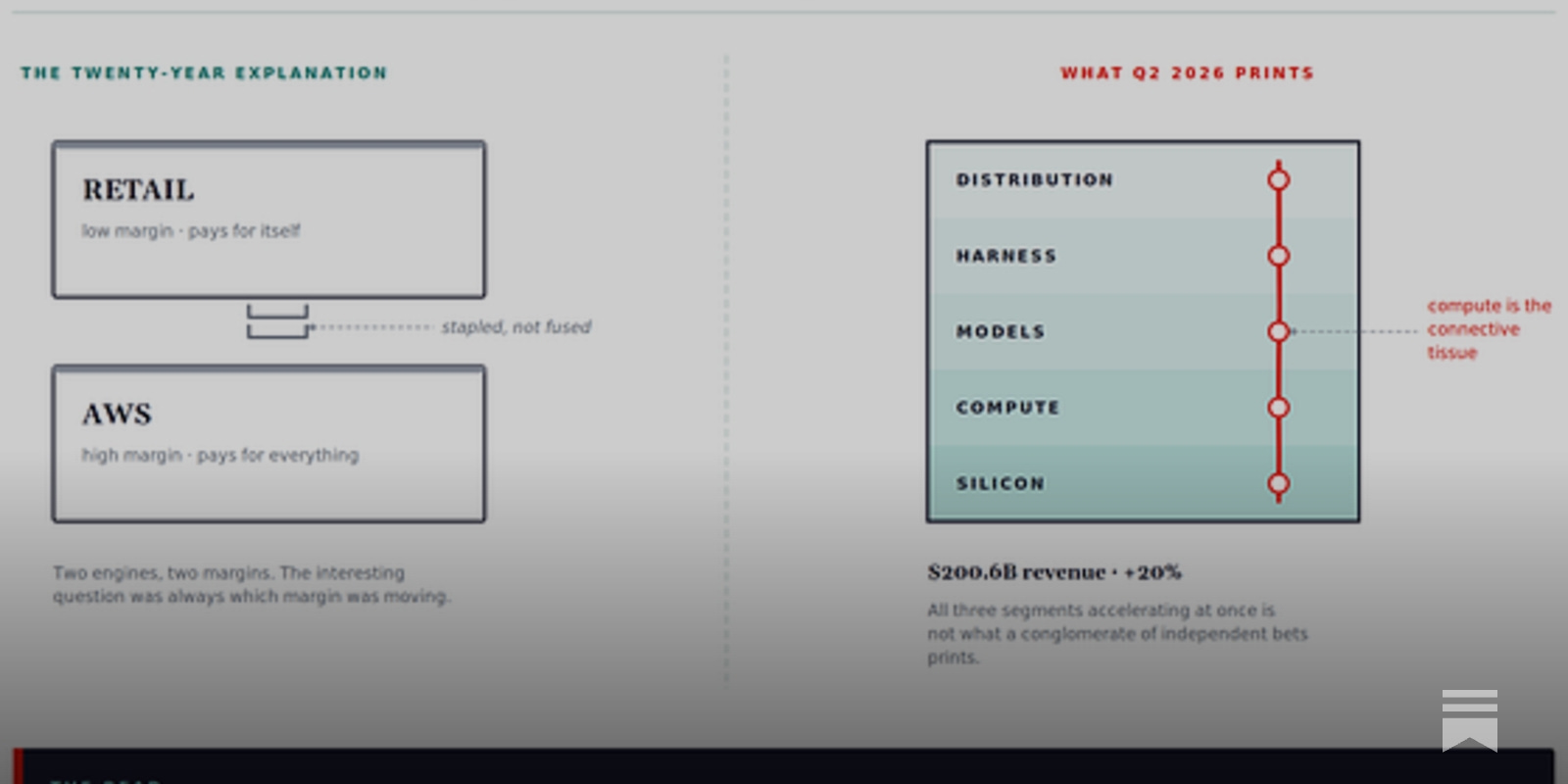
For years, analysts described Amazon as two businesses awkwardly sharing a balance sheet: a low-margin retail operation that generated cash flow, and a high-margin cloud division called AWS that generated profit. The logic held long enough to become consensus. It no longer holds.
Source: The Business Engineer
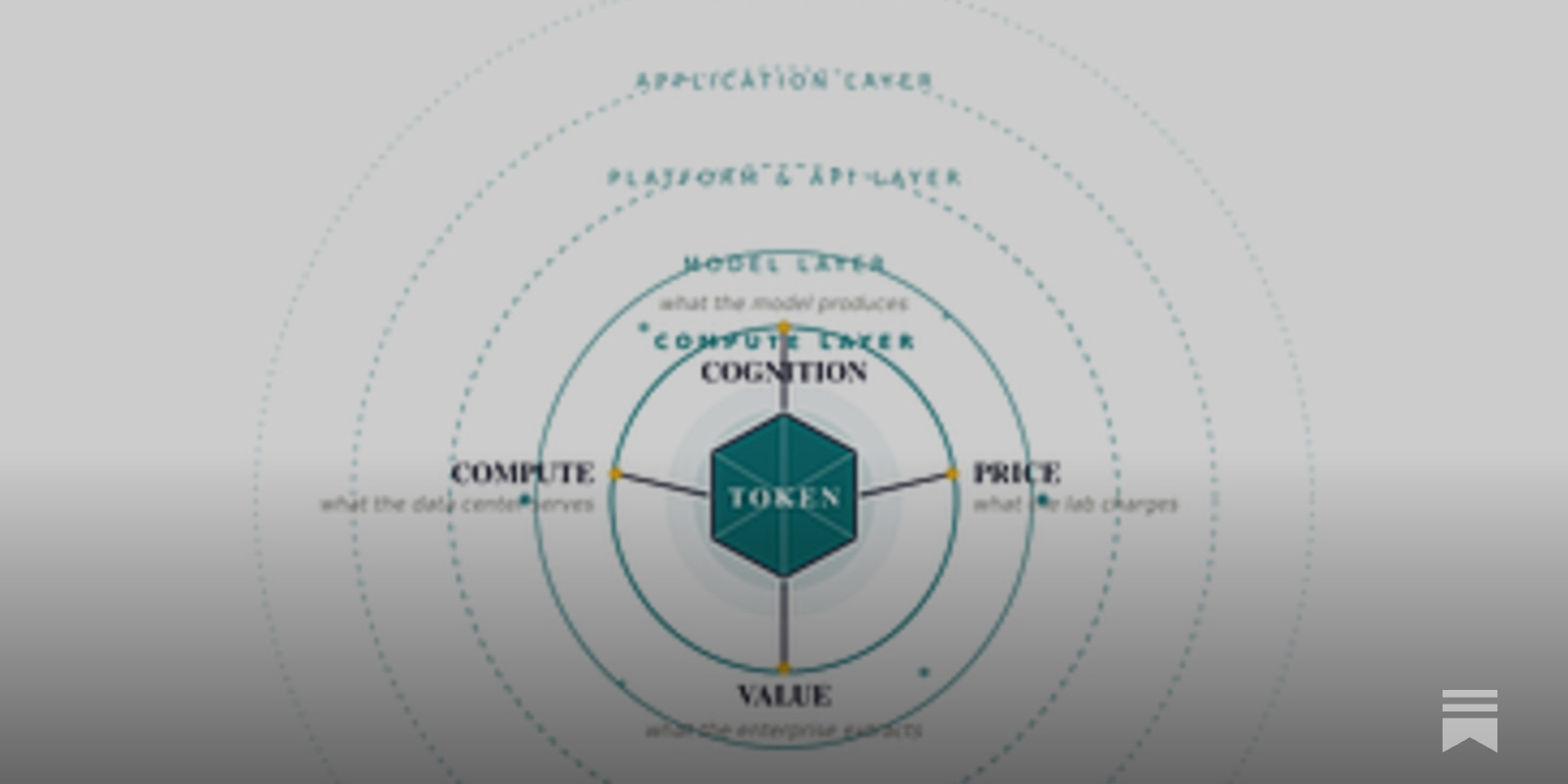
Amazon’s retail operation, logistics network, advertising platform, and AWS are now feeding a single AI feedback loop. Data generated by over 300 million active customer accounts trains models that optimize warehouse routing, which improves delivery speed, which drives more purchases, which generates more advertising revenue, which funds more AI compute on AWS. Each layer amplifies the others.
That is not a conglomerate structure. That is an integrated intelligence platform — and the distinction matters enormously for competitors trying to respond.
Why Microsoft Should Be Watching Closely
Microsoft’s business model remains organized around relatively distinct profit centers: Azure for cloud, LinkedIn for professional networking, Office 365 for productivity, and Xbox for consumer entertainment. According to analysis by The Business Engineer, Amazon’s structural shift away from siloed units toward a unified AI factory creates a compounding advantage that architectures built around separate business lines are poorly positioned to replicate.
Microsoft’s Azure holds roughly 23 percent of the global cloud infrastructure market, compared to AWS at approximately 31 percent. That gap has been stable, but the competitive risk is less about market share today and more about structural leverage tomorrow.
When Amazon’s retail data continuously trains logistics models that run on AWS infrastructure, Microsoft has no equivalent closed loop. Azure’s AI capabilities are impressive, but they are primarily sold as external tools to third-party enterprises — not fed by a proprietary data engine of Amazon’s scale and diversity.
The Advertising Signal Nobody Talks About
Amazon’s advertising business generated over $46 billion in revenue in 2023, making it the third-largest digital advertising platform globally behind Google and Meta. That revenue stream is not a side product. It is proof of intent-signal data — consumers actively searching for products to buy — flowing directly into Amazon’s AI training pipeline.
Google sits on comparable search intent data, which is why it remains the more immediate threat to Amazon’s AI factory thesis. Microsoft, despite Bing’s AI integration with OpenAI, captures a fraction of that commercial intent volume.
Amazon is not getting bigger. It is getting denser. The same assets that existed five years ago are now connected in ways that produce outputs none of them could produce individually.
For enterprise customers evaluating cloud vendors, that density starts to look less like a retailer offering cloud services and more like an AI infrastructure company that happens to deliver packages. AWS alone serves over one million active business customers — each of whom now sits closer to Amazon’s unified intelligence stack than they may realize.
Gennaro Cuofano is a CRO and tech executive who has worked in AI since late 2015, starting with bringing NLP, natural-language generation, voice and chatbot products to the marketing industry. His background is in law and finance: he holds a Master's degree in Law and an International MBA with an emphasis on corporate finance (LUISS Business School and the University of San Diego, 2012), and worked as a financial analyst at a real-estate investment firm in San Diego and as an assistant controller. His work focuses on business model strategy, business engineering and, more broadly, structural analysis: how companies make money, read from their own filings. He created FourWeekMBA and leads research there and at The Business Engineer, his newsletter on AI and business strategy, with over 95,000 subscribers and more than 1,000 published analyses. His writing has also appeared on Entrepreneur, HackerNoon and Search Engine People. Find him on LinkedIn and Substack. See how we source.
Scroll to Top
Discover more from FourWeekMBA
Subscribe now to keep reading and get access to the full archive.