

Pinterest’s top shareholder is co-founder and executive chairman Benjamin Silbermann, followed by the other co-founders Paul Sciarra and Evan Sharp. Top institutional investors comprise The Vanguard Group and Blackrock.
By 2023, Pinterest generated over $3 billion in revenue.
| Aspect | Description | Analysis | Examples |
|---|---|---|---|
| Products and Services | Pinterest offers a digital platform and mobile application that allows users to discover, save, and organize visual content, such as images and videos, known as “Pins.” Users can create and curate collections of Pins on virtual boards, as well as browse and engage with content shared by others. The platform also offers advertising solutions for businesses to promote their products and services through Promoted Pins. | Pinterest’s core offering centers around visual discovery and organization. The platform encourages users to discover and save content related to their interests, making it a valuable source of inspiration. Advertising through Promoted Pins enables businesses to reach a targeted audience. | Digital platform, mobile application, visual content discovery and organization, Pins, virtual boards, user curation, Promoted Pins, source of inspiration, targeted advertising. |
| Revenue Streams | Pinterest generates revenue primarily through advertising. Businesses can create Promoted Pins to reach Pinterest’s user base. Additionally, Pinterest offers shopping features that allow users to shop directly from Pins, enabling e-commerce transactions, and potentially earning transaction fees or commissions. | Advertising is the primary revenue source for Pinterest, with businesses leveraging Promoted Pins to access the platform’s user base. E-commerce transactions and potential transaction fees or commissions from shopping features represent an additional revenue stream. | Revenue from advertising, Promoted Pins, shopping features, e-commerce transactions, transaction fees, commissions, diversified revenue streams. |
| Customer Segments | Pinterest serves a diverse customer base, including individual users, content creators, influencers, small and medium-sized businesses, and large corporations. The platform appeals to individuals seeking inspiration, DIY enthusiasts, hobbyists, and businesses looking to engage with an image-focused audience. | Customer segments for Pinterest encompass a broad range of users and businesses, from individuals seeking inspiration to content creators and businesses aiming to connect with a visually-oriented audience. Pinterest’s versatile platform caters to various interests and purposes. | Individual users, content creators, influencers, DIY enthusiasts, hobbyists, small and medium-sized businesses, large corporations, diverse customer segments, versatile platform, visually-oriented audience. |
| Distribution Channels | Pinterest distributes its platform through mobile applications available on app stores (iOS, Android) and through its website. Users can download the app or access the platform via web browsers. Pinterest’s content can also be discovered through search engines and shared on other social media platforms. | Distribution channels for Pinterest include mobile applications, web access, discoverability through search engines, and sharing on social media platforms. The platform’s availability on multiple devices and platforms enhances its accessibility and user reach. | Mobile applications (iOS, Android), website, discoverability through search engines, sharing on social media platforms, accessibility, broad user reach. |
| Key Partnerships | Pinterest forms partnerships with various entities to enhance its offerings. These partnerships may include collaborations with content creators, influencers, and celebrities to promote the platform and its features. Pinterest also collaborates with businesses and brands for advertising campaigns using Promoted Pins. | Partnerships with content creators, influencers, and celebrities contribute to platform promotion and user engagement. Collaborations with businesses and brands for advertising campaigns generate revenue and expand the platform’s reach. These partnerships are crucial for Pinterest’s growth and success. | Content creator, influencer, celebrity partnerships, platform promotion, user engagement, business and brand collaborations, advertising campaigns, revenue generation, platform reach expansion. |
| Key Resources | Key resources for Pinterest include its platform infrastructure, user base, content database, technical team for app development and maintenance, advertising infrastructure, and partnerships with businesses. The platform relies on a robust infrastructure to handle user-generated content and advertising campaigns. | Pinterest’s resources encompass its technical infrastructure, extensive user base, content database, dedicated technical team for app development and maintenance, advertising infrastructure, and partnerships. These resources are essential for maintaining the platform’s functionality, user engagement, and revenue generation. | Platform infrastructure, user base, content database, technical team, advertising infrastructure, partnerships, crucial resources for functionality, user engagement, revenue generation. |
| Cost Structure | Pinterest incurs various costs associated with its operations, including expenses for platform maintenance, technical development, server infrastructure, marketing and advertising to promote the platform, employee salaries and benefits, content moderation, and administrative overhead. The cost of server infrastructure and content moderation can be substantial due to the volume of user-generated content. | Costs associated with Pinterest’s operations include platform maintenance, technical development, server infrastructure, marketing and advertising expenses for brand promotion, employee salaries and benefits, content moderation costs, and administrative overhead. Maintaining a scalable infrastructure and ensuring content quality are significant operational expenses. | Platform maintenance, technical development, server infrastructure, marketing and advertising expenses, employee salaries and benefits, content moderation costs, administrative overhead, substantial server infrastructure and content moderation expenses. |
| Competitive Advantage | Pinterest’s competitive advantage lies in its visual discovery platform, user-generated content, and the ability to inspire and engage users. The platform’s advertising capabilities through Promoted Pins make it a valuable marketing channel for businesses. Pinterest’s focus on creativity and lifestyle sets it apart in the social media landscape. | Pinterest’s strengths include its visual discovery platform, user-generated content, inspiration and engagement capabilities, and advertising potential through Promoted Pins. The platform’s unique focus on creativity, DIY, and lifestyle distinguishes it within the social media market. | Visual discovery platform, user-generated content, inspiration and engagement capabilities, advertising potential, Promoted Pins, creativity focus, lifestyle niche, differentiation in the social media market. |

The company had 4,014 employees in 2023.

And it reached nearly 500 million monthly active users.

Its average revenue per user in the US (which is the most valuable geography for Pinterest) was $7.6.

For some context, in the same period, Facebook’s ARPU in the US & Canada was over $58.

Early days
Silbermann came from a family of doctors and felt destined to become one himself, but as a child, he idolized entrepreneurs such as Walt Disney and Steve Jobs. In addition to his passion for visionaries, Silbermann had also been an avid bug collector as a child and thought that “the things you collect say so much about who you are.”
In early adulthood, Silbermann landed a job at Google in customer support because he was “more excited than the previous applicant” and, once there, was inspired by the company’s audacity to think “at a really big scale.”
He later worked on the design and development of Google’s display ads, but with no engineering qualifications, he was prevented from building his own products in the company’s much-vaunted “20% time”.
After encouragement from his girlfriend, Silbermann quit Google to pursue his own interests.
Tote
Sometime in 2009, Silbermann teamed up with college friend Paul Sciarra to develop Tote. The phone-based app intended to replace paper catalogs with digital versions and enable consumers to save items, browse apparel, and receive push notifications from around 30 different retailers.
After enduring countless rejections, the pair eventually secured funding from an investor. But Tote would ultimately fail for two main reasons. The first was that the app was ahead of its time since eCommerce was not yet mainstream. The second, related reason was that the App store did not provide support for cloud-based app companies.
Despite Tote not working out, Silbermann and Sciarra observed that users browsed for products and then saved them using the app’s Favorite function. Many were also discovering new products and sending images of the products to themselves.
Based on user data from the platform, the pair started work on a new prototype. One of the core concepts was the idea of buckets, where users could organize their collection of saved images.
Pinterest is born
While Silbermann was visiting a friend in New York, he met Evan Sharp through a friend of a friend. The pair immediately bonded over their love of the internet, with Silbermann also of the opinion that Sharp was the only person who understood his vision for Pinterest.
The now trio built a rudimentary version of Pinterest in a small Manhattan apartment, with Sharp credited as inventing the platform’s grid layout while also carrying out much of the early coding and design work.
In March 2010, a prototype was sent via email to around 200 family and friends. Around 50% opened the email and started to use the app in the way its creators had hoped.
Over time, the launch transitioned into an open beta format where others could access the platform with an invite from someone else.
Growth
When Pinterest passed 5,000 users, Silbermann made a point to personally contact each one of them. When the platform passed 10,000 members after just nine months, the company once more took the opportunity to quiz users about their overall experience.
Silbermann’s attention to detail and obsession with every aspect of Pinterest’s design helped him navigate a difficult first year in business. Most social media users of the time were more interested in news feeds than they were grid layouts, while others did not understand the concept of pinboards in any case.
However, an inflection point was reached in mid-2010 when a user started the Pin It Forward campaign. The campaign encouraged bloggers to exchange pinboards about what home meant to them, and soon, people started using Pinterest in ways the founders had not envisioned.
For example, one user created a board entitled “Things That Look Like the Deathstar” while another created a guide for tourists visiting London.
An iPad app and Pinterest Mobile for non-iPhone users was released in 2011, with growth thereafter seeing Pinterest enter the top 10 largest social network services with 11 million weekly visitors.
First revenue and IPO
Pinterest generated its first revenue in 2014 after it launched a system where businesses could advertise their products to users. By 2016, there were 150 million monthly active users with 80 million of those outside the United States.
The company confidentially lodged the paperwork for an IPO in February 2019, with its stock market debut coming on April 18. Pinterest was soon valued at almost $14 billion, which made Silbermann a billionaire and many others very wealthy.
Key takeaways:
- Pinterest is a social media service that enables users to save and discover information from the internet. The company was founded in December 2009 by former Facebook product designer Evan Sharp together with Paul Sciarra and Ben Silbermann.
- Silbermann was born into a family of doctors but always had a passion for collecting and the internet. He started the failure venture Tote with friend Paul Sciarra before the pair were joined by Evan Sharp.
- The now trio built a rudimentary version of Pinterest in a small Manhattan apartment, with a closed beta launch to 200 friends and family mildly successful. Once in the public domain, however, Pinterest grew rapidly as users adapted the platform for their own purposes.
Connected Business Models




Handpicked related business models:
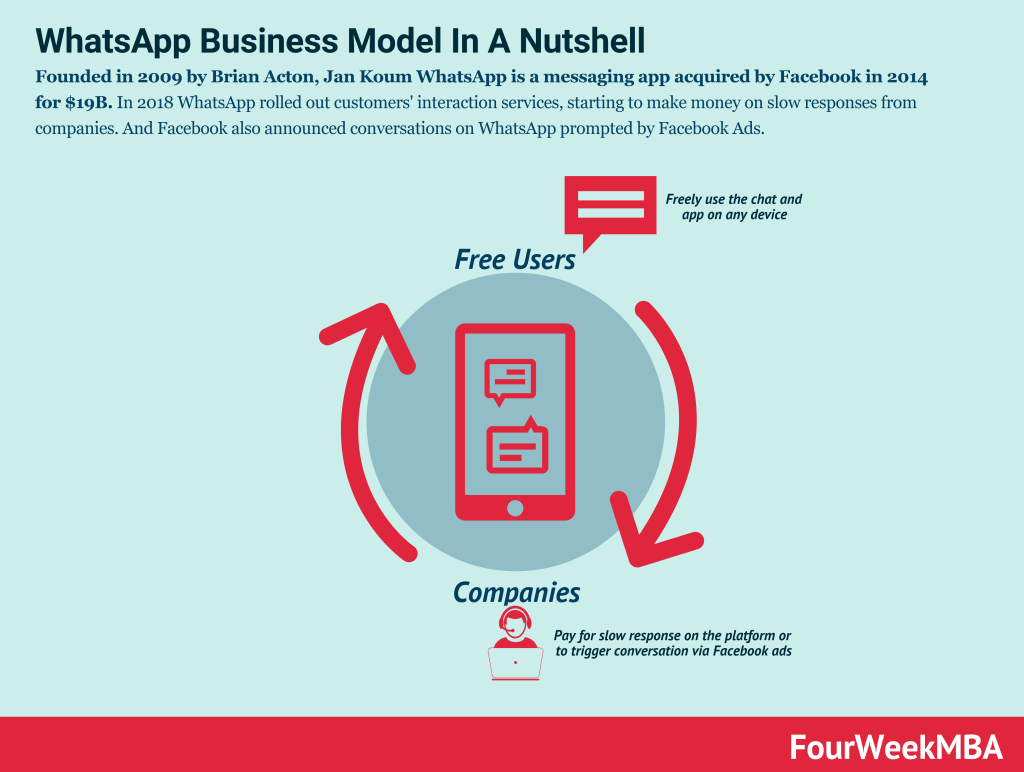
- How Does WhatsApp Make Money? WhatsApp Business Model Explained
- How Does Google Make Money? It’s Not Just Advertising!
- The Google of China: Baidu Business Model In A Nutshell
- How Does Twitter Make Money? Twitter Business Model In A Nutshell
- How Does DuckDuckGo Make Money? DuckDuckGo Business Model Explained
Other resources:
- Successful Types of Business Models You Need to Know
- Business Strategy: Definition, Examples, And Case Studies
- What Is a Business Model Canvas? Business Model Canvas Explained
- Blitzscaling Business Model Innovation Canvas In A Nutshell
- What Is a Value Proposition? Value Proposition Canvas Explained
- What Is a Lean Startup Canvas? Lean Startup Canvas Explained
- What Is Market Segmentation? the Ultimate Guide to Market Segmentation
- Marketing Strategy: Definition, Types, And Examples
Main Free Guides:


