Greenfield investments are those where a company establishes a new subsidiary on foreign soil by investing in new facilities such as offices, factories, staff accommodation, and distribution hubs. They are named after the notion that a company launching a new venture from scratch starts with nothing but a green field. A greenfield investment, therefore, is a form of foreign direct investment where a company establishes operations in another country by constructing new facilities from scratch.
Aspect
Explanation
Definition
Greenfield Investment refers to a form of Foreign Direct Investment (FDI) in which a company or investor establishes a new business operation or facility from the ground up in a foreign country. Unlike other forms of FDI, such as mergers and acquisitions (M&A), greenfield investments involve creating an entirely new venture in the host country rather than acquiring an existing one. Greenfield investments can take various forms, including building new manufacturing plants, offices, retail outlets, or research and development centers. This approach allows investors to start fresh and tailor the new operation to their specific needs and strategies.
Key Features
Greenfield investments typically exhibit the following features: 1. New Establishment: The investor builds a new facility or business unit. 2. Ownership: The investor has full ownership and control over the new venture. 3. Customization: The new operation is designed according to the investor’s preferences and requirements. 4. Resource Allocation: The investor allocates capital, technology, and human resources to set up the new business. 5. Market Entry: It serves as a means for entering a foreign market where the investor has no prior presence.
Motivations
Companies choose greenfield investments for several reasons, including: 1. Market Expansion: Seeking growth opportunities in new markets. 2. Technology Transfer: Introducing advanced technology or know-how. 3. Cost Efficiency: Building modern, efficient facilities tailored to specific needs. 4. Strategic Control: Maintaining full control over operations and strategy. 5. Compliance: Meeting regulatory requirements or local content rules. The choice of a greenfield investment reflects the investor’s long-term strategic goals and objectives.
Benefits of Greenfield Investments
Greenfield investments offer several advantages: 1. Customization: Investors can design facilities and processes to match their requirements. 2. Full Control: Investors have complete control over the operation. 3. Technology Transfer: The latest technology can be incorporated from the start. 4. Brand Image: Investors can establish a strong local brand presence. 5. Job Creation: Greenfield projects often create employment opportunities in the host country.
Challenges and Risks
Greenfield investments also pose challenges and risks: 1. High Initial Costs: Setting up new operations can be capital-intensive. 2. Market Entry Barriers: Navigating local regulations and bureaucracy can be complex. 3. Time-Consuming: Building from scratch may take longer to generate returns. 4. Local Adaptation: Adapting to local culture and business practices is essential. 5. Market Uncertainty: Entering new markets always involves some degree of uncertainty and risk. It’s crucial for investors to conduct thorough market research and feasibility studies.
Steps in a Greenfield Investment
A typical greenfield investment process involves the following steps: 1. Market Research: Identifying an attractive market and assessing demand. 2. Feasibility Study: Evaluating the viability of the investment, considering costs, benefits, and risks. 3. Site Selection: Choosing a suitable location based on factors like infrastructure, labor availability, and proximity to suppliers or customers. 4. Regulatory Compliance: Navigating local regulations and securing permits and approvals. 5. Construction: Building the new facility or establishment. 6. Staffing: Hiring and training local staff. 7. Market Entry: Launching the new operation and marketing products or services. The success of a greenfield investment depends on effective planning, execution, and ongoing management.
Examples
Greenfield investments can be found in various industries. For instance: 1. An automobile manufacturer might build a new assembly plant in a foreign country to serve a growing market. 2. A technology company might establish a research and development center to tap into local talent and expertise. 3. A retail chain might open new stores in a foreign market to expand its presence. 4. A renewable energy company might construct wind farms or solar installations to harness local resources. These examples illustrate how greenfield investments can be tailored to different industries and objectives.
Government Involvement
Host governments often play a significant role in facilitating or regulating greenfield investments. They may offer incentives such as tax breaks, subsidies, or streamlined permitting processes to attract foreign investors. These measures aim to stimulate economic growth, create jobs, and transfer knowledge and technology to the host country. Investors must engage with local authorities to ensure compliance with all legal and regulatory requirements.
Long-Term Strategy
Greenfield investments are typically part of a company’s long-term international expansion and market entry strategy. They allow businesses to establish a presence in foreign markets while maintaining control over operations and quality standards. Investors should consider market dynamics, competition, and local conditions when deciding whether a greenfield investment aligns with their broader objectives.
Greenfield investments differ from brownfield investments, where the company purchases or leases existing infrastructure for the same expansionary purpose.
The strategy is commonly employed by companies who desire more control over their operations and want to avoid the extra costs associated with intermediaries.
In this section, let’s take a look at some real-world examples:
Toyota Motor Corporation
In 2015, Toyota announced it would be building a new production facility in the Mexican state of Guanajuato.
South Korean auto manufacturer Hyundai made a similar commitment in 2006 when it received approval to build a factory in the Czech Republic.
The factory opened three years later with an initial capacity of 200,000 vehicles per year, with the Czech government providing incentives to attract Hyundai to lower unemployment and stimulate economic activity in the country.
Weber
In 2021, American outdoor cooking innovation and technology company Weber opened its first manufacturing and distribution hub in southern Poland.
The 50,000 square meter facility allows the company to produce high-quality barbecue products for the European market and improve its delivery and service speed in the process.
Advantages of greenfield investments
Control
As noted earlier, greenfield investments tend to be associated with more control since the company can build its infrastructure to spec without the need to adapt or retrofit.
This also the company more control over the quality of its products.
Brand reputation
In some cases, a company that commits to establishing a presence in another country and recruits local expertise will enjoy a superior brand reputation.
It may also be able to profit from stronger local networks and partnerships.
Economicbenefits
Greenfield investments also come with several economic benefits.
Companies sometimes receive incentivization from governments in the form of tax breaks and subsidies and may be able to bypass trade restrictions and import tariffs.
Capital expenditure or capital expense represents the money spent toward things that can be classified as fixed asset, with a longer term value. As such they will be recorded under non-current assets, on the balance sheet, and they will be amortized over the years. The reduced value on the balance sheet is expensed through the profit and loss.
Greenfield investments require vast sums of money which exposes the company to more risk should the project become unviable for whatever reason.
If nothing else, the capital expenditure required is a substantial barrier to entry.
Political risk
While a government may initially be supportive of greenfield investment, this can change after an election if a new government takes power and is less supportive of international companies operating within its jurisdiction.
Regulations
Some countries will also require that the foreign company use domestically manufactured components or services to support their operations.
Others will require that a certain percentage of the workforce be comprised of local employees.
These requirements can make a greenfield investment problematic for companies that must control every aspect of the process to maintain exacting standards.
Greenfield investment trends
Greenfield FDI projects rebounded in 2021 after the pandemic slowed momentum in 2020. In fact, according to The Global FDI Annual Report 2022, a total of 16,516 greenfield projects were approved in 2021.
This represented an 18% increase over the previous year and is slightly below pre-pandemic levels in 2019.
Three of the top ten megaprojects involved chip factories and were a response to pandemic-induced global supply chain constraints.
Sustainability trends
Also driving the increase over 2022 was an increase in the average size of greenfield projects in the renewables sector. While 30% of the top 10 megaprojects involved semiconductors, 60% related to climate change mitigation investment.
One of the outliers in this trend is India, which doubled the number of new greenfield project announcements.
The same can also be said for the Asia-Pacific region more broadly, with announcements in the ASEAN countries (Indonesia, Malaysia, Philippines, Singapore, Thailand, and Vietnam) increasing by 21% in 2022.
Greenfield investment megaprojects
Here is a look at some of the aforementioned megaprojects that were announced in 2022.
Taiwan Semiconductor Manufacturing (TMSC)
In December 2022, TMSC announced plans to build a second semiconductor factory in the U.S. state of Arizona.
The greenfield project is one of the largest such FDI projects in the history of the United States and will place the company at the forefront of global semiconductor production. Such was the significance of the deal that it attracted commentary from President Joe Biden.
When complete, the project will be able to produce 10 GW of power from solar and wind farms in the area. The project forms part of an ambitious push by the Moroccan Government to derive 80% of its electricity from renewable sources by 2050.
For Eren Groupe, Morocco is seen as an attractive greenfield location because of its favorable climate and strategic location in North Africa.
URB
URB is a developer of net-zero cities that is headquartered in the United Arab Emirates. The company recently announced plans for The Parks – a net-zero city project for 150,000 residents that will be self-sufficient and produce its own energy, food, and water.
The city is planned to occupy some 1,700 hectares and will incorporate IoT, ICT, and data science to create an efficient, collaborative, intelligent, and sustainable ecosystem. The project will also use blockchain technology to enhance the sales and leasing process.
Greenfield investment vs. joint venture
Where a greenfield investment is a form of foreign direct investment where a company establishes operations in another country by constructing new facilities from scratch.
A joint venture is a form of strategic alliance where two parent companies come together to form a child company with shared resources and equity in a binding agreement.
Strategic alliances occur when two or more businesses work together to create a win-win situation. A strategic alliance describes cooperation between two or more organizations to achieve a result a single party could not achieve alone.
Joint ventures have a clear objective, with profits split equally between each party.
A joint venture might also comprise the construction of a massive operation in a foreign country but it doesn’t necessarily need to be structured in that way.
Greenfield investment vs. brownfield investment
A brownfield investment normally occurs when an organization wants to begin operating in a new country without incurring the expensive start-up costs associated with a greenfield investment. For the purposes of this article, a greenfield investment is one where a new production facility is constructed from scratch. A brownfield investment is the lease or purchase of a pre-existing production facility in a foreign country.
Where a greenfield investment implies a heavy operation, in a brownfield investment, quite the opposite, the company tries to avoid too high start-up costs, thus purchasing pre-existing facilities or operations to kick off the business.
Greenfield investment vs. franchaining
Another interesting difference is between greenfield investment and what we labeled as a franchained operation, which is a form of expansion strategy built by Coca-Cola.
In a franchained businessmodel (a short-term chain, long-term franchise) model, the company deliberately launched its operations by keeping tight ownership on the main assets, while those are established, thus choosing a chain model. Once operations are running and established, the company divests its ownership and opts instead for a franchising model.
The Coca-Cola system works as a short-term chain, where the company does structure heavy operations early on, similar to what happens in a greenfield investment.
Yet, in the long run, it transitions toward a light operational model, where the operations on the ground are run by a franchisee partner that though is tied to Coca-Cola.
Additional Case Studies
Amazon in India:
Description: In 2014, Amazon announced its plan to invest $2 billion in its Indian operations, aiming to expand its services and boost its e-commerce platform in the country. This investment involved setting up new data centers, warehouses, and expanding its service network.
Effectiveness: Amazon’s greenfield investment helped it gain a significant foothold in the rapidly growing Indian e-commerce market.
Volkswagen in Tennessee, USA:
Description: Volkswagen invested over $1 billion in a production facility in Chattanooga, Tennessee, which began its operations in 2011.
Effectiveness: The plant allowed Volkswagen to produce cars specifically tailored for the American market, such as the Volkswagen Atlas.
Apple in Iowa, USA:
Description: In 2017, Apple announced a $1.3 billion investment to build a data center in Waukee, Iowa.
Effectiveness: This investment was aimed to enhance Apple’s cloud services capacity, catering to its growing user base.
Microsoft in South Africa:
Description: In 2017, Microsoft announced its first cloud data centers in Africa, with the initial sites being Cape Town and Johannesburg.
Effectiveness: This allowed Microsoft to offer its Azure cloud services locally, improving speed and reliability for African businesses.
Google in Singapore:
Description: Google started its expansion in Singapore with a greenfield investment to set up data centers. The third data center was announced in 2018, emphasizing Singapore’s strategic location for tech hubs.
Effectiveness: This move ensured Google’s capacity to handle traffic and offer faster services in the region.
IKEA in India:
Description: IKEA made its foray into the Indian market with a greenfield investment in Hyderabad in 2018, which was followed by a store in Mumbai in 2020.
Effectiveness: By understanding local tastes and preferences, IKEA tailored its product offerings, making its venture in India a success.
Bosch in Mexico:
Description: Bosch, the global supplier of technology and services, announced in 2016 its plan to invest more than $100 million in a new plant in the state of Guanajuato in Mexico.
Effectiveness: This plant was aimed at expanding Bosch’s automotive electronics division, catering to the demand in North and South America.
Spotify in London:
Description: In 2018, Spotify announced its plan to set up a new research and development hub in London, which would be its first such facility outside the US and Sweden.
Effectiveness: This move was aimed at tapping into London’s rich talent pool and to drive innovation for its platform.
Tesla in Shanghai, China:
Description: Tesla’s Gigafactory in Shanghai, which began construction in 2019, is one of its most significant greenfield investments outside the US.
Effectiveness: This factory allows Tesla to produce cars locally for the Chinese market, reducing costs and bypassing trade tariffs.
Facebook in Singapore:
Description: In 2018, Facebook announced a $1 billion greenfield investment for constructing a data center in Singapore, its first in Asia.
Effectiveness: This center serves the growing user base in the region, ensuring faster and more reliable services.
Key takeaways
A greenfield investment is a form of foreign direct investment where a company establishes operations in another country by constructing new facilities from scratch.
Real-world examples of greenfield investment include Toyota in Mexico, Hyundai in the Czech Republic, and Weber in Poland.
Greenfield investments can afford the company more control over its foreign operations and grant access to various financial incentives. However, the significant capital expenditure represents a substantial barrier to entry and can make the company more vulnerable to a change in government or regulations.
Key Highlights
Greenfield Investments: Greenfield investments involve establishing a new subsidiary in a foreign country by building new facilities from scratch, such as offices, factories, and distribution hubs.
Comparison with Brownfield Investments: Greenfield investments differ from brownfield investments, where companies acquire existing infrastructure for expansion purposes.
Real-World Examples:
Toyota Motor Corporation established a production facility in Mexico for the Corolla sedan.
Hyundai built a factory in the Czech Republic with support from the local government.
Weber opened a manufacturing and distribution hub in Poland for high-quality barbecue products.
Advantages of Greenfield Investments:
Control: Companies have more control over the infrastructure and product quality.
Brand Reputation: Commitment to establishing a presence and recruiting local expertise enhances brand reputation.
Economic Benefits: Governments may offer tax breaks, subsidies, and exemptions from trade restrictions.
Disadvantages of Greenfield Investments:
Capital Expenditure: Greenfield investments require substantial capital, increasing risk and serving as a barrier to entry.
Political Risk: Changes in government can impact the support for international companies operating in the country.
Regulations: Some countries may impose requirements on using domestic components and employing local workers.
Greenfield Investment Trends: Greenfield FDI projects rebounded in 2021 after a slowdown in 2020 due to the pandemic. However, momentum weakened in 2022, with a focus on renewable greenfield projects.
Greenfield Investment Megaprojects:
Taiwan Semiconductor Manufacturing (TMSC) announced a semiconductor factory in the U.S., investing $40 billion.
Eren Groupe plans to build a green hydrogen and ammonia plant in Morocco worth $10.6 billion.
URB announced The Parks, a net-zero city project for 150,000 residents in the United Arab Emirates.
Comparison with Joint Ventures: Greenfield investments involve setting up new facilities, while joint ventures are strategic alliances where two parent companies form a child company with shared resources and equity.
Comparison with Brownfield Investments: Brownfield investments involve purchasing pre-existing facilities, while greenfield investments build new facilities from scratch.
Comparison with Franchising: Greenfield investments are distinct from franchaining, where a company starts with heavy operations and later transitions to a franchisee model.
Related Concepts
Description
Implications
Greenfield Investment
Greenfield investment refers to a strategy where a company establishes a new business or facility in a foreign country from the ground up. It involves building new infrastructure, facilities, and operations in a foreign market, often with substantial investment and long-term commitment.
Greenfield investment offers companies full control over their operations in a foreign market, allowing them to customize their facilities and processes to suit local conditions and preferences. However, it requires significant financial resources, time, and effort to establish operations from scratch, as well as careful consideration of regulatory requirements, market dynamics, and cultural factors.
Brownfield Investment
Brownfield investment involves acquiring or redeveloping an existing business or facility in a foreign market, often with the aim of expanding operations or gaining access to new markets more quickly and cost-effectively than starting from scratch. It may involve renovating or repurposing existing infrastructure, facilities, or assets to meet the company’s needs and objectives.
Brownfield investment offers companies the opportunity to enter foreign markets more quickly and with potentially lower costs compared to greenfield investment. By acquiring existing assets or facilities, companies can benefit from established infrastructure, customer bases, and market presence. However, brownfield investments may also entail challenges such as legacy issues, renovation costs, and integration complexities with existing operations.
Joint Venture
A joint venture is a strategic partnership between two or more companies to undertake a specific business project or venture together. Joint ventures involve shared ownership, control, and responsibility among the participating entities, enabling them to pool resources, expertise, and risks to achieve common goals. Joint ventures can take various forms, including equity joint ventures, contractual joint ventures, and cooperative agreements.
Joint ventures allow companies to access foreign markets and share risks, costs, and expertise with local partners. By collaborating with local partners, companies can leverage their knowledge of the market, regulatory environment, and customer preferences. However, joint ventures also require careful negotiation, governance structures, and alignment of interests among partners to ensure effective cooperation and mitigate potential conflicts or disagreements.
Licensing
Licensing involves granting permission to another party (licensee) to use intellectual property rights, such as trademarks, patents, or copyrights, in exchange for royalties, fees, or other forms of compensation. Licensing agreements allow companies to expand their market reach and generate revenue without directly investing in physical operations or infrastructure in foreign markets.
Licensing offers companies a low-risk and cost-effective way to enter foreign markets and monetize their intellectual property assets. By licensing their brand, technology, or products to local partners, companies can benefit from increased market presence, brand awareness, and revenue streams. However, licensing may also entail risks such as loss of control over brand image, quality standards, and potential infringement or misuse of intellectual property by licensees.
Franchising
Franchising is a business model where a company (franchisor) grants rights to independent operators (franchisees) to sell its products or services and use its brand name, business model, and operational systems in exchange for fees or royalties. Franchising allows companies to expand rapidly and penetrate new markets with minimal investment, leveraging the local knowledge, resources, and entrepreneurship of franchisees.
Franchising offers companies a scalable and capital-efficient way to expand their footprint in foreign markets. By partnering with local franchisees, companies can benefit from their local expertise, networks, and entrepreneurial spirit to drive growth and market penetration. However, franchising requires careful selection and training of franchisees, as well as ongoing support and supervision to ensure compliance with brand standards, quality control, and customer satisfaction.
The idea of a market economy first came from classical economists, including David Ricardo, Jean-Baptiste Say, and Adam Smith. All three of these economists were advocates for a free market. They argued that the “invisible hand” of market incentives and profit motives were more efficient in guiding economic decisions to prosperity than strict government planning.
Positive economics is concerned with describing and explaining economic phenomena; it is based on facts and empirical evidence. Normative economics, on the other hand, is concerned with making judgments about what “should be” done. It contains value judgments and recommendations about how the economy should be.
When there is an increased price of goods and services over a long period, it is called inflation. In these times, currency shows less potential to buy products and services. Thus, general prices of goods and services increase. Consequently, decreases in the purchasing power of currency is called inflation.
Asymmetric information as a concept has probably existed for thousands of years, but it became mainstream in 2001 after Michael Spence, George Akerlof, and Joseph Stiglitz won the Nobel Prize in Economics for their work on information asymmetry in capital markets. Asymmetric information, otherwise known as information asymmetry, occurs when one party in a business transaction has access to more information than the other party.
Autarky comes from the Greek words autos (self)and arkein (to suffice) and in essence, describes a general state of self-sufficiency. However, the term is most commonly used to describe the economic system of a nation that can operate without support from the economic systems of other nations. Autarky, therefore, is an economic system characterized by self-sufficiency and limited trade with international partners.
Creative destruction was first described by Austrian economist Joseph Schumpeter in 1942, who suggested that capital was never stationary and constantly evolving. To describe this process, Schumpeter defined creative destruction as the “process of industrial mutation that incessantly revolutionizes the economic structure from within, incessantly destroying the old one, incessantly creating a new one.” Therefore, creative destruction is the replacing of long-standing practices or procedures with more innovative, disruptive practices in capitalist markets.
Happiness economics seeks to relate economic decisions to wider measures of individual welfare than traditional measures which focus on income and wealth. Happiness economics, therefore, is the formal study of the relationship between individual satisfaction, employment, and wealth.
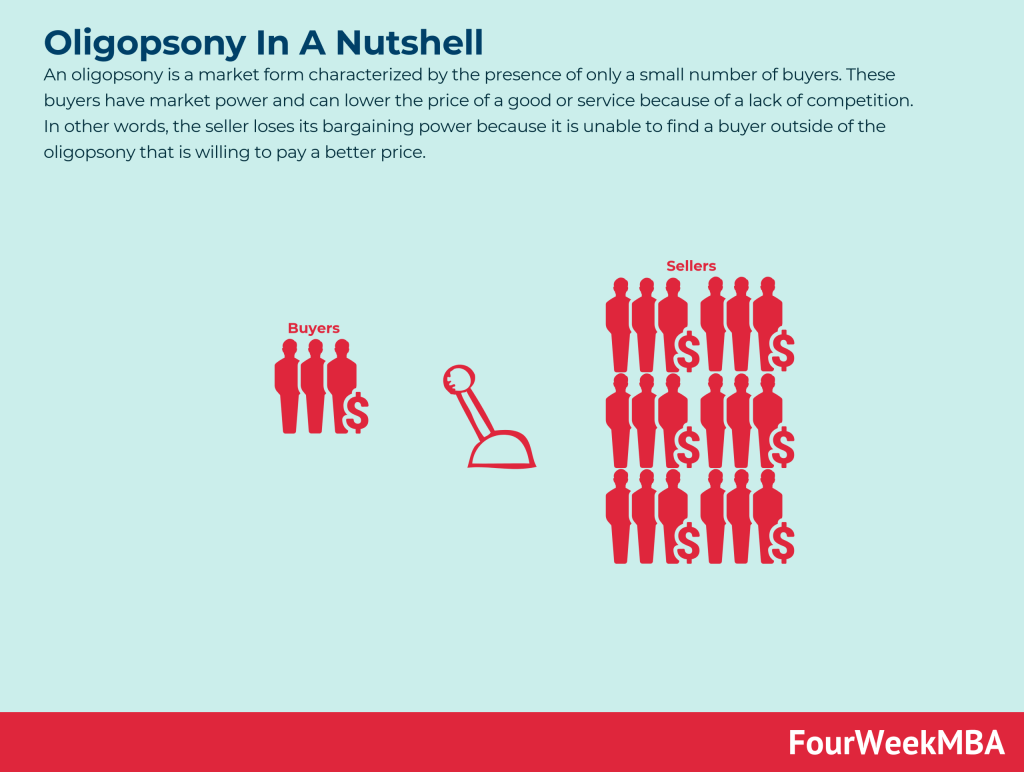
An oligopsony is a market form characterized by the presence of only a small number of buyers. These buyers have market power and can lower the price of a good or service because of a lack of competition. In other words, the seller loses its bargaining power because it is unable to find a buyer outside of the oligopsony that is willing to pay a better price.
The term “animal spirits” is derived from the Latin spiritus animalis, loosely translated as “the breath that awakens the human mind”. As far back as 300 B.C., animal spirits were used to explain psychological phenomena such as hysterias and manias. Animal spirits also appeared in literature where they exemplified qualities such as exuberance, gaiety, and courage. Thus, the term “animal spirits” is used to describe how people arrive at financial decisions during periods of economic stress or uncertainty.
State capitalism is an economic system where business and commercial activity is controlled by the state through state-owned enterprises. In a state capitalist environment, the government is the principal actor. It takes an active role in the formation, regulation, and subsidization of businesses to divert capital to state-appointed bureaucrats. In effect, the government uses capital to further its political ambitions or strengthen its leverage on the international stage.
The boom and bust cycle describes the alternating periods of economic growth and decline common in many capitalist economies. The boom and bust cycle is a phrase used to describe the fluctuations in an economy in which there is persistent expansion and contraction. Expansion is associated with prosperity, while the contraction is associated with either a recession or a depression.
The paradox of thrift was popularised by British economist John Maynard Keynes and is a central component of Keynesian economics. Proponents of Keynesian economics believe the proper response to a recession is more spending, more risk-taking, and less saving. They also believe that spending, otherwise known as consumption, drives economic growth. The paradox of thrift, therefore, is an economic theory arguing that personal savings are a net drag on the economy during a recession.
In simplistic terms, the circular flow model describes the mutually beneficial exchange of money between the two most vital parts of an economy: households, firms and how money moves between them. The circular flow model describes money as it moves through various aspects of society in a cyclical process.
Trade deficits occur when a country’s imports outweigh its exports over a specific period. Experts also refer to this as a negative balance of trade. Most of the time, trade balances are calculated based on a variety of different categories.
A market type is a way a given group of consumers and producers interact, based on the context determined by the readiness of consumers to understand the product, the complexity of the product; how big is the existing market and how much it can potentially expand in the future.
Rational choice theory states that an individual uses rational calculations to make rational choices that are most in line with their personal preferences. Rational choice theory refers to a set of guidelines that explain economic and social behavior. The theory has two underlying assumptions, which are completeness (individuals have access to a set of alternatives among they can equally choose) and transitivity.
The peer-to-peer (P2P) economy is one where buyers and sellers interact directly without the need for an intermediary third party or other business. The peer-to-peer economy is a business model where two individuals buy and sell products and services directly. In a peer-to-peer company, the seller has the ability to create the product or offer the service themselves.
The term “knowledge economy” was first coined in the 1960s by Peter Drucker. The management consultant used the term to describe a shift from traditional economies, where there was a reliance on unskilled labor and primary production, to economies reliant on service industries and jobs requiring more thinking and data analysis. The knowledge economy is a system of consumption and production based on knowledge-intensive activities that contribute to scientific and technical innovation.
In a command economy, the government controls the economy through various commands, laws, and national goals which are used to coordinate complex social and economic systems. In other words, a social or political hierarchy determines what is produced, how it is produced, and how it is distributed. Therefore, the command economy is one in which the government controls all major aspects of the economy and economic production.
How do you protect your rights as a worker? Who is there to help defend you against unfair and unjust work conditions? Both of these questions have an answer, and it’s a solution that many are familiar with. The answer is a labor union. From construction to teaching, there are labor unions out there for just about any field of work.
The bottom of the pyramid is a term describing the largest and poorest global socio-economic group. Franklin D. Roosevelt first used the bottom of the pyramid (BOP) in a 1932 public address during the Great Depression. Roosevelt noted that – when talking about the ‘forgotten man:’ “these unhappy times call for the building of plans that rest upon the forgotten, the unorganized but the indispensable units of economic power.. that build from the bottom up and not from the top down, that put their faith once more in the forgotten man at the bottom of the economic pyramid.”
Glocalization is a portmanteau of the words “globalization” and “localization.” It is a concept that describes a globally developed and distributed product or service that is also adjusted to be suitable for sale in the local market. With the rise of the digital economy, brands now can go global by building a local footprint.
Market fragmentation is most commonly seen in growing markets, which fragment and break away from the parent market to become self-sustaining markets with different products and services. Market fragmentation is a concept suggesting that all markets are diverse and fragment into distinct customer groups over time.
The L-shaped recovery refers to an economy that declines steeply and then flatlines with weak or no growth. On a graph plotting GDP against time, this precipitous fall combined with a long period of stagnation looks like the letter “L”. The L-shaped recovery is sometimes called an L-shaped recession because the economy does not return to trend line growth. The L-shaped recovery, therefore, is a recession shape used by economists to describe different types of recessions and their subsequent recoveries. In an L-shaped recovery, the economy is characterized by a severe recession with high unemployment and near-zero economic growth.
Comparative advantage was first described by political economist David Ricardo in his book Principles of Political Economy and Taxation. Ricardo used his theory to argue against Great Britain’s protectionist laws which restricted the import of wheat from 1815 to 1846. Comparative advantage occurs when a country can produce a good or service for a lower opportunity cost than another country.
The Easterlin paradox was first described by then professor of economics at the University of Pennsylvania Richard Easterlin. In the 1970s, Easterlin found that despite the American economy experiencing growth over the previous few decades, the average level of happiness seen in American citizens remained the same. He called this the Easterlin paradox, where income and happiness correlate with each other until a certain point is reached after at least ten years or so. After this point, income and happiness levels are not significantly related. The Easterlin paradox states that happiness is positively correlated with income, but only to a certain extent.
In Economics, Economies of Scale is a theory for which, as companies grow, they gain cost advantages. More precisely, companies manage to benefit from these cost advantages as they grow, due to increased efficiency in production. Thus, as companies scale and increase production, a subsequent decrease in the costs associated with it will help the organizationscale further.
In Economics, a Diseconomy of Scale happens when a company has grown so large that its costs per unit will start to increase. Thus, losing the benefits of scale. That can happen due to several factors arising as a company scales. From coordination issues to management inefficiencies and lack of proper communication flows.
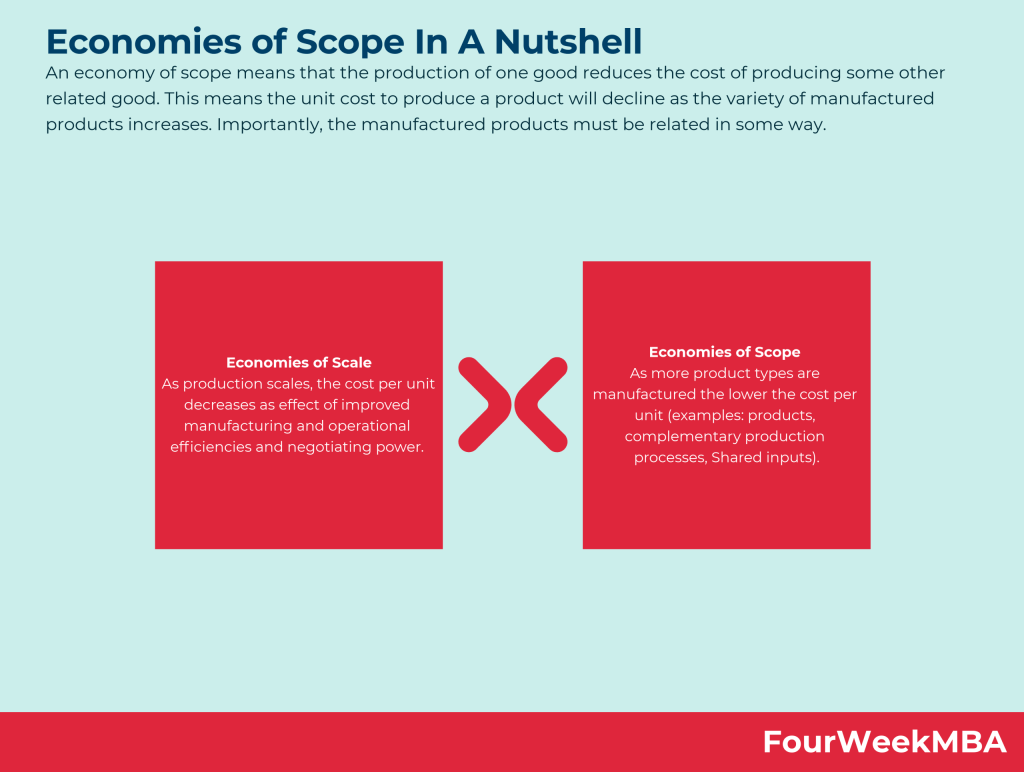
An economy of scope means that the production of one good reduces the cost of producing some other related good. This means the unit cost to produce a product will decline as the variety of manufactured products increases. Importantly, the manufactured products must be related in some way.
Price sensitivity can be explained using the price elasticity of demand, a concept in economics that measures the variation in product demand as the price of the product itself varies. In consumer behavior, price sensitivity describes and measures fluctuations in product demand as the price of that product changes.
Gennaro is the creator of FourWeekMBA, which reached about four million business people, comprising C-level executives, investors, analysts, product managers, and aspiring digital entrepreneurs in 2022 alone | He is also Director of Sales for a high-tech scaleup in the AI Industry | In 2012, Gennaro earned an International MBA with emphasis on Corporate Finance and Business Strategy.