The ADKAR model is a management tool designed to assist employees and businesses in transitioning through organizational change. To maximize the chances of employees embracing change, the ADKAR model was developed by author and engineer Jeff Hiatt in 2003. The model seeks to guide people through the change process and importantly, ensure that people do not revert to habitual ways of operating after some time has passed.
You can use the Ansoff Matrix as a strategic framework to understand what growthstrategy is more suited based on the market context. Developed by mathematician and business manager Igor Ansoff, it assumes a growthstrategy can be derived from whether the market is new or existing, and whether the product is new or existing.
The lean startup canvas is an adaptation by Ash Maurya of the business model canvas by Alexander Osterwalder, which adds a layer that focuses on problems, solutions, key metrics, unfair advantage based, and a unique value proposition. Thus, starting from mastering the problem rather than the solution.
In the 1970s, Bruce D. Henderson, founder of the Boston Consulting Group, came up with The Product Portfolio (aka BCG Matrix, or Growth-share Matrix), which would look at a successful business product portfolio based on potential growth and market shares. It divided products into four main categories: cash cows, pets (dogs), question marks, and stars.
A blue ocean is a strategy where the boundaries of existing markets are redefined, and new uncontested markets are created. At its core, there is valueinnovation, for which uncontested markets are created, where competition is made irrelevant. And the cost-value trade-off is broken. Thus, companies following a blue ocean strategy offer much more value at a lower cost for the end customers.
Business analysis is a research discipline that helps driving change within an organization by identifying the key elements and processes that drive value. Business analysis can also be used in Identifying new business opportunities or how to take advantage of existing business opportunities to grow your business in the marketplace.
According to the FourWeekMBA definition of business engineering, a business engineer is a hybrid between an entrepreneur, executive, and business strategist, which combines a deep understanding of business modeling to speed up experimentation, design thinking to develop products with a customer obsessed approach. And a deep understanding of business scaling through concepts of non-linear competition, transitional business modeling, and technological modeling.
Another dimension of asymmetric betting is given by how impactful the idea can be to the business. When we have asymmetric bets that can have a high impact and are easy to reverse, we get to the “Jackpot” and go into an “All-In-Mode” of action! And how easy to reverse.
Design strategy is a framework applying the tactical thinking of a business strategy to the needs of the user to create the most effective products and services.
As pointed out by Eric Ries, a minimum viable product is that version of a new product which allows a team to collect the maximum amount of validated learning about customers with the least effort through a cycle of build, measure, learn; that is the foundation of the lean startup methodology.
Porter’s Five Forces is a model that helps organizations to gain a better understanding of their industries and competition. Published for the first time by Professor Michael Porter in his book “Competitive Strategy” in the 1980s. The model breaks down industries and markets by analyzing them through five forces
The Six Forces Model is a variation of Porter’s Five Forces. The sixth force, according to this model, is the complementary products. In short, the six forces model is an adaptation especially used in the tech business world to assess the change of the context, based on new market entrants and whether those can play out initially as complementary products and in the long-term substitutes.
In his 1985 book Competitive Advantage, Porter explains that a value chain is a collection of processes that a company performs to create value for its consumers. As a result, he asserts that value chain analysis is directly linked to competitive advantage. Porter’s Value Chain Model is a strategic management tool developed by Harvard Business School professor Michael Porter. The tool analyses a company’s value chain – defined as the combination of processes that the company uses to make money.
According to Michael Porter, a competitive advantage, in a given industry could be pursued in two key ways: low cost (cost leadership), or differentiation. A third generic strategy is focus. According to Porter a failure to do so would end up stuck in the middle scenario, where the company will not retain a long-term competitive advantage.
The McKinsey 7-S Model was developed in the late 1970s by Robert Waterman and Thomas Peters, who were consultants at McKinsey & Company. Waterman and Peters created seven key internal elements that inform a business of how well positioned it is to achieve its goals, based on three hard elements and four soft elements.
The GE McKinsey Matrix was developed in the 1970s after General Electric asked its consultant McKinsey to develop a portfolio management model. This matrix is a strategy tool that provides guidance on how a corporation should prioritize its investments among its business units, leading to three possible scenarios: invest, protect, harvest, and divest.
The McKinsey Horizon Model helps a business focus on innovation and growth. The model is a strategy framework divided into three broad categories, otherwise known as horizons. Thus, the framework is sometimes referred to as McKinsey’s Three Horizons of Growth.
McKinsey’s Seven Degrees of Freedom for Growth is a strategy tool. Developed by partners at McKinsey and Company, the tool helps businesses understand which opportunities will contribute to expansion, and therefore it helps to prioritize those initiatives.
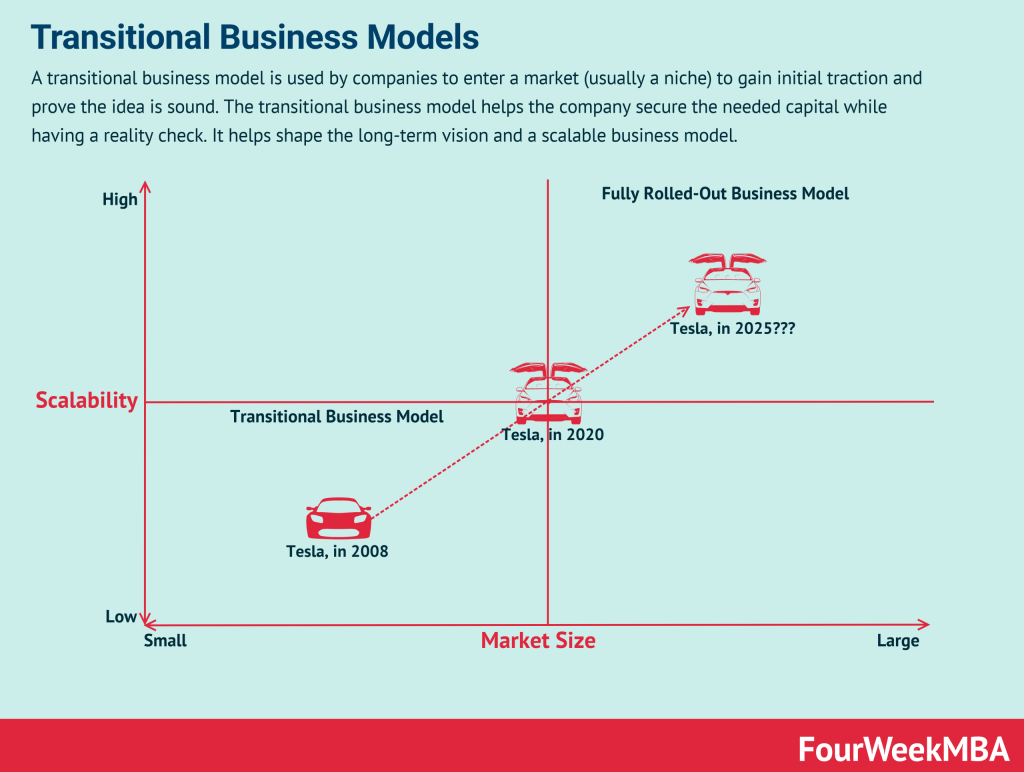
In a tech-driven business world, companies can move toward market expansion by creating options to scale via niches. Thus leveraging transitional business models to scale further and take advantage of non-linear competition, where today’s niches become tomorrow’s legacy players.
The MECE framework is an exhaustive expression of information that must account for all conceivable scenarios. While the framework is used in categorizing information and data processing, it is commonly used in formulating problems and then solving them. The MECE framework is a means of the exhaustive grouping of information into categories that are both mutually exclusive (ME) and collectively exhaustive (CE).
Product development, known as the new product development process comprises a set of steps that go from idea generation to post-launch review, which help companies analyze the various aspects of launching new products and bringing them to market. It comprises idea generation, screening, testing; business case analysis, product development, test marketing, commercialization, and post-launch review.
The term “user experience” was coined by researcher Dr. Donald Norman who said that “no product is an island. A product is more than the product. It is a cohesive, integrated set of experiences. Think through all of the stages of a product or service – from initial intentions through final reflections, from first usage to help, service, and maintenance. Make them all work together seamlessly.” User experience design is a process that design teams use to create products that are useful and relevant to consumers.
A cost-benefit analysis is a process a business can use to analyze decisions according to the costs associated with making that decision. For a cost analysis to be effective it’s important to articulate the project in the simplest terms possible, identify the costs, determine the benefits of project implementation, assess the alternatives.
Empathy mapping is a visual representation of knowledge regarding user behavior and attitudes. An empathy map can be built by defining the scope, purpose to gain user insights, and for each action, add a sticky note, summarize the findings. Expand the plan and revise.
Marc Andreessen defined Product/market fit as “being in a good market with a product that can satisfy that market.” According to Andreessen, that is a moment when a product or service has its place in the market, thus enabling traction for the company offering that product or service.
Perceptual mapping is the visual representation of consumer perceptions of brands, products, services, and organizations as a whole. Indeed, perceptual mapping asks consumers to place competing products relative to one another on a graph to assess how they perform with respect to each other in terms of perception.
Value stream mapping uses flowcharts to analyze and then improve on the delivery of products and services. Value stream mapping (VSM) is based on the concept of value streams – which are a series of sequential steps that explain how a product or service is delivered to consumers.
The bullseye framework is a simple method that enables you to prioritize the marketing channels that will make your company gain traction. The main logic of the bullseye framework is to find the marketing channels that work and prioritize them.
A Blockchain Business Model according to the FourWeekMBA framework is made of four main components: Value Model (Core Philosophy, Core Values and Value Propositions for the key stakeholders), Blockchain Model (Protocol Rules, Network Shape and Applications Layer/Ecosystem), Distribution Model (the key channels amplifying the protocol and its communities), and the Economic Model (the dynamics/incentives through which protocol players make money). Those elements coming together can serve as the basis to build and analyze a solid Blockchain Business Model.
In an asymmetric business model, the organization doesn’t monetize the user directly, but it leverages the data users provide coupled with technology, thus have a key customer pay to sustain the core asset. For example, Google makes money by leveraging users’ data, combined with its algorithms sold to advertisers for visibility.
In a business world driven by technology and digitalization, competition is much more fluid, as innovation becomes a bottom-up approach that can come from anywhere. Thus, making it much harder to define the boundaries of existing markets. Therefore, a proper business competition analysis looks at customer, technology, distribution, and financial model overlaps. While at the same time looking at future potential intersections among industries that in the short-term seem unrelated.
Technological modeling is a discipline to provide the basis for companies to sustain innovation, thus developing incremental products. While also looking at breakthrough innovative products that can pave the way for long-term success. In a sort of Barbell Strategy, technological modeling suggests having a two-sided approach, on the one hand, to keep sustaining continuous innovation as a core part of the business model. On the other hand, it places bets on future developments that have the potential to break through and take a leap forward.
A transitional business model is used by companies to enter a market (usually a niche) to gain initial traction and prove the idea is sound. The transitional business model helps the company secure the needed capital while having a reality check. It helps shape the long-term vision and a scalable business model.
Business scaling is the process of transformation of a business as the product is validated by wider and wider market segments. Business scaling is about creating traction for a product that fits a small market segment. As the product is validated it becomes critical to build a viable business model. And as the product is offered at wider and wider market segments, it’s important to align product, business model, and organizational design, to enable wider and wider scale.
In the FourWeekMBA growth matrix, you can apply growth for existing customers by tackling the same problems (gain mode). Or by tackling existing problems, for new customers (expand mode). Or by tackling new problems for existing customers (extend mode). Or perhaps by tackling whole new problems for new customers (reinvent mode).
In the FourWeekMBA Revenue Streams Matrix, revenue streams are classified according to the kind of interactions the business has with its key customers. The first dimension is the “Frequency” of interaction with the key customer. As the second dimension, there is the “Ownership” of the interaction with the key customer.
Revenue model patterns are a way for companies to monetize their business models. A revenue model pattern is a crucial building block of a business model because it informs how the company will generate short-term financial resources to invest back into the business. Thus, the way a company makes money will also influence its overall business model.
A pricing strategy or model helps companies find the pricing formula in fit with their business models. Thus aligning the customer needs with the product type while trying to enable profitability for the company. A good pricing strategy aligns the customer with the company’s long term financial sustainability to build a solid business model.
Highlights
Concept
Description
When to Use
Advantages
Drawbacks
ADKAR Model
A change management tool designed to guide employees and businesses through organizational change.
When implementing organizational change initiatives.
Helps ensure successful change adoption.
May require thorough implementation efforts.
Ansoff Matrix
A strategic framework for choosing growth strategies based on market and product contexts.
When deciding on growth strategies for a business.
Provides a structured approach to growth.
Limited to market and product aspects.
Lean Startup Canvas
An adaptation of the business model canvas focusing on problems, solutions, metrics, and value proposition.
When developing and validating startup ideas.
Emphasizes customer-centric approach.
May require iterative adjustments.
BCG Matrix
Classifies products into four categories based on market share and growth potential.
When assessing a product portfolio’s performance and potential.
Provides a visual representation of products.
May not consider all strategic factors.
Blue Ocean Strategy
A strategy that creates uncontested markets by redefining existing market boundaries.
When seeking new market opportunities and competition disruption.
Reduces competition and creates value.
Requires innovation and market analysis.
Business Analysis Framework
A research discipline for identifying key elements and processes that drive value within an organization.
When analyzing business processes and opportunities for improvement.
Enhances decision-making and value creation.
May be resource-intensive to implement.
Business Engineering Framework
Combines entrepreneurship, strategy, and scaling concepts to accelerate business innovation.
When aiming to innovate and scale a business model effectively.
Integrates various aspects of business.
Requires deep understanding of the framework.
Business Modeling Framework
A framework for developing and analyzing business models, encompassing value propositions, distribution, and more.
When designing or assessing a business model.
Offers a structured approach to modeling.
Needs customization for specific businesses.
Business Asymmetric Betting Framework
Focuses on the impact and reversibility of ideas, categorizing them into “Jackpot” and “All-In” actions.
When evaluating and prioritizing business ideas based on impact.
Helps identify high-impact opportunities.
Not a standalone decision-making tool.
Design Strategy Framework
Applies strategic thinking to user needs for creating effective products and services.
When designing products and services with user-centric approaches.
Aligns business strategy with user needs.
Requires user research and design expertise.
Minimum Viable Product
A concept that emphasizes creating a product version for maximum learning with minimal effort.
In lean startup methodologies for product development and testing.
Accelerates learning and reduces waste.
May lead to limited product features initially.
Porter’s Five Forces
Analyzes industry competitiveness by examining five forces: supplier power, buyer power, rivalry, etc.
When assessing market attractiveness and competitive forces.
Provides insights into market dynamics.
Limited to industry-level analysis.
Six Forces Model
An extension of Porter’s Five Forces with an added focus on complementary products and new market entrants.
When analyzing competition and market dynamics in technology sectors.
Addresses technological shifts and complements.
May require industry-specific expertise.
Porter’s Value Chain
Identifies processes that create value for consumers and links them to competitive advantage.
When assessing and optimizing a company’s value creation processes.
Enhances competitive positioning.
Focuses on internal processes, not external factors.
Porter’s Generic Strategies
Offers three generic strategies for competitive advantage: cost leadership, differentiation, and focus.
When choosing a competitive strategy to stand out in the market.
Provides clear strategic directions.
May not fit all business contexts.
McKinsey 7s Model
Evaluates an organization’s alignment of seven internal elements: strategy, structure, systems, etc.
When assessing organizational effectiveness and alignment.
Identifies areas for improvement.
May require extensive data collection and analysis.
GE McKinsey Matrix
Prioritizes business units based on industry attractiveness and competitive strength, leading to four strategies.
When managing a portfolio of business units and investments.
Aids in portfolio management decisions.
Requires continuous evaluation and adaptation.
McKinsey Horizon Model
A strategy framework divided into three horizons to focus on innovation and growth.
When planning for long-term innovation and business development.
Helps balance short-term and long-term goals.
May require complex strategic planning.
McKinsey’s Seven Degrees Framework
A strategy tool that helps businesses understand growth opportunities and prioritize initiatives.
When evaluating and prioritizing opportunities for business expansion.
Identifies high-impact growth initiatives.
Requires effective opportunity assessment.
Market Expansion Strategy Framework
Focuses on market niches, transitional business models, and non-linear competition for market expansion.
When considering innovative strategies for market expansion.
Addresses niche markets and scalable models.
May require adaptation to specific industries.
MECE Framework
A categorization framework used to group information into mutually exclusive and collectively exhaustive categories.
When structuring information or solving complex problems.
Ensures comprehensive and organized analysis.
May require careful definition of categories.
New Product Development
A process that covers idea generation, testing, analysis, and launch to bring new products to market.
When developing and launching new products or services.
Structured approach to product development.
Time-consuming and resource-intensive process.
User Experience Design
Focuses on creating products and services that are useful and relevant to consumers through user-centric design.
When designing products with a strong emphasis on user needs.
Enhances user satisfaction and usability.
Requires user research and design expertise.
Cost-Benefit Analysis
Evaluates the costs and benefits associated with a decision to determine whether it’s economically viable.
When making decisions that involve financial considerations.
Provides a quantitative basis for decision-making.
Relies on accurate cost and benefit estimation.
Empathy Mapping
A visual representation of user behavior and attitudes to gain insights for creating user-centric solutions.
When seeking a deeper understanding of user needs and behaviors.
Enhances empathy and user-centered design.
Requires thorough user research and analysis.
Problem-Solution Fit
Focuses on validating the market need (problem) before developing a solution (product or service).
When developing a product or service with a strong problem-solution fit.
Reduces the risk of building unwanted solutions.
Requires early-stage market validation.
Product-Market Fit
Identifies the moment when a product or service aligns perfectly with the target market’s needs and demands.
When seeking to establish a strong fit between a product and its market.
Drives customer satisfaction and growth.
Requires continuous market assessment and adaptation.
Perceptual Mapping
Visualizes consumer perceptions of brands, products, or services on a graph to assess competitive positioning.
When analyzing and comparing brand or product perceptions in the market.
Provides a visual representation of market perception.
May oversimplify complex market dynamics.
Value Stream Mapping
Uses flowcharts to analyze and improve the delivery of products and services by identifying value-adding steps.
When optimizing processes for efficiency and value creation.
Enhances process efficiency and waste reduction.
Requires process analysis and documentation.
Bullseye Framework
A method to prioritize marketing channels that are most effective for gaining traction in a business.
When planning marketing strategies to drive business growth.
Focuses marketing efforts on high-impact channels.
May require ongoing testing and adjustment.
Speed vs. Reversibility Matrix
Evaluates business decisions based on their speed of implementation and ease of reversal.
When assessing and prioritizing business decisions based on impact and reversibility.
Helps make informed decisions.
May not address all decision factors comprehensively.
Tech Business Model Template
Defines the components of a tech business model, including value model, technological model, distribution model, and financial model.
When designing or analyzing tech-focused business models.
Provides a structured approach to tech business modeling.
Requires adaptation to specific tech contexts.
Web3 Business Model Template
Defines the components of a blockchain-based business model, encompassing value model, blockchain model, distribution model, and economic model.
When analyzing or designing business models for blockchain or Web3 applications.
Offers a framework for understanding Web3 business models.
May require expertise in blockchain and Web3 concepts.
Asymmetric Business Models
Focuses on monetizing data and technology while having a key customer pay to sustain the core asset.
When exploring business models that leverage data and technology platforms.
Enables new revenue streams and models.
Requires careful management of data and technology assets.
Business Competition
Analyzes competition in a tech-driven world by considering customer, technology, distribution, and financial model overlaps.
When assessing competitive forces and strategic positioning in evolving markets.
Offers a comprehensive view of competitive dynamics.
Requires continuous monitoring and adaptation.
Technological Modeling
A discipline that sustains innovation through incremental and breakthrough product development.
When aiming to develop both incremental and transformative products.
Balances short-term and long-term innovation.
Requires a clear understanding of technological trends.
Transitional Business Models
Helps companies gain initial traction in a market by validating ideas and shaping long-term scalable business models.
When exploring market entry strategies and proving concept viability.
Supports business idea validation and adaptation.
Requires careful transition to long-term models.
Business Scaling
The process of transforming a product validated in niche markets into a viable and scalable business model.
When expanding a niche product into broader market segments.
Enables growth and wider market penetration.
Requires alignment of product, model, and organization.
Growth Matrix
Categorizes growth strategies based on targeting existing or new customers with existing or new problems.
When planning growth strategies for a business or product.
Provides a framework for strategic growth planning.
May not cover all strategic growth scenarios.
Revenue Streams Matrix
Classifies revenue streams based on the frequency and ownership of interactions with key customers.
When analyzing and optimizing revenue generation strategies.
Offers insights into revenue sources and customer relationships.
Requires alignment with business strategy and goals.
Revenue Modeling
Examines different patterns for monetizing a business model, considering short-term financial sustainability.
When designing revenue generation strategies and models.
Provides guidance for revenue planning and optimization.
Requires adaptation to fit specific business contexts.
Pricing Strategies
Helps companies establish pricing formulas that align customer needs with product features and profitability.
When setting prices for products or services to achieve profitability.
Supports pricing strategy development and alignment.
Requires consideration of market dynamics and competition.
Gennaro is the creator of FourWeekMBA, which reached about four million business people, comprising C-level executives, investors, analysts, product managers, and aspiring digital entrepreneurs in 2022 alone | He is also Director of Sales for a high-tech scaleup in the AI Industry | In 2012, Gennaro earned an International MBA with emphasis on Corporate Finance and Business Strategy.