Coca-Cola is the market leader in the soft drink industry. It is also the most widely recognized brand, with a Business Insider study revealing that a staggering 94% of the world population recognizes the red and white logo. However, Coca-Cola faces significant challenges with increasingly health-conscious consumers and less access to water resources.
High brand equity – in a market dominated by products that look largely the same, Coca-Cola enjoys high brand equity. In 2011, it won Interbrand’s highest brand equity award. More recently, it won the 2019 Effie Index award for the most effective global brand.
Global presence – the Coca-Cola Company has either a product or manufacturing presence in most of the world’s 196 countries. It is the most widely distributed North American product, eclipsing the likes of McDonald’s and Subway.
Economies of scale – of the 60 billion beverages served worldwide every day, Coca-Cola serves 3.2% or 1.9 billion of them. This allows the company to spread its costs over billions of servings across hundreds of brands, making each drink extremely cheap to produce.
Diversified product portfolio – while many associate Coca-Cola with soft drink, the company also owns and distributes over 500 different beverages in markets such as bottled water, fruit juice, sports drinks, and tea and coffee.
Weaknesses
Competition – as successful as Coca-Cola has been, PepsiCo enjoys a similar market share and brand equity. The two companies have been involved in several acrimonious disputes over the years, resulting in negative press and a decrease in brand equity for each.
Soft-drink reliance – although highly diversified, Coca-Cola still relies on soft drinks to drive most of its sales. In fact, sales of “Coke” accounted for 78% of total revenue. This reliance may drive profits down as consumers shift to healthier beverages.
Water management – beverage-centric companies such as Coca-Cola are heavily reliant on water as the main ingredient in their products. Water security and water quality are contentious issues, particularly in the third world. Thus, the company may face challenges in securing enough water to meet demand.
Opportunities
Diversification – with a clear shift away from carbonated drinks, Cola-Cola needs to diversify to maintain revenue. The company has invested heavily in Keurig Green Mountain, a coffee brand, and energy drink Monster. Developing countries with a need for clean drinking water as well as tea and coffee also represent an opportunity for Coca-Cola to diversify.
Supply chain improvement – as a global brand, Coca-Cola’s supply chain is subject to increased transportation and distribution costs. The company has the opportunity to leverage existing soft drink networks to instead move products with a higher profit margin.
Sustainability – as one of the largest manufactures of beverages, Coca-Cola has to accept some responsibility for the pollution arising from single-use plastics. There is scope for Coca-Cola to position themselves as environmentally friendly with innovative, recyclable packaging.
Threats
Competition – as Coca-Cola focuses on distribution and brand visibility, its main competitor PepsiCo is prioritizing an eCommerce presence with a focus on premium products. There is the potential that Coca-Cola has a competitive disadvantage as consumer buying preferences change.
Regulation – healthcare professionals are becoming more vocal about the dangers of sugar-laden drinks and their potential to cause diabetes and heart disease. This, in turn, has led to discussions in government about the introduction of sugar taxes on the soft drinks which are a staple of Coca-Cola’s product range.
Modernization – because of Coca-Cola’s global footprint, they are more susceptible to economic changes in developing countries. In such countries, employees are demanding higher rates of pay as others leave to chase better pay elsewhere. This leaves Coca-Cola understaffed and vulnerable to productivity loss. To some extent, Coca-Cola is also reliant on favorable exchange rates and the cheap and plentiful supply of raw materials to make a profit.
Coca-Cola’s real secret formula? Distribution!
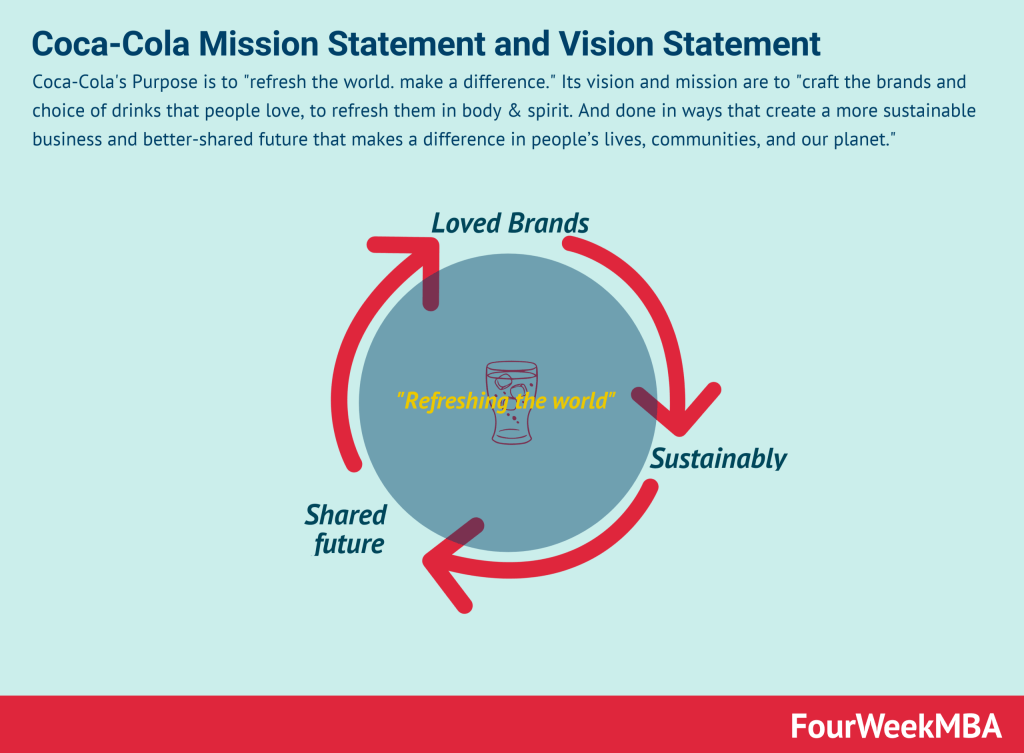
Coca-Cola follows a business strategy (implemented since 2006) where through its operating arm – the Bottling Investment Group – it invests initially in bottling partners’ operations. As they take off, Coca-Cola divests its equity stakes, and it establishes a franchising model, as long-term growth and distributionstrategy.The Coca-Cola Company is an American multinational beverage corporation founded in 1892 by pharmacist Asa Griggs Candler. Many consumers associate the company with its signature soda in a red can or bottle. In truth, however, The Coca-Cola Company owns a plethora of soft drink, juice, tea, coffee, and other beverage brands. Coca-Cola’s Purpose is to “refresh the world. make a difference.” Its vision and mission are to “craft the brands and choice of drinks that people love, to refresh them in body & spirit. And done in ways that create a more sustainable business and better-shared future that makes a difference in people’s lives, communities, and our planet.”The Coca-Cola Company has 21 different billion-dollar brands or brands that generate more than $1 billion or more in revenue each year. The company also sells its products in nearly every country in the world, with Cuba and North Korea the only two countries where it is not sold officially. What’s more, the Coca-Cola brand is worth $87.6 billion, making it one of the most valuable among all companies. Though these figures allow Coca-Cola to enjoy market dominance in many countries, the company is nevertheless subject to intense competition.
Key Highlights
Strengths:
High Brand Equity: Coca-Cola enjoys high brand equity and recognition globally, making it one of the most widely recognized brands.
Global Presence: The company has a presence in most of the world’s countries through products or manufacturing, making it highly distributed.
Economies of Scale: Coca-Cola’s vast distribution allows it to spread costs over billions of servings, making production cost-effective.
Diversified Product Portfolio: Beyond soft drinks, the company owns and distributes a wide range of beverages, including bottled water, fruit juice, and more.
Weaknesses:
Competition: Rivalry with PepsiCo has led to disputes and affected brand equity for both companies.
Soft-Drink Reliance: A significant portion of revenue comes from soft drinks, making the company vulnerable to shifting consumer preferences towards healthier options.
Water Management: The company’s reliance on water raises challenges in water security and quality, particularly in regions with water scarcity.
Opportunities:
Diversification: Coca-Cola can diversify into coffee, energy drinks, and markets with demand for clean drinking water, tea, and coffee.
Supply Chain Improvement: Leveraging existing networks, the company can enhance supply chain efficiency for higher-margin products.
Sustainability: Innovations in recyclable packaging can position Coca-Cola as environmentally friendly.
Threats:
Competition: Rival companies like PepsiCo’s focus on eCommerce and premium products could put Coca-Cola at a competitive disadvantage.
Regulation: Increasing awareness of health risks in sugary drinks might lead to government regulations, such as sugar taxes.
Modernization and Labor: Economic changes in developing countries could impact workforce availability and productivity.
Business Strategy:
Coca-Cola’s business strategy includes a franchising model through its Bottling Investment Group. It invests initially in bottling partners’ operations, gradually divesting equity stakes as partners’ operations grow.
Purpose:
Coca-Cola’s purpose is to “refresh the world. make a difference.” Its vision is to craft brands and choices that refresh people’s bodies and spirits while creating a more sustainable and better-shared future.
Billion-Dollar Brands:
The Coca-Cola Company owns 21 billion-dollar brands and sells its products in almost every country, making it a globally recognized and valuable brand.
Coca-Cola follows a business strategy (implemented since 2006) where through its operating arm – the Bottling Investment Group – it invests initially in bottling partners operations. As they take off, Coca-Cola divests its equity stakes, and it establishes a franchising model, as long-term growth and distributionstrategy.
Coca-Cola’s top investors include Warren Buffet’s company, Berkshire Hathaway, with 9.25% of shares, and other mutual funds like The Vanguard Group, holding 8.51% of shares, and BlackRock owning over 7.19% of shares of the company. Other individual investors like Herbert A. Allen, director of The Coca-Cola Company since 1982, and Barry Diller, Chairman of the Coca-Cola board since 2002. And former CEO Muhtar Kent.
Coca-Cola generated $45.75 billion in revenue in 2023, compared to over $43 billion in revenue in 2022, and $10.7 billion in profits in 2023, compared to over $9.5 billion in net profits in 2022.
Coca-Cola’s Purpose is to “refresh the world. make a difference.” Its vision and mission are to “craft the brands and choice of drinks that people love, to refresh them in body & spirit. And done in ways that create a more sustainable business and better-shared future that makes a difference in people’s lives, communities, and our planet.”
Coca-Cola is the market leader of the soft drink industry. It is also the most widely recognized brand, with a Business Insider study revealing that a staggering 94% of the world population recognizes the red and white logo. However, Coca-Cola faces significant challenges with increasingly health-conscious consumers and less access to water resources.
The Coca-Cola Company is an American multinational beverage corporation founded in 1892 by pharmacist Asa Griggs Candler. Many consumers associate the company with its signature soda in a red can or bottle. In truth, however, The Coca-Cola Company owns a plethora of soft drink, juice, tea, coffee, and other beverage brands.
The Coca-Cola Company has 21 different billion-dollar brands or brands that generate more than $1 billion or more in revenue each year. The company also sells its products in nearly every country in the world, with Cuba and North Korea the only two countries where it is not sold officially. What’s more, the Coca-Cola brand is worth $87.6 billion, making it one of the most valuable among all companies. Though these figures allow Coca-Cola to enjoy market dominance in many countries, the company is nevertheless subject to intense competition.
Pepsi is owned by PepsiCo, the holding company which owns many brands spanning from drinks to food & snacks and more. PepsiCo generated $91.47 billion in revenue in 2023, and $9.07 billion in profits for the same period. PepsiCo is primarily owned by institutional investors like The Vanguard Group (8.9%) and BlackRock (7.6%). Top individual investors comprise Robert Pohlad, the company’s board member; and the company’s CEO, Ramon Laguarta.
PepsiCo was founded in 1902 by American pharmacist and businessman Caleb Bradham as the Pepsi-Cola Company. Bradham, who hoped to emulate the success of Coca-Cola, marketed the beverage from his pharmacy and registered a patent for its recipe the following year. Today, Pepsi is a global company with a portfolio of 23 billion-dollar brands, or brands earning more than $1 billion in annual revenue. Sixteen of these brands are beverage-related, while the remaining seven are associated with snacks and other food products.
In 1965, PepsiCo acquired Frito-Lay in what the chairmen of both companies called a “marriage made in heaven”. The resultant company transformed PepsiCo from a soft drink organization and set it on a path to becoming one of the world’s leading food and beverage companies. Today, PepsiCo claims to operate in more than 200 countries and territories around the world with seven distinct divisions and many successful brands.
PepsiCo generated $91.47 billion in revenue in 2023, over $86 billion in revenue in 2022, over $79 billion in revenue in 2021, and over $70 billion in 2020.
PepsiCo generated $9.07 billion in profits in 2023, compared to nearly $9 billion in profits in 2022, over $7.6 billion in profits in 2021 and over $7 billion in 2020.
Samsung was founded in South Korea in 1938 by Lee Byung-Chul. Originally a trading company, it took Samsung 22 years to become the fully-fledged electronics company that most people recognize today. Indeed, the company is a leader in technological innovation through telecommunications, electronics, and home appliances.
Costco is a large American multinational corporation with a focus on low-cost, membership-only retail warehouse clubs. Costco is the 4th largest retail operator in the world, operating 785 warehouses in 10 different countries. Indeed, it has enjoyed rapid success growing from zero to $3 billion in sales within six years.
From humble beginnings just over 50 years ago, Walmart has grown to become the world’s largest retail company. A single small discount store in Arkansas has now expanded to over 11,000 stores in 28 countries. Some reports suggest that the company now makes $1.8 million of profit every hour.
Headquartered in San Francisco, California, Uber started as a peer-to-peer ridesharing platform. In more recent times, the company has moved into food delivery, rental cars, and bike-sharing. In one form or another, Uber now has a presence in over 900 cities worldwide.
It would be hard to argue the case for a more recognizable entertainment brand than Disney. Disney is of course synonymous with Walt Disney, but it was Walt and his brother Roy who started the company in 1923 in Burbank, California. Disney content is now broadcast on over 100 channels in 34 different languages across the globe.
Coca-Cola is the market leader of the soft drink industry. It is also the most widely recognized brand, with a Business Insider study revealing that a staggering 94% of the world population recognizes the red and white logo. However, Coca-Cola faces significant challenges with increasingly health-conscious consumers and less access to water resources.
Founded in 1903 by Henry Ford and is the fifth-largest family-owned company in the world. Ford is a globally recognized brand in the automotive industry for a couple of reasons. First, Henry Ford is well-known as the inventor of the production line and thus the modern automobile industry. Today, Ford has also maintained relevance as the seventh-largest car manufacturer worldwide, selling a range of passenger cars, trucks, and vans.
Tesco was founded in 1919 by Jack Cohen, as a small group of market stalls. After rapid expansion in the following years, the company became the largest retailer in the UK and is now the second-largest in the world. To put their dominance into perspective, consider that Tesco serves around 66 shoppers per second across 7000 retails stores, delivering approximately $180,000 worth of sales every minute.
Nestlé is a large multinational food and beverage manufacturer with more than 2000 brands spread across 197 countries. Some of Nestlé’s well-known brands include Nescafe, Kit-Kat, Purina, Aero, Butterfinger, Maggi, and Haagen-Dazs. Originally a producer of infant food in 1867, it is now considered to be the world’s largest food manufacturer.
Amazon is among the most diversified business model in the tech industry. The company is well-positioned to dominate e-commerce further. And while its online stores have tight profit margins, Amazon still unlocks cash for growth, while consolidating its dominance in the cloud and grabbing new opportunities like voice.
Facebook, with its products, with its strong appeal, and consumer brand has a solid business model, threatened in the last years by privacy concerns, which open up the way to potential regulation to break up the company. If that will not happen, Facebook will have the chance to expand to define other markets like VR.
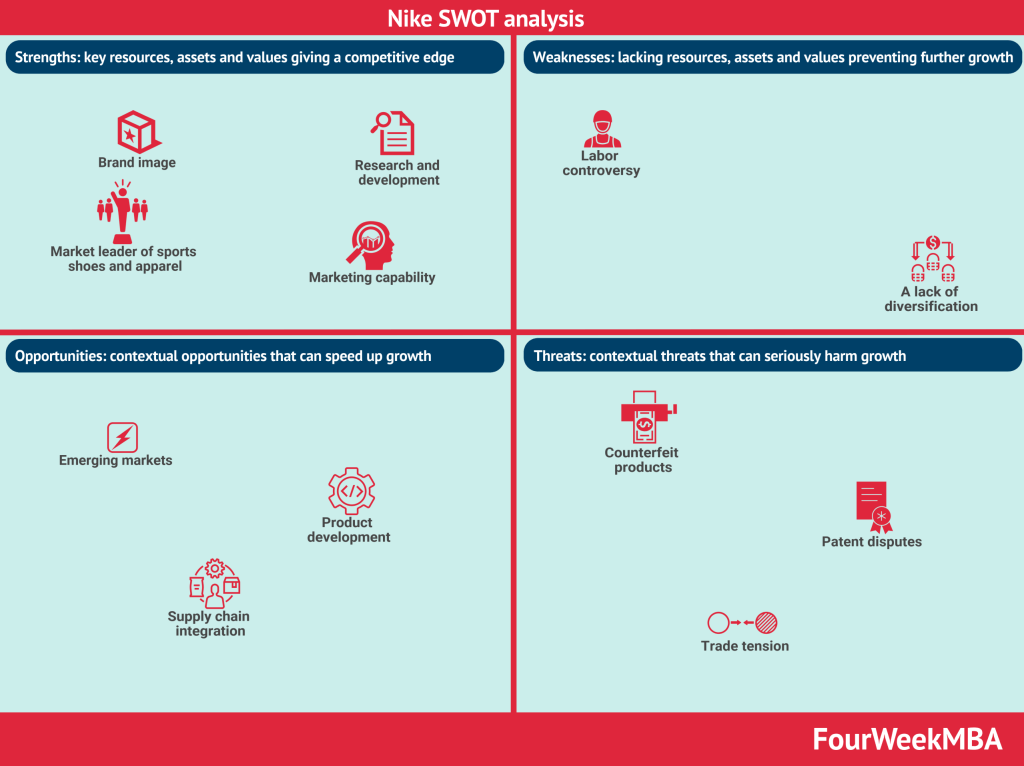
Starbucks is a global consumer brand with direct distribution, recognized brands, and products that make it a viable business. Its reliance on the Americas as a primary operating segment makes it a weakness. At the same time, Starbucks faces risks related to coffee beans price volatility. Yet the company still has global expansion opportunities.
Among the most recognized car manufacturers, Tesla is valued more than the combined market capitalization of GM and Ford. While the company’s direct distribution is a strength, its lack of financial viability is a weakness. Competition is a future threat. However, if Tesla defines a new market for car manufacturing its potential growth will be massive.
Netflix is among the most popular streaming platforms, with a subscription-based business model. The brand, platform, and content are strengths. The volatility of content licensing and production are weaknesses. The streaming market is a potential blue ocean. Inability to attract and retain premium members, and its fixed long-term costs are threats to its business model.
Apple can leverage a strong consumer brand and set of successful products as a strength. Yet the company is still too reliant on the iPhone as a primary revenue stream. Though Apple is working to open up new markets as an opportunity, it has to make sure to sustain its stores’ sales.
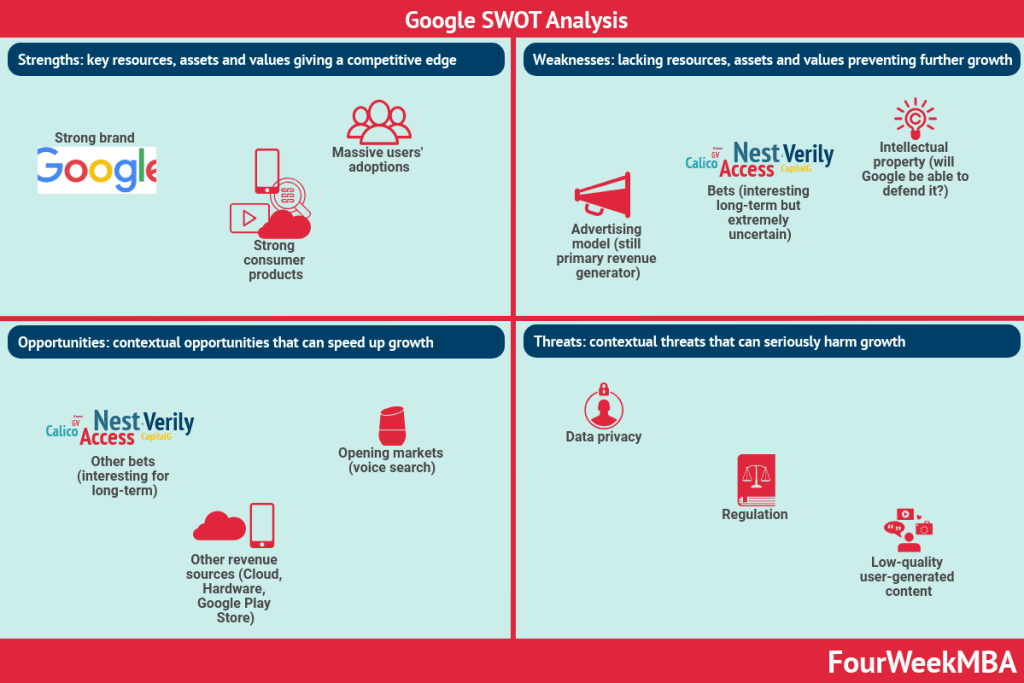
Google’s strength is its strong consumer brand. The company is grabbing new opportunities by opening up industries like voice search and consolidating in industries like the cloud. As a weakness, its revenues primarily come from advertising. A primary threat is the quick change of search and potential intervention by regulators.
Gennaro is the creator of FourWeekMBA, which reached about four million business people, comprising C-level executives, investors, analysts, product managers, and aspiring digital entrepreneurs in 2022 alone | He is also Director of Sales for a high-tech scaleup in the AI Industry | In 2012, Gennaro earned an International MBA with emphasis on Corporate Finance and Business Strategy.