The 2-Company Engine Powering Everything Elon Musk Builds
Most coverage of Elon Musk focuses on headlines and controversies. FourWeekMBA readers know better — the real story is the business model architecture quietly operating beneath all the noise. And right now, that architecture reveals something counterintuitive: Musk runs two fundamentally different business model types, and they are deliberately designed to fund each other.
Tesla’s Model: Volume, Margins, and the Recurring Revenue Trap Nobody Talks About
Tesla operates as a vertically integrated product company with an increasingly software-defined revenue layer. The hardware — the car — is essentially a Trojan horse. The real business model bet is on Full Self-Driving subscriptions, energy storage margins, and the Supercharger network, which now serves non-Tesla vehicles. This is a classic razor-and-blades inversion: sell the razor at compressed margins, monetize the ecosystem indefinitely.
Tesla’s 2024 gross margin compression actually revealed the model’s maturity problem. When you compete on volume, you eventually hit commodity pricing pressure. Tesla is now racing to transition from a car company to an energy and autonomy platform before that commoditization fully arrives. The Cybercab robotaxi announcement is the clearest signal: Tesla wants recurring, asset-light revenue — not unit sales.
SpaceX’s Model: Scarcity, Contracts, and the Infrastructure Playbook
SpaceX operates almost the opposite logic. It is fundamentally a infrastructure-as-a-service business dressed in aerospace clothing. Starlink alone has crossed 4 million subscribers globally, making it the most disruptive broadband infrastructure play since fiber optic rollout. But the deeper model is launch monopoly economics — reusable rockets create structural cost advantages no competitor has yet matched at scale.
Government contracts from NASA and the Department of Defense provide baseline revenue stability. Commercial launches provide margin. Starlink provides the recurring subscriptionflywheel. Three revenue streams, three different risk profiles — stacked deliberately. This is not a startup. This is a vertically integrated infrastructure conglomerate operating inside a single private company.
Which Model Actually Wins? The Cross-Subsidy Nobody Covers
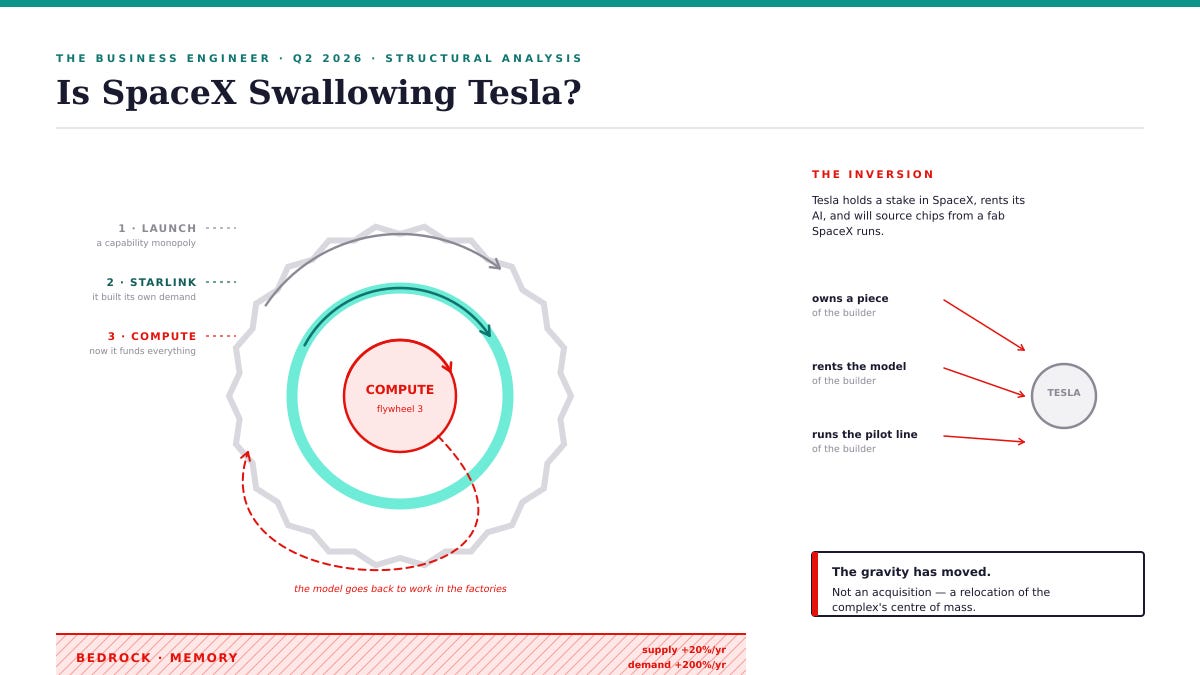
Here is the angle that business model analysts consistently miss: Tesla and SpaceX do not compete. They subsidize each other’s ambitions in ways that are structurally invisible.
Tesla’s public market valuation — still one of the highest price-to-earnings ratios among major manufacturers — provides Musk with financial credibility and collateral. SpaceX’s private status allows it to operate without quarterly earnings pressure, running long-horizon capital expenditure cycles that would be impossible under public market scrutiny. Together, they form a public-private dumbbell structure that no other entrepreneur has successfully replicated.
The “Elon Musk companies” question is really a business model architecture question. Each company — Tesla, SpaceX, xAI, X — serves a different layer of a vertically integrated influence and technology stack. SpaceX owns physical infrastructure. Tesla owns consumer hardware and energy. xAI owns intelligence. X owns distribution.
This is not a portfolio. It is a vertically integrated conglomerate built across five industries simultaneously — with each unit feeding the others. Understanding that structure is the actual business model story. Everything else is just news.
This piece describes how the companies named are structured. It is not a valuation, a recommendation or an assessment of any security, and nothing here is investment advice.
Gennaro Cuofano is a CRO and tech executive who has worked in AI since late 2015, starting with bringing NLP, natural-language generation, voice and chatbot products to the marketing industry. His background is in law and finance: he holds a Master's degree in Law and an International MBA with an emphasis on corporate finance (LUISS Business School and the University of San Diego, 2012), and worked as a financial analyst at a real-estate investment firm in San Diego and as an assistant controller. His work focuses on business model strategy, business engineering and, more broadly, structural analysis: how companies make money, read from their own filings. He created FourWeekMBA and leads research there and at The Business Engineer, his newsletter on AI and business strategy, with over 95,000 subscribers and more than 1,000 published analyses. His writing has also appeared on Entrepreneur (for example, How to Digitize a Family Business in Europe) and HackerNoon. Find him on LinkedIn and Substack. See how we source.