TikTok is a creative media platform, which is widely popular among young people, but it is also quickly scaling up. With its formats primarily driven by a continuous scroll and its powerful AI, TikTok is the stickiest media platform on earth. It has massive potential for companies that understand how to leverage it to build an effective digital marketingstrategy.
TikTok Marketing KPIs
Description
Formula to Measure
When to Use
Advantages
Drawbacks
Follower Growth Rate
Measures the percentage increase in TikTok followers over a specific time period.
[(Current Followers – Previous Followers) / Previous Followers] x 100%
To track audience expansion and engagement.
Indicates popularity and reach.
Growth may fluctuate due to trends.
Engagement Rate
Calculates the percentage of engagement (likes, comments, shares) per TikTok video post.
[(Total Engagement / Total Views) x 100%]
To evaluate content quality and interaction.
Measures audience interaction.
Low engagement may signal issues.
Video Views
Counts the total number of views for a specific TikTok video.
Total views of a single video
To measure video visibility and reach.
High views indicate content appeal.
Views don’t guarantee conversions.
Click-Through Rate (CTR)
Measures the percentage of TikTok users who clicked on a link in your video’s description or bio.
(Total Clicks / Total Views) x 100%
For tracking website or landing page traffic.
Indicates video’s effectiveness.
Low CTR may require content adjustments.
Hashtag Reach
Tracks the total number of users who have seen posts using a specific TikTok hashtag.
Count of users reached by the hashtag
To assess the impact of hashtag campaigns.
Measures hashtag effectiveness.
Depends on hashtag popularity.
Average Watch Time
Calculates the average time users spend watching a TikTok video.
(Total Watch Time / Total Views)
To evaluate video engagement and retention.
Longer watch times signify interest.
Short watch times may indicate issues.
Share of Voice
Compares your brand’s TikTok presence to competitors by measuring the volume of mentions and discussions.
(Your Brand Mentions / Total Brand Mentions) x 100%
For competitive analysis and positioning.
Identifies market share and trends.
Data may vary based on sources.
Conversion Rate
Measures the percentage of TikTok viewers who complete a desired action, such as making a purchase or signing up.
(Total Conversions / Total Clicks) x 100%
To assess the effectiveness of call-to-action.
Indicates marketing ROI.
Low conversion may need optimization.
User Demographics
Analyzes the age, gender, location, and interests of TikTok followers and viewers.
Demographic data analysis
To tailor content and targeting strategies.
Personalizes content for the audience.
Data may not be fully accurate.
User Retention Rate
Calculates the percentage of TikTok followers who continue to follow your account over time.
[(End Followers – Start Followers) / Start Followers] x 100%
To monitor follower loyalty and engagement.
Indicates content consistency.
Fluctuates due to various factors.
User Comments
Counts the total number of comments on TikTok videos, reflecting user engagement and feedback.
Total comments on a video
To assess audience interaction and sentiment.
Measures content relevance.
Comments may include spam or negativity.
Video Completion Rate
Measures the percentage of TikTok viewers who watch a video in its entirety.
[(Total Completed Views / Total Views) x 100%]
To evaluate video engagement and quality.
High completion indicates captivation.
Low rate may need content adjustments.
Influencer Collaboration ROI
Evaluates the return on investment (ROI) from collaborating with TikTok influencers for campaigns.
[(Revenue from Campaign – Cost of Collaboration) / Cost of Collaboration] x 100%
When partnering with influencers.
Measures campaign profitability.
ROI depends on influencer performance.
Audience Growth Rate
Measures the percentage increase in TikTok followers over a specified time period.
[(Current Followers – Previous Followers) / Previous Followers] x 100%
To track overall audience growth.
Indicates audience appeal and reach.
Growth rate may fluctuate.
Video Impressions
Tracks the total number of times TikTok videos have been displayed to users’ feeds.
Total impressions of a video
To assess video visibility and reach.
High impressions increase visibility.
Impressions don’t guarantee engagement.
Profile Visits
Counts the total number of users who have visited your TikTok profile page.
Total visits to the profile
To measure user interest and engagement.
Indicates profile appeal and content.
Visits may not always lead to follows.
Video Shares
Measures the number of times TikTok videos have been shared with others, increasing exposure.
Total shares of a video
To assess content virality and reach.
High shares indicate engaging content.
Virality may vary based on trends.
Ad Campaign ROI
Evaluates the return on investment (ROI) from TikTok advertising campaigns, considering ad spend and revenue generated.
[(Revenue from Ads – Ad Spend) / Ad Spend] x 100%
For tracking the effectiveness of paid ads.
Measures advertising campaign success.
ROI depends on ad targeting and quality.
Video Likes
Counts the total number of likes or “hearts” received on TikTok videos, reflecting user approval and engagement.
Total likes on a video
To measure video popularity and impact.
High likes indicate user approval.
Likes may be influenced by trends.
Competitor Analysis
Evaluates TikTok marketing strategies of competitors, including content, engagement, and follower growth.
Data collection and analysis
For competitive benchmarking and improvement.
Identifies market opportunities.
Data accuracy depends on sources.
User-generated Content (UGC)
Measures the volume and impact of user-generated content that mentions or promotes your brand on TikTok.
UGC tracking and engagement analysis
When leveraging user-generated content.
Utilizes user advocacy and trust.
Quality and authenticity may vary.
Hashtag Performance
Analyzes the effectiveness of branded hashtags in driving engagement, visibility, and user-generated content.
[(Total Engagement with Hashtag / Total Impressions of Hashtag) x 100%]
For assessing hashtag campaigns.
Measures hashtag campaign success.
Campaigns may not go viral.
TikTok Video Length
Evaluates the optimal video length for audience engagement and retention on TikTok.
Analysis of video performance
To refine video content strategy.
Helps create more effective videos.
Length may vary based on audience.
Live Streaming Metrics
Tracks metrics like live viewers, comments, and shares during TikTok live streaming sessions.
Live streaming analytics
When utilizing live streaming for engagement.
Measures real-time audience interaction.
Stream quality may impact metrics.
Audience Sentiment Analysis
Analyzes user comments and feedback to gauge audience sentiment toward TikTok content and campaigns.
Sentiment analysis of comments
For understanding audience perceptions.
Helps tailor content and strategy.
Interpretation may vary.
TikTok Challenges Participation
Measures user participation and engagement in branded TikTok challenges or contests.
Participation data analysis
When running challenge campaigns.
Drives user-generated content.
Participation may vary by challenge.
Video Dislikes
Counts the total number of dislikes received on TikTok videos, reflecting user dissatisfaction or negative sentiment.
Total dislikes on a video
To assess video content impact and sentiment.
Indicates areas for improvement.
Dislikes may result from various factors.
Cost per Click (CPC)
Calculates the cost of each click on a TikTok ad, helping determine ad campaign efficiency and budget allocation.
(Ad Spend / Total Clicks)
For monitoring advertising costs.
Evaluates ad cost-effectiveness.
High CPC may require optimization.
User Churn Rate
Measures the percentage of TikTok users who stop following your account or engage less over time.
[(Start Followers – End Followers) / Start Followers] x 100%
The marketers and makes should create that sort of content on the platform that doesn’t alienate the audiences. Engaging, relatable, share-worthy, and will tell a story.
A great part of the site’s content is comedic—sort of like Vine, Twitter’s late video organization (find happiness within the hereafter). Probably the foremost mainstream types incorporate short productions, lip-adjusting, flinch recordings, and cooking how-to’s.
One of the foremost famous marvels is that the flood of “challenges” posted over the stage (regularly to picture verses from a well-known melody or test various responses to a typical social analysis) that make an expanding influence as everybody contributes their adaptation. You thought the #InMyFeelingsChallenge was mainstream once you continued seeing it on Instagram? it had been transferred to Instagram 1.7 multiple times, while TikTok saw 5 million sections.
TikTok Ads
With regards to advertisement openings on TikTok, there are tons of opportunities for the brands and individuals to seem for:
In-Feed Ads
TopView
Brand Takeover
Marked Hashtag Challenge
Given what proportion impact TikTok has over music downloads, it doesn’t shock anyone that performers and craftsmen are utilizing TikTok advertisements to expand their reach and advance their most up-to-date deliveries.
Be that because it may, brands are additionally engaging within the activity — with many seeing noteworthy profits for his or her speculation. Levi’s has allegedly observed high commitment and expanded traffic to its site, with item sees dramatically increasing for every item that appeared with TikTok’s new “Shop Now” button.
Influencer Marketing on TikTok
Notwithstanding immediate promotions, numerous brands are utilizing TikTok’s genius influencers to assist their image crusades — and arriving at an enormous number of clients simultaneously.
A few brands are as of now going all out with their TikTok influencer showcasing technique. Fenty Beauty is that the principal brand on the appliance to form their own maker “house” on TikTok, enrolling absolutely the greatest magnificence content makers on TikTok as a serious aspect of their #FENTYBEAUTYHOUSE.
TikTok has been quick to acknowledge influencer promoting as a key aspect of their internet business offering for brands. TikTok has lately dispatched a TikTok Creator Marketplace: an “official stage for brand and maker coordinated efforts,” and recordings from maker accomplices can undoubtedly be advanced as in-feed promotions for extra permeability support.
How to run Ads on Tiktok
Create a TikTok Ads Account
To create your first advertising campaign, visit the TikTok Ads home page and click on on the Create a billboard button. Because TikTok Ads remains in beta, the method of fixing ads isn’t entirely online yet. once you click the button, a form pops up requesting details to line up your account. After you submit this information, a representative will get in-tuned with you to line up your TikTok Ads account.
It can take up to 48 hours to receive your account. Once you are doing, the method for creating ads is comparatively straightforward.
Create a TikTok advertising campaign
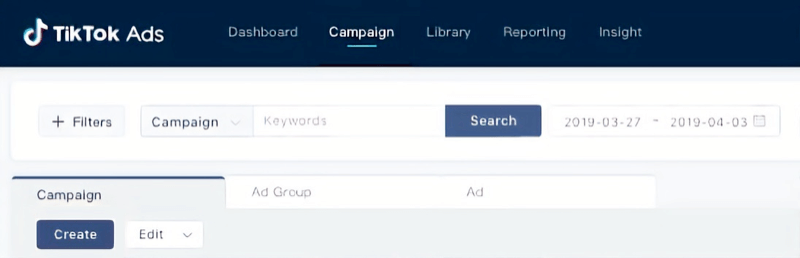
In the TikTok Ads dashboard, click the Campaign tab at the highest of the page then click the Create button.
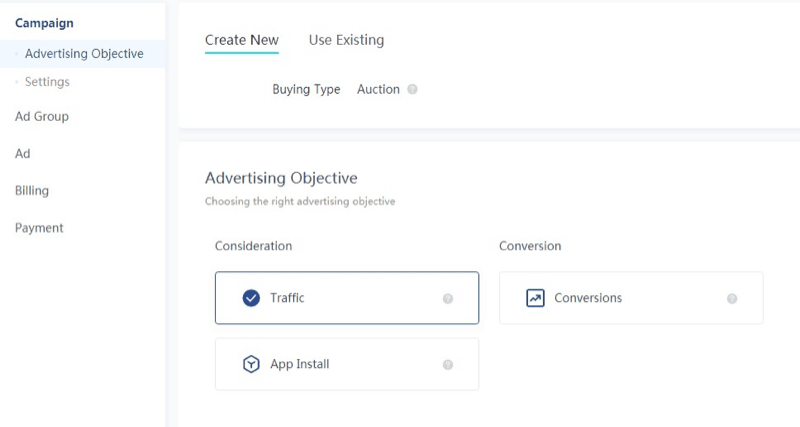
Next, choose a campaign objective, which is the primary goal of your ad. As of this writing, you’ll choose between three options: Traffic, Conversions, and App Install.
To set your budget at the campaign level, select either the Daily Budget or Total Budget option under Settings. Note that both the daily budget and total budget must be a minimum of $500.
Set Your TikTok Ad Placements, Details, and Targeting
The next step is to make a billboard group for your campaign and choose your placements and targeting.
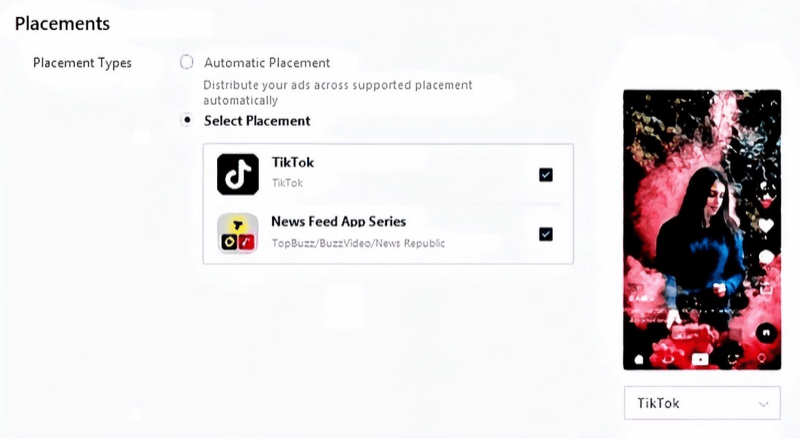
One of the foremost useful features of the TikTok Ads dashboard is that it allows you to select the precise platforms you’d wish to run your ads on. These include not only TikTok but also its entire family of apps like BuzzVideo, News Republic, etc.
There’s also an option for automatic placements, where TikTok determines where your ad would perform best and places it there.
Once you’ve selected your preferred placements, follow the prompts to enter all of the small print necessary to start out running your ad, including any relevant URLs, display names, images, and categories. you’ll also select up to twenty keywords to explain your website or app, which can then be wont to match your products with the proper audience.
The Targeting section allows you to define the audience for your ads. Set parameters for location, age, gender, languages, interests, devices, and more to draw in the proper audience for your ads. If you’ve got a selected group of individuals in mind to focus on TikTok, you’ll create a custom audience by uploading the IDs of existing TikTok users. Simply upload the IDs as a CSV, TXT, or ZIP file.
Control Your TikTok Ad Spend, Duration, and Goals
Now you’re able to choose a budget, schedule, and goal for your TikTok ads.
Set a Budget and Schedule
In the Budget & Schedule section, set the allow the ad group. you’ll choose either a daily budget (the amount you’re willing to spend each day) or a complete budget (the total amount you’re willing to spend for the duration of the schedule).
Note that there’s a $50 minimum for the daily budget and total budget at the ad group level. Editor’s Note: At the time of this writing, the minimum daily budget at the ad group level was quoted as $50.
Design Your Ad Using TikTok’s Video Creation Kit
When it involves designing the creative assets for your ad, the method is fairly straightforward. TikTok ads are often horizontal, vertical, or square videos and pictures . the simplest thing about the ads platform may be a tool called the Video Creation Kit, which provides video and image templates you customize using your existing images. It also comes with 300+ options for free of charge background music.
Optimize Your TikTok Ad
When creating a brand takeover or in-app display ad, make sure you use high-resolution images because the ad’s visuals will take over the user’s entire screen and be highly visible.
Tiktok Ads are very easy to create, monitor, and optimize. Focus on just one call to action (CTA) to form the foremost of your redirect link. for instance, if you ask users to download your app and access a coupon code through your website, you would possibly confuse some viewers by redirecting them to your app’s download screen.
Account-based marketing (ABM) is a strategy where the marketing and sales departments come together to create personalized buying experiences for high-value accounts. Account-based marketing is a business-to-business (B2B) approach in which marketing and sales teams work together to target high-value accounts and turn them into customers.
Ad Ops – also known as Digital Ad Operations – refers to systems and processes that support digital advertisements’ delivery and management. The concept describes any process that helps a marketing team manage, run, or optimize ad campaigns, making them an integrating part of the business operations.
Venture capitalist, Dave McClure, coined the acronym AARRR which is a simplified model that enables to understand what metrics and channels to look at, at each stage for the users’ path toward becoming customers and referrers of a brand.
Affinity marketing involves a partnership between two or more businesses to sell more products. Note that this is a mutually beneficial arrangement where one brand can extend its reach and enhance its credibility in association with the other.
As the name suggests, ambush marketing raises awareness for brands at events in a covert and unexpected fashion. Ambush marketing takes many forms, one common element, the brand advertising their products or services has not paid for the right to do so. Thus, the business doing the ambushing attempts to capitalize on the efforts made by the business sponsoring the event.
Affiliate marketing describes the process whereby an affiliate earns a commission for selling the products of another person or company. Here, the affiliate is simply an individual who is motivated to promote a particular product through incentivization. The business whose product is being promoted will gain in terms of sales and marketing from affiliates.
The bullseye framework is a simple method that enables you to prioritize the marketing channels that will make your company gain traction. The main logic of the bullseye framework is to find the marketing channels that work and prioritize them.
Brand building is the set of activities that help companies to build an identity that can be recognized by its audience. Thus, it works as a mechanism of identification through core values that signal trust and that help build long-term relationships between the brand and its key stakeholders.
According to inbound marketing platform HubSpot, brand dilution occurs “when a company’s brand equity diminishes due to an unsuccessful brand extension, which is a new product the company develops in an industry that they don’t have any market share in.” Brand dilution, therefore, occurs when a brand decreases in value after the company releases a product that does not align with its vision, mission, or skillset.
The brand essence wheel is a templated approach businesses can use to better understand their brand. The brand essence wheel has obvious implications for external brand strategy. However, it is equally important in simplifying brand strategy for employees without a strong marketing background. Although many variations of the brand essence wheel exist, a comprehensive wheel incorporates information from five categories: attributes, benefits, values, personality, brand essence.
The brand equity is the premium that a customer is willing to pay for a product that has all the objective characteristics of existing alternatives, thus, making it different in terms of perception. The premium on seemingly equal products and quality is attributable to its brand equity.
Brand positioning is about creating a mental real estate in the mind of the target market. If successful, brand positioning allows a business to gain a competitive advantage. And it also works as a switching cost in favor of the brand. Consumers recognizing a brand might be less prone to switch to another brand.
Business storytelling is a critical part of developing a business model. Indeed, the way you frame the story of your organization will influence its brand in the long-term. That’s because your brand story is tied to your brand identity, and it enables people to identify with a company.
Content marketing is one of the most powerful commercial activities which focuses on leveraging content production (text, audio, video, or other formats) to attract a targeted audience. Content marketing focuses on building a strong brand, but also to convert part of that targeted audience into potential customers.
One of the first mentions of customer lifetime value was in the 1988 book Database Marketing: Strategy and Implementation written by Robert Shaw and Merlin Stone. Customer lifetime value (CLV) represents the value of a customer to a company over a period of time. It represents a critical business metric, especially for SaaS or recurring revenue-based businesses.
Customer segmentation is a marketing method that divides the customers in sub-groups, that share similar characteristics. Thus, product, marketing and engineering teams can center the strategy from go-to-market to product development and communication around each sub-group. Customer segments can be broken down is several ways, such as demographics, geography, psychographics and more.
Developer marketing encompasses tactics designed to grow awareness and adopt software tools, solutions, and SaaS platforms. Developer marketing has become the standard among software companies with a platform component, where developers can build applications on top of the core software or open software. Therefore, engaging developer communities has become a key element of marketing for many digital businesses.
A digital channel is a marketing channel, part of a distribution strategy, helping an organization to reach its potential customers via electronic means. There are several digital marketing channels, usually divided into organic and paid channels. Some organic channels are SEO, SMO, email marketing. And some paid channels comprise SEM, SMM, and display advertising.
Field marketing is a general term that encompasses face-to-face marketing activities carried out in the field. These activities may include street promotions, conferences, sales, and various forms of experiential marketing. Field marketing, therefore, refers to any marketing activity that is performed in the field.
interaction with a brand until they become a paid customer and beyond.
Funnel marketing is modeled after the marketing funnel, a concept that tells the company how it should market to consumers based on their position in the funnel itself. The notion of a customer embarking on a journey when interacting with a brand was first proposed by Elias St. Elmo Lewis in 1898.
Funnel marketing typically considers three stages of a non-linear marketing funnel. These are top of the funnel (TOFU), middle of the funnel (MOFU), and bottom of the funnel (BOFU). Particular marketing strategies at each stage are adapted to the level of familiarity the consumer has with a brand.
A go-to-market strategy represents how companies market their new products to reach target customers in a scalable and repeatable way. It starts with how new products/services get developed to how these organizations target potential customers (via sales and marketing models) to enable their value proposition to be delivered to create a competitive advantage.
The term “greenwashing” was first coined by environmentalist Jay Westerveld in 1986 at a time when most consumers received their news from television, radio, and print media. Some companies took advantage of limited public access to information by portraying themselves as environmental stewards – even when their actions proved otherwise. Greenwashing is a deceptive marketing practice where a company makes unsubstantiated claims about an environmentally-friendly product or service.
Grassroots marketing involves a brand creating highly targeted content for a particular niche or audience. When an organization engages in grassroots marketing, it focuses on a small group of people with the hope that its marketing message is shared with a progressively larger audience.
Growth marketing is a process of rapid experimentation, which in a way has to be “scientific” by keeping in mind that it is used by startups to grow, quickly. Thus, the “scientific” here is not meant in the academic sense. Growth marketing is expected to unlock growth, quickly and with an often limited budget.
Guerrilla marketing is an advertising strategy that seeks to utilize low-cost and sometimes unconventional tactics that are high impact. First coined by Jay Conrad Levinson in his 1984 book of the same title, guerrilla marketing works best on existing customers who are familiar with a brand or product and its particular characteristics.
Hunger marketing is a marketing strategy focused on manipulating consumer emotions. By bringing products to market with an attractive price point and restricted supply, consumers have a stronger desire to make a purchase.
Integrated marketing communication (IMC) is an approach used by businesses to coordinate and brand their communication strategies. Integrated marketing communication takes separate marketing functions and combines them into one, interconnected approach with a core brand message that is consistent across various channels. These encompass owned, earned, and paid media. Integrated marketing communication has been used to great effect by companies such as Snapchat, Snickers, and Domino’s.
Inbound marketing is a marketing strategy designed to attract customers to a brand with content and experiences that they derive value from. Inbound marketing utilizes blogs, events, SEO, and social media to create brand awareness and attract targeted consumers. By attracting or “drawing in” a targeted audience, inbound marketing differs from outbound marketing which actively pushes a brand onto consumers who may have no interest in what is being offered.
Integrated marketing describes the process of delivering consistent and relevant content to a target audience across all marketing channels. It is a cohesive, unified, and immersive marketing strategy that is cost-effective and relies on brand identity and storytelling to amplify the brand to a wider and wider audience.
The marketing mix is a term to describe the multi-faceted approach to a complete and effective marketing plan. Traditionally, this plan included the four Ps of marketing: price, product, promotion, and place. But the exact makeup of a marketing mix has undergone various changes in response to new technologies and ways of thinking. Additions to the four Ps include physical evidence, people, process, and even politics.
Marketing myopia is the nearsighted focus on selling goods and services at the expense of consumer needs. Marketing myopia was coined by Harvard Business School professor Theodore Levitt in 1960. Originally, Levitt described the concept in the context of organizations in high-growth industries that become complacent in their belief that such industries never fail.
Marketing personas give businesses a general overview of key segments of their target audience and how these segments interact with their brand. Marketing personas are based on the data of an ideal, fictional customer whose characteristics, needs, and motivations are representative of a broader market segment.
Meme marketing is any marketing strategy that uses memes to promote a brand. The term “meme” itself was popularized by author Richard Dawkins over 50 years later in his 1976 book The Selfish Gene. In the book, Dawkins described how ideas evolved and were shared across different cultures. The internet has enabled this exchange to occur at an exponential rate, with the first modern memes emerging in the late 1990s and early 2000s.
Microtargeting is a marketing strategy that utilizes consumer demographic data to identify the interests of a very specific group of individuals. Like most marketing strategies, the goal of microtargeting is to positively influence consumer behavior.
Multichannel marketing executes a marketing strategy across multiple platforms to reach as many consumers as possible. Here, a platform may refer to product packaging, word-of-mouth advertising, mobile apps, email, websites, or promotional events, and all the other channels that can help amplify the brand to reach as many consumers as possible.
Multi-level marketing (MLM), otherwise known as network or referral marketing, is a strategy in which businesses sell their products through person-to-person sales. When consumers join MLM programs, they act as distributors. Distributors make money by selling the product directly to other consumers. They earn a small percentage of sales from those that they recruit to do the same – often referred to as their “downline”.
The Net Promoter Score (NPS) is a measure of the ability of a product or service to attract word-of-mouth advertising. NPS is a crucial part of any marketing strategy since attracting and then retaining customers means they are more likely to recommend a business to others.
Neuromarketing information is collected by measuring brain activity related to specific brain functions using sophisticated and expensive technology such as MRI machines. Some businesses also choose to make inferences of neurological responses by analyzing biometric and heart-rate data.
Neuromarketing is the domain of large companies with similarly large budgets or subsidies. These include Frito-Lay, Google, and The Weather Channel.
Newsjacking as a marketing strategy was popularised by David Meerman Scott in his book Newsjacking: How to Inject Your Ideas into a Breaking News Story and Generate Tons of Media Coverage. Newsjacking describes the practice of aligning a brand with a current event to generate media attention and increase brand exposure.
A microniche is a subset of potential customers within a niche. In the era of dominating digital super-platforms, identifying a microniche can kick off the strategy of digital businesses to prevent competition against large platforms. As the microniche becomes a niche, then a market, scale becomes an option.
We can define pull and push marketing from the perspective of the target audience or customers. In push marketing, as the name suggests, you’re promoting a product so that consumers can see it. In a pull strategy, consumers might look for your product or service drawn by its brand.
Real-time marketing is as exactly as it sounds. It involves in-the-moment marketing to customers across any channel based on how that customer is interacting with the brand.
Relationship marketing involves businesses and their brands forming long-term relationships with customers. The focus of relationship marketing is to increase customer loyalty and engagement through high-quality products and services. It differs from short-term processes focused solely on customer acquisition and individual sales.
Reverse marketing describes any marketing strategy that encourages consumers to seek out a product or company on their own. This approach differs from a traditional marketing strategy where marketers seek out the consumer.
Remarketing involves the creation of personalized and targeted ads for consumers who have already visited a company’s website. The process works in this way: as users visit a brand’s website, they are tagged with cookies that follow the users, and as they land on advertising platforms where retargeting is an option (like social media platforms) they get served ads based on their navigation.
Sensory marketing describes any marketing campaign designed to appeal to the five human senses of touch, taste, smell, sight, and sound. Technologies such as artificial intelligence, virtual reality, and the Internet of Things (IoT) are enabling marketers to design fun, interactive, and immersive sensory marketing brand experiences. Long term, businesses must develop sensory marketing campaigns that are relevant and effective in eCommerce.
Services marketing originated as a separate field of study during the 1980s. Researchers realized that the unique characteristics of services required different marketing strategies to those used in the promotion of physical goods. Services marketing is a specialized branch of marketing that promotes the intangible benefits delivered by a company to create customer value.
Sustainable marketing describes how a business will invest in social and environmental initiatives as part of its marketing strategy. Also known as green marketing, it is often used to counteract public criticism around wastage, misleading advertising, and poor quality or unsafe products.
Word-of-mouth marketing is a marketing strategy skewed toward offering a great experience to existing customers and incentivizing them to share it with other potential customers. That is one of the most effective forms of marketing as it enables a company to gain traction based on existing customers’ referrals. When repeat customers become a key enabler for the brand this is one of the best organic and sustainable growth marketing strategies.
360 marketing is a marketing campaign that utilizes all available mediums, channels, and consumer touchpoints. 360 marketing requires the business to maintain a consistent presence across multiple online and offline channels. This ensures it does not miss potentially lucrative customer segments. By its very nature, 360 marketing describes any number of different marketing strategies. However, a broad and holistic marketing strategy should incorporate a website, SEO, PPC, email marketing, social media, public relations, in-store relations, and traditional forms of advertising such as television.
Gennaro is the creator of FourWeekMBA, which reached about four million business people, comprising C-level executives, investors, analysts, product managers, and aspiring digital entrepreneurs in 2022 alone | He is also Director of Sales for a high-tech scaleup in the AI Industry | In 2012, Gennaro earned an International MBA with emphasis on Corporate Finance and Business Strategy.