Dark Pools

Dark Pools are private trading platforms allowing institutional investors to execute large trades anonymously. They offer reduced price impact and lower transaction costs but face concerns about transparency. The U.S. SEC regulates them, and they are favored for large trades and block orders.

What are Dark Pools?

Dark pools are private trading venues where large quantities of securities are bought and sold without the details of the transactions being made public until after they have been executed. These platforms provide anonymity for traders, typically institutional investors, allowing them to execute large trades without revealing their intentions to the broader market.

Key Characteristics of Dark Pools

  • Anonymity: Provides traders with anonymity, reducing the market impact of large orders.
  • Liquidity: Offers additional liquidity options outside of public exchanges.
  • Price Discovery: Trades are executed without immediate public disclosure, affecting price discovery.
  • Regulation: Subject to regulatory oversight to ensure fair trading practices.

Importance of Understanding Dark Pools

Understanding dark pools is crucial for investors, traders, and regulators as they impact market liquidity, price discovery, and trading strategies.

Market Liquidity

  • Additional Venue: Provides an additional venue for executing large trades, enhancing overall market liquidity.
  • Reduced Market Impact: Allows large trades to be executed without significantly impacting market prices.

Price Discovery

  • Delayed Disclosure: Trades are disclosed after execution, which can delay the impact on price discovery.
  • Market Information: Understanding dark pool activity can provide insights into market movements and investor behavior.

Trading Strategies

  • Execution Efficiency: Offers efficient execution for large trades without revealing trading intentions.
  • Risk Management: Helps manage market impact risk associated with large transactions.

Components of Dark Pools

Dark pools involve several key components that contribute to their functioning and role in the financial markets.

1. Participants

  • Institutional Investors: Major participants include hedge funds, mutual funds, and pension funds.
  • Broker-Dealers: Brokers facilitate trades on behalf of institutional clients.
  • Proprietary Traders: Some proprietary trading firms also participate to take advantage of liquidity.

2. Trading Mechanisms

  • Order Matching: Orders are matched based on price and availability, often using advanced algorithms.
  • Crossing Networks: Trades are executed within the dark pool without being exposed to the public market.

3. Types of Dark Pools

  • Broker-Dealer Dark Pools: Operated by large broker-dealers to facilitate trades for their clients.
  • Independent Dark Pools: Operated by independent firms providing a platform for multiple clients.
  • Exchange-Owned Dark Pools: Owned and operated by public exchanges as an alternative trading venue.

4. Regulatory Oversight

  • SEC Regulation: Subject to regulation by the Securities and Exchange Commission (SEC) to ensure transparency and fairness.
  • Reporting Requirements: Required to report trades to regulatory bodies to ensure market integrity.

How Dark Pools Function

Understanding how dark pools function helps in comprehending their impact on financial markets and trading strategies.

1. Order Placement

  • Non-Public Orders: Orders are placed anonymously without being displayed on public order books.
  • Large Block Trades: Typically used for large block trades to minimize market impact.

2. Order Matching and Execution

  • Algorithmic Matching: Advanced algorithms match buy and sell orders based on price, size, and timing.
  • Internal Crossing: Trades are executed within the dark pool, often at midpoint prices or better.

3. Post-Trade Reporting

  • Delayed Disclosure: Trade details are reported to regulatory bodies after execution, delaying public disclosure.
  • Regulatory Compliance: Ensures compliance with regulatory requirements for transparency and market integrity.

4. Information Dissemination

  • Limited Information: Limited information is available to the public about the trades executed in dark pools.
  • Market Impact: The aggregated impact of dark pool trades can influence broader market prices and trends.

Benefits of Dark Pools

Dark pools offer several benefits, including enhanced liquidity, reduced market impact, and efficient trade execution.

Enhanced Liquidity

  • Additional Trading Venue: Provides an alternative venue for trading, adding to overall market liquidity.
  • Large Trades: Facilitates the execution of large trades without significantly impacting market prices.

Reduced Market Impact

  • Anonymity: Allows traders to execute large orders anonymously, reducing the risk of price movements caused by the trade.
  • Order Confidentiality: Keeps trading intentions confidential, preventing front-running and other market manipulations.

Efficient Trade Execution

  • Algorithmic Matching: Uses advanced algorithms to efficiently match and execute orders.
  • Price Improvement: Often provides price improvement by executing trades at midpoint prices or better.

Risk Management

  • Market Impact Risk: Helps manage the risk of market impact associated with large trades.
  • Execution Risk: Reduces the risk of adverse price movements during the execution of large orders.

Challenges of Dark Pools

Despite their benefits, dark pools present several challenges, including regulatory scrutiny, potential for misuse, and impact on market transparency.

Regulatory Scrutiny

  • Compliance: Ensuring compliance with regulatory requirements can be complex and resource-intensive.
  • Regulatory Changes: Adapting to changes in regulatory frameworks and guidelines.

Potential for Misuse

  • Information Asymmetry: Potential for information asymmetry, where some participants may have better information than others.
  • Market Manipulation: Risk of market manipulation, such as front-running and predatory trading practices.

Impact on Market Transparency

  • Delayed Disclosure: Delayed disclosure of trade information can impact market transparency and price discovery.
  • Public Market Impact: The aggregated impact of dark pool trades can influence public market prices, potentially leading to distortions.

Operational Risks

  • Technology: Dependence on advanced technology and algorithms can introduce operational risks.
  • Liquidity Management: Ensuring sufficient liquidity within the dark pool to facilitate trades.

Best Practices for Using Dark Pools

Implementing best practices can help effectively manage and utilize dark pools, maximizing their benefits while minimizing challenges.

Develop Robust Compliance Programs

  • Regulatory Adherence: Ensure strict adherence to regulatory requirements and guidelines.
  • Internal Controls: Implement robust internal controls and compliance monitoring systems.

Enhance Transparency

  • Clear Reporting: Provide clear and timely reporting of trades to regulatory bodies.
  • Market Communication: Communicate transparently with clients and market participants about dark pool operations.

Utilize Advanced Technology

  • Algorithmic Trading: Employ advanced algorithmic trading systems for efficient order matching and execution.
  • Cybersecurity: Ensure robust cybersecurity measures to protect sensitive information and trading data.

Manage Operational Risks

  • Risk Management Framework: Develop a comprehensive risk management framework to address operational risks.
  • Regular Audits: Conduct regular audits and reviews to ensure the integrity and efficiency of dark pool operations.

Foster Fair Trading Practices

  • Market Integrity: Promote fair trading practices to prevent market manipulation and ensure a level playing field.
  • Client Protections: Implement measures to protect clients’ interests and ensure fair treatment.

Future Trends in Dark Pools

Several trends are likely to shape the future of dark pools and their role in financial markets.

Digital Transformation

  • AI and Machine Learning: Leveraging artificial intelligence and machine learning to enhance order matching and execution.
  • Blockchain Technology: Exploring the use of blockchain for secure and transparent trade reporting.

Regulatory Evolution

  • Enhanced Oversight: Increased regulatory oversight to ensure transparency and market integrity.
  • Global Coordination: Greater coordination among international regulators to address cross-border trading activities.

Market Integration

  • Hybrid Models: Development of hybrid models that integrate dark pools with public exchanges.
  • Liquidity Aggregation: Aggregating liquidity across multiple trading venues to enhance market depth.

Ethical Trading

  • Ethical Standards: Adoption of higher ethical standards and best practices to promote fair trading.
  • Sustainable Finance: Integrating sustainability considerations into trading practices and operations.

Technological Advancements

  • Real-Time Analytics: Use of real-time analytics and big data to monitor and optimize trading strategies.
  • Quantum Computing: Exploring the potential of quantum computing to revolutionize trading algorithms and execution.

Conclusion

Dark pools play a critical role in modern financial markets by providing a venue for large trades with reduced market impact. By understanding the key components, functioning, benefits, and challenges of dark pools, investors, traders, and regulators can develop effective strategies to utilize these platforms while ensuring market integrity and transparency. Implementing best practices such as robust compliance programs, enhanced transparency, advanced technology utilization, and fair trading practices can help maximize the benefits of dark pools.gulators, and investors alike will continue to grapple with the trade-offs between market efficiency and transparency, seeking the right balance for a fair and well-functioning financial ecosystem.

Connected Financial Concepts
Circle of Competence

circle-of-competence
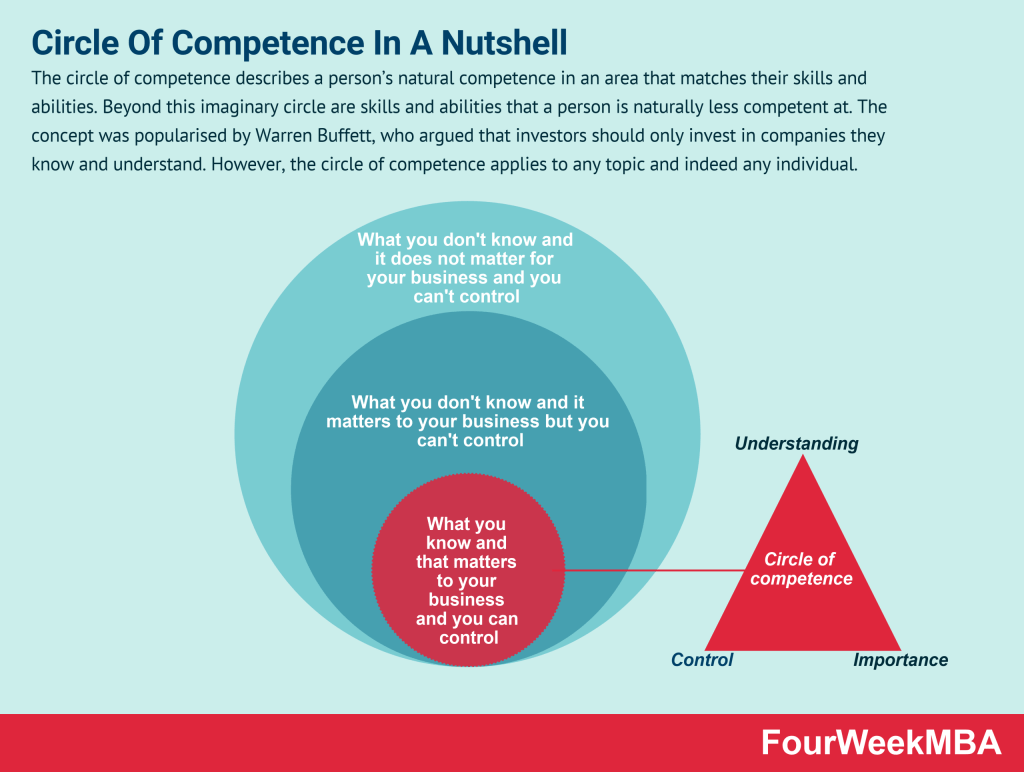
The circle of competence describes a person’s natural competence in an area that matches their skills and abilities. Beyond this imaginary circle are skills and abilities that a person is naturally less competent at. The concept was popularised by Warren Buffett, who argued that investors should only invest in companies they know and understand. However, the circle of competence applies to any topic and indeed any individual.

What is a Moat

moat
Economic or market moats represent the long-term business defensibility. Or how long a business can retain its competitive advantage in the marketplace over the years. Warren Buffet who popularized the term “moat” referred to it as a share of mind, opposite to market share, as such it is the characteristic that all valuable brands have.

Buffet Indicator

buffet-indicator
The Buffet Indicator is a measure of the total value of all publicly-traded stocks in a country divided by that country’s GDP. It’s a measure and ratio to evaluate whether a market is undervalued or overvalued. It’s one of Warren Buffet’s favorite measures as a warning that financial markets might be overvalued and riskier.

Venture Capital

venture-capital
Venture capital is a form of investing skewed toward high-risk bets, that are likely to fail. Therefore venture capitalists look for higher returns. Indeed, venture capital is based on the power law, or the law for which a small number of bets will pay off big time for the larger numbers of low-return or investments that will go to zero. That is the whole premise of venture capital.

Foreign Direct Investment

foreign-direct-investment
Foreign direct investment occurs when an individual or business purchases an interest of 10% or more in a company that operates in a different country. According to the International Monetary Fund (IMF), this percentage implies that the investor can influence or participate in the management of an enterprise. When the interest is less than 10%, on the other hand, the IMF simply defines it as a security that is part of a stock portfolio. Foreign direct investment (FDI), therefore, involves the purchase of an interest in a company by an entity that is located in another country. 

Micro-Investing

micro-investing
Micro-investing is the process of investing small amounts of money regularly. The process of micro-investing involves small and sometimes irregular investments where the individual can set up recurring payments or invest a lump sum as cash becomes available.

Meme Investing

meme-investing
Meme stocks are securities that go viral online and attract the attention of the younger generation of retail investors. Meme investing, therefore, is a bottom-up, community-driven approach to investing that positions itself as the antonym to Wall Street investing. Also, meme investing often looks at attractive opportunities with lower liquidity that might be easier to overtake, thus enabling wide speculation, as “meme investors” often look for disproportionate short-term returns.

Retail Investing

retail-investing
Retail investing is the act of non-professional investors buying and selling securities for their own purposes. Retail investing has become popular with the rise of zero commissions digital platforms enabling anyone with small portfolio to trade.

Accredited Investor

accredited-investor
Accredited investors are individuals or entities deemed sophisticated enough to purchase securities that are not bound by the laws that protect normal investors. These may encompass venture capital, angel investments, private equity funds, hedge funds, real estate investment funds, and specialty investment funds such as those related to cryptocurrency. Accredited investors, therefore, are individuals or entities permitted to invest in securities that are complex, opaque, loosely regulated, or otherwise unregistered with a financial authority.

Startup Valuation

startup-valuation
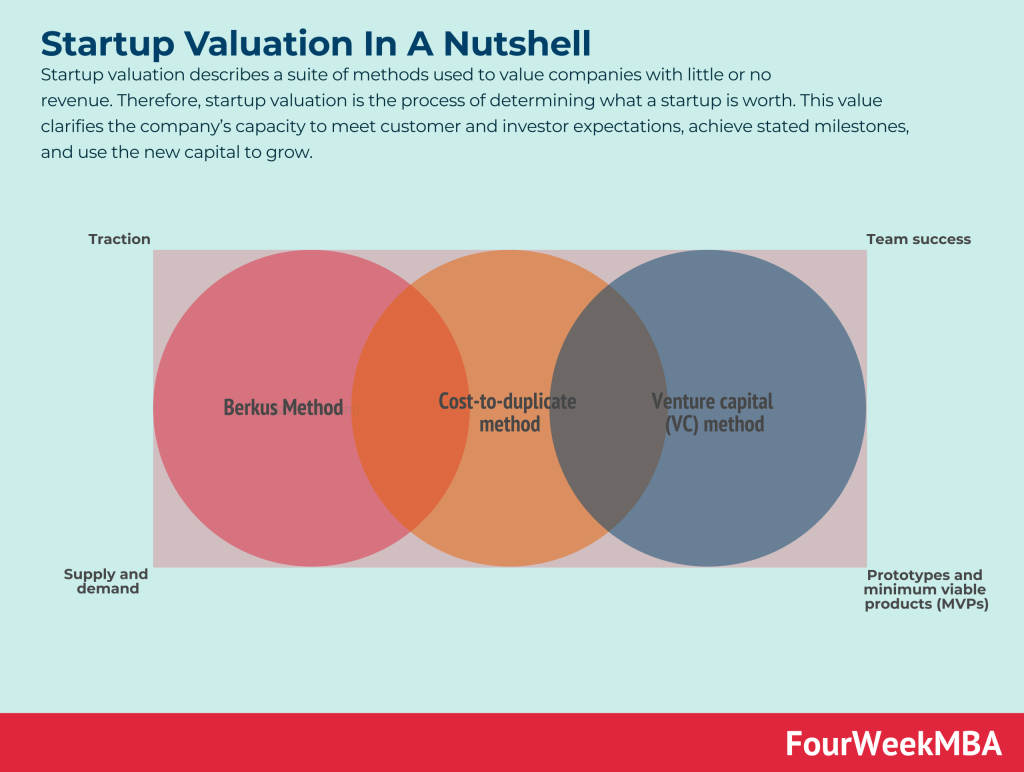
Startup valuation describes a suite of methods used to value companies with little or no revenue. Therefore, startup valuation is the process of determining what a startup is worth. This value clarifies the company’s capacity to meet customer and investor expectations, achieve stated milestones, and use the new capital to grow.

Profit vs. Cash Flow

profit-vs-cash-flow
Profit is the total income that a company generates from its operations. This includes money from sales, investments, and other income sources. In contrast, cash flow is the money that flows in and out of a company. This distinction is critical to understand as a profitable company might be short of cash and have liquidity crises.

Double-Entry

double-entry-accounting
Double-entry accounting is the foundation of modern financial accounting. It’s based on the accounting equation, where assets equal liabilities plus equity. That is the fundamental unit to build financial statements (balance sheet, income statement, and cash flow statement). The basic concept of double-entry is that a single transaction, to be recorded, will hit two accounts.

Balance Sheet

balance-sheet
The purpose of the balance sheet is to report how the resources to run the operations of the business were acquired. The Balance Sheet helps to assess the financial risk of a business and the simplest way to describe it is given by the accounting equation (assets = liability + equity).

Income Statement

income-statement
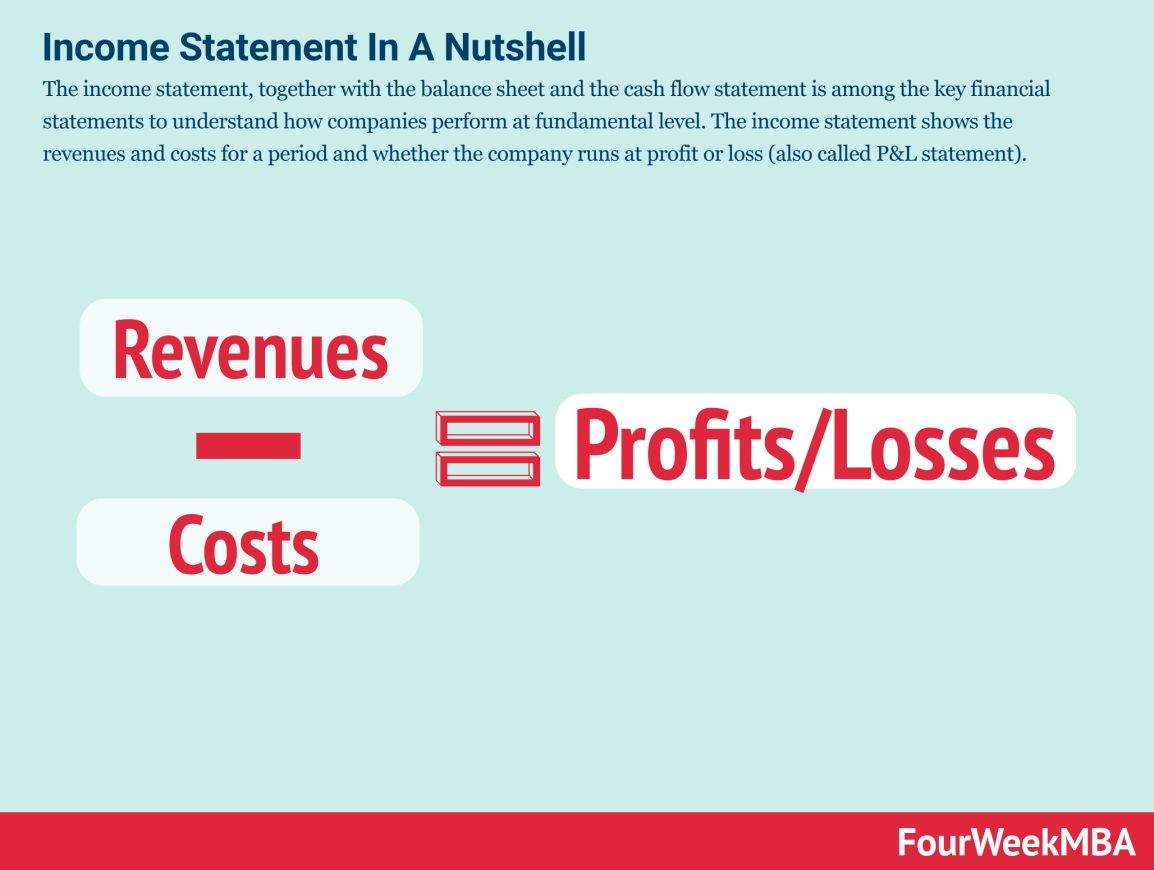
The income statement, together with the balance sheet and the cash flow statement is among the key financial statements to understand how companies perform at fundamental level. The income statement shows the revenues and costs for a period and whether the company runs at profit or loss (also called P&L statement).

Cash Flow Statement

cash-flow-statement
The cash flow statement is the third main financial statement, together with income statement and the balance sheet. It helps to assess the liquidity of an organization by showing the cash balances coming from operations, investing and financing. The cash flow statement can be prepared with two separate methods: direct or indirect.

Capital Structure

capital-structure
The capital structure shows how an organization financed its operations. Following the balance sheet structure, usually, assets of an organization can be built either by using equity or liability. Equity usually comprises endowment from shareholders and profit reserves. Where instead, liabilities can comprise either current (short-term debt) or non-current (long-term obligations).

Capital Expenditure

capital-expenditure
Capital expenditure or capital expense represents the money spent toward things that can be classified as fixed asset, with a longer term value. As such they will be recorded under non-current assets, on the balance sheet, and they will be amortized over the years. The reduced value on the balance sheet is expensed through the profit and loss.

Financial Statements

financial-statements
Financial statements help companies assess several aspects of the business, from profitability (income statement) to how assets are sourced (balance sheet), and cash inflows and outflows (cash flow statement). Financial statements are also mandatory to companies for tax purposes. They are also used by managers to assess the performance of the business.

Financial Modeling

financial-modeling
Financial modeling involves the analysis of accounting, finance, and business data to predict future financial performance. Financial modeling is often used in valuation, which consists of estimating the value in dollar terms of a company based on several parameters. Some of the most common financial models comprise discounted cash flows, the M&A model, and the CCA model.

Business Valuation

valuation
Business valuations involve a formal analysis of the key operational aspects of a business. A business valuation is an analysis used to determine the economic value of a business or company unit. It’s important to note that valuations are one part science and one part art. Analysts use professional judgment to consider the financial performance of a business with respect to local, national, or global economic conditions. They will also consider the total value of assets and liabilities, in addition to patented or proprietary technology.

Financial Ratio

financial-ratio-formulas

WACC

weighted-average-cost-of-capital
The Weighted Average Cost of Capital can also be defined as the cost of capital. That’s a rate – net of the weight of the equity and debt the company holds – that assesses how much it cost to that firm to get capital in the form of equity, debt or both. 

Financial Option

financial-options
A financial option is a contract, defined as a derivative drawing its value on a set of underlying variables (perhaps the volatility of the stock underlying the option). It comprises two parties (option writer and option buyer). This contract offers the right of the option holder to purchase the underlying asset at an agreed price.

Profitability Framework

profitability
A profitability framework helps you assess the profitability of any company within a few minutes. It starts by looking at two simple variables (revenues and costs) and it drills down from there. This helps us identify in which part of the organization there is a profitability issue and strategize from there.

Triple Bottom Line

triple-bottom-line
The Triple Bottom Line (TBL) is a theory that seeks to gauge the level of corporate social responsibility in business. Instead of a single bottom line associated with profit, the TBL theory argues that there should be two more: people, and the planet. By balancing people, planet, and profit, it’s possible to build a more sustainable business model and a circular firm.

Behavioral Finance

behavioral-finance
Behavioral finance or economics focuses on understanding how individuals make decisions and how those decisions are affected by psychological factors, such as biases, and how those can affect the collective. Behavioral finance is an expansion of classic finance and economics that assumed that people always rational choices based on optimizing their outcome, void of context.

Connected Video Lectures

Read Next: BiasesBounded RationalityMandela EffectDunning-Kruger

Read Next: HeuristicsBiases.

Main Free Guides:

Scroll to Top

Discover more from FourWeekMBA

Subscribe now to keep reading and get access to the full archive.

Continue reading

FourWeekMBA