Accelerators are programs that help entrepreneurs with a minimum viable product grow their business with advice, training, networking, and in some cases, financial support. Incubators, on the other hand, are similar programs designed to assist entrepreneurs in refining a business idea and establishing a company around it from scratch.
Aspect
Accelerator
Incubator
Purpose and Background
Accelerators are fixed-term, cohort-based programs designed to accelerate startups’ growth by providing mentorship, resources, and funding in exchange for equity. Prominent examples include Y Combinator, Techstars, and 500 Startups. Accelerators aim to propel startups rapidly and prepare them for the next stage of investment.
Incubators, in contrast, are long-term programs intended to nurture startups from ideation to maturity. They offer co-working spaces, mentorship, resources, and sometimes funding without taking equity. Well-known incubators include Seedcamp and Idealab. Incubators create a supportive environment for startups to develop at their own pace.
Program Duration
Accelerator programs are typically short and intense, spanning around three to six months. During this period, startups are expected to achieve specific milestones, participate in mentoring sessions, and often culminate the program with a demo day to attract investors.
Incubator programs are open-ended and may not have a predefined duration. Startups can remain within an incubator until they are ready to operate independently or secure external funding. The duration can vary significantly, ranging from months to several years.
Equity vs. No Equity
Accelerators usually require startups to surrender equity (typically 5-10%) in exchange for participation, mentorship, resources, and funding. This equity stake is considered an investment in the startup’s potential.
Incubators typically do not demand equity from startups. Instead, they provide support, resources, and mentorship without taking ownership stakes. While some incubators may charge fees or take a small percentage of equity, this is less common.
Selection Process
Accelerators feature highly competitive selection processes, admitting only a limited number of startups per cohort. They often receive a high volume of applications and subject startups to rigorous screening, interviews, and pitches.
Incubators generally have less competitive selection processes and are more inclusive. They tend to accept a broader range of startups and entrepreneurs. Although some incubators do have competitive entry, the barrier is typically lower than in accelerators.
Curriculum and Mentorship
Accelerators offer structured curricula, mentorship, and a rigorous schedule. Startups participate in workshops, receive guidance on various aspects like product development, marketing, and fundraising, and are encouraged to network with other startups in the cohort.
Incubators provide a less structured environment. While they do offer mentorship and resources, the level of guidance and curriculum may vary significantly. Incubated startups have greater flexibility to shape their development path, with support available as needed.
Funding and Investment
Accelerators provide startups with seed funding, often as part of the program. This funding is typically a fixed amount, and startups receive it at the program’s outset. Additionally, they may have opportunities to pitch to investors at demo days held at the program’s conclusion.
Incubators do not primarily provide direct funding. Instead, they may connect startups to potential investors, including angel investors, venture capitalists, or government grants. Funding is not a central feature of incubation, although some may offer limited financial support.
Focus on Growth
Accelerators prioritize rapid growth and scalability. They often adopt a “growth at all costs” mindset, preparing startups for the next stage of funding, such as a seed round or series A. Startups are expected to demonstrate substantial progress within a short timeframe.
Incubators focus on creating a nurturing environment for startups to develop their ideas, products, and business models. While growth is essential, it is not the sole focus, and incubated startups can evolve at their own pace, allowing for more gradual growth.
Industry Networks
Accelerators typically have extensive networks within the startup ecosystem, connecting startups with potential investors, corporate partners, industry experts, and mentors. These networks can be invaluable for a startup’s growth and expansion.
Incubators may also have industry connections but may not be as specialized or extensive as those of accelerators. The network’s focus may vary based on the incubator’s mission and area of expertise.
Graduation and Next Steps
Accelerators often culminate in a demo day, where startups pitch to a room full of investors. After graduation, startups are expected to secure additional funding, enter new markets, or achieve significant growth as they move to the next stage of their development.
Incubators do not typically have a formal graduation event like accelerators. Instead, startups can transition out of an incubator when they are sufficiently mature, secure external funding, or have reached their defined goals. The exit strategy varies for each incubator.
Dynamic Environment
The accelerator model is well-suited for startups operating in dynamic and rapidly evolving environments. It is particularly advantageous when adaptability and speed are crucial for success.
Incubators are more flexible and adaptable to the needs of startups. While they can also support startups in dynamic environments, they are equally suitable for startups operating in less volatile industries or seeking more gradual growth.
Startups vs. Established
Accelerators cater to both startups and established companies, but they are particularly popular among startups. Startups use accelerators to refine their business models, access networks, and secure funding. Established companies may seek accelerators for innovation.
Incubators primarily serve startups, providing them with the support needed to develop their concepts into viable businesses. They offer a nurturing environment that is well-suited for startups in their early stages of development.
A startup accelerator describes an organization that provides mentorship, capital, and access to a network of business partners and investors for startups with a validated minimum viable product (MVP). To that end, accelerator programs are well suited to companies with potential as a way to rapidly scale growth.
Examples of companies that run accelerator programs include Y Combinator, Techstars, and MassChallenge. The acceptance rate for such programs is low as there are thousands of startups applying for a finite amount of resources. Successful applicants will be required to hand over equity in their companies to the accelerator in exchange for services rendered.
Since the overarching goal is to scale growth rapidly, accelerators tend to be intense programs lasting anywhere between three and six months.
Understanding incubators
A startup incubator has a core focus on nurturing entrepreneurs in a collaborative and supportive environment. Incubator programs assist when required in various areas and as a consequence, do not tend to operate on a fixed schedule. The primary purpose of an incubator is to provide real-world context to the theories an entrepreneur may have learned as part of their tertiary education.
For instance, some will need assistance with their product-market fit while others need help making their business more attractive to investors. Incubators also enable startup founders to network with the founders of other startups in the same program.
Many incubator companies specialize in specific verticals. Monarq Incubator specializes in female-centric startups while KitchenCru is a food or kitchen incubator that provides commercial kitchen space and insurance, banking, and marketing assistance to budding culinary entrepreneurs.
Key differences between accelerators and incubators
Now that we have explained each type of program, let’s take a look at some of the main differences:
Accelerators, as the name suggests, aim to accelerate the growth of a company via rapid scaling. Conversely, incubators focus on “incubating” disruptive ideas and many consider them preparation for a subsequent accelerator program.
Accelerators have a specific timeframe since resources such as capital, office space, and mentorship services are finite. There is less emphasis on material resources in an incubator program, so they may last for months or even several years.
Mentorship in exchange for equity in the company is one of the reasons accelerator programs are so popular with entrepreneurs. However, this makes the application process much more rigorous and selective than in an incubator where there is more of a relaxed attitude to the selection process.
Incubators tend to be independent companies that are sponsored by universities, governments, development corporations, and non-profit organizations. In contrast, accelerators are more likely to be funded by private organizations.
How to join an accelerator?
Research and Identify Suitable Accelerators:
Start by researching different accelerator programs that align with your industry, business model, and goals. Look for accelerators that have a track record of success and are known for supporting startups in your field.
Prepare Your Startup:
Ensure that your startup has a clear and validated minimum viable product (MVP) or prototype. Accelerators typically work with startups that have a demonstrated potential for growth.
Craft a Compelling Application:
Most accelerators require an online application. Prepare a well-crafted application that includes details about your team, product or service, market opportunity, traction, and your vision for the future. Be concise and persuasive in your responses.
Pitch Your Startup:
If your initial application is shortlisted, you may be invited to pitch your startup to the accelerator team or a panel of judges. Prepare a compelling pitch that highlights your unique value proposition, market fit, and growth potential.
Interviews and Due Diligence:
Expect one or more rounds of interviews and due diligence. The accelerator team may want to dive deeper into your business model, team dynamics, and growthstrategy. Be prepared to answer questions and provide additional documentation.
Acceptance and Equity Negotiation:
If you are selected to join the accelerator program, you will receive an offer of acceptance. Review the terms carefully, especially regarding equity exchange, funding, and the scope of services offered by the accelerator. Negotiate if necessary, but keep in mind that accelerator terms are often standardized.
Commitment and Preparation:
Once you accept the offer, commit to the accelerator program fully. This may involve relocating to a specific location if it’s an in-person program or dedicating significant time and effort to the virtual program.
Accelerator Program Participation:
Engage actively in the accelerator program, which typically includes mentorship, workshops, networking events, and access to resources. Be open to feedback and guidance from mentors and peers.
Demo Day:
Many accelerator programs conclude with a “Demo Day” where startups present their progress and pitches to a room full of potential investors and partners. Use this opportunity to showcase your growth and attract funding.
Post-Accelerator Growth:
After completing the accelerator program, continue to build and scale your startup. Leverage the network and connections you’ve gained during the program to secure additional funding, partnerships, and customers.
What’s the process to be selected within an accelerator?
Application Submission:
Startups interested in joining the accelerator program begin by submitting an online application. The application typically includes information about the team, the business idea, market opportunity, current traction, and future plans.
Initial Screening:
Accelerator staff and/or a selection committee review the applications to identify promising candidates. They may use specific criteria such as market fit, scalability, innovation, and the team’s ability to execute.
Pitch Evaluation:
Shortlisted applicants are often invited to pitch their startup to the accelerator team or a panel of judges. The pitch is an opportunity for startups to make a compelling case for their business and demonstrate their ability to communicate their vision effectively.
Due Diligence:
Accelerators typically conduct due diligence on the startups they are considering. This may involve verifying the accuracy of the information provided in the application, checking references, and assessing the startup’s financials and legal status.
Interviews and Workshops:
Some accelerators conduct interviews with the founders to get to know them better and assess their commitment and passion for the project. Startups may also be asked to participate in workshops or exercises to evaluate their coachability and adaptability.
Selection Committee Decision:
The final decision on which startups to accept into the accelerator program is often made by a selection committee or a group of experienced entrepreneurs, investors, and industry experts. They consider all the information gathered during the screening process.
Offer and Equity Negotiation:
Accepted startups receive an offer to join the accelerator program. This offer typically includes details about the equity the accelerator will take in exchange for the services provided. Startups may negotiate these terms, although they are often standardized.
Acceptance and Onboarding:
Once a startup accepts the offer, they commit to the accelerator program and prepare to start. This may involve relocating to a specific location if it’s an in-person program or engaging with the virtual program.
Accelerator Program Participation:
Selected startups actively participate in the accelerator program, which includes mentorship, workshops, networking events, and access to resources. They work on achieving key milestones and growing their businesses during the program.
Demo Day and Graduation:
Many accelerator programs culminate in a “Demo Day” where startups present their progress and pitch to potential investors and partners. Successful completion of the program often leads to graduation and continued support from the accelerator network.
Top Accelerators
Y Combinator: Based in Silicon Valley, Y Combinator is one of the most renowned and prestigious startup accelerators globally. It has a strong track record of success, with companies like Airbnb, Dropbox, and Reddit among its alumni.
Techstars: Techstars operates a network of accelerator programs across various cities and industries. It provides mentorship, funding, and resources to startups, helping them grow and scale.
500 Startups: Known for its global presence, 500 Startups has invested in numerous startups worldwide. They offer accelerator programs and funding to early-stage companies.
Seedcamp: Seedcamp is a European-based accelerator that supports startups across the continent. It provides mentoring, capital, and access to a network of investors and mentors.
Startupbootcamp: With programs in various locations and industries, Startupbootcamp offers mentorship, funding, and resources to early-stage startups.
AngelPad: AngelPad is a startup accelerator known for its rigorous mentorship and support. It has helped launch several successful startups, including Postmates and Buffer.
MassChallenge: MassChallenge is a global nonprofit accelerator with locations in the United States and internationally. It provides startups with access to resources, mentorship, and office space.
Plug and Play: Plug and Play is a global innovationplatform that runs accelerator programs in various industries, including technology, health, and sustainability.
500 Women: A branch of 500 Startups, 500 Women supports female founders and startups led by women. It focuses on promoting gender diversity in the startup ecosystem.
The Brandery: Based in Cincinnati, Ohio, The Brandery specializes in consumer marketing and branding. It offers mentorship and resources to startups in this space.
Lisbon Challenge: Lisbon Challenge is an accelerator based in Portugal that supports startups across Europe. It offers mentorship and a network of investors.
HAX Accelerator: HAX is a hardware-focused accelerator program that helps startups in robotics, IoT, and related fields. It provides funding, mentorship, and access to manufacturing resources.
MuckerLab: MuckerLab is a Los Angeles-based accelerator program that focuses on early-stage startups, primarily in the tech and consumer internet sectors.
Alchemist Accelerator: Alchemist Accelerator specializes in nurturing enterprise-focused startups. It provides funding, mentorship, and access to a network of corporate partners.
500 Global: Another branch of 500 Startups, 500 Global runs accelerator programs in multiple countries, supporting startups with diverse backgrounds and ideas.
Key takeaways:
Accelerators programs help entrepreneurs with an MVP grow their business with advice, training, networking, and in some cases, financial support. Incubators, on the other hand, are designed to assist entrepreneurs in refining a business idea and establishing a company around it from the ground up.
Accelerator programs tend to be intense and last anywhere between 3-6 months, while incubator programs focus on creating a more relaxed, collaborative work environment that may last for several months or years.
Due to demand and finite resources, the application process for an accelerator program is much more rigorous and selective than an incubator. Incubators are normally sponsored by non-profits, governments, and other development organizations.
Key Highlights:
Accelerators vs. Incubators: Accelerators are programs designed to help startups with a validated minimum viable product (MVP) rapidly scale their growth through mentorship, capital, and networking, while incubators nurture entrepreneurs in a collaborative environment and focus on refining business ideas from scratch.
Prominent Accelerators: Examples of well-known accelerator programs include Y Combinator, Techstars, and MassChallenge. These programs are highly competitive, and successful applicants often exchange equity in their companies for the services provided.
Duration: Accelerator programs are typically intense and relatively short, lasting between three and six months. In contrast, incubator programs have a more flexible duration, and some can extend for several months or even years.
Mentorship and Equity: Accelerators emphasize mentorship in exchange for equity in the startup. This rigorous selection process is a hallmark of accelerator programs. Incubators, while offering mentorship, have a more relaxed attitude towards selection and equity.
Funding Sources: Incubators are often sponsored by universities, governments, development corporations, and non-profit organizations. Accelerators are more likely to be funded by private organizations.
Specialization: Some incubators specialize in specific verticals or niches, such as Monarq Incubator for female-centric startups or KitchenCru for culinary entrepreneurs, providing tailored support.
Framework
Description
When to Apply
Accelerator Programs
Intensive programs designed to accelerate the growth of early-stage startups through mentorship, education, networking, and sometimes funding. Typically, these programs have a fixed duration and culminate in a demo day where startups pitch to potential investors.
– When launching a startup and seeking support to accelerate growth and scale quickly. – During the early stages of startup development to gain access to mentorship, resources, and networks that can help overcome challenges.
Incubator Programs
Support programs focused on nurturing the development of new businesses or startups, providing resources, guidance, and workspace. Incubators often have a more flexible timeline compared to accelerators and may cater to a broader range of startup stages and industries.
– When incubating a new business idea and in need of support, resources, and mentorship to validate the concept and develop a viable business model. – During the pre-launch phase of a startup to refine the product, market strategy, and business model.
Structured Support
Accelerator programs offer a structured curriculum covering various aspects of startup development, including business model canvas, market validation, product development, marketing, fundraising, and pitching.
– When seeking structured guidance and education on startup fundamentals and best practices. – During the scaling phase of a startup to refine strategies, optimize operations, and prepare for growth.
Mentorship and Networking
Both accelerators and incubators provide access to a network of experienced mentors, industry experts, and investors who offer guidance, feedback, and connections. Networking opportunities within the startup ecosystem are also facilitated to foster collaboration and partnerships.
– When in need of mentorship and guidance from seasoned entrepreneurs and industry professionals. – During the fundraising process to connect with potential investors and build relationships within the startup community.
Demo Days and Investor Access
Accelerator programs often culminate in demo days, where startups pitch their products or services to a panel of investors, potential partners, and stakeholders. This provides exposure and opportunities for startups to secure funding and strategic partnerships.
– When preparing to pitch to investors and seeking funding or strategic partnerships. – During the growth phase of a startup to raise capital for scaling operations, expanding market reach, or developing new products.
Access to Resources
Both accelerator and incubator programs offer access to resources such as co-working spaces, legal and accounting services, technology infrastructure, and in some cases, seed funding or investment opportunities.
– When lacking resources or infrastructure to support startup operations and growth. – During the early stages of startup development when bootstrapping or seeking initial funding to kickstart the venture.
Industry-Specific Focus
Some accelerator and incubator programs specialize in particular industries or verticals, providing tailored support and expertise relevant to startups operating in those sectors. This industry focus can enhance relevance and effectiveness in addressing specific challenges.
– When operating in a specific industry or vertical and seeking support and guidance tailored to its unique challenges and opportunities. – During the scale-up phase to leverage industry-specific knowledge and networks for accelerated growth.
Long-Term Support and Alumni Network
Accelerator and incubator programs often provide ongoing support even after the formal program ends, including access to alumni networks, continued mentorship, and opportunities for further funding rounds or partnerships.
– When looking for long-term support and opportunities for ongoing mentorship, networking, and growth. – During the post-accelerator phase to leverage alumni networks and connections for continued support and collaboration.
Ecosystem Integration
Accelerator and incubator programs are deeply integrated into the local or regional startup ecosystem, collaborating with universities, government agencies, corporates, and other stakeholders to provide comprehensive support and foster innovation and entrepreneurship.
– When operating within a startup ecosystem and seeking opportunities to collaborate, network, and access resources and support services. – During the entrepreneurial journey to leverage ecosystem partnerships for growth and sustainability.
Tailored Growth Strategies
Programs may offer personalized support and guidance tailored to the unique needs and challenges of each startup, helping founders develop and execute growth strategies aligned with their vision, goals, and market opportunities.
– When in need of customized support and guidance to address specific challenges and capitalize on market opportunities. – During the pivot or expansion phase to adapt strategies and explore new growth avenues.
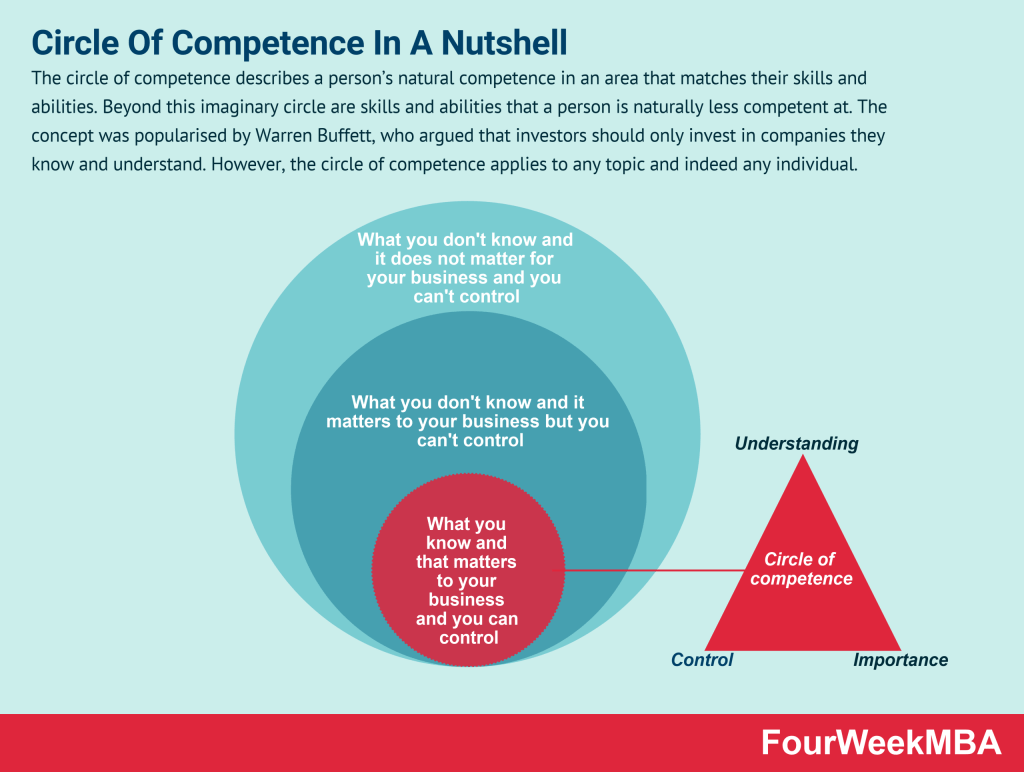
The circle of competence describes a person’s natural competence in an area that matches their skills and abilities. Beyond this imaginary circle are skills and abilities that a person is naturally less competent at. The concept was popularised by Warren Buffett, who argued that investors should only invest in companies they know and understand. However, the circle of competence applies to any topic and indeed any individual.
Economic or market moats represent the long-term business defensibility. Or how long a business can retain its competitive advantage in the marketplace over the years. Warren Buffet who popularized the term “moat” referred to it as a share of mind, opposite to market share, as such it is the characteristic that all valuable brands have.
The Buffet Indicator is a measure of the total value of all publicly-traded stocks in a country divided by that country’s GDP. It’s a measure and ratio to evaluate whether a market is undervalued or overvalued. It’s one of Warren Buffet’s favorite measures as a warning that financial markets might be overvalued and riskier.
Venture capital is a form of investing skewed toward high-risk bets, that are likely to fail. Therefore venture capitalists look for higher returns. Indeed, venture capital is based on the power law, or the law for which a small number of bets will pay off big time for the larger numbers of low-return or investments that will go to zero. That is the whole premise of venture capital.
Foreign direct investment occurs when an individual or business purchases an interest of 10% or more in a company that operates in a different country. According to the International Monetary Fund (IMF), this percentage implies that the investor can influence or participate in the management of an enterprise. When the interest is less than 10%, on the other hand, the IMF simply defines it as a security that is part of a stock portfolio. Foreign direct investment (FDI), therefore, involves the purchase of an interest in a company by an entity that is located in another country.
Micro-investing is the process of investing small amounts of money regularly. The process of micro-investing involves small and sometimes irregular investments where the individual can set up recurring payments or invest a lump sum as cash becomes available.
Meme stocks are securities that go viral online and attract the attention of the younger generation of retail investors. Meme investing, therefore, is a bottom-up, community-driven approach to investing that positions itself as the antonym to Wall Street investing. Also, meme investing often looks at attractive opportunities with lower liquidity that might be easier to overtake, thus enabling wide speculation, as “meme investors” often look for disproportionate short-term returns.
Retail investing is the act of non-professional investors buying and selling securities for their own purposes. Retail investing has become popular with the rise of zero commissions digital platforms enabling anyone with small portfolio to trade.
Accredited investors are individuals or entities deemed sophisticated enough to purchase securities that are not bound by the laws that protect normal investors. These may encompass venture capital, angel investments, private equity funds, hedge funds, real estate investment funds, and specialty investment funds such as those related to cryptocurrency. Accredited investors, therefore, are individuals or entities permitted to invest in securities that are complex, opaque, loosely regulated, or otherwise unregistered with a financial authority.
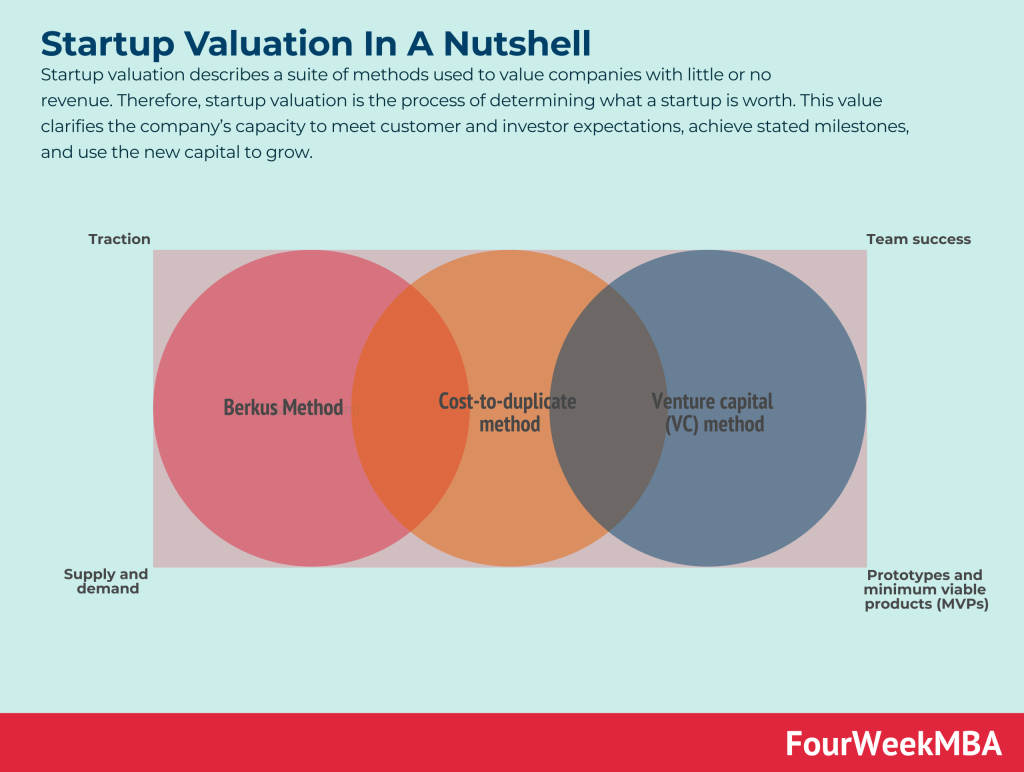
Startup valuation describes a suite of methods used to value companies with little or no revenue. Therefore, startup valuation is the process of determining what a startup is worth. This value clarifies the company’s capacity to meet customer and investor expectations, achieve stated milestones, and use the new capital to grow.
Profit is the total income that a company generates from its operations. This includes money from sales, investments, and other income sources. In contrast, cash flow is the money that flows in and out of a company. This distinction is critical to understand as a profitable company might be short of cash and have liquidity crises.
Double-entry accounting is the foundation of modern financial accounting. It’s based on the accounting equation, where assets equal liabilities plus equity. That is the fundamental unit to build financial statements (balance sheet, income statement, and cash flow statement). The basic concept of double-entry is that a single transaction, to be recorded, will hit two accounts.
The purpose of the balance sheet is to report how the resources to run the operations of the business were acquired. The Balance Sheet helps to assess the financial risk of a business and the simplest way to describe it is given by the accounting equation (assets = liability + equity).
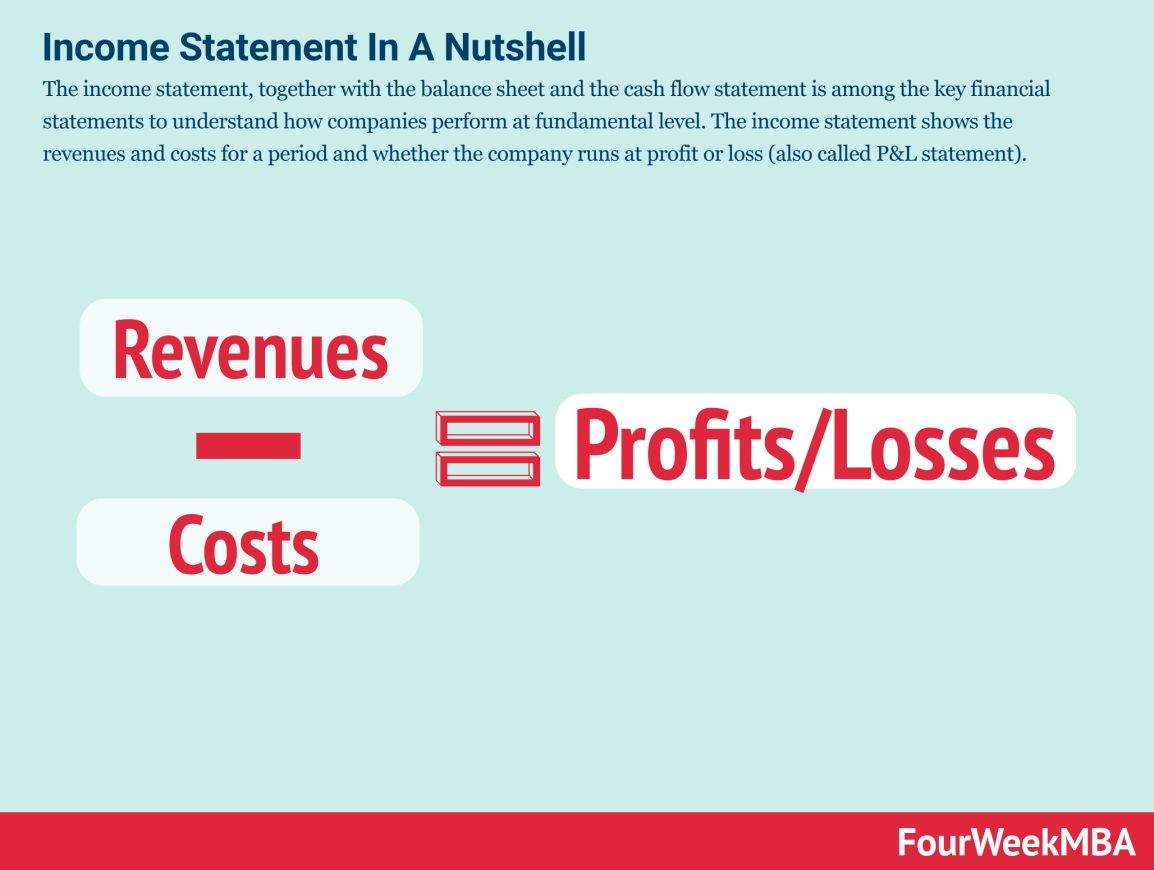
The income statement, together with the balance sheet and the cash flow statement is among the key financial statements to understand how companies perform at fundamental level. The income statement shows the revenues and costs for a period and whether the company runs at profit or loss (also called P&L statement).
The cash flow statement is the third main financial statement, together with income statement and the balance sheet. It helps to assess the liquidity of an organization by showing the cash balances coming from operations, investing and financing. The cash flow statement can be prepared with two separate methods: direct or indirect.
The capital structure shows how an organization financed its operations. Following the balance sheet structure, usually, assets of an organization can be built either by using equity or liability. Equity usually comprises endowment from shareholders and profit reserves. Where instead, liabilities can comprise either current (short-term debt) or non-current (long-term obligations).
Capital expenditure or capital expense represents the money spent toward things that can be classified as fixed asset, with a longer term value. As such they will be recorded under non-current assets, on the balance sheet, and they will be amortized over the years. The reduced value on the balance sheet is expensed through the profit and loss.
Financial statements help companies assess several aspects of the business, from profitability (income statement) to how assets are sourced (balance sheet), and cash inflows and outflows (cash flow statement). Financial statements are also mandatory to companies for tax purposes. They are also used by managers to assess the performance of the business.
Financial modeling involves the analysis of accounting, finance, and business data to predict future financial performance. Financial modeling is often used in valuation, which consists of estimating the value in dollar terms of a company based on several parameters. Some of the most common financial models comprise discounted cash flows, the M&A model, and the CCA model.
Business valuations involve a formal analysis of the key operational aspects of a business. A business valuation is an analysis used to determine the economic value of a business or company unit. It’s important to note that valuations are one part science and one part art. Analysts use professional judgment to consider the financial performance of a business with respect to local, national, or global economic conditions. They will also consider the total value of assets and liabilities, in addition to patented or proprietary technology.
A financial option is a contract, defined as a derivative drawing its value on a set of underlying variables (perhaps the volatility of the stock underlying the option). It comprises two parties (option writer and option buyer). This contract offers the right of the option holder to purchase the underlying asset at an agreed price.
Gennaro is the creator of FourWeekMBA, which reached about four million business people, comprising C-level executives, investors, analysts, product managers, and aspiring digital entrepreneurs in 2022 alone | He is also Director of Sales for a high-tech scaleup in the AI Industry | In 2012, Gennaro earned an International MBA with emphasis on Corporate Finance and Business Strategy.