The Coca-Cola Company owns Costa Coffee. It completed the purchase on 3 January 2019 for $4.9 billion, according to its 10-K, and reports Costa in what it then called its Global Ventures segment. Coca-Cola itself is widely held: Berkshire Hathaway (9.29%), Vanguard (8.61%) and BlackRock (7.28%) are its only holders above 5% (2026 proxy).
Correction (10 Oct 2026): this page was mistakenly titled ‘Who Owns Coca-Cola?’ and its top data card showed undated, unsourced shareholder figures. The title is fixed; the card is replaced by filing-sourced figures below. The rest of the article is kept as it was.
How we source: figures on this page come from the company’s own filings (SEC 10-K, 10-Q, prospectus and earnings releases, or its annual report), with the period stated next to each number; outside estimates appear only labelled, with their source and date. Last refreshed October 2026. Our methodology.
Costa Limited has been a wholly owned subsidiary of The Coca-Cola Company since 3 January 2019, when Coca-Cola completed the acquisition for $4.9 billion (Coca-Cola 10-K for 2018). The seller was Whitbread, the UK owner of Premier Inn. Coca-Cola does not report Costa’s revenue on its own.
The Business Engineer view
Structurally, Costa was Coca-Cola’s way into hot drinks, the one big beverage category its bottling model did not reach. It came with three channels at once: coffee shops, self-serve Costa Express machines and packaged coffee for retail. The open question, given that Coca-Cola does not break out Costa’s numbers, is how much of that potential has turned into profit.
The full story
Costa Coffee is now part of the Coca-Cola Company, which acquired it in 2019 in a $4.9 billion deal, giving Coca-Cola a significant footprint in the global coffee business. Today, the Coca-Cola Compan, net revenues of $47.9 billion for the full year 2025 and $13,107 million in net income attributable to shareowners of The Coca-Cola Company in 2025 empire., which owns many drinks brands like Coca-Cola, Fanta, Fresca, Schweppes, Sprite, Thums Up, Aquarius, Dasani, Smartwater, glacéau Vitamin Water, and many others.
Updated 6 October 2026: we refreshed 10 figures on this page, now taken from investors.coca-colacompany.com and worldcoffeeportal.com. Anything we could not check against a current source keeps its original year, so you can see how old it is.
The Coca-Cola Company will maintain full ownership of Costa Coffee, it has confirmed, but says the coffee chain must improve performance in a key international market, World Coffee Portal reported. worldcoffeeportal.com
Detail
Description
Company
Costa Coffee
Ownership Structure
Wholly owned subsidiary
Parent Company
The Coca-Cola Company
Acquisition Date
January 3, 2019
Founding Date
1971
Founders
Bruno Costa and Sergio Costa
Headquarters
Dunstable, Bedfordshire, England
Primary Business
Operating coffee shops and retailing coffee products worldwide
Strategic Goals
Expanding global market presence, enhancing customer experience, and innovating product offerings in the coffee sector
Additional Ownership Details
The Coca-Cola Company: Coca-Cola acquired Costa Coffee from Whitbread PLC in 2019 for £3.9 billion ($4.9 billion USD). The acquisition was part of Coca-Cola’s strategy to diversify its beverage portfolio and enter the hot beverage market.
Corporate Strategy: Costa Coffee aims to grow its global footprint by opening new stores in emerging markets and expanding its presence in existing ones. The brand focuses on offering high-quality coffee and creating a welcoming environment for customers.
Product Innovation: Costa Coffee continues to innovate by introducing new beverages, sustainable packaging solutions, and technology-driven customer experiences, such as mobile ordering and contactless payment options.
Sustainability and Ethics: Costa Coffee is committed to ethical sourcing and sustainability, focusing on responsible coffee sourcing, reducing environmental impact, and supporting coffee-growing communities.
Brand Positioning: As part of Coca-Cola’s beverage portfolio, Costa Coffee benefits from Coca-Cola’s global distribution network and marketing expertise, allowing the brand to enhance its international reach and brand recognition.
Aspect · Description · Analysis · Examples
Products and Services
Description. Costa Coffee offers a variety of hot and cold beverages, including coffee, tea, hot chocolate, and specialty drinks like lattes and cappuccinos. The company also provides a range of food items such as sandwiches, pastries, and snacks. Additionally, Costa Coffee offers coffee beans and related merchandise for retail purchase.
Analysis. Costa Coffee’s core products are beverages, with a strong focus on coffee, catering to a wide range of tastes and preferences. The inclusion of food items enhances the customer experience and encourages longer visits. Retail coffee bean sales and merchandise offer additional revenue streams.
Examples. Coffee, tea, hot chocolate, specialty drinks, sandwiches, pastries, snacks, coffee beans, merchandise, diverse product and service portfolio, catering to various customer preferences.
Revenue Streams
Description. Costa Coffee generates revenue primarily from the sale of beverages and food items in its coffee shops. The company earns income from coffee bean and merchandise sales for retail customers. Additionally, Costa Coffee may offer loyalty programs or partnerships that drive customer retention and increase sales.
Analysis. The primary revenue source for Costa Coffee is the sale of beverages and food items in its coffee shops, with a focus on coffee. Retail sales of coffee beans and merchandise diversify revenue sources. Loyalty programs and partnerships enhance customer retention and sales growth. Multiple revenue streams contribute to financial stability.
Examples. Revenue from the sale of beverages and food items in coffee shops, coffee bean and merchandise sales for retail customers, loyalty programs, partnerships, diversified revenue sources ensuring financial stability.
Customer Segments
Description. Costa Coffee serves a diverse customer base, including coffee enthusiasts, commuters, students, professionals, and families. The company tailors its menu offerings, ambiance, and loyalty programs to cater to various customer preferences and occasions, from quick coffee breaks to relaxed gatherings.
Analysis. Customer segments for Costa Coffee encompass a wide range of individuals and groups, each with unique preferences and needs. Tailoring the menu, ambiance, and loyalty programs to cater to diverse customer occasions enhances market relevance and encourages repeat visits.
Description. Costa Coffee’s products and services are primarily distributed through its network of coffee shops, which includes company-owned stores and franchise locations. The company also offers takeaway and delivery services, allowing customers to enjoy their favorite beverages and snacks off-premises.
Analysis. Distribution channels for Costa Coffee predominantly comprise coffee shops, ensuring a physical presence and customer experience. Takeaway and delivery services extend convenience and accessibility, meeting the needs of on-the-go customers.
Description. Costa Coffee may collaborate with various partners to enhance its offerings and expand its market presence. This includes partnerships with suppliers to ensure a consistent supply of high-quality coffee beans and ingredients. Additionally, partnerships with property developers or retail chains may facilitate store locations and expansion.
Analysis. Partnerships with suppliers ensure a consistent supply of quality ingredients, particularly coffee beans, which are crucial to the company’s offerings. Collaborations with property developers or retail chains can aid in securing prime store locations and supporting expansion efforts.
Examples. Partnerships with suppliers, consistent supply of quality ingredients, collaborations with property developers, retail chains, securing prime store locations, expansion support.
Key Resources
Description. Key resources for Costa Coffee include its network of coffee shops, a diverse menu of coffee and food items, brand recognition, a dedicated workforce, including baristas and service staff, reliable suppliers for coffee beans and ingredients, store locations, and financial resources for investments and expansion.
Analysis. Resources for Costa Coffee encompass coffee shops, a diverse menu, brand recognition, a dedicated workforce, suppliers for coffee beans and ingredients, store locations, financial resources, supporting the company’s position as a leading coffeehouse chain.
Examples. Coffee shops, diverse menu, brand recognition, dedicated workforce, suppliers, store locations, financial resources, resources supporting a leading coffeehouse chain.
Cost Structure
Description. Costa Coffee incurs various costs associated with its operations, including expenses for rent and lease agreements for store locations, employee salaries and benefits, procurement of coffee beans and ingredients, marketing and advertising expenditures, store maintenance and utilities, research and development investments for new menu items and innovation, and administrative overhead. Procurement of high-quality coffee beans is a significant operational cost.
Analysis. Costs associated with Costa Coffee’s operations include rent and lease agreements for store locations, employee salaries and benefits, coffee bean and ingredient procurement, marketing and advertising expenses, store maintenance and utilities, research and development investments, administrative overhead. Procurement of quality coffee beans represents a substantial operational cost to ensure the quality of the beverages.
Examples. Rent and lease agreements, employee salaries and benefits, coffee bean and ingredient procurement, marketing and advertising expenses, store maintenance, utilities, research and development investments, administrative overhead, significant coffee bean procurement costs for beverage quality.
Description. Costa Coffee’s competitive advantage lies in its strong brand recognition, a diverse menu offering a wide range of coffee and food items, and a focus on customer experience. Partnerships with suppliers ensure a consistent supply of high-quality coffee beans. The company’s commitment to innovation and expansion strategies contribute to its competitiveness in the coffeehouse industry.
Analysis. Strong brand recognition, diverse menu, quality coffee and food offerings, focus on customer experience, partnerships with suppliers for coffee bean quality, innovation, and expansion strategies, competitive position in the coffeehouse industry.
Examples. Costa Coffee’s business model revolves around offering a diverse range of coffee and food items in its coffee shops, generating revenue through in-store sales, retail sales of coffee beans and merchandise, and loyalty programs or partnerships to enhance customer retention. The company maintains a strong brand image, focuses on quality, and commits to providing a superior customer experience to remain competitive in the coffeehouse industry.
Costa Coffee Joins the Coca-Cola Company
Costa Coffee, a well-known coffee chain, is now a part of the Coca-Cola Company. In 2019, Coca-Cola completed its acquisition of Costa Coffee in a deal worth $4.9 billion.
Key numbersChecked 6 October 2026
$47,941 millionCoca-Cola's full-year 2025 net operating revenues were $47,941 million and operating income was $13,762…investors.coca-colacompany.com
2%The Coca-Cola Company's net revenues grew 2% to $47.9 billion for the full year 2025.investors.coca-colacompany.com
7%In the second quarter of 2026, Coca-Cola's net revenues grew 7% to $13.4 billion.investors.coca-colacompany.com
16%In the second quarter of 2026, Coca-Cola's EPS grew 16% to $1.03.investors.coca-colacompany.com
In one lineCosta Coffee is now part of the Coca-Cola Company, which acquired it in 2019 in a $4.9 billion deal, giving Coca-Cola a significant footprint in the global coffee business.
FourWeekMBABusiness EngineerAt a glance
The Coca-Cola Company's net revenues grew 2% to $47.9 billion for the full year 2025. investors.coca-colacompany.com
In the second quarter of 2026, Coca-Cola's net revenues grew 7% to $13.4 billion. investors.coca-colacompany.com
The acquisition of Costa Coffee was a strategic move by Coca-Cola to tap into the growing coffee market.
Layout and figures refreshed 6 October 2026. Sources are listed at the end of the article.
Why it mattersFrom the article
With the coffee industry experiencing increased demand and evolving consumer preferences, the addition of Costa Coffee to its portfolio allowed Coca-Cola to leverage the coffee chain's established brand reputation and customer base.
As part of Coca-Cola's empire, which reported net revenues of $47.9 billion for the full year 2025, Costa Coffee benefits from the strength of a diverse brand portfolio and a vast global reach.
This acquisition allowed Coca-Cola to significantly expand its presence in the global coffee business and enter the thriving coffee market.
Costa Coffee’s established brand and network of coffee shops complemented Coca-Cola’s diverse beverage portfolio, positioning the company for further growth in the hot beverage sector.
Coca-Cola: A $47.9 Billion Empire (Full Year 2025 Net Revenues)
The Coca-Cola Company has grown into a beverage empire with net revenues of $47.9 billion for the full year 2025.
Over the years, the company has expanded its brand portfolio to include a wide range of popular and iconic drinks.
From its flagship brand Coca-Cola to other well-known names like Fanta, Fresca, Schweppes, Sprite, Thums Up, Aquarius, Dasani, Smartwater, glacéau Vitamin Water, and many more, Coca-Cola boasts an impressive collection of beverages that cater to various consumer preferences and markets worldwide.
FourWeekMBABusiness EngineerTimeline, as stated in the article
2019
The Coca-Cola Company: Coca-Cola acquired Costa Coffee from Whitbread PLC in 2019 for £3.9 billion ($4.9 billion USD).
2019
In 2019, Coca-Cola completed its acquisition of Costa Coffee in a deal worth $4.9 billion.
2025
The Coca-Cola Company's net revenues grew 2% to $47.9 billion for the full year 2025. investors.coca-colacompany.com
2025
Coca-Cola's full-year 2025 net operating revenues were $47,941 million and operating income was $13,762 million. investors.coca-colacompany.com
2026
In the second quarter of 2026, Coca-Cola's net revenues grew 7% to $13.4 billion. investors.coca-colacompany.com
2026
In the second quarter of 2026, Coca-Cola's EPS grew 16% to $1.03. investors.coca-colacompany.com
Coca-Cola’s Beverage Portfolio and Global Reach
With an extensive brand portfolio, Coca-Cola enjoys a dominant position in the beverage industry.
The company’s products can be found in virtually every corner of the globe, making it one of the most recognizable and accessible beverage companies in the world.
From carbonated soft drinks to still beverages, waters, juices, teas, and coffees, Coca-Cola’s diverse range of offerings ensures that it can effectively reach and serve consumers across different demographics and regions.
Expanding into the Coffee Market
The acquisition of Costa Coffee was a strategic move by Coca-Cola to tap into the growing coffee market.
With the coffee industry experiencing increased demand and evolving consumer preferences, the addition of Costa Coffee to its portfolio allowed Coca-Cola to leverage the coffee chain’s established brand reputation and customer base.
This move aligned with Coca-Cola’s commitment to diversifying its offerings and staying ahead of market trends.
Key Takeaways
The acquisition of Costa Coffee by the Coca-Cola Company in 2019 was a significant strategic move that expanded Coca-Cola’s presence in the global coffee business.
As part of Coca-Cola’s empire, which reported net revenues of $47.9 billion for the full year 2025, Costa Coffee benefits from the strength of a diverse brand portfolio and a vast global reach.
Together, Coca-Cola and Costa Coffee continue to thrive in their respective sectors, meeting the evolving demands of consumers and ensuring their positions as leaders in the beverage and coffee markets, respectively.
Coca-Cola follows a business strategy (implemented since 2006) where through its operating arm – the Bottling Investment Group – it invests initially in bottling partners operations. As they take off, Coca-Cola divests its equity stakes, and it establishes a franchising model, as long-term growth and distributionstrategy.
Coca-Cola’s top investors include Warren Buffet’s company, Berkshire Hathaway, with 9.25% of shares, and other mutual funds like The Vanguard Group, holding 8.51% of shares, and BlackRock owning over 7.19% of shares of the company. Other individual investors like Herbert A. Allen, director of The Coca-Cola Company since 1982, and Barry Diller, Chairman of the Coca-Cola board since 2002. And former CEO Muhtar Kent.
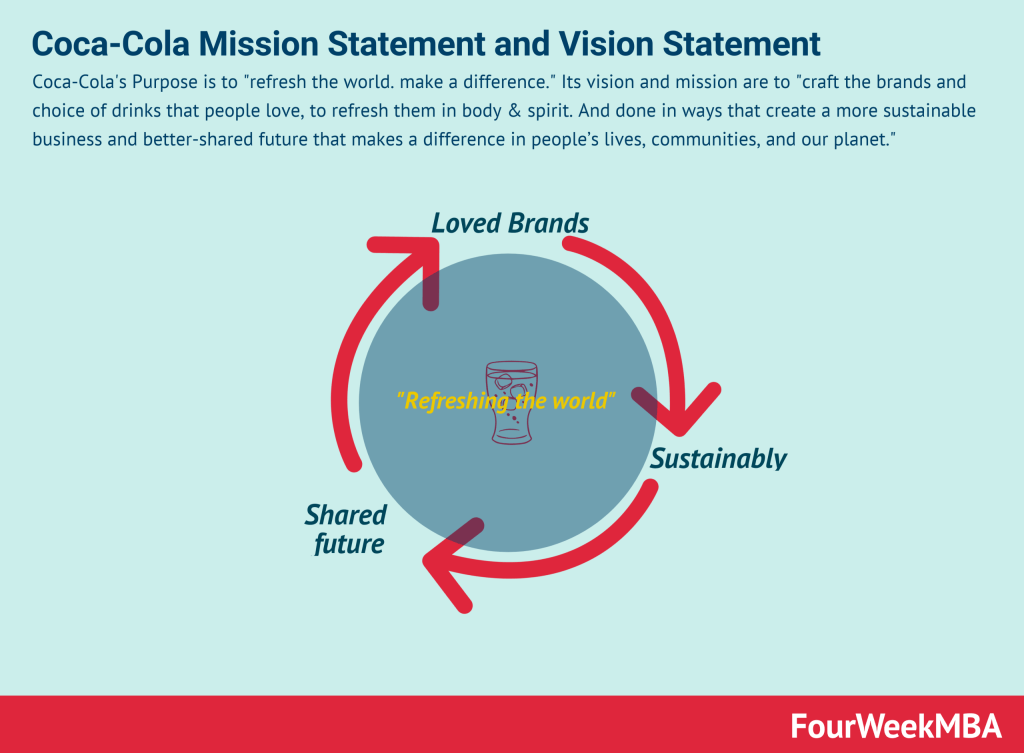
Coca-Cola’s Purpose is to “refresh the world. make a difference.” Its vision and mission are to “craft the brands and choice of drinks that people love, to refresh them in body & spirit. And done in ways that create a more sustainable business and better-shared future that makes a difference in people’s lives, communities, and our planet.”
Coca-Cola is the market leader of the soft drink industry. It is also the most widely recognized brand, with a Business Insider study revealing that a staggering 94% of the world population recognizes the red and white logo. However, Coca-Cola faces significant challenges with increasingly health-conscious consumers and less access to water resources.
The Coca-Cola Company is an American multinational beverage corporation founded in 1892 by pharmacist Asa Griggs Candler. Many consumers associate the company with its signature soda in a red can or bottle. In truth, however, The Coca-Cola Company owns a plethora of soft drink, juice, tea, coffee, and other beverage brands.
The Coca-Cola Company has 21 different billion-dollar brands or brands that generate more than $1 billion or more in revenue each year. The company also sells its products in nearly every country in the world, with Cuba and North Korea the only two countries where it is not sold officially. What’s more, the Coca-Cola brand is worth $87.6 billion, making it one of the most valuable among all companies. Though these figures allow Coca-Cola to enjoy market dominance in many countries, the company is nevertheless subject to intense competition.
PepsiCo was founded in 1902 by American pharmacist and businessman Caleb Bradham as the Pepsi-Cola Company. Bradham, who hoped to emulate the success of Coca-Cola, marketed the beverage from his pharmacy and registered a patent for its recipe the following year. Today, Pepsi is a global company with a portfolio of 23 billion-dollar brands, or brands earning more than $1 billion in annual revenue. Sixteen of these brands are beverage-related, while the remaining seven are associated with snacks and other food products.
In 1965, PepsiCo acquired Frito-Lay in what the chairmen of both companies called a “marriage made in heaven”. The resultant company transformed PepsiCo from a soft drink organization and set it on a path to becoming one of the world’s leading food and beverage companies. Today, PepsiCo claims to operate in more than 200 countries and territories around the world with seven distinct divisions and many successful brands.
Gennaro Cuofano is a CRO and tech executive who has worked in AI since late 2015, starting with bringing NLP, natural-language generation, voice and chatbot products to the marketing industry. His background is in law and finance: he holds a Master's degree in Law and an International MBA with an emphasis on corporate finance (LUISS Business School and the University of San Diego, 2012), and worked as a financial analyst at a real-estate investment firm in San Diego and as an assistant controller. His work focuses on business model strategy, business engineering and, more broadly, structural analysis: how companies make money, read from their own filings. He created FourWeekMBA and leads research there and at The Business Engineer, his newsletter on AI and business strategy, with over 95,000 subscribers and more than 1,000 published analyses. His writing has also appeared on Entrepreneur (for example, How to Digitize a Family Business in Europe) and HackerNoon. Find him on LinkedIn and Substack. See how we source.