The Political Stability Index is a measure that assesses the perception of political stability and absence of violence or terrorism within a country.
It is part of the Worldwide Governance Indicators (WGI) project, developed by the World Bank, and is based on surveys and expert assessments that evaluate the quality of governance in various countries.
The Political Stability Index provides valuable insights for businesses and investors regarding the political risk environment in different countries, helping them make informed decisions about market entry, investment strategies, and risk management.
How the Political Stability Index Impacts Business:
Investment Attractiveness and Market Confidence:
Countries with higher Political Stability Index scores are perceived as more attractive destinations for foreign investment due to lower political risks, stable governance structures, and reduced likelihood of political instability or unrest.
Businesses and investors use the Political Stability Index as a key indicator to assess market confidence, evaluate investment opportunities, and allocate resources effectively, preferring countries with higher political stability scores for long-term investments and strategic expansion initiatives.
Risk Mitigation and Decision-Making:
The Political Stability Index helps businesses and investors identify and mitigate political risks associated with market entry, expansion, or operation in foreign countries by providing insights into the level of political stability, governance quality, and institutional robustness.
Companies use the Political Stability Index to inform decision-making processes, conduct risk assessments, and develop risk mitigation strategies, such as diversifying investment portfolios, hedging exposure, or implementing contingency plans to manage political uncertainties and safeguard investments against potential disruptions or adverse events.
Business Environment and Regulatory Framework:
Political stability influences the business environment and regulatory framework in a country, affecting factors such as rule of law, property rights, contract enforcement, and government transparency, which are critical for business operations, investment climate, and economic growth.
Businesses leverage the Political Stability Index to evaluate the quality of governance, assess regulatory risks, and navigate legal and institutional frameworks in different countries, ensuring compliance with laws, regulations, and standards, and minimizing legal, financial, and reputational risks associated with political instability or governance challenges.
Strategies for Managing Political Stability Risks:
Country Risk Assessment and Due Diligence:
Businesses should conduct comprehensive country risk assessments and due diligence processes to evaluate political stability risks, governance quality, and institutional capacity in target markets.
Companies can leverage political risk analysis, market research, and expert insights to assess the Political Stability Index, evaluate political dynamics, and understand the implications for business operations, investment decisions, and risk management strategies, enabling informed decision-making and proactive risk mitigation.
Stakeholder Engagement and Relationship Building:
Businesses should engage with local stakeholders, government officials, and industry associations to build relationships, gain insights into political dynamics, and navigate regulatory environments effectively.
Companies can establish dialogue channels, advocacy initiatives, and partnership frameworks to collaborate with governments, civil society organizations, and community leaders, fostering trust, cooperation, and mutual understanding, and mitigating political risks through constructive engagement and stakeholder alignment.
Scenario Planning and Contingency Preparedness:
Businesses should develop scenario planning exercises and contingency preparedness plans to anticipate potential political stability risks, disruptions, or crises and respond effectively to adverse events.
Companies can simulate different scenarios, conduct stress tests, and develop response strategies, such as business continuity plans, crisis management protocols, and communication strategies, to mitigate the impact of political instability, ensure operational resilience, and protect assets, personnel, and stakeholders’ interests in volatile or uncertain political environments.
Case Studies of Political Stability Index Impact on Business:
Investment Decision-Making in Emerging Markets:
Multinational corporations, such as Coca-Cola, Unilever, and Nestlé, consider the Political Stability Index when evaluating investment opportunities and market entry strategies in emerging markets.
These companies conduct risk assessments, due diligence, and scenario analysis to assess political stability risks, governance quality, and institutional frameworks, enabling informed decision-making and risk mitigation strategies to navigate political uncertainties and safeguard investments in diverse and dynamic operating environments.
Financial Sector Resilience in Political Transitions:
Financial institutions, including banks, asset managers, and insurance companies, monitor the Political Stability Index to evaluate political risk exposure, assess sovereign credit risks, and manage portfolio allocations in countries undergoing political transitions or governance changes.
These institutions use political risk indicators, such as the Political Stability Index, to adjust investment strategies, allocate capital, and hedge risks, ensuring portfolio diversification, liquidity management, and financial resilience in response to political instability or regime changes affecting market conditions and investor sentiment.
Conclusion:
The Political Stability Index serves as a valuable tool for businesses and investors to assess political risks, governance quality, and institutional stability in different countries, informing decision-making processes, risk management strategies, and investment allocations in global markets. By understanding the implications of the Political Stability Index on business operations, investment attractiveness, and market confidence, companies can develop strategies to navigate political uncertainties, mitigate risks, and capitalize on opportunities for sustainable growth and resilience in diverse and dynamic political environments. Through comprehensive risk assessments, stakeholder engagement, and scenario planning, businesses can enhance political risk management capabilities, ensure operational continuity, and create long-term value in an increasingly interconnected and uncertain geopolitical landscape.
The idea of a market economy first came from classical economists, including David Ricardo, Jean-Baptiste Say, and Adam Smith. All three of these economists were advocates for a free market. They argued that the “invisible hand” of market incentives and profit motives were more efficient in guiding economic decisions to prosperity than strict government planning.
Positive economics is concerned with describing and explaining economic phenomena; it is based on facts and empirical evidence. Normative economics, on the other hand, is concerned with making judgments about what “should be” done. It contains value judgments and recommendations about how the economy should be.
When there is an increased price of goods and services over a long period, it is called inflation. In these times, currency shows less potential to buy products and services. Thus, general prices of goods and services increase. Consequently, decreases in the purchasing power of currency is called inflation.
Asymmetric information as a concept has probably existed for thousands of years, but it became mainstream in 2001 after Michael Spence, George Akerlof, and Joseph Stiglitz won the Nobel Prize in Economics for their work on information asymmetry in capital markets. Asymmetric information, otherwise known as information asymmetry, occurs when one party in a business transaction has access to more information than the other party.
Autarky comes from the Greek words autos (self)and arkein (to suffice) and in essence, describes a general state of self-sufficiency. However, the term is most commonly used to describe the economic system of a nation that can operate without support from the economic systems of other nations. Autarky, therefore, is an economic system characterized by self-sufficiency and limited trade with international partners.
Creative destruction was first described by Austrian economist Joseph Schumpeter in 1942, who suggested that capital was never stationary and constantly evolving. To describe this process, Schumpeter defined creative destruction as the “process of industrial mutation that incessantly revolutionizes the economic structure from within, incessantly destroying the old one, incessantly creating a new one.” Therefore, creative destruction is the replacing of long-standing practices or procedures with more innovative, disruptive practices in capitalist markets.
Happiness economics seeks to relate economic decisions to wider measures of individual welfare than traditional measures which focus on income and wealth. Happiness economics, therefore, is the formal study of the relationship between individual satisfaction, employment, and wealth.
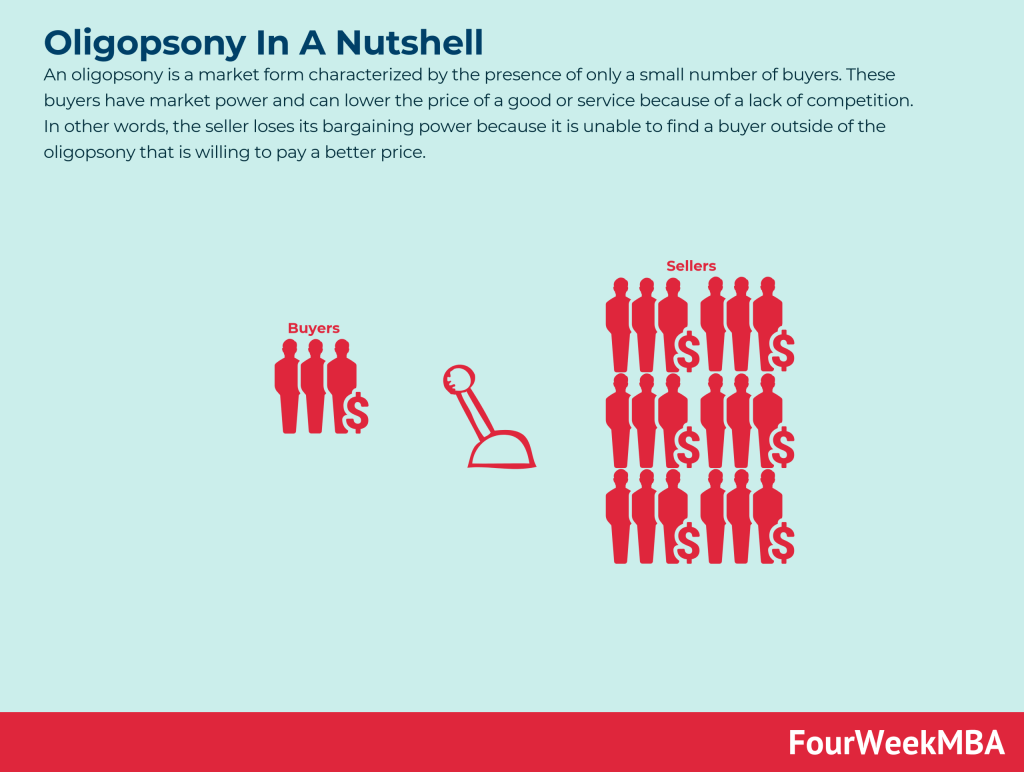
An oligopsony is a market form characterized by the presence of only a small number of buyers. These buyers have market power and can lower the price of a good or service because of a lack of competition. In other words, the seller loses its bargaining power because it is unable to find a buyer outside of the oligopsony that is willing to pay a better price.
The term “animal spirits” is derived from the Latin spiritus animalis, loosely translated as “the breath that awakens the human mind”. As far back as 300 B.C., animal spirits were used to explain psychological phenomena such as hysterias and manias. Animal spirits also appeared in literature where they exemplified qualities such as exuberance, gaiety, and courage. Thus, the term “animal spirits” is used to describe how people arrive at financial decisions during periods of economic stress or uncertainty.
State capitalism is an economic system where business and commercial activity is controlled by the state through state-owned enterprises. In a state capitalist environment, the government is the principal actor. It takes an active role in the formation, regulation, and subsidization of businesses to divert capital to state-appointed bureaucrats. In effect, the government uses capital to further its political ambitions or strengthen its leverage on the international stage.
The boom and bust cycle describes the alternating periods of economic growth and decline common in many capitalist economies. The boom and bust cycle is a phrase used to describe the fluctuations in an economy in which there is persistent expansion and contraction. Expansion is associated with prosperity, while the contraction is associated with either a recession or a depression.
The paradox of thrift was popularised by British economist John Maynard Keynes and is a central component of Keynesian economics. Proponents of Keynesian economics believe the proper response to a recession is more spending, more risk-taking, and less saving. They also believe that spending, otherwise known as consumption, drives economic growth. The paradox of thrift, therefore, is an economic theory arguing that personal savings are a net drag on the economy during a recession.
In simplistic terms, the circular flow model describes the mutually beneficial exchange of money between the two most vital parts of an economy: households, firms and how money moves between them. The circular flow model describes money as it moves through various aspects of society in a cyclical process.
Trade deficits occur when a country’s imports outweigh its exports over a specific period. Experts also refer to this as a negative balance of trade. Most of the time, trade balances are calculated based on a variety of different categories.
A market type is a way a given group of consumers and producers interact, based on the context determined by the readiness of consumers to understand the product, the complexity of the product; how big is the existing market and how much it can potentially expand in the future.
Rational choice theory states that an individual uses rational calculations to make rational choices that are most in line with their personal preferences. Rational choice theory refers to a set of guidelines that explain economic and social behavior. The theory has two underlying assumptions, which are completeness (individuals have access to a set of alternatives among they can equally choose) and transitivity.
The peer-to-peer (P2P) economy is one where buyers and sellers interact directly without the need for an intermediary third party or other business. The peer-to-peer economy is a business model where two individuals buy and sell products and services directly. In a peer-to-peer company, the seller has the ability to create the product or offer the service themselves.
The term “knowledge economy” was first coined in the 1960s by Peter Drucker. The management consultant used the term to describe a shift from traditional economies, where there was a reliance on unskilled labor and primary production, to economies reliant on service industries and jobs requiring more thinking and data analysis. The knowledge economy is a system of consumption and production based on knowledge-intensive activities that contribute to scientific and technical innovation.
In a command economy, the government controls the economy through various commands, laws, and national goals which are used to coordinate complex social and economic systems. In other words, a social or political hierarchy determines what is produced, how it is produced, and how it is distributed. Therefore, the command economy is one in which the government controls all major aspects of the economy and economic production.
How do you protect your rights as a worker? Who is there to help defend you against unfair and unjust work conditions? Both of these questions have an answer, and it’s a solution that many are familiar with. The answer is a labor union. From construction to teaching, there are labor unions out there for just about any field of work.
The bottom of the pyramid is a term describing the largest and poorest global socio-economic group. Franklin D. Roosevelt first used the bottom of the pyramid (BOP) in a 1932 public address during the Great Depression. Roosevelt noted that – when talking about the ‘forgotten man:’ “these unhappy times call for the building of plans that rest upon the forgotten, the unorganized but the indispensable units of economic power.. that build from the bottom up and not from the top down, that put their faith once more in the forgotten man at the bottom of the economic pyramid.”
Glocalization is a portmanteau of the words “globalization” and “localization.” It is a concept that describes a globally developed and distributed product or service that is also adjusted to be suitable for sale in the local market. With the rise of the digital economy, brands now can go global by building a local footprint.
Market fragmentation is most commonly seen in growing markets, which fragment and break away from the parent market to become self-sustaining markets with different products and services. Market fragmentation is a concept suggesting that all markets are diverse and fragment into distinct customer groups over time.
The L-shaped recovery refers to an economy that declines steeply and then flatlines with weak or no growth. On a graph plotting GDP against time, this precipitous fall combined with a long period of stagnation looks like the letter “L”. The L-shaped recovery is sometimes called an L-shaped recession because the economy does not return to trend line growth. The L-shaped recovery, therefore, is a recession shape used by economists to describe different types of recessions and their subsequent recoveries. In an L-shaped recovery, the economy is characterized by a severe recession with high unemployment and near-zero economic growth.
Comparative advantage was first described by political economist David Ricardo in his book Principles of Political Economy and Taxation. Ricardo used his theory to argue against Great Britain’s protectionist laws which restricted the import of wheat from 1815 to 1846. Comparative advantage occurs when a country can produce a good or service for a lower opportunity cost than another country.
The Easterlin paradox was first described by then professor of economics at the University of Pennsylvania Richard Easterlin. In the 1970s, Easterlin found that despite the American economy experiencing growth over the previous few decades, the average level of happiness seen in American citizens remained the same. He called this the Easterlin paradox, where income and happiness correlate with each other until a certain point is reached after at least ten years or so. After this point, income and happiness levels are not significantly related. The Easterlin paradox states that happiness is positively correlated with income, but only to a certain extent.
In Economics, Economies of Scale is a theory for which, as companies grow, they gain cost advantages. More precisely, companies manage to benefit from these cost advantages as they grow, due to increased efficiency in production. Thus, as companies scale and increase production, a subsequent decrease in the costs associated with it will help the organizationscale further.
In Economics, a Diseconomy of Scale happens when a company has grown so large that its costs per unit will start to increase. Thus, losing the benefits of scale. That can happen due to several factors arising as a company scales. From coordination issues to management inefficiencies and lack of proper communication flows.
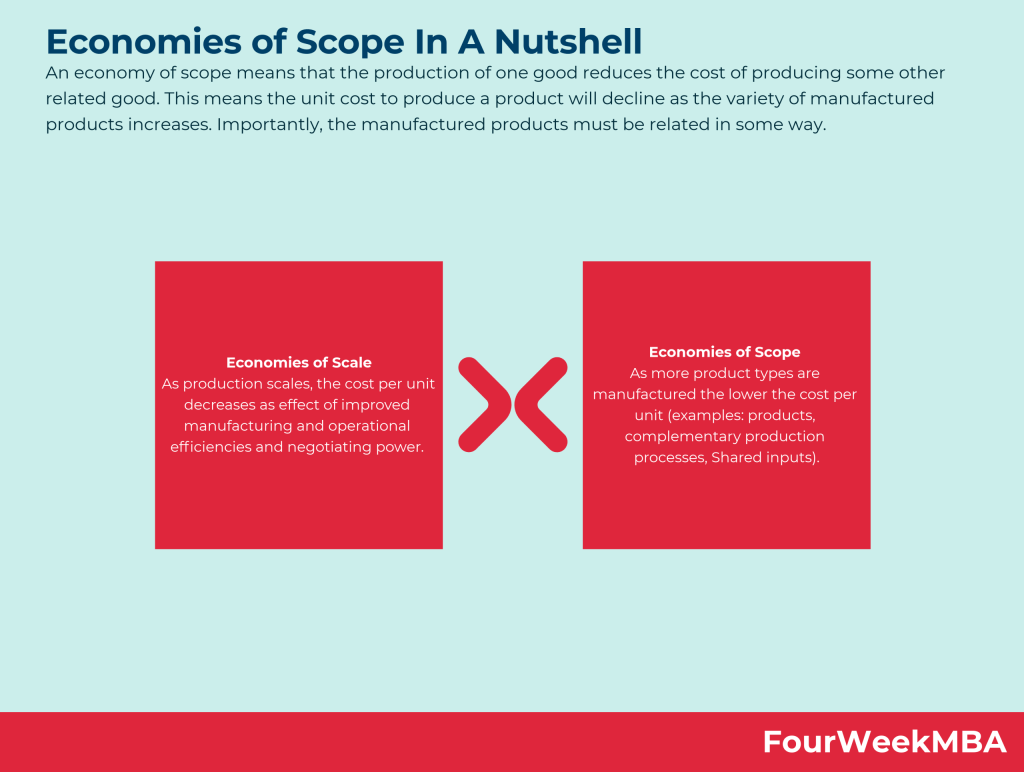
An economy of scope means that the production of one good reduces the cost of producing some other related good. This means the unit cost to produce a product will decline as the variety of manufactured products increases. Importantly, the manufactured products must be related in some way.
Price sensitivity can be explained using the price elasticity of demand, a concept in economics that measures the variation in product demand as the price of the product itself varies. In consumer behavior, price sensitivity describes and measures fluctuations in product demand as the price of that product changes.
Gennaro is the creator of FourWeekMBA, which reached about four million business people, comprising C-level executives, investors, analysts, product managers, and aspiring digital entrepreneurs in 2022 alone | He is also Director of Sales for a high-tech scaleup in the AI Industry | In 2012, Gennaro earned an International MBA with emphasis on Corporate Finance and Business Strategy.