Jimmy Choo operates with a business model focused on delivering luxurious and fashion-forward footwear to its target customers. With a strong emphasis on design, craftsmanship, and brand prestige, Jimmy Choo generates revenue through product sales, collaborations, and licensing. Its key activities include design, manufacturing, and marketing, supported by key resources such as design expertise and brand reputation. The cost structure includes expenses related to materials, marketing, retail operations, and research and development.
Jimmy Choo is globally recognized for its specialization in creating luxury footwear.
The brand’s name is synonymous with high-end, fashionable shoes that exude elegance and style.
Value Proposition
Luxury Footwear and Accessories: Jimmy Choo offers a range of luxury footwear, handbags, and accessories crafted from high-quality materials and adorned with intricate detailing. The brand’s products exude elegance, sophistication, and glamour, appealing to discerning customers who seek luxury and exclusivity.
Fashion Forward Design: Jimmy Choo is known for its fashion-forward designs that reflect the latest trends in footwear and accessories. With a focus on innovation and creativity, the brand continuously pushes boundaries in design, delivering styles that are both contemporary and timeless.
Celebrity Endorsement and Red Carpet Appeal: Jimmy Choo’s association with celebrities and its frequent appearances on red carpets around the world enhance its appeal and prestige. The brand’s products are often seen on influential figures in the entertainment industry, reinforcing its status as a symbol of luxury and style.
Craftsmanship and Quality: Each Jimmy Choo product is meticulously crafted by skilled artisans using traditional techniques and the finest materials. The brand’s commitment to craftsmanship and quality ensures that every piece is impeccably finished and built to last, adding value and durability to its offerings.
Revenue Model
Retail Sales: The primary revenue stream for Jimmy Choo is the sale of its luxury footwear, handbags, and accessories through company-owned retail stores, e-commerce channels, and authorized retailers worldwide. Customers purchase Jimmy Choo products at full price, generating revenue for the company.
Limited Edition and Collaborations: Jimmy Choo occasionally releases limited edition collections and collaborates with designers, celebrities, or brands to create exclusive products. These special releases command premium prices and generate additional revenue for the brand, while also driving excitement and buzz among customers.
Licensing and Brand Partnerships: Jimmy Choo engages in licensing agreements and brand partnerships to extend its reach into new product categories and markets. By licensing its brand name and designs for use in fragrance, eyewear, and other lifestyle products, Jimmy Choo generates licensing fees and royalties, contributing to its overall revenue.
Collaborations and Licensing:
Jimmy Choo strategically collaborates with other fashion brands, designers, or artists to create limited-edition collections.
These collaborations not only attract a wider audience but also maintain the brand’s reputation for creativity and innovation.
Licensing agreements allow the brand to expand its presence into related product categories, further capitalizing on its name and image.
Target Customers:
Jimmy Choo’s target customers are individuals who value fashion as a form of self-expression.
The brand appeals to those who seek unique and stylish footwear that complements their personal style.
Key Activities:
Design: The brand invests in design talent to create footwear that embodies both current trends and timeless elegance.
Manufacturing: The shoes are crafted by skilled artisans who bring the designs to life.
Marketing: Jimmy Choo’s marketing efforts focus on highlighting the brand’s luxury, exclusivity, and craftsmanship.
Key Resources:
Design Expertise: The brand’s creative designers play a crucial role in shaping its footwear collections.
Skilled Craftsmen: The artisans who handcraft the shoes are essential resources that ensure the products meet the brand’s quality standards.
Brand Reputation: The long-standing reputation for luxury and style is a valuable asset that attracts customers.
Costs Incurred:
High-Quality Materials: Jimmy Choo uses premium materials sourced from around the world to ensure the durability and comfort of its footwear.
Marketing: To maintain its image, the brand invests in marketing campaigns that convey luxury and exclusivity.
Retail Operations: Operating upscale boutiques and ensuring a premium shopping experience incurs costs.
Research and Development: Innovating in design and materials is essential to keep the brand relevant and appealing.
Distribution Strategy:
Global Presence:
Establishes a global footprint with upscale boutiques in major fashion capitals like New York, Paris, London, and Milan.
Ensures accessibility to international clientele seeking luxurious footwear.
Partnerships with High-End Retailers:
Collaborates with prestigious department stores and luxury retailers, including Bergdorf Goodman, Harrods, and Saks Fifth Avenue.
These partnerships extend the brand’s reach and place Jimmy Choo products alongside other luxury fashion offerings.
E-Commerce Channels:
Maintains a robust online presence through the official website, allowing customers to browse and purchase products from anywhere.
Enhances convenience and accessibility, especially for those unable to visit physical stores.
Marketing Strategy:
Luxury Brand Messaging:
Emphasizes the brand’s luxury, sophistication, and exclusivity through all marketing materials and communications.
Projects an image of opulence and prestige, attracting customers who seek high-end fashion experiences.
Celebrity Endorsements:
Leverages high-profile endorsements from celebrities and public figures known for their fashion-forward style.
These endorsements associate the brand with glamour and elegance, reinforcing its status.
Collaborative Partnerships:
Actively engages in strategic collaborations with renowned fashion designers, artists, and influencers.
These partnerships create buzz, draw attention, and maintain Jimmy Choo’s reputation for creativity.
Social Media Engagement:
Maintains an active presence on various social media platforms such as Instagram, Facebook, and Twitter.
Shares visually captivating content, fashion trends, and behind-the-scenes glimpses to connect with a fashion-forward audience.
Consistent Marketing Campaigns:
Runs consistent and cohesive marketing campaigns that highlight the brand’s commitment to craftsmanship and design excellence.
These campaigns often feature the latest collections, drawing attention to the intricate details and artistry of each product.
Organizational Structure:
Leadership:
CEO, often a prominent figure in the fashion industry, leads the executive team and sets the brand’s strategic direction.
Manufacturing: Encompasses skilled artisans and production teams who bring the designs to life with meticulous craftsmanship.
Marketing: Focuses on promoting the brand’s luxury image and maintaining its aura of exclusivity.
Retail Operations: Manages upscale boutiques, ensuring a premium shopping experience for customers.
Research and Development: Invests in innovation in design and materials to keep the brand relevant and appealing.
Licensing Management: Oversees licensing agreements, allowing expansion into related product categories such as fragrances and eyewear.
Collaboration and Coordination:
Encourages collaboration among these departments to maintain consistency in design, quality, and brand messaging.
The creative designers and skilled artisans work closely to ensure that innovation meets craftsmanship standards.
Brand Reputation:
Recognizes the importance of brand reputation and exclusivity, which are central to the company’s appeal and marketingstrategy.
All organizational efforts align with upholding the brand’s image as a symbol of luxury and style.
Key Takeaways
In conclusion, Jimmy Choo’s business model thrives on delivering luxurious and fashionable footwear that appeals to individuals seeking elegance and style.
The brand’s dedication to design, craftsmanship, and maintaining an aura of exclusivity allows it to command premium prices in the luxury market.
Collaborations, licensing, and strategic marketing efforts contribute to its revenue growth and brand recognition.
Element
Description
Value Proposition
Jimmy Choo offers a unique and exclusive value proposition for its customers, including: – Luxury Footwear: Known for high-end, fashionable footwear. – Exquisite Craftsmanship: Exceptional craftsmanship and attention to detail. – Elegance and Glamour: Offering elegant and glamorous designs. – Quality Materials: Using premium materials and leather. – Brand Prestige: A prestigious and recognized luxury brand. – Customization: Providing made-to-order and bespoke services. – Heritage and Legacy: A history dating back to 1996. – Innovative Design: Emphasizing creative and innovative design.
Core Products/Services
Jimmy Choo’s core products and services encompass: – Footwear: Luxury shoes, including heels, flats, and boots. – Handbags: High-end handbags and clutches. – Accessories: Fashionable accessories such as sunglasses and scarves. – Fragrances: Signature fragrances and perfumes. – Eyewear: Luxury eyewear collections. – Customization Services: Offering personalized and made-to-order items. – Artisanal Expertise: Craftsmanship and artisanal skills. – Heritage Collections: Timeless collections showcasing brand history.
Customer Segments
Jimmy Choo targets an exclusive range of customer segments, including: – Affluent Consumers: High-net-worth individuals seeking luxury fashion. – Fashion Enthusiasts: Discerning consumers with a passion for high-end design. – Red-Carpet Celebrities: Celebrities and fashion icons attending events. – Brand Aficionados: Loyal customers dedicated to the Jimmy Choo brand. – Customization Seekers: Those seeking personalized and bespoke items. – Global Clientele: International clients with a preference for luxury goods. – Art and Fashion Collectors: Collectors valuing limited and artistic pieces. – Trendsetters: Individuals setting fashion trends and styles.
Revenue Streams
Jimmy Choo generates revenue through various revenue streams: – Product Sales: Earnings from the sale of luxury fashion and footwear. – Handbag Sales: Revenue from high-end handbag and accessory sales. – Fragrance Sales: Income from the sale of signature fragrances and perfumes. – Eyewear Sales: Revenue from luxury eyewear collections. – Customization Services: Fees for personalized and made-to-order items. – Artisanal Expertise: Income from showcasing craftsmanship and artisanal skills. – Heritage Collections: Sales of timeless collections that celebrate brand history. – Licensing and Collaborations: Partnerships and licensing agreements.
Distribution Strategy
Jimmy Choo employs a comprehensive distribution strategy to maintain exclusivity: – Boutique Stores: Operating high-end boutiques worldwide. – Exclusivity: Limiting distribution and availability of products. – Customization Services: Offering personalized and bespoke items in select locations. – Artisanal Expertise: Showcasing craftsmanship and artisanal skills in workshops. – Limited Editions: Launching limited-edition collections to create demand. – E-commerce: Selling products through its official website with a focus on the brand experience. – Licensing and Collaborations: Partnering selectively for co-branded products. – Red-Carpet Presence: Garnering visibility through celebrity endorsements and red-carpet appearances.
Capri Holdings’ revenue increased from $4.72 billion in 2018 to $5.24 billion in 2019.
The revenue continued to rise in 2020, reaching $5.55 billion.
In 2021, the revenue decreased to $4.06 billion, a significant drop from the previous year.
However, in 2022, the revenue rebounded, growing to $5.65 billion.
In 2018, the net income was $592 million.
In 2019, it slightly decreased to $543 million.
The net income took a significant hit in 2020, resulting in a loss of $223 million.
In 2021, the company still experienced a net loss, though smaller, of $62 million.
By 2022, the net income rebounded significantly to $822 million.
In 2020, the net income was a loss of $8 million.
The net income turned positive in 2021, reaching $21 million.
In 2022, Versace’s net income increased significantly to $185 million.
In 2020, the revenue was $555 million.
The revenue decreased in 2021 to $418 million.
However, in 2022, Jimmy Choo’s revenue increased significantly to $613 million.
In 2020, the company experienced an operating loss of $13 million.
The operating loss increased in 2021 to $55 million.
However, in 2022, Jimmy Choo’s operating performance improved, resulting in an operating income of $13 million.
Slow fashion is a movement in contraposition with fast fashion. Where in fast fashion, it’s all about speed from design to manufacturing and distribution, in slow fashion, quality and sustainability of the supply chain are the key elements.
Patagonia is an American clothing retailer founded by climbing enthusiast Yvon Chouinard in 1973 who saw initial success by selling reusable climbing pitons and Scottish rugby shirts. Over time Patagonia also became a fashionable brand also for its focus on slow fashion. Indeed, the company sells high-priced clothing items built to last which it will repair for free.
Patagonia has a particular organizational structure, where its founder, Chouinard, disposed of the company’s ownership in the hands of two non-profits. The Patagonia Purpose Trust, holding 100% of the voting stocks, is in charge of defining the company’s strategic direction. And the Holdfast Collective, a non-profit, holds 100% of non-voting stocks, aiming to re-invest the brand’s dividends into environmental causes.
Fash fashion has been a phenomenon that became popular in the late 1990s and early 2000s, as players like Zara and H&M took over the fashion industry by leveraging on shorter and shorter design-manufacturing-distribution cycles. Reducing these cycles from months to a few weeks. With just-in-time logistics and flagship stores in iconic places in the largest cities in the world, these brands offered cheap, fashionable clothes and a wide variety of designs.
With over €27 billion in sales in 2021, the Spanish Fast Fashion Empire, Inditex, which comprises eight sister brands, has grown thanks to a strategy of expanding its flagship stores in exclusive locations around the globe. Its largest brand, Zara, contributed over 70% of the group’s revenue. The country that contributed the most to the fast fashion Empire sales was Spain, with over 15% of its revenues.
LVMH is a global luxury empire with over €79 billion ($83 billion) in revenues for 2022, spanning several industries: wines and spirits, fashion and leather goods, perfumes and cosmetics, watches and jewelry, and selective retailing. It comprises brands like Louis Vuitton, Christian Dior Couture, Fendi, Loro Piana, and many others.
Kering Group follows a multi-brand business model strategy. The central holding helps the brands and Houses part of its portfolio leverage economies of scale while creating synergies. At the same time, those brands are run independently. Kering is today a global luxury brand that made over €20 billion in revenue based on this multi-brand strategy. Within Kering Group are brands like Gucci, Bottega Veneta, Saint Laurent, and many more—the primary operating segments based on luxury and lifestyle.
Kering is a luxury goods multinational founded in France by François Pinault in 1963. The company, which initially specialized in timber trading, grew via acquisitions and was listed on the Paris Stock Exchange in 1988. Two years later, Kering merged with a French conglomerate interested in furniture, department stores, and bookstores.
The Ultra Fashion business model is an evolution of fast fashion with a strong online twist. Indeed, where the fast-fashion retailer invests massively in logistics and warehousing, its costs are still skewed toward operating physical retail stores. While the ultra-fast fashion retailer mainly moves its operations online, thus focusing its cost centers on logistics, warehousing, and a mobile-based digital presence.
ASOS is a British online fashion retailer founded in 2000 by Nick Robertson, Andrew Regan, Quentin Griffiths, and Deborah Thorpe. As an online fashion retailer, ASOS makes money by purchasing clothes from wholesalers and then selling them for a profit. This includes the sale of private label or own-brand products. ASOS further expanded on the fast fashion business model to create an ultra-fast fashion model driven by short sales cycles and online mobile e-commerce as the main drivers.
Real-time retail involves the instantaneous collection, analysis, and distribution of data to give consumers an integrated and personalized shopping experience. This represents a strong new trend, as a further evolution of fast fashion first (who turned the design into manufacturing in a few weeks), ultra-fast fashion later (which further shortened the cycle of design-manufacturing). Real-time retail turns fashion trends into clothes collections in a few days or a maximum of one week.
SHEIN is an international B2C fast fashion eCommerce platform founded in 2008 by Chris Xu. The company improved the ultra-fast fashion model by leveraging real-time retail, quickly turning fashion trends in clothes collections through its strong digital presence and successful branding campaigns.
Zara is a brand part of the retail empire Inditex. Zara is the leading brand in what has been defined as “fast fashion.” With almost €20 billion in sales in 2021 (comprising Zara Home) and an integrated retail format with quick sales cycles. Zara follows an integrated retail format where customers are free to move from physical to digital experience.
Wish is a mobile-first e-commerce platform in which users’ experience is based on discovery and customized product feed. Wish makes money from merchants’ fees and advertising on the platform, and logistic services. The mobile platform also leverages an asset-light business model based on a positive cash conversion cycle where users pay in advance as they order goods, and merchants are paid in weeks.
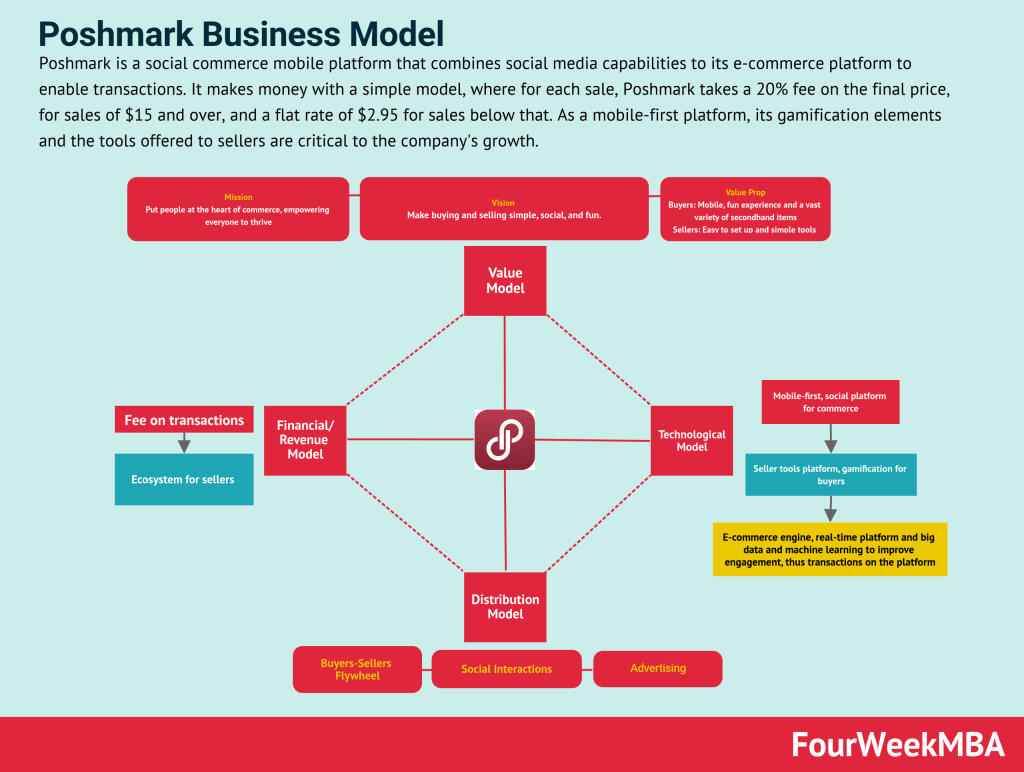
Poshmark is a social commerce mobile platform that combines social media capabilities with its e-commerce platform to enable transactions. It makes money with a simple model, where for each sale, Poshmark takes a 20% fee on the final price for sales of $15 and over and a flat rate of $2.95 for sales below that. Its gamification elements and the tools offered to sellers are critical to the company’s growth as a mobile-first platform.
Gennaro is the creator of FourWeekMBA, which reached about four million business people, comprising C-level executives, investors, analysts, product managers, and aspiring digital entrepreneurs in 2022 alone | He is also Director of Sales for a high-tech scaleup in the AI Industry | In 2012, Gennaro earned an International MBA with emphasis on Corporate Finance and Business Strategy.