Instructor-led training is a more traditional, top-down, teacher-oriented approach to learning that occurs in online or offline classroom environments. The approach connects instructors with students to encourage discussion and interaction in a group or individual context, with many enjoying ILT over other methods as they can seek direct clarification on a topic from the source. Instructor-led training (ILT), therefore, encompasses any form of training provided by an instructor in an online or offline classroom setting.
Aspect
Explanation
Concept Overview
– Instructor-led Training (ILT) is a traditional and widely used approach to education and skill development. It involves a trained instructor leading a group of learners in a structured learning environment. ILT can be conducted in physical classrooms or through virtual classrooms, where participants join remotely. It aims to provide face-to-face interaction and real-time guidance to enhance learning outcomes. ILT is commonly utilized in various educational, corporate, and vocational settings.
Key Characteristics
– ILT is characterized by several key features: 1. Instructor Guidance: A knowledgeable instructor facilitates the learning process. 2. Real-Time Interaction: Learners can ask questions and seek clarification in real time. 3. Structured Curriculum: Content is typically organized into a structured curriculum or syllabus. 4. Group Dynamics: Learners benefit from peer interactions and collaborative learning. 5. Active Learning: Activities and discussions engage participants actively.
Delivery Modes
– ILT can be delivered through different modes: 1. In-Person ILT: Participants physically attend classes or workshops. 2. Virtual ILT: Learning takes place in real time, with participants joining remotely via web conferencing or video conferencing tools. 3. Blended ILT: A combination of in-person and virtual elements is used to maximize flexibility and reach. The choice of mode depends on the learning objectives and logistical considerations.
Benefits
– ILT offers several benefits: 1. Instructor Expertise: Learners benefit from the knowledge and experience of a skilled instructor. 2. Real-Time Clarifications: Questions can be addressed immediately. 3. Interaction: Learners can engage in discussions, activities, and group projects. 4. Personalized Attention: Instructors can adapt to individual learning needs. 5. Collaboration: Group settings encourage collaboration and shared insights. 6. Feedback: Instructors can provide instant feedback.
Suitable Subjects
– ILT is suitable for a wide range of subjects and skills, including professional development, technical training, language instruction, academic courses, soft skills, and more. Its versatility makes it applicable in both academic and corporate environments. The choice of subjects should align with the expertise of the instructor and the learning objectives.
Technology Integration
– Modern ILT often incorporates technology, such as virtual classroom software, learning management systems (LMS), and interactive multimedia. These technologies enhance the learning experience, allowing for online assessments, collaborative tools, and access to digital resources. The integration of technology enables more flexible and dynamic ILT approaches.
Customization
– ILT can be customized to suit the specific needs of learners and organizations. Customization may involve tailoring content, adjusting the pace, and incorporating real-world examples relevant to the participants. Customized ILT ensures that learning objectives are met and that the training aligns with organizational goals.
Challenges
– ILT also faces challenges: 1. Scheduling Constraints: Coordination of in-person sessions can be challenging. 2. Geographic Limitations: Physical ILT may be limited by location. 3. Instructor Availability: Skilled instructors may not always be readily available. 4. Cost: In-person ILT can be expensive due to facilities, materials, and travel. 5. Limited Accessibility: Virtual ILT requires technology and internet access.
Assessment and Evaluation
– Effective ILT includes methods for assessment and evaluation to measure learning outcomes. Tests, quizzes, assignments, and participant feedback are common evaluation tools. Instructors use assessment results to adjust instruction and ensure that learning objectives are met. Continuous evaluation is essential for the improvement of ILT programs.
Interactivity and Engagement
– Interactivity and learner engagement are critical aspects of ILT. Instructors often incorporate group discussions, case studies, role-playing, hands-on activities, and real-world scenarios to keep participants engaged and encourage active learning. These interactive elements contribute to a more dynamic and effective learning experience.
Integration with Blended Learning
– Blending ILT with other modes of learning, such as eLearning, webinars, or self-paced modules, can create a more comprehensive and flexible training approach. Blended learning combines the strengths of various learning modes to cater to diverse learner preferences and optimize learning outcomes. The integration should be strategically planned and executed.
Continuous Improvement
– To ensure the effectiveness of ILT, organizations and institutions should focus on continuous improvement. This involves gathering learner feedback, monitoring learning outcomes, updating content, and enhancing instructional techniques. ILT programs should evolve to meet changing learner needs and leverage advancements in education and technology.
Ethical Considerations
– Ethical considerations in ILT involve respecting learner diversity, ensuring accessibility, protecting learner privacy, and maintaining academic integrity. Instructors and organizations should adhere to ethical standards in the design and delivery of ILT to create a positive and inclusive learning environment. Ethical practices promote trust and fairness.
There are three general types of instructor-led training available today. These include:
Location-dependent
Or any form of training provided in a physical environment such as an office, workplace, training center, workshop, classroom, or in the field.
Virtual
This describes instructor-led training that is provided in a real-time, virtual environment.
Virtual training occurs on video conferencing platforms such as Zoom and has increased in popularity due to the coronavirus pandemic.
Blended
A hybrid approach of location-dependent and virtual training that caters to a broader mix of learning styles and facilitates more collaboration and discussion.
Education may occur via live webinars, podcasts, videos, quizzes, and in-field or practical exercises that supplement theory-based content.
Advantages of instructor-led training
Open dialogue
As hinted at earlier, two-way communication between the instructor and student is a hallmark of instructor-led training.
This allows the instructor to leverage student queries and ensure they understand the information presented.
There is also value in face-to-face interaction and the ability for both parties to read the facial expressions and body language of the other.
Less distraction
While remote learning is now extremely popular, it cannot compete with instructor-led training in terms of a distraction-free environment.
In a classroom setting where the student is under direct supervision and has often paid to be there, there is a reduced likelihood they’ll be distracted by social media or other temptations.
Disadvantages of instructor-led training
Cost
For companies who sell or utilise instructor-led training, the costs can be significant.
Expenses include instructor fees, venue rental, travel expenses, training materials, and instructor-specific refresher courses.
Reduced productivity
Unlike some forms of virtual training that employees can do in their own time, instructor-led training is normally conducted in business hours and can take several days to complete.
For the business, this means reduced productivity as employees undertake the training.
Key takeaways
Instructor-led training (ILT) encompasses any form of training provided by an instructor in an online or offline classroom setting.
There are three types of instructor-led training: location-dependent, virtual, and blended, which caters to a more diverse range of learning styles and situations.
Instructor-led training increases knowledge retention as instructors can adapt their teaching style based on student queries and body language. There are also fewer distractions in a formal classroom setting. However, ILT tends to be costlier for companies, and productivity is reduced when employees are requisitioned for learning.
Key Highlights
Instructor-Led Training (ILT) Defined:
ILT is a traditional, teacher-oriented learning approach that occurs in classroom environments, either online or offline.
It involves direct interaction between instructors and students for discussions and clarifications.
Purpose of ILT:
Companies use ILT to train employees on complex topics that require interactive and hands-on experience.
ILT is effective in increasing knowledge retention among employees.
Statistics on ILT:
ILT constitutes 66% of corporate training and increases to 80% in high-stakes industries like healthcare, finance, and utilities.
Types of ILT:
Location-Dependent: Training conducted in physical settings like offices, classrooms, workshops, etc.
Virtual: Real-time training in virtual environments using platforms like Zoom.
Blended: A mix of location-dependent and virtual training, catering to diverse learning styles.
Advantages of ILT:
Open Dialogue: Instructor-student interaction enables direct clarification and understanding.
Less Distraction: Classroom setting reduces distractions compared to remote learning.
Disadvantages of ILT:
Cost: ILT can be costly due to instructor fees, venue rental, travel, and training materials.
Reduced Productivity: ILT often occurs during business hours, leading to reduced employee productivity.
Key Takeaways:
ILT involves training provided by an instructor in classroom settings, fostering direct interaction.
Three types of ILT: location-dependent, virtual, and blended, catering to different learning styles.
ILT enhances knowledge retention through interaction and reduced distractions.
However, ILT can be expensive for companies and reduce employee productivity during training.
Active listening is the process of listening attentively while someone speaks and displaying understanding through verbal and non-verbal techniques. Active listening is a fundamental part of good communication, fostering a positive connection and building trust between individuals.
Active recall enables the practitioner to remember information by moving it from short-term to long-term memory, where it can be easily retrieved. The technique is also known as active retrieval or practice testing. With active recall, the process is reversed since learning occurs when the student retrieves information from the brain.
The phrase “baptism by fire” originates from the Bible in Matthew 3:11. In Christianity, the phrase was associated with personal trials and tribulations and was also used to describe the martyrdom of an individual. Many years later, it was associated with a soldier going to war for the first time. Here, the baptism was the battle itself. “Baptism by fire” is a phrase used to describe the process of an employee learning something the hard way with great difficulty.
The Dreyfus model of skill acquisition was developed by brothers Hubert and Stuart Dreyfus at the University of California, Berkeley, in 1980. The Dreyfus model of skill acquisition is a learning progression framework. It argues that as one learns a new skill via external instruction, they pass through five stages of development: novice, advanced beginner, competent, proficient, and expert.
The Kolb reflective cycle was created by American educational theorist David Kolb. In 1984, Kolb created the Experiential Learning Theory (ELT) based on the premise that learning is facilitated by direct experience. In other words, the individual learns through action. The Kolb reflective cycle is a holistic learning and development process based on the reflection of active experiences.
The Method of Loci is a mnemonic strategy for memorizing information. The Method of Loci gets its name from the word “loci”, which is the plural of locus – meaning location or place. It is a form of memorization where an individual places information they want to remember along with points of an imaginary journey. By retracing the same route through the journey, the individual can recall the information in a specific order. For this reason, many consider this memory tool a location-based mnemonic.
The Experience Curve argues that the more experience a business has in manufacturing a product, the more it can lower costs. As a company gains un know-how, it also gains in terms of labor efficiency, technology-driven learning, product efficiency, and shared experience, to reduce the cost per unit as the cumulative volume of production increases.
The Feynman Technique is a mental model and strategy for learning something new and committing it to memory. It is often used in exam preparation and for understanding difficult concepts. Physicist Richard Feynman elaborated this method, and it’s a powerful technique to explain anything.
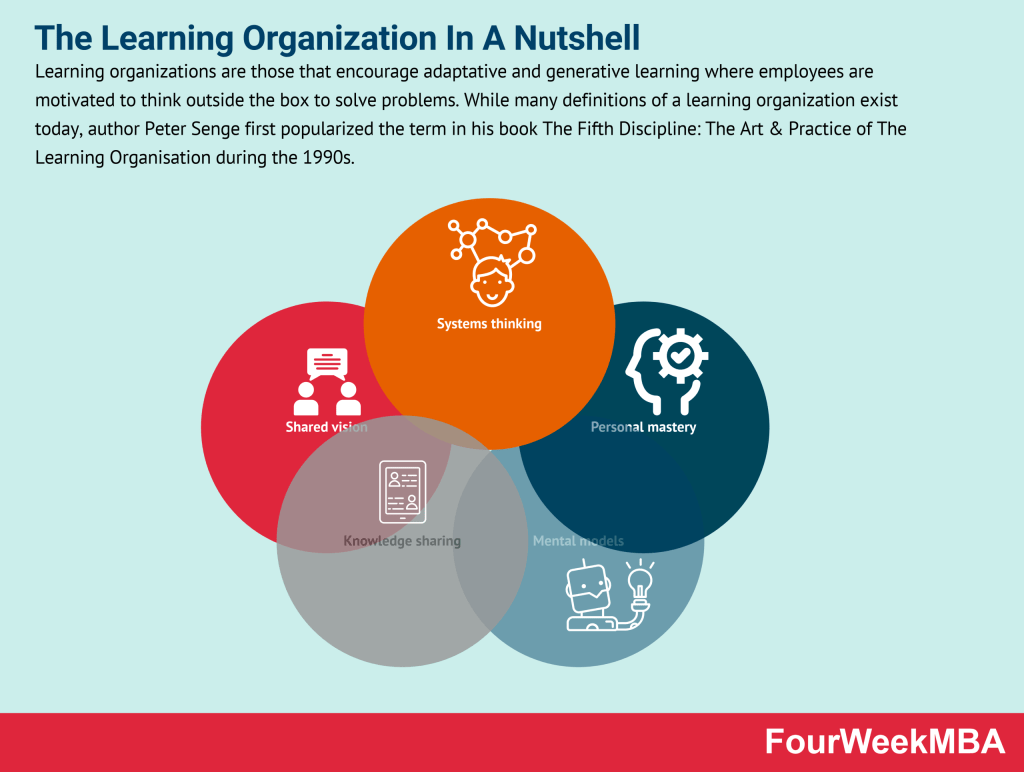
Learning organizations are those that encourage adaptative and generative learning where employees are motivated to think outside the box to solve problems. While many definitions of a learning organization exist today, author Peter Senge first popularized the term in his book The Fifth Discipline: The Art & Practice of The Learning Organisation during the 1990s.
The forgetting curve was first proposed in 1885 by Hermann Ebbinghaus, a German psychologist and pioneer of experimental research into memory. The forgetting curve illustrates the rate at which information is lost over time if the individual does not make effort to retain it.
Instructor-led training is a more traditional, top-down, teacher-oriented approach to learning that occurs in online or offline classroom environments. The approach connects instructors with students to encourage discussion and interaction in a group or individual context, with many enjoying ILT over other methods as they can seek direct clarification on a topic from the source. Instructor-led training (ILT), therefore, encompasses any form of training provided by an instructor in an online or offline classroom setting.
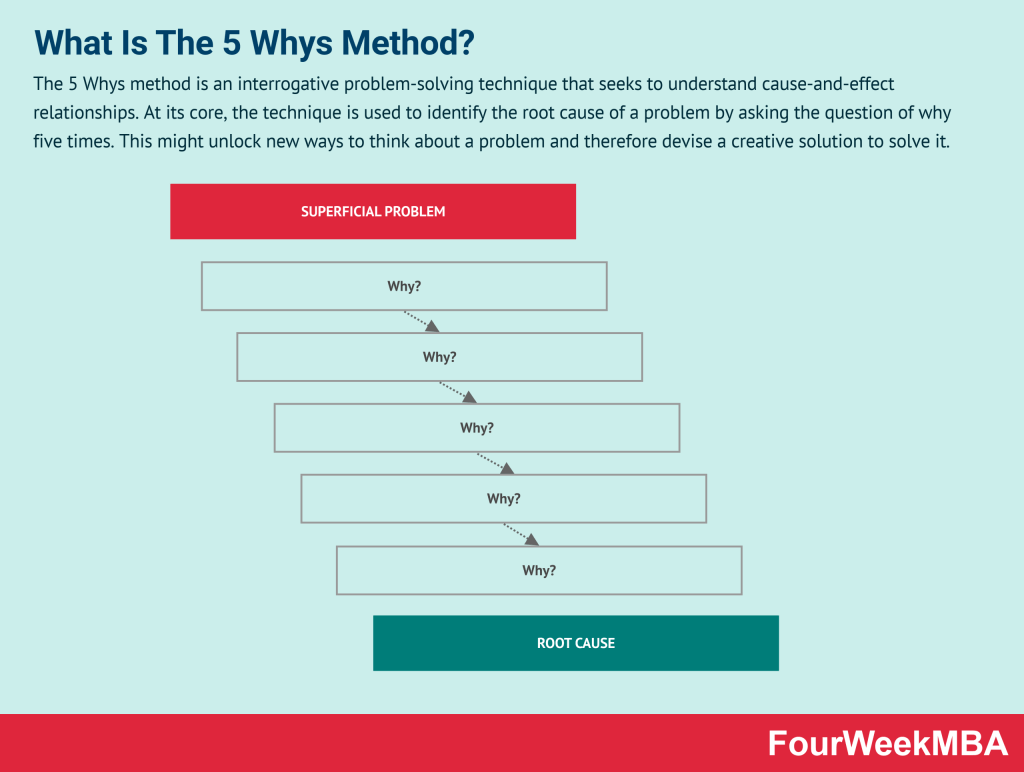
The 5 Whys method is an interrogative problem-solving technique that seeks to understand cause-and-effect relationships. At its core, the technique is used to identify the root cause of a problem by asking the question of why five times. This might unlock new ways to think about a problem and therefore devise a creative solution to solve it.
Single-loop learning was developed by Dr. Chris Argyris, a well-respected author and Harvard Business School professor in the area of metacognitive thinking. He defined single-loop learning as “learning that changes strategies of action (i.e. the how) in ways that leave the values of a theory of action unchanged (i.e. the why).” Single-loop learning is a learning process where people, groups, or organizations modify their actions based on the difference between expected and actual outcomes.
Spaced repetition is a technique where individuals review lessons at increasing intervals to memorize information. Spaced repetition is based on the premise that the brain learns more effectively when the individual “spaces out” the learning process. Thus, it can be used as a mnemonic technique to transform short-term memory into long-term memory.
Gennaro is the creator of FourWeekMBA, which reached about four million business people, comprising C-level executives, investors, analysts, product managers, and aspiring digital entrepreneurs in 2022 alone | He is also Director of Sales for a high-tech scaleup in the AI Industry | In 2012, Gennaro earned an International MBA with emphasis on Corporate Finance and Business Strategy.