Facebook alternatives comprise general social networks like Twitter and Instagram, privacy-focused platforms such as Signal and MeWe, and niche communities like Reddit and TikTok.
Real-World Examples
FacebookMetaGoogleLinkedinTiktokTwitter
Quick Answers
What are the general social networks?
Twitter : A popular microblogging platform for real-time updates and conversations.. Instagram : A visual-centric platform for sharing photos and videos with a large user base.. LinkedIn : A professional networking site connecting individuals and businesses.
What are the privacy-focused social networks?
Signal : A secure messaging app with a focus on privacy and end-to-end encryption.. Mastodon : A decentralized social network allowing users to create their own communities.. MeWe : A privacy-focused platform emphasizing data ownership and control.
Reddit : A platform of communities based on shared interests, with discussions and content sharing.. Pinterest : A visual discovery platform for finding and organizing inspiration and ideas.. TikTok : A video-sharing app featuring short-form creative content and viral trends.
Key Insight
Facebook alternatives comprise general social networks like Twitter and Instagram, privacy-focused platforms such as Signal and MeWe, and niche communities like Reddit and TikTok.
Exec Package + Claude OS Master Skill | Business Engineer Founding Plan
FourWeekMBA x Business Engineer | Updated 2026
Facebook alternatives comprise general social networks like Twitter and Instagram, privacy-focused platforms such as Signal and MeWe, and niche communities like Reddit and TikTok.
Alternative
Key Features
Core Strengths
Weaknesses
Mastodon
1. Federated Social Network: Decentralized, open-source platform. 2. Customizable Instances: Users can join or create instances with specific rules. 3. Privacy: Provides granular control over data sharing.
– Decentralized network with user-controlled instances for tailored experiences. – Strong focus on user privacy and data control. – Open-source nature allows for customization and community-driven development.
– Smaller user base compared to mainstream social media platforms. – Requires some technical knowledge for instance setup and management. – May lack the same level of third-party app support as Facebook.
Diaspora
1. Decentralized Social Network: Offers a decentralized and user-owned platform. 2. Privacy Controls: Provides granular privacy settings. 3. Community Pods: Users can join or create community pods.
– Decentralized and user-owned network for enhanced privacy and control. – Extensive privacy controls allow users to manage data sharing. – Community pods foster niche communities and customization options.
– Smaller user base compared to mainstream platforms. – Interface and user experience may vary between different pods. – May require some technical knowledge to set up or join pods.
Ello
1. Ad-Free Platform: Ad-free social network with a focus on user experience. 2. Creative Community: Attracts artists and creators. 3. Privacy Features: Offers private profiles and data protection.
– Ad-free experience without intrusive advertisements. – Welcoming community for artists and creative individuals. – Emphasizes user privacy with private profiles and data protection.
– Smaller user base compared to major social media platforms. – May not have the same level of feature diversity as Facebook. – Limited monetization options for content creators.
MeWe
1. Privacy-Centric: Focuses on user privacy and data protection. 2. Customizable Feeds: Users can control their news feeds. 3. Encrypted Chat: Offers end-to-end encrypted messaging.
– Strong emphasis on user privacy and data control. – Customizable news feeds allow users to curate their content. – Secure end-to-end encrypted messaging for private communication.
– Smaller user base compared to major social media platforms. – Some features may require a paid subscription. – User interface and design may differ from mainstream platforms.
Friendica
1. Federated Social Network: Part of the Fediverse, allowing connections with various platforms. 2. Privacy Controls: Offers extensive privacy settings. 3. Community Support: Active community and support.
– Part of the Fediverse, enabling connections with different federated platforms. – Granular privacy controls for user data management. – Active community and support for newcomers.
– Smaller user base compared to mainstream social media networks. – May have a learning curve for those unfamiliar with the Fediverse concept. – Interface and user experience may vary between different servers.
General Social Networks:
Twitter: A popular microblogging platform for real-time updates and conversations.
Instagram: A visual-centric platform for sharing photos and videos with a large user base.
LinkedIn: A professional networking site connecting individuals and businesses.
Snapchat: A multimedia messaging app known for its disappearing content and augmented reality features.
Privacy-Focused Social Networks:
Signal: A secure messaging app with a focus on privacy and end-to-end encryption.
Mastodon: A decentralized social network allowing users to create their own communities.
MeWe: A privacy-focused platform emphasizing data ownership and control.
Diaspora: A decentralized social network prioritizing user privacy and data autonomy.
Niche Social Networks:
Reddit: A platform of communities based on shared interests, with discussions and content sharing.
Pinterest: A visual discovery platform for finding and organizing inspiration and ideas.
TikTok: A video-sharing app featuring short-form creative content and viral trends.
Nextdoor: A neighborhood-based social network connecting neighbors and fostering local interactions.
Mark Zuckerberg is the largest shareholder in the company. Zuckerberg retains ownership and control of the company. Like Google, Facebook has issued two common stocks, Class A and Class B. The holders of Class B common stocks are entitled to ten votes per share, and holders of our Class A common stocks are entitled to one vote per share. Mark Zuckerberg has a voting power of 61.1%; he’s the primary decision-maker. Other individual investors comprise Sheryl Sandberg, Christopher Cox, Marc Andreessen, Peter Thiel, Dustin Moskovitz, and Eduardo Saverin.
Facebook, the main product of Meta is an attention merchant. As such, its algorithms condense the attention of over 2.91 billion monthly active users as of June 2021. Meta generated $117.9 billion in revenues, in 2021, of which $114.9 billion from advertising (97.4% of the total revenues) and over $2.2 billion from Reality Labs (the augmented and virtual reality products arm).
Facebook generated most of its revenue from advertising in 2023. Indeed, the company generated $131.95B from advertising, $1.89B billion from its reality labs segment, and over a billion in other revenue.
By September 2022, Facebook’s (Meta) employee count had peaked at 87,314. Yet, as revenue slew down for the first time in years, the company announced a layoff of 13% of its workforce, bringing the headcount to 75,964. By March 2023, Meta announced another round of layoffs, dubbed “The Year of Efficiency,” which brought the headcount down to less than 66 thousand employees. By the end of 2023, Facebook reported 67,317 employees.
In 2022, post layoffs, Facebook generated $1,535,056 per employee, compared to $1,638,586 in 2021. In 2023, as Facebook (now Meta) completed its mass layoffs, the company reported nearly $135 billion in revenue and 67,317 employees, with a $2,003,981 revenue per employee.
Facebook (Meta) gained users in 2023. In fact, in 2023, Facebook had over three billion users worldwide, of which 272 million were in Canada, 408 million were in Europe, over 1.3 billion were in Asia, and over a billion were in the rest of the world.
ARPU, or average revenue per user, is a crucial metric for attention merchants like Facebook. It assesses the ability of the platform to monetize its users. For instance, by the end of 2023, Meta’s ARPU worldwide was $13.12. In the US & Canada, it was $68.44; in Europe, it was $23.14; in Asia-Pacific, $5.52; and in the rest of the world, it was $4.50.
ARPU, or average revenue per user, is a crucial metric for attention merchants like Facebook. It assesses the ability of the platform to monetize its users. For instance, by the end of 2023, Meta’s ARPU worldwide was $13.12. In the US & Canada, it was $68.44; in Europe, it was $23.14; in Asia-Pacific, $5.52; and in the rest of the world, it was $4.50.
Facebook (Meta) revenue in 2023 increased to $134.9B, compared to $116.6B in 2022. Its profitability increased to $39.1B in 2023, compared to $23.2B in 2022 and $39.37B in 2021.
Facebook is characterized by a multi-faceted matrix organizational structure. The company utilizes a flat organizational structure in combination with corporate function-based teams and product-based or geographic divisions. The flat organization structure is organized around the leadership of Mark Zuckerberg, and the key executives around him. On the other hand, the function-based teams based on the main corporate functions (like HR, productmanagement, investor relations, and so on).
Instagram makes money via visual advertising. Acquired by Facebook for a billion-dollar in 2012, today, Instagram is integrated into the overall Facebook (now rebranded as Meta) business strategy. In 2018, Instagram founders Kevin Systrom and Mike Krieger left the company as Facebook pushed toward tighter integration of the two platforms. In 2022, Instagram is the most successful product still, in Meta’s portfolio.
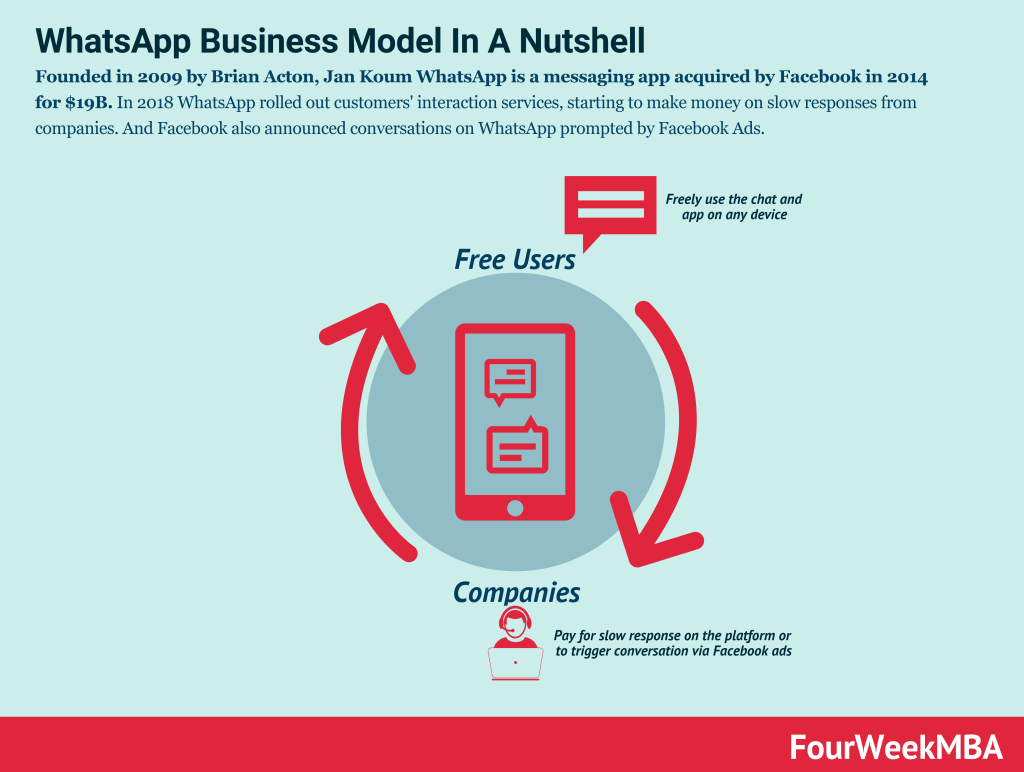
Founded in 2009 by Brian Acton, Jan Koum WhatsApp is a messaging app acquired by Facebook in 2014 for $19B. In 2018 WhatsApp rolled out customers’ interaction services, starting to make money on slow responses from companies. And Facebook also announced conversations on WhatsApp prompted by Facebook Ads.What are the general social networks?
Twitter : A popular microblogging platform for real-time updates and conversations.. Instagram : A visual-centric platform for sharing photos and videos with a large user base.. LinkedIn : A professional networking site connecting individuals and businesses.
What are the key components of Facebook Alternatives?
The key components of Facebook Alternatives include Mastodon, Diaspora, Ello, MeWe, Friendica. Mastodon: 1. Federated Social Network: Decentralized, open-source platform. 2. Customizable Instances: Users can join or create instances with specific rules.
What are the general social networks?
Twitter : A popular microblogging platform for real-time updates and conversations.. Instagram : A visual-centric platform for sharing photos and videos with a large user base.. LinkedIn : A professional networking site connecting individuals and businesses.
Frequently Asked Questions
What is Facebook Alternatives?
Facebook alternatives comprise general social networks like Twitter and Instagram, privacy-focused platforms such as Signal and MeWe, and niche communities like Reddit and TikTok.
What are the general social networks?
Twitter : A popular microblogging platform for real-time updates and conversations.. Instagram : A visual-centric platform for sharing photos and videos with a large user base.. LinkedIn : A professional networking site connecting individuals and businesses.
Gennaro is the creator of FourWeekMBA, which reached about four million business people, comprising C-level executives, investors, analysts, product managers, and aspiring digital entrepreneurs in 2022 alone | He is also Director of Sales for a high-tech scaleup in the AI Industry | In 2012, Gennaro earned an International MBA with emphasis on Corporate Finance and Business Strategy.