The value/risk matrix is a tool used to assess the complexity of a category of goods or services based on value and risk. The value/risk matrix is a relatively simple 2×2 matrix, with risk on the x-axis and value on the y-axis. Each of the four quadrants should be partitioned according to the designated scoring system. If each factor is ranked out of 100 for value and risk, then a low-risk initiative will score between 0 and 50 and a high-risk initiative between 50 and 100. Businesses that need more flexibility or precision may choose to use a 3×3 matrix with low, medium, and high designations.
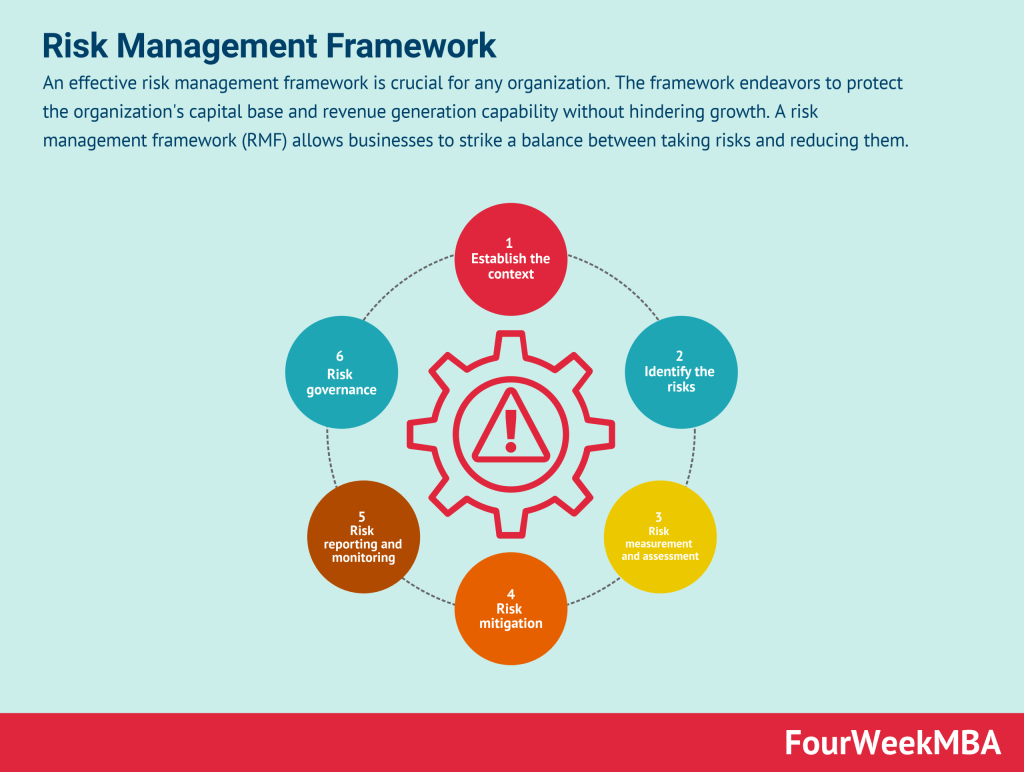
An effective risk management framework is crucial for any organization. The framework endeavors to protect the organization’s capital base and revenue generation capability without hindering growth. A risk management framework (RMF) allows businesses to strike a balance between taking risks and reducing them.
A Barbell strategy consists of making sure that 90% of your capital is safe, and use the remaining 10%, or on risky investments. Applied to business strategy, this means having a binary approach. On the one hand, extremely conservative. On the other, extremely aggressive, thus creating a potent mix.
A Project Execution Plan (PEP) details the project managementstrategy. It is sometimes referred to as a project managementplan. Generally speaking, PEPs are drafted by the client’s project director or similarly skilled project manager. Each plan must have the appropriate systems in place and be supported by the right tools and resources. This increases project performance and helps mitigate risk in the process.
Tactical management involves choosing an appropriate course of action to achieve a strategic plan or objective. Therefore, tactical management comprises the set of daily operations that support long strategy delivery. It may involve risk management, regular meetings, conflict resolution, and problem-solving.
The Kraljic matrix is a framework that analyzes and classifies a company’s supplier base.
Kraljic’s matrix is used by purchasers to maximize supply security/minimize supply risk and reduce costs. In so doing, it encourages them to see procurement as a strategic activity and not one that is simply transactional.
The Kraljic matrix is divided into four quadrants based on varying degrees of supply risk and profit impact. Each quadrant defines a type of supply item and a strategy that reduces risk and cost. The quadrants encompass leverage items, bottleneck items, non-critical items, and strategic items.
Framework
Description
Application
Advantages
Drawbacks
Value/Risk Matrix
Tool to assess goods or services based on value and risk in a 2×2 matrix.
Evaluating and categorizing initiatives, prioritizing projects.
Simple visualization, easy prioritization.
May oversimplify complex situations, subjective scoring.
Risk Management Framework
Framework for effectively managing risks to protect capital and revenue without hindering growth.
Risk assessment, mitigation, and decision-making in organizations.
What are the key components of 6 Risk Management Frameworks?
The key components of 6 Risk Management Frameworks include Value/Risk Matrix, Risk Management Framework, Barbell Strategy, Project Execution Plan, Tactical Management. Value/Risk Matrix: Tool to assess goods or services based on value and risk in a 2×2 matrix.
Gennaro is the creator of FourWeekMBA, which reached about four million business people, comprising C-level executives, investors, analysts, product managers, and aspiring digital entrepreneurs in 2022 alone | He is also Director of Sales for a high-tech scaleup in the AI Industry | In 2012, Gennaro earned an International MBA with emphasis on Corporate Finance and Business Strategy.