In the first quarter of 2024, Pinterest Inc. witnessed a remarkable surge in revenue, reporting a substantial 23% increase amounting to $740 million. This surge can be attributed to various strategic initiatives undertaken by the company, including a renewed focus on shopping and enhanced user engagement strategies. Additionally, Pinterest experienced robust user growth, particularly among Gen-Z users, who now constitute over 40% of its total user base. The platform’s global monthly active users (MAUs) reached 518 million as of March 31, marking a noteworthy 12% year-over-year increase.
Shopping Focus: Pinterest’s strategic emphasis on shopping played a pivotal role in driving revenuegrowth during the first quarter. The platform introduced user-friendly features that facilitate direct purchases, thereby enhancing user experience and monetization opportunities.
Gen-Z Targeting: Targeting Gen-Z users has been a key focus area for Pinterest. The company tailored its offerings to cater to the preferences and behaviors of this demographic, resulting in increased user engagement and platform adoption.
AI Integration: Investments in AI-driven tools and ad formats have significantly improved the relevancy of content and advertisements on the platform. Pinterest’s AI algorithms analyze user behavior and preferences to deliver personalized recommendations, driving higher user interaction and advertiser ROI.
Financial Performance and Market Response
Pinterest’s financialperformance in Q1 2024 surpassed analysts’ expectations, with adjusted earnings per share (EPS) standing at 20 cents on sales of $740 million. The company’s shares surged by nearly 20% in after-hours trading following the announcement of its financial results, indicating strong investor confidence in its performance and growth prospects.
Strategic Initiatives
AI Integration: Pinterest’s continued investment in AI-integrated tools has been instrumental in enhancing user experience and advertising effectiveness. The platform’s AI algorithms analyze user behavior to deliver personalized content recommendations and targeted advertisements, driving higher user engagement and revenue.
Shopping Focus: The platform’s strategic push into shopping has expanded monetization opportunities and strengthened its position as a destination for product discovery and inspiration. Pinterest’s user-friendly features, such as shoppable pins and curated shopping boards, have facilitated direct purchases, driving revenuegrowth.
Gen-Z Engagement: Targeting and engaging Gen-Z users strategically has enabled Pinterest to capture a growing segment of the digital audience. The company’s efforts to understand and cater to the preferences of this demographic have resulted in increased user adoption and platform engagement.
Future Outlook
Looking ahead, Pinterest anticipates second-quarter revenue in the range of $835 million to $850 million, indicating sustained growth momentum and confidence in its strategic direction. Continued investments in AI-driven technologies are expected to further enhance user engagement, content relevancy, and advertising effectiveness, driving long-term revenuegrowth. Furthermore, Pinterest’s focus on shopping and Gen-Z engagement positions it competitively in the digital advertising landscape, with opportunities to capture market share and expand its user base.
Implications and Strategic Analysis
Monetization Opportunities: Pinterest’s emphasis on shopping and AI integration presents significant monetization opportunities through targeted advertising, sponsored content, and e-commerce partnerships. By leveraging user data and AI algorithms, the company can deliver personalized shopping experiences and drive higher conversion rates for advertisers.
User Engagement: The success of Pinterest in attracting and engaging Gen-Z users underscores the importance of audience targeting and tailored content strategies in driving user growth and revenue. By continuously refining its algorithms and content recommendations, Pinterest can enhance user engagement and retention, thereby increasing its competitive advantage in the digital advertising space.
Brand Positioning: Pinterest’s strong brand positioning as a destination for inspiration and product discovery enhances its appeal to advertisers and users alike. The platform’s curated content and visually-driven interface differentiate it from other social media platforms, making it an attractive platform for brands looking to connect with consumers in a meaningful way.
Conclusion
Pinterest Inc.’s impressive performance in Q1 2024 reflects its strategic focus on shopping, Gen-Z engagement, and AI integration. With sustained revenuegrowth, expanding user base, and promising future outlook, Pinterest remains well-positioned to capitalize on emerging opportunities in the digital advertising landscape. By leveraging its AI-driven technologies and user-friendly features, Pinterest can continue to drive user engagement, attract advertisers, and maintain its competitive edge in the market.
Pinterest’s top shareholder is co-founder and executive chairman Benjamin Silbermann, followed by the other co-founders Paul Sciarra and Evan Sharp. Top institutional investors comprise The Vanguard Group and Blackrock.
By 2023, Pinterest generated over $3 billion in revenue.
Between Q4 2022 and Q4 2023, worldwide ARPU saw a slight increase from $1.96 to $2.00, indicating a positive yet slow trend in revenue per user on a global scale.
In the US market, the increase in ARPU was also slight, rising from $7.60 in Q4 2022 to $8.07 in Q4 2023, reflecting a slow growth in revenue per user specifically in the US market.
Pinterest makes money by selling advertising for marketers and companies that can gain visibility for their brands and more sales for their shops. In 2023, Pinterest generated over $3 billion in advertising revenue, with nearly 500 million monthly active users and a net loss of $35 million.
Instagram makes money via visual advertising. Acquired by Facebook for a billion-dollar in 2012, today, Instagram is integrated into the overall Facebook (now rebranded as Meta) business strategy. In 2018, Instagram founders Kevin Systrom and Mike Krieger left the company as Facebook pushed toward tighter integration of the two platforms. In 2022, Instagram is the most successful product still, in Meta’s portfolio.
TikTok makes money through advertising. It is estimated that ByteDance, its owner, made $51 billion in 2021 in revenues. TikTok instead generated $11 billion in advertising in 2022, 3.3 billion downloads, and 1.2 billion monthly active users in 2021. TikTok, therefore, is a multi-billion company worth anywhere between $100 and-150 billion and among the most valuable social media platforms on earth.
Spotify is a two-sided marketplace, running a free ad-supported service and a paid membership. Founded in 2008 with the belief that music should be universally accessible, it generated €13.25 billion in 2023. Of these revenues, 87.3%, or €11.56 billion, came from premium memberships, while over 12.6%, or €1.68 billion, came from ad-supported members. By 2023, Spotify had over 600 million users, of which 236 million were premium members and 379 million weread-supported users.
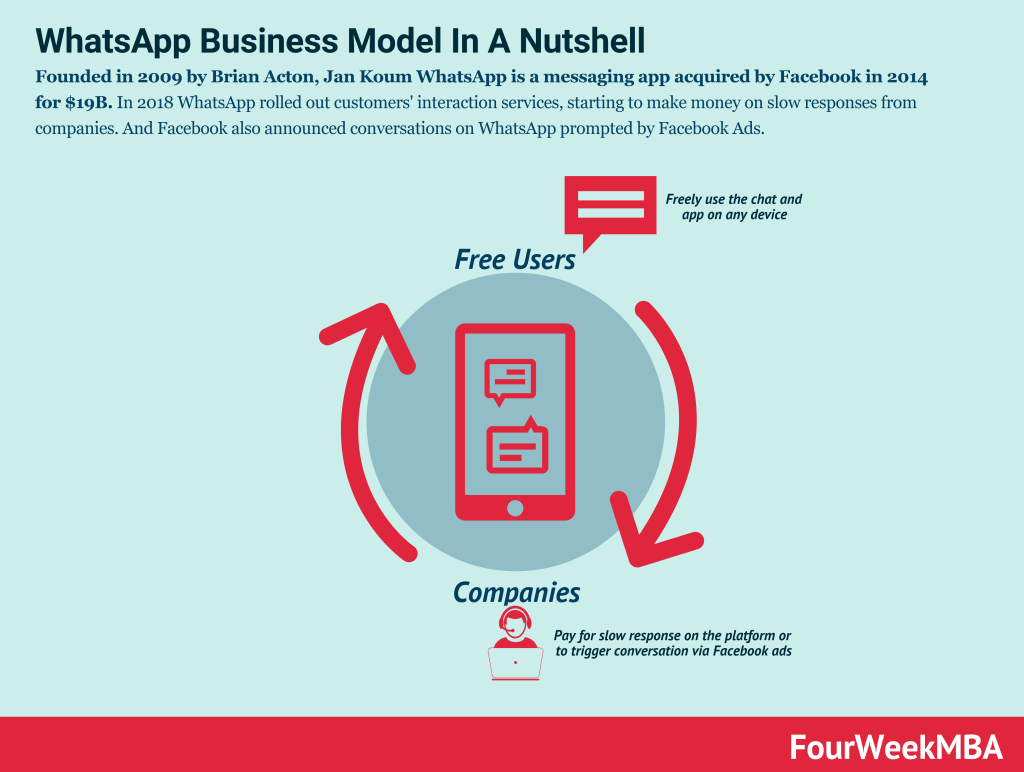
Founded in 2009 by Brian Acton, Jan Koum WhatsApp is a messaging app acquired by Facebook in 2014 for $19B. In 2018 WhatsApp rolled out customers’ interaction services, starting to make money on slow responses from companies. And Facebook also announced conversations on WhatsApp prompted by Facebook Ads.
Reddit is a social news and discussion website that also rates web content. The platform was created in 2005 after founders Alexis Ohanian and Steve Huffman met venture capitalist Paul Graham and pitched the company as the “front page of the internet.” Reddit makes money primarily via advertising. It also offers premium membership plans.
Twitter makes money in two ways: advertising and data licensing. In 2021, Twitter generated $4.5 billion from advertising and $570 million from data licensing. While Twitter generated $5 billion in total revenues, it lost 221 million.
Telegram is a messaging app emphasizing privacy and encryption, launched in 2013. It doesn’t make money yet, while it raised over $1.7 billion in Initial Coin Offerings throughout 2018, halted by the SEC in 2019. Telegram wants to keep the app 100% free while trying to sustain its growth.
unfortunately in the last decade we saw the emergence of the “anything goes” intellectual movement, where pretty much anything could be claimed as long as wrapped around a credible story. That generated intellectuals like Harari, which fake their understanding of domains they don’t have any clue about. Just because anything goes…
Facebook, the main product of Meta, is an attention merchant. As such, its algorithms condense the attention of over three billion monthly active users as of 2023. Meta generated nearly $135 billion in revenues in 2023, of which nearly $132 billion was from advertising (97.8% of the total revenues), $1.9 billion from Reality Labs (the augmented and virtual reality products arm), and over $1 billion in other revenue.
Gennaro is the creator of FourWeekMBA, which reached about four million business people, comprising C-level executives, investors, analysts, product managers, and aspiring digital entrepreneurs in 2022 alone | He is also Director of Sales for a high-tech scaleup in the AI Industry | In 2012, Gennaro earned an International MBA with emphasis on Corporate Finance and Business Strategy.