Turo is a car-sharing app where users can book vehicles directly from their owners.
Like all online marketplaces that rely on adequate supply, the viability of Turo’s business model depends on its attractiveness to vehicle owners looking to make extra money. It provides them with seller support and increases trust by offering insurance and verification checks.
Turo makes money by taking a percentage of each booking and also collects fees that arise in specific circumstances.
Element
Description
Value Proposition
Turo offers a compelling value proposition for its customers, including: – Car Sharing: Providing a platform for car owners to share their vehicles with others. – Variety and Choice: Offering a wide range of vehicle options to suit diverse needs and preferences. – Affordability: Allowing renters to access vehicles at competitive prices. – Convenience: Enabling easy booking, pickup, and return processes through the app. – Flexibility: Giving car owners the flexibility to earn money from their idle cars. – Insurance Coverage: Providing insurance coverage and protection for both car owners and renters. – Community: Fostering a community of car enthusiasts and travelers. – Sustainability: Promoting the efficient use of existing vehicles and reducing the need for car ownership.
Core Products/Services
Turo’s core products and services encompass: – Car Sharing Platform: Operating an online platform that connects car owners with renters. – Vehicle Listings: Allowing car owners to list their vehicles for rent, specifying availability and pricing. – Rental Bookings: Facilitating bookings, reservations, and payments for renters. – Insurance Coverage: Providing insurance coverage options for both car owners and renters. – Mobile App: Offering a mobile app for users to browse, book, and manage rentals. – Community Features: Incorporating community-building features like reviews and ratings. – Owner Earnings: Enabling car owners to earn money by renting out their vehicles. – Roadside Assistance: Offering assistance and support for renters and owners during rentals. – Vehicle Inspection: Conducting vehicle inspections to ensure safety and quality.
Customer Segments
Turo serves a diverse range of customer segments, including: – Car Owners: Attracting individuals who own vehicles and want to earn extra income. – Travelers: Targeting tourists and travelers in need of rental cars during trips. – Business Travelers: Engaging with professionals who require rental cars for business trips. – Car Enthusiasts: Attracting car enthusiasts looking for unique and specialty vehicles. – Local Renters: Serving local renters who need cars for short-term use. – Event-Related Rentals: Providing rental options for event attendees and organizers. – Alternative to Car Ownership: Appealing to individuals seeking an alternative to car ownership. – Insurance Seekers: Catering to customers in need of insurance coverage during rentals. – Global Audience: Expanding services to international markets.
Revenue Streams
Turo generates revenue through various revenue streams: – Service Fees: Earnings from service fees charged to car owners for each rental. – Insurance Premiums: Income from insurance premiums paid by renters. – Add-Ons and Extras: Revenue from additional services like delivery, fuel options, and more. – Roadside Assistance Fees: Earnings from fees associated with roadside assistance services. – Owner Earnings: Deducting a portion of rental income as a commission. – Global Expansion: Potential revenue from expanding services to international markets. – Insurance Partnerships: Earnings from partnerships with insurance providers. – Platform Upgrades: Potential income from premium features and services for users. – Advertising: Revenue from advertising and promotions on the platform.
Distribution Strategy
Turo employs a strategic distribution strategy to reach customers: – Mobile App: Offering a mobile app for users to browse, book, and manage rentals. – Online Platform: Operating a web-based platform for desktop users. – Insurance Partnerships: Collaborating with insurance providers to offer coverage options. – Community Engagement: Fostering a community of car owners and renters through reviews and ratings. – Global Expansion: Expanding services to international markets and regions. – Marketing and Advertising: Running marketing campaigns to attract renters and car owners. – Customer Support: Providing customer support for assistance during rentals. – Owner Onboarding: Assisting car owners in listing and managing their vehicles on the platform. – Safety Measures: Implementing safety measures and vehicle inspections for quality assurance.
Turo is a car-sharing app where users can book vehicles directly from their owners.
Turo’s business model can be best described as an online marketplace that connects car owners with renters for a predetermined time period.
Like all online marketplaces that rely on adequate supply, the viability of Turo’s platform depends on its attractiveness to vehicle owners looking to make extra money.
To that end, the company tells owners how to optimize their ads and has even allowed some to run the multiple-vehicle businesses on the platform.
Turo also takes care of insurance to ensure both parties are sufficiently covered – a common point of frustration and confusion in the vehicle rental industry.
It also assesses a customer’s driving history to minimize instances where a claim needs to be made.
Aside from a presence in many major cities, some vehicles on the platform can be delivered for free to a customer’s location or the airport.
This widens the appeal of the service to both leisure and business-related activities.
Turo’s fees also tend to be lower than traditional providers like Hertz and Avis and some owners on the platform don’t mind lending their cars to renters aged under 25.
Speaking of owners, Turo provides a relatively painless way to monetize their vehicles.
They have the freedom to set their own prices, but the company also offers dynamic pricing based on the time of year, type of car, and location.
Value Proposition
Peer-to-Peer Car Rental: Turo’s value proposition centers around its peer-to-peer car rental platform, which connects car owners with travelers seeking rental vehicles. By offering a convenient and flexible alternative to traditional car rental companies, Turo enables users to access a diverse selection of vehicles at competitive prices, enhancing choice and affordability for both owners and renters.
Choice and Variety: Turo provides users with access to a wide range of vehicles, including economy cars, luxury sedans, SUVs, trucks, and specialty vehicles such as convertibles and electric cars. With thousands of options available in various locations, Turo offers unparalleled choice and variety, catering to diverse preferences and needs.
Convenience and Flexibility: Turo offers a convenient and flexible rental experience, allowing users to book vehicles online or through the mobile app, choose pickup and drop-off locations, and select rental durations that suit their schedules. By eliminating the hassle of traditional car rental processes, Turo streamlines the rental experience and saves users time and effort.
Cost Savings: Turo enables users to save money on car rentals by offering competitive pricing, transparent fees, and flexible pricing options such as hourly, daily, and weekly rates. With no hidden fees and lower overhead costs compared to traditional car rental companies, Turo delivers cost savings and value for both owners and renters.
How does Turo make money?
Turo makes money via numerous fees that are applicable in various circumstances:
Trip fees – this is calculated as a percentage of the total trip cost and is influenced by vehicle value, trip duration, and how far the trip was booked in advance.
Young driver fees – for drivers in the US aged 18-25 and in the UK aged 18-24, a young driver fee applies.
Cancellation fees – these are charged to owners who fail to show for a booked trip or violate cleaning policies.
Miscellaneous fees – other examples where fees are collected include profiteering, maintenance policy violations, and vehicle misrepresentation.
Guest-specific fees – these include additional distance fees, EV recharging fees, gas replacement convenience fees, and pet policy violations.
Distribution Strategy:
Online Platform: Turo primarily operates as an online platform accessible through its website and mobile app. This digital presence allows car owners and renters to engage with the service from anywhere, simplifying the booking process.
Mobile App: Turo offers a mobile app available on both iOS and Android devices. The app provides a user-friendly interface for browsing, booking, and managing car rentals, enhancing the convenience for users on the go.
Geographical Expansion: Turo has expanded its presence to cover over 7,500 cities across the United States, Canada, and the United Kingdom. This wide geographical reach ensures that potential users in numerous locations can access the platform.
Search and Discovery: The platform offers robust search and discovery features, allowing renters to find available cars in their desired location. This feature-rich search functionality simplifies the process of finding suitable rental options.
Delivery Options: Turo extends its distributionstrategy by offering convenient vehicle delivery options. Some car owners on the platform provide free delivery of rental cars to customers’ locations or airports. This flexibility widens the appeal of the service.
Partnerships: Turo has established partnerships with car owners, who list their vehicles on the platform, as well as with insurance providers to ensure adequate coverage for both owners and renters. These partnerships are crucial for the platform’s reliability and trustworthiness.
Host and Guest Ratings: Turo incorporates a rating and review system where both hosts (car owners) and guests (renters) can rate and review each other. This feedback system helps users make informed decisions when choosing hosts or guests, fostering trust within the community.
Marketing Strategy:
Segmented Targeting: Turo targets two primary user segments – car owners seeking to monetize their vehicles and renters looking for cost-effective and convenient car rentals. Tailored marketing messages are crafted to address the unique needs and motivations of each segment.
User Testimonials: Turo utilizes user testimonials and success stories to showcase the benefits of the platform. Real-life experiences shared by both car owners and renters serve as powerful endorsements.
Value Proposition: The company emphasizes its value proposition to both car owners and renters. Owners can earn money by renting out their cars, while renters can access a wide range of vehicles at competitive prices.
Geographic Expansion: Turo’s marketing highlights its extensive coverage in multiple countries and cities, appealing to travelers and locals alike.
Pricing Transparency: Turo communicates pricing transparency to renters, helping them understand the costs involved, including trip fees and additional charges.
Lower Costs: Turo positions itself as a cost-effective alternative to traditional rental companies like Hertz and Avis, emphasizing potential cost savings for renters.
Dynamic Pricing: The company promotes dynamic pricing, allowing owners to maximize their earnings based on factors like season, car type, and location.
Social Media: Turo maintains an active presence on social media platforms, sharing user-generated content, platform updates, and travel-related content to engage with its audience.
Content Marketing: Turo invests in content marketing by creating blog posts, articles, and guides related to travel, car sharing, and rental tips. This content serves as a valuable resource for users and contributes to organic traffic.
Organizational Structure:
Founders/Co-founders: Turo was likely founded by individuals with expertise in technology, online marketplaces, and the automotive industry. The founders are responsible for setting the company’s vision and strategic direction.
Management Team: The management team comprises key executives overseeing various aspects of the business, including product development, marketing, operations, and customer support.
Product Development Team: This team includes software engineers, designers, and developers responsible for building and maintaining the platform’s website and mobile app, ensuring a seamless user experience.
Host Acquisition Team: Turo may have a team focused on acquiring new car owners (hosts) to list their vehicles on the platform. This team would assist hosts in optimizing their listings.
Insurance and Risk Management: Turo’s insurance and risk management team collaborates with insurance providers to ensure proper coverage for owners and renters. They also assess renters’ driving histories to minimize claims.
Customer Support: The customer support team addresses inquiries, resolves issues, and provides assistance to both hosts and guests. They play a crucial role in ensuring a positive user experience.
Marketing and User Acquisition: This team is responsible for creating and executing marketing campaigns, attracting car owners and renters, and promoting the platform’s value proposition.
Data and Analytics: Professionals in this role analyze user data and platform performance to inform business decisions, pricing strategies, and user recommendations.
Legal and Compliance: Ensures that Turo complies with relevant laws and regulations, including insurance requirements and liability considerations.
Finance and Administration: Manages financial operations, budgeting, and administrative functions to support the company’s growth.
Key Highlights of Turo’s Business Model:
Online Marketplace: Turo functions as an online marketplace where car owners and renters interact. Users can rent vehicles from individual owners, making it a peer-to-peer car-sharing platform.
Supply Attractiveness: Like other online marketplaces, Turo’s success relies on the appeal it offers to vehicle owners seeking additional income. Turo guides owners on optimizing their listings and encourages some to run multiple-vehicle businesses on the platform.
Insurance and Trust: Turo addresses the insurance concern, a common issue in vehicle rental. It provides insurance coverage to protect both owners and renters. Additionally, it assesses renters’ driving history to minimize insurance claims.
Value Proposition:
Widespread Availability: Turo operates in more than 7,500 cities across the United States, Canada, and the United Kingdom, making it the largest online car-sharing marketplace globally.
Convenient Delivery: Some vehicles can be delivered for free to customers’ locations or airports, catering to both leisure and businessneeds.
Lower Fees: Turo’s fees are often lower than traditional rental providers like Hertz and Avis.
Catering to Young Drivers: Unlike many rental companies, Turo allows owners to rent their cars to individuals under 25, expanding the market appeal.
Monetization for Owners: Turo provides car owners with a relatively hassle-free method to earn money from their vehicles. Owners can set their own prices, and dynamic pricing is also offered based on factors like season, car type, and location.
Revenue Streams:
Trip Fees: Turo earns a percentage of the total trip cost, influenced by factors like vehicle value, trip duration, and booking lead time.
Young Driver Fees: Fees apply for drivers in specific age ranges (18-25) in the US and UK.
Cancellation Fees: Owners who violate policies or fail to fulfill bookings may incur cancellation fees.
Miscellaneous Fees: Turo charges fees for violations like profiteering, maintenance policy breaches, and inaccurate vehicle information.
Guest-Specific Fees: Additional charges apply for factors such as exceeding distance limits, electric vehicle recharging, gas replacement, and violating pet policies.
BlaBlaCar is a French online carpooling marketplace connecting drivers and passengers willing to share the cost of a journey. BlaBlaCar makes money by charging a service fee to its customers. The exact fee depends on the total amount the driver sets for the ride. The company also shares ride revenue with bus operators that adopt its branding in their fleet.
DoorDash is a platform business model that enables restaurants to set up at no cost delivery operations. At the same time, customers get their food at home and dashers (delivery people) earn some extra money. DoorDash makes money by markup prices through delivery fees, memberships, and advertising for restaurants on the marketplace.
Glovo is a Spanish on-demand courier service that purchases and delivers products ordered through a mobile app. Founded in 2015 by Oscar Pierre and Sacha Michaud as a way to “uberize” local services. Glovo makes money via delivery fees, mini-supermarkets (fulfillment centers that Glovo operates in partnership with grocery store chains), and dark kitchens (enabling restaurants to increase their capacity).
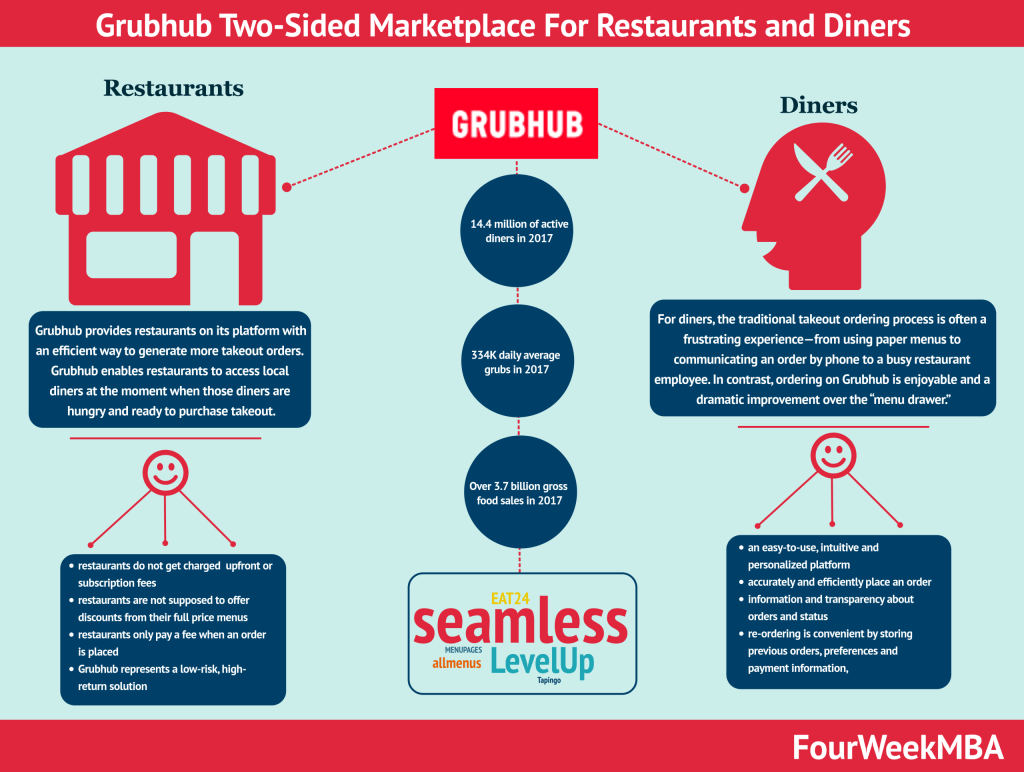
Grubhub is an online and mobile platform for restaurant pick-up and delivery orders. In 2018 the company connected 95,000 takeout restaurants in over 1,700 U.S. cities and London. The Grubhub portfolio of brands like Seamless, LevelUp, Eat24, AllMenus, MenuPages, andTapingo. The company makes money primarily by charging restaurants a pre-order commission and it generates revenues when diners place an order on its platform. Also, it charges restaurants that use Grubhub delivery services and when diners pay for those services.
Instacart’s business model relies on enabling an easy set up for grocery stores, the comfort for customers to get their shopping delivered at home, and an additional income stream for personal shoppers. Instacart makes money by charging service fees, via memberships, and by running performance advertising on its platform.
Lyft is a transportation-as-a-service marketplace allowing riders to find a driver for a ride. Lyft has also expanded with a multimodal platform that gives more options like bike-sharing or electric scooters. Lyft primary makes money by collecting fees from drivers that complete rides on the platform.
Uber is a is two-sided marketplace, a platform business model that connects drivers and riders, with an interface that has elements of gamification, that makes it easy for two sides to connect and transact. Uber makes money by collecting fees from the platform’s gross bookings.
Postmates is a food delivery service built as a last-mile delivery service platform connecting locals with shops. Postmates makes money by collecting fees (commission, delivery, service, cart, and cancellation fees). It also makes money via its subscription service (called Unlimted – $9.99/month or $99.99 annually) giving free delivery on every order of more than $12.
Uber Eats is a three-sided marketplace connecting a driver, a restaurant owner and a customer with Uber Eats platform at the center. The three-sided marketplace moves around three players: Restaurants pay commission on the orders to Uber Eats; Customers pay the small delivery charges, and at times, cancellation fee; Drivers earn through making reliable deliveries on time.
Gennaro is the creator of FourWeekMBA, which reached about four million business people, comprising C-level executives, investors, analysts, product managers, and aspiring digital entrepreneurs in 2022 alone | He is also Director of Sales for a high-tech scaleup in the AI Industry | In 2012, Gennaro earned an International MBA with emphasis on Corporate Finance and Business Strategy.