R-squared, often denoted as R², is a statistical measure that quantifies the proportion of the variance in the dependent variable that is explained by the independent variables in a regression model.
It provides insights into how well the independent variables predict the variation in the dependent variable.
Key Elements of R-squared:
Dependent Variable: The variable that you are trying to predict or explain.
Independent Variables: The variables used in the regression model to predict the dependent variable.
Residuals: The differences between the observed values of the dependent variable and the values predicted by the regression model.
R-squared holds significant importance in various fields and applications for several reasons:
Model Assessment:
It serves as a critical tool for assessing the effectiveness of regression models in explaining the variability in the dependent variable.
Prediction Evaluation:
R-squared helps evaluate the predictive power of a model by quantifying how well it captures the underlying relationships between variables.
Variable Selection:
Researchers and analysts use R-squared to decide which independent variables are relevant and contribute meaningfully to the model.
Comparative Analysis:
R-squared allows for the comparison of different models to determine which one provides a better fit to the data.
Calculating R-squared
The calculation of R-squared involves several steps:
Calculate the Total Sum of Squares (SST): This is the total variation in the dependent variable, and it is calculated as the sum of the squared differences between each observed data point and the overall mean of the dependent variable.
Calculate the Regression Sum of Squares (SSR): This is the variation in the dependent variable that is explained by the regression model. It is calculated as the sum of the squared differences between the predicted values (from the regression model) and the overall mean of the dependent variable.
Calculate the Residual Sum of Squares (SSE): This is the unexplained variation in the dependent variable, representing the discrepancies between the observed values and the predicted values from the regression model. It is calculated as the sum of the squared residuals.
Calculate R-squared: R-squared is computed as the ratio of SSR to SST: R-squared (R²) = SSR / SST Alternatively, it can be calculated as: R-squared (R²) = 1 – (SSE / SST)
R-squared values range between 0 and 1. A higher R-squared indicates that a larger proportion of the variance in the dependent variable is explained by the independent variables in the model.
Interpreting R-squared
Interpreting R-squared involves considering the following points:
An R-squared value of 0 suggests that the model does not explain any of the variance in the dependent variable.
An R-squared value of 1 implies that the model perfectly explains all the variance in the dependent variable.
R-squared values between 0 and 1 indicate the proportion of variance explained. For example, an R-squared of 0.80 means that 80% of the variance in the dependent variable is explained by the independent variables in the model.
While a high R-squared is desirable, it does not necessarily mean that the model is the best fit. Other factors such as the theoretical foundation, data quality, and domain knowledge should also be considered.
Real-World Applications of R-squared
R-squared finds practical applications in various fields and scenarios:
Economic Research:
Economists use R-squared to measure the goodness of fit of regression models that examine relationships between economic variables.
Financial Analysis:
Analysts utilize R-squared to assess the explanatory power of financial models, such as those used for stock price prediction or risk analysis.
Marketing and Sales:
In marketing, R-squared helps evaluate the effectiveness of marketing campaigns in explaining changes in sales or customer behavior.
Biomedical Research:
R-squared is applied to assess how well independent variables explain variations in health-related outcomes in biomedical studies.
Environmental Science:
Researchers use R-squared to analyze the impact of environmental factors on ecological or climate-related variables.
Limitations and Considerations
While R-squared is a valuable metric for model evaluation, it has certain limitations:
Overfitting:
A high R-squared does not guarantee a good model; it may indicate overfitting, where the model is too complex and captures noise in the data.
Extrapolation:
R-squared does not indicate how well the model can predict values outside the observed range of independent variables.
Domain Knowledge:
R-squared should not be the sole criterion for model selection. It is essential to consider domain knowledge, data quality, and other factors.
Nonlinear Relationships:
R-squared may not accurately reflect the fit of models with nonlinear relationships between variables.
Conclusion
R-squared is a fundamental tool in statistics and data analysis, providing insights into how well a regression model explains the variance in a dependent variable. By quantifying the proportion of explained variance, it aids in model assessment, variable selection, and prediction evaluation across various fields and applications. However, it is essential to interpret R-squared in conjunction with other factors and exercise caution to avoid overfitting and make meaningful inferences. R-squared remains a valuable tool for researchers, analysts, and decision-makers seeking to understand and quantify relationships between variables in a data-driven world.
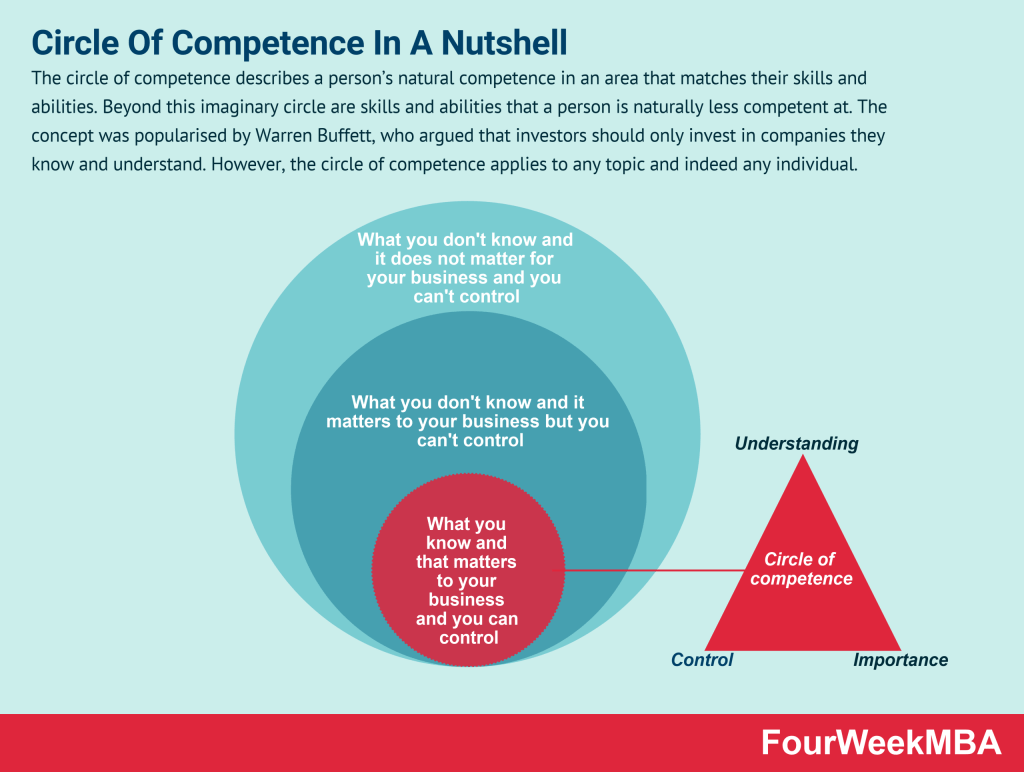
The circle of competence describes a person’s natural competence in an area that matches their skills and abilities. Beyond this imaginary circle are skills and abilities that a person is naturally less competent at. The concept was popularised by Warren Buffett, who argued that investors should only invest in companies they know and understand. However, the circle of competence applies to any topic and indeed any individual.
Economic or market moats represent the long-term business defensibility. Or how long a business can retain its competitive advantage in the marketplace over the years. Warren Buffet who popularized the term “moat” referred to it as a share of mind, opposite to market share, as such it is the characteristic that all valuable brands have.
The Buffet Indicator is a measure of the total value of all publicly-traded stocks in a country divided by that country’s GDP. It’s a measure and ratio to evaluate whether a market is undervalued or overvalued. It’s one of Warren Buffet’s favorite measures as a warning that financial markets might be overvalued and riskier.
Venture capital is a form of investing skewed toward high-risk bets, that are likely to fail. Therefore venture capitalists look for higher returns. Indeed, venture capital is based on the power law, or the law for which a small number of bets will pay off big time for the larger numbers of low-return or investments that will go to zero. That is the whole premise of venture capital.
Foreign direct investment occurs when an individual or business purchases an interest of 10% or more in a company that operates in a different country. According to the International Monetary Fund (IMF), this percentage implies that the investor can influence or participate in the management of an enterprise. When the interest is less than 10%, on the other hand, the IMF simply defines it as a security that is part of a stock portfolio. Foreign direct investment (FDI), therefore, involves the purchase of an interest in a company by an entity that is located in another country.
Micro-investing is the process of investing small amounts of money regularly. The process of micro-investing involves small and sometimes irregular investments where the individual can set up recurring payments or invest a lump sum as cash becomes available.
Meme stocks are securities that go viral online and attract the attention of the younger generation of retail investors. Meme investing, therefore, is a bottom-up, community-driven approach to investing that positions itself as the antonym to Wall Street investing. Also, meme investing often looks at attractive opportunities with lower liquidity that might be easier to overtake, thus enabling wide speculation, as “meme investors” often look for disproportionate short-term returns.
Retail investing is the act of non-professional investors buying and selling securities for their own purposes. Retail investing has become popular with the rise of zero commissions digital platforms enabling anyone with small portfolio to trade.
Accredited investors are individuals or entities deemed sophisticated enough to purchase securities that are not bound by the laws that protect normal investors. These may encompass venture capital, angel investments, private equity funds, hedge funds, real estate investment funds, and specialty investment funds such as those related to cryptocurrency. Accredited investors, therefore, are individuals or entities permitted to invest in securities that are complex, opaque, loosely regulated, or otherwise unregistered with a financial authority.
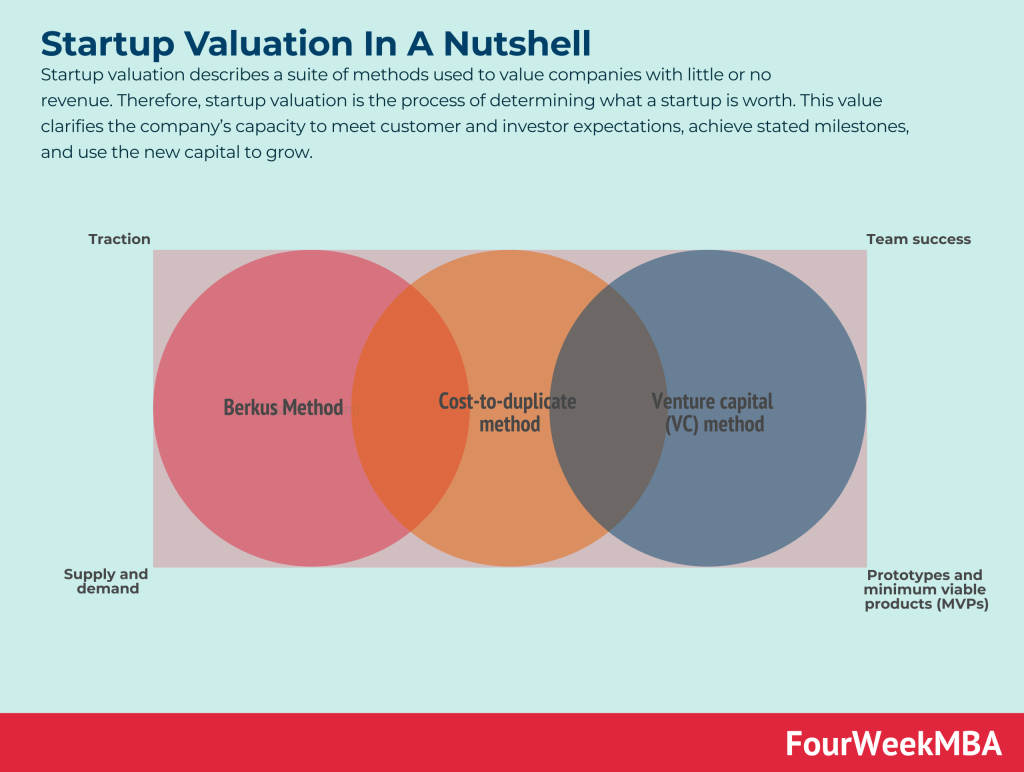
Startup valuation describes a suite of methods used to value companies with little or no revenue. Therefore, startup valuation is the process of determining what a startup is worth. This value clarifies the company’s capacity to meet customer and investor expectations, achieve stated milestones, and use the new capital to grow.
Profit is the total income that a company generates from its operations. This includes money from sales, investments, and other income sources. In contrast, cash flow is the money that flows in and out of a company. This distinction is critical to understand as a profitable company might be short of cash and have liquidity crises.
Double-entry accounting is the foundation of modern financial accounting. It’s based on the accounting equation, where assets equal liabilities plus equity. That is the fundamental unit to build financial statements (balance sheet, income statement, and cash flow statement). The basic concept of double-entry is that a single transaction, to be recorded, will hit two accounts.
The purpose of the balance sheet is to report how the resources to run the operations of the business were acquired. The Balance Sheet helps to assess the financial risk of a business and the simplest way to describe it is given by the accounting equation (assets = liability + equity).
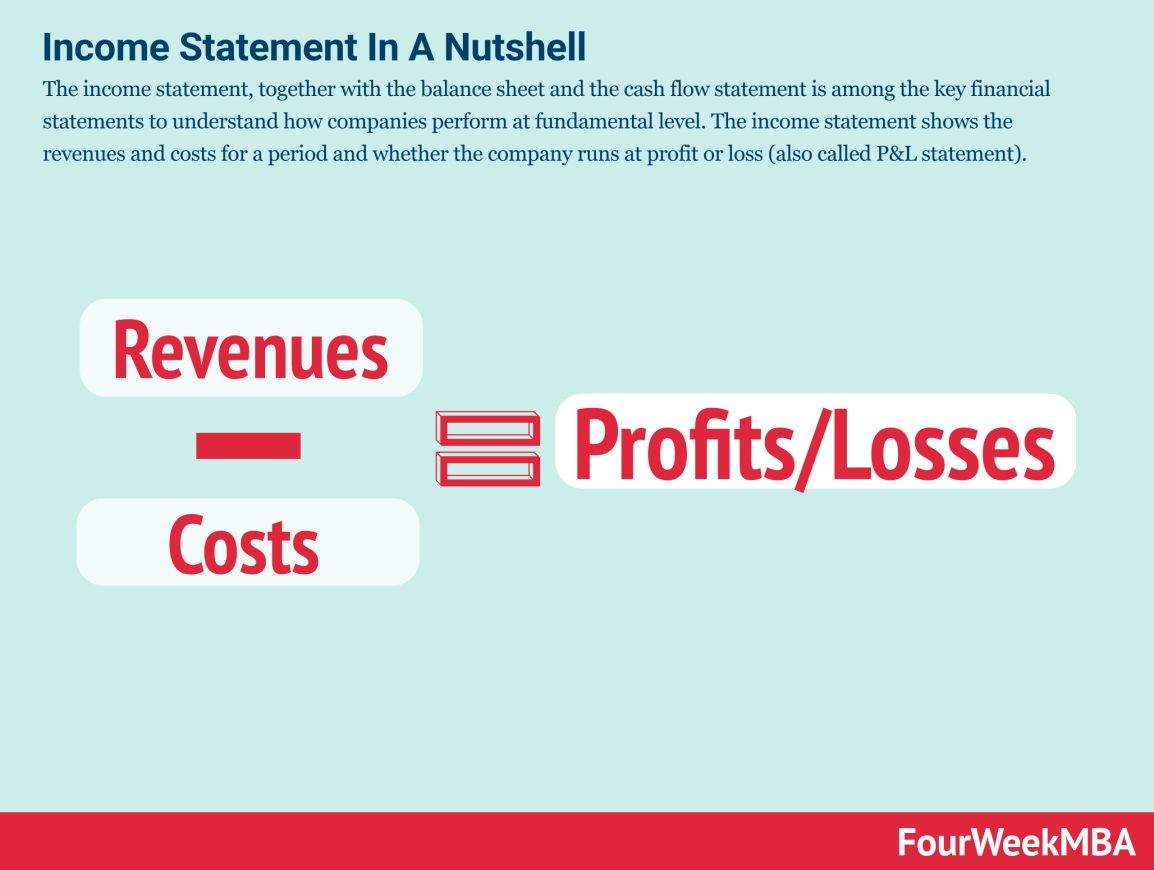
The income statement, together with the balance sheet and the cash flow statement is among the key financial statements to understand how companies perform at fundamental level. The income statement shows the revenues and costs for a period and whether the company runs at profit or loss (also called P&L statement).
The cash flow statement is the third main financial statement, together with income statement and the balance sheet. It helps to assess the liquidity of an organization by showing the cash balances coming from operations, investing and financing. The cash flow statement can be prepared with two separate methods: direct or indirect.
The capital structure shows how an organization financed its operations. Following the balance sheet structure, usually, assets of an organization can be built either by using equity or liability. Equity usually comprises endowment from shareholders and profit reserves. Where instead, liabilities can comprise either current (short-term debt) or non-current (long-term obligations).
Capital expenditure or capital expense represents the money spent toward things that can be classified as fixed asset, with a longer term value. As such they will be recorded under non-current assets, on the balance sheet, and they will be amortized over the years. The reduced value on the balance sheet is expensed through the profit and loss.
Financial statements help companies assess several aspects of the business, from profitability (income statement) to how assets are sourced (balance sheet), and cash inflows and outflows (cash flow statement). Financial statements are also mandatory to companies for tax purposes. They are also used by managers to assess the performance of the business.
Financial modeling involves the analysis of accounting, finance, and business data to predict future financial performance. Financial modeling is often used in valuation, which consists of estimating the value in dollar terms of a company based on several parameters. Some of the most common financial models comprise discounted cash flows, the M&A model, and the CCA model.
Business valuations involve a formal analysis of the key operational aspects of a business. A business valuation is an analysis used to determine the economic value of a business or company unit. It’s important to note that valuations are one part science and one part art. Analysts use professional judgment to consider the financial performance of a business with respect to local, national, or global economic conditions. They will also consider the total value of assets and liabilities, in addition to patented or proprietary technology.
The Weighted Average Cost of Capital can also be defined as the cost of capital. That’s a rate – net of the weight of the equity and debt the company holds – that assesses how much it cost to that firm to get capital in the form of equity, debt or both.
A financial option is a contract, defined as a derivative drawing its value on a set of underlying variables (perhaps the volatility of the stock underlying the option). It comprises two parties (option writer and option buyer). This contract offers the right of the option holder to purchase the underlying asset at an agreed price.
A profitability framework helps you assess the profitability of any company within a few minutes. It starts by looking at two simple variables (revenues and costs) and it drills down from there. This helps us identify in which part of the organization there is a profitability issue and strategize from there.
The Triple Bottom Line (TBL) is a theory that seeks to gauge the level of corporate social responsibility in business. Instead of a single bottom line associated with profit, the TBL theory argues that there should be two more: people, and the planet. By balancing people, planet, and profit, it’s possible to build a more sustainable business model and a circular firm.
Behavioral finance or economics focuses on understanding how individuals make decisions and how those decisions are affected by psychological factors, such as biases, and how those can affect the collective. Behavioral finance is an expansion of classic finance and economics that assumed that people always rational choices based on optimizing their outcome, void of context.
Gennaro is the creator of FourWeekMBA, which reached about four million business people, comprising C-level executives, investors, analysts, product managers, and aspiring digital entrepreneurs in 2022 alone | He is also Director of Sales for a high-tech scaleup in the AI Industry | In 2012, Gennaro earned an International MBA with emphasis on Corporate Finance and Business Strategy.