The job interview process is a crucial step in the hiring process. Knowing how to conduct a job interview effectively can make all the difference between finding the perfect candidate and making an unfortunate hire. Whether you are interviewing for a position within your own startup or elsewhere, it’s important to understand what questions should be asked, when they should be asked, and how to assess qualifications and skills during an interview. In this blog post we will cover preparing for an interview, conducting one properly, assessing candidates’ qualifications and skillsets appropriately, offering employment successfully as well as following up after the whole process is complete – so that you can ensure success every time you have to conduct a job interview!
Preparing for the Interview
Before conducting a job interview, it is important to research the company and prepare questions that will help you assess the candidate’s qualifications and skills. Additionally, practice interviewing with a friend or colleague to ensure that you are prepared for the actual interview.
Researching the Company: It is essential to have an understanding of what the company does, its values, mission statement, goals and objectives prior to meeting with potential candidates. This can be done by visiting their website or social media pages as well as reading up on news articles about them. Knowing this information can help guide your questioning during the interview process.
Preparing Questions: Once you have gathered some background knowledge about the company, create thoughtful questions that will allow you to gain insight into how qualified each candidate is for this role. Ask open-ended questions such as “What do you think makes someone successful in this position?” or “How would you handle a difficult situation?” These types of questions give candidates an opportunity to demonstrate their problem solving skills and provide more detailed answers than yes/no type inquiries.
Before engaging in real conversations with applicants who could potentially become part of your team at work, it may be beneficial to practice interviewing with friends or colleagues who have experience in project management roles within startups. This allows time for feedback which can improve your interviewing technique and offer advice on best practices when talking with candidates.
Key Takeaway: The key takeaway from the above is that it is important to research the company and prepare questions prior to conducting a job interview. This includes gaining knowledge about the company’s values, mission statement, goals and objectives as well as asking open-ended questions such as “What do you think makes someone successful in this position?” or “How would you handle a difficult situation?” Additionally, practicing interviewing with friends or colleagues can help improve technique before engaging in real conversations with potential team members.
Conducting the Interview
Establish Rapport with the Candidate: When conducting an interview, it is important to establish a rapport with the candidate. Begin by introducing yourself and providing an overview of the position. Ask questions about their experience and qualifications that are relevant to the role. Show interest in their answers and provide positive feedback when appropriate.
Ask Open-Ended Questions: During the interview, ask open-ended questions to get a better understanding of how they think and approach problems. This will give you insight into their skillset as well as how they would fit into your team culture. Avoid asking yes or no questions as these do not provide much information about the candidate’s abilities or experiences.
Pay attention to both verbal responses and body language during an interview; this can provide insight into whether or not a candidate is suitable for the role. Observe how they respond to different types of questions, if they seem comfortable answering them, if they make eye contact while speaking etcetera; all of which can help you assess whether or not someone is right for your company’s needs.
Assessing Qualifications and Skills
When assessing qualifications and skills for a project manager role within a startup, it is important to verify the candidate’s education and work history. Request copies of diplomas or certificates from relevant institutions to ensure that they have the necessary credentials. Additionally, ask questions about their experience in similar roles to get an understanding of how well-suited they are for the job.
It is also essential to test technical knowledge and skills by giving them a task related to the position they are applying for. This could include developing strategies on how best to manage projects or demonstrating problem-solving abilities when faced with challenges. By doing this, you can assess if they have the right skill set required for success in this role.
Finally, analyze soft skills such as communication, problem-solving, and teamwork abilities as well as cultural fit in order to determine if they are suitable for the role. Ask questions that will help you understand how well they would fit into your team dynamic and company culture while also evaluating their ability to handle stressful situations calmly and effectively. It is important that these qualities match up with what your organization values most so that everyone can work together harmoniously towards achieving common goals
Making an Offer of Employment
Making an Offer of Employment is a crucial step in the hiring process. Once you have identified the right candidate for the role, it’s time to discuss salary, benefits, and other terms of employment with them before making an offer.
Discuss Salary, Benefits, and Other Terms of Employment: It’s important to provide clear information about salary expectations upfront so that both parties are on the same page. Discuss any additional benefits such as health insurance or vacation days that may be included in the package. Make sure to explain any company policies regarding overtime pay or bonuses as well.
Be sure to also clarify how performance reviews will work and when raises can be expected, if applicable.
Following Up After the Interview Process is Complete
After completing the interview process, it is important to follow up with all candidates in a timely manner. Providing feedback to those who were not selected for the role can be beneficial both for them and your company. It allows you to give constructive criticism that may help them in future job searches, while also helping you maintain a positive reputation as an employer.
When providing feedback, try to be as specific as possible about why they weren’t chosen for the position. For example, if their technical skills didn’t meet your requirements or if their personality wasn’t a good fit for the team culture, explain this clearly and concisely so that they understand why they weren’t successful this time around.
For those who were successful during the interview process, sending out offer letters is essential before they start working at your company. Offer letters should include all details regarding salary, benefits package (if applicable), start date and any other terms of employment that need to be agreed upon between both parties. This ensures there are no misunderstandings once they begin work and helps create a smooth transition into their new role within your organization.
It is also important to make sure that offer letters are sent out promptly after interviews have been completed; otherwise potential employees may become frustrated or lose interest in taking on the role altogether due to lack of communication from your end. Additionally, following up with unsuccessful applicants quickly shows respect towards them by acknowledging their efforts throughout the recruitment process even though it did not result in success this time around
Key Takeaway: When conducting a job interview, it is important to follow up with all candidates in a timely manner and provide feedback to those who were not selected. Offer letters should include all details regarding salary, benefits package (if applicable), start date and any other terms of employment that need to be agreed upon between both parties. Additionally, following up with unsuccessful applicants quickly shows respect towards them by acknowledging their efforts throughout the recruitment process even though it did not result in success this time around.Key takeaways: • Provide clear and specific feedback to unsuccessful candidates • Include all necessary information in offer letters before sending out • Follow up promptly with both successful and unsuccessful applicants
FAQs in Relation to How to Conduct a Job Interview
What are 10 simple steps to conducting an interview?
1. Prepare questions in advance: Before the interview, create a list of relevant questions to ask the candidate.
2. Research the company and position: Understand what the role entails and have an understanding of the company’s mission statement and values.
3. Set expectations: Explain to candidates what they can expect from you during their interview process so that there are no surprises or misunderstandings later on.
4. Greet warmly: Make sure to greet your candidate with a smile and be friendly throughout their visit as this will help them feel more comfortable speaking with you about themselves and their experiences.
5. Ask open-ended questions: Ask questions that require more than a yes/no answer such as “Tell me about yourself” or “What do you think makes you well suited for this role?”
6. Listen carefully: Pay attention to how your candidate responds, not just what they say, so that you can get an accurate picture of who they are as a person and professional before making any decisions about hiring them or not
7. Take notes: Write down key points made by each candidate so that it is easier for you to compare them afterwards when deciding which one is best suited for the job
8 .Be consistent in evaluations : Ensure all candidates receive equal consideration by asking similar questions across interviews; make sure everyone has access to same information prior to meeting with them
9 .Provide feedback : Give constructive feedback after each interview so that applicants know where they stand in terms of being considered for hire
10 .Follow up promptly : Reach out quickly once a decision has been made regarding who will fill the position; promptness shows respect towards those interviewed but not chosen
What are the 5 steps for conducting an interview?
1. Prepare: Before the interview, research the company and position to ensure you are well-informed. Create a list of questions that will help you gain an understanding of the role and assess if it is a good fit for your skillset.
2. Introduce Yourself: Begin by introducing yourself with confidence and expressing why you are interested in this particular role at this company.
3. Ask Questions: During the interview, ask thoughtful questions that demonstrate your knowledge about the job requirements and organization’s goals.
4. Listen Carefully: Pay attention to what is being said so that you can respond appropriately during conversation or answer any follow up questions they may have regarding your answers or experience level related to their needs.
5 Follow Up: Afterward, send a thank-you note expressing appreciation for their time as well as reiterating why you believe yourself to be qualified for the position and how excited you would be to join their team!
What are the 3 methods of job interview?
1. Behavioral Interviews: These are used to assess a candidate’s past experiences and how they would handle similar situations in the future. Questions focus on how the applicant handled challenges, solved problems, or made decisions in previous roles.
2. Technical Interviews: This type of interview is designed to evaluate a candidate’s knowledge and skills related to the job requirements. It may include questions about specific software programs, coding languages, or other technical topics that are relevant for the position being applied for.
3. Case Studies: In this type of interview, applicants are presented with a problem and asked to solve it using their analytical skills and experience as well as any resources available to them at the time of the interview. The interviewer will then ask follow-up questions based on their response in order to gauge their ability to think critically under pressure.
Conclusion
It is essential to prepare for the interview by researching the company and role, as well as gathering information about potential candidates. During the interview, it is important to assess qualifications and skills in order to make an informed decision when making an offer of employment. Finally, following up after the interview process is complete will help ensure that all parties are on track with expectations moving forward. By taking these steps into consideration when conducting a job interview, you can be sure that you have made a successful hire for your organization.
How to Prepare for a Job Interview
Preparing for a job interview can be nerve-wracking, but with the right preparation and knowledge of what to expect, you’ll be well on your way to making a good impression. Knowing how to research the company, prepare your resume and cover letter, practice answering common questions in advance, dress professionally for the occasion and arrive early are all key elements that will help you as you prepare for a job interview. As daunting as it may seem at first glance – take comfort in knowing that if you plan ahead properly there’s no need to worry! Read this blog post for more tips on how best to prepare yourself when applying for project management positions within startups so that come time of the interview -you’re ready!
Research the Company
Researching the company before an interview is essential for any job seeker. It helps you to understand the company’s history, culture, and job requirements so that you can prepare accordingly.
Subheading a: Learn About the Company’s History and Culture
It is important to learn about the company’s history and culture in order to get a better understanding of what they are looking for in an employee. Researching their website or social media pages can give you insight into their values, mission statement, and overall goals as a business. Additionally, reading reviews from current or former employees can provide additional information on how it feels to work at this particular organization.
Subheading b: Understand the Job Description and Requirements
Understanding exactly what duties will be expected of you if hired is key when preparing for an interview. Read through all aspects of the job description carefully so that you know exactly what skills are required for success in this role. Knowing these details ahead of time will help you tailor your answers during your interview more effectively by demonstrating why your experience makes you uniquely qualified for this position.
Asking questions during an interview shows employers that you have not only done your research but also demonstrates interest in working with them long-term should they offer you a position. Prepare some thoughtful questions ahead of time related to topics such as team dynamics, career growth opportunities within the organization, or anything else relevant to your potential role within this startup environment. This will show employers that you have taken initiative and possess genuine enthusiasm towards joining their team.
Key Takeaway: The key takeaway from this research is that preparing for a job interview requires more than just knowing the basics of the company. It is important to learn about their history and culture, understand the job description and requirements, and come up with thoughtful questions to ask during your interview. This will demonstrate to employers that you have done your research and are genuinely interested in joining their team.
Prepare Your Resume and Cover Letter
When applying for a job, having an up-to-date resume and cover letter is essential. Your documents should accurately reflect your skills and experience to make the best impression on potential employers.
a. Update Your Resume with Relevant Experience and Skills: Make sure your resume is current by including any new experiences or qualifications you have acquired since the last time you updated it. Highlight any relevant accomplishments that demonstrate how you can be an asset to the company, such as awards or certifications earned in your field of expertise.
b. Tailor Your Cover Letter to the Position You Are Applying For: Take time to customize your cover letter for each position you apply for so that it reflects why you are uniquely qualified for this particular role. Showcase specific examples from past work experiences that illustrate how you can contribute to the success of this organization if hired.
Ask a trusted friend or family member who has experience in writing resumes and cover letters to review yours before submitting them with your application materials. They may spot typos, grammar mistakes, formatting issues, or other errors that could hurt your chances of getting an interview invitation if not corrected beforehand.
Practice Answering Common Interview Questions
It is important to be prepared for any questions that may arise during an interview. Practicing ahead of time can help you feel more confident and comfortable when it comes time to answer the interviewer’s questions.
Brainstorm Answers to Common Interview Questions Ahead of Time: Before your interview, take some time to think about potential questions that may come up and prepare answers accordingly. Consider common inquiries such as “What experience do you have in this field?” or “Why are you interested in this position?” Having a few responses ready will make it easier for you to answer quickly and confidently during the actual interview.
Rehearse Your Responses Out Loud with a Friend or Family Member: Once you have brainstormed possible answers, practice saying them out loud with someone else present. This will give you an opportunity to hear how your responses sound before actually delivering them in front of the interviewer. Additionally, having another person listen can provide valuable feedback on how clear and concise your answers are so that they can be improved if necessary.
Recording yourself answering mock interview questions is also beneficial because it allows you to review your performance afterwards. Listen back carefully and assess what went well and where there is room for improvement; this way, any areas needing further attention can be addressed prior to the real thing.
Dress Professionally for the Interview
When attending a job interview, it is important to dress professionally. An appropriate outfit should be clean and well-fitting, such as a suit or blazer with slacks or skirt. Professional accessories like jewelry, watches, and shoes can also help you make the right impression. Make sure not to wear too much makeup or fragrances that could distract from your qualifications.
Choose an Appropriate Outfit That Is Clean and Well-Fitting
Choosing the right outfit for a job interview is essential in making a good first impression. A professional look will show that you are serious about the position and have taken time to prepare for the meeting. Opt for items such as suits or blazers with slacks or skirts in neutral colors like black, navy blue, gray, brown, tan or cream; avoid bright colors and patterns which may be distracting during an interview setting. Additionally, ensure that all clothing items fit properly – nothing should be too tight nor too loose on your body – so you appear polished and put together throughout the entire process.
The small details matter when dressing professionally for an interview! Wearing subtle pieces of jewelry such as stud earrings (no dangling earrings) along with simple necklaces can add sophistication to any look without being overly flashy; similarly adding a watch helps complete your overall appearance while still looking tasteful yet stylish at the same time! Lastly don’t forget about footwear – choose classic pumps in leather material if possible – they will go perfectly with almost any ensemble you decide on wearing!
Avoid Wearing Too Much Makeup Or Fragrances That Could Distract From Your Qualifications
When it comes to makeup, keep it minimalistic – less is more. Natural tones work best since they won’t draw attention away from what really matters – your skillset and experience related to this particular role. Additionally, try avoiding strong perfumes or colognes before going into an office environment since some people might find them overwhelming and potentially distracting during conversations between yourself and potential employers.
Key Takeaway: A key takeaway from the above is that when attending a job interview, it is important to dress professionally and pay attention to small details. This includes wearing an appropriate outfit such as a suit or blazer with slacks or skirt, professional accessories like jewelry, watches, and shoes; avoiding too much makeup or fragrances that could distract from your qualifications; and keeping makeup minimalistic with natural tones.
Arrive Early for the Interview
It is important to arrive early for a job interview. Arriving late can give the impression that you are not organized or reliable, and it could negatively impact your chances of getting the job. To ensure that you arrive on time, plan ahead for traffic delays or other unforeseen circumstances by leaving earlier than necessary.
Plan Ahead for Traffic Delays or Other Unforeseen Circumstances: Allow yourself plenty of time to get to the interview location so that you don’t have to rush. Check traffic reports and plan your route accordingly, taking into account any construction or detours along the way. It is also helpful to map out where you will be parking in advance so that you know exactly how much time it will take from when you park until when you reach the building entrance.
Bring Copies of Your Resume, Cover Letter, and Any Other Necessary Documents: Have copies of all relevant documents ready before heading out for your interview. This includes multiple copies of your resume and cover letter as well as any other documents requested by the employer such as references or certifications. Having these readily available shows initiative and preparedness which are both qualities employers look for in potential hires.
When arriving at the office building, make sure to introduce yourself politely with a smile when entering the reception area if one is present. Doing this allows them to direct people who may be asking about an upcoming interview towards you rather than having them wait around aimlessly looking lost, which can cause confusion among those waiting outside. Additionally, introducing yourself allows receptionists to become familiar with applicants’ faces, making it easier for them to remember who they spoke with during interviews later on down the line.
Key Takeaway: When preparing for a job interview, it is important to plan ahead and be prepared. This includes allowing extra time for traffic delays or other unforeseen circumstances, bringing copies of your resume, cover letter and any other documents requested by the employer, and introducing yourself politely with a smile when entering the reception area if one is present. By taking these steps you can demonstrate your organization skills as well as initiative and preparedness which are both qualities employers look for in potential hires.
Conclusion
In conclusion, preparing for a job interview is an important step in securing the position you want. Taking the time to research the company, create a professional resume and cover letter, practice answering common questions, dress professionally and arrive early will help you make a great impression during your interview. By following these steps and being prepared with knowledge of the company and yourself, you can increase your chances of success when it comes to prepare for a job interview.
Leadership styles encompass the behavioral qualities of a leader. These qualities are commonly used to direct, motivate, or manage groups of people. Some of the most recognized leadership styles include Autocratic, Democratic, or Laissez-Faire leadership styles.
Agile leadership is the embodiment of agile manifesto principles by a manager or management team. Agile leadership impacts two important levels of a business. The structural level defines the roles, responsibilities, and key performance indicators. The behavioral level describes the actions leaders exhibit to others based on agile principles.
Adaptive leadership is a model used by leaders to help individuals adapt to complex or rapidly changing environments. Adaptive leadership is defined by three core components (precious or expendable, experimentation and smart risks, disciplined assessment). Growth occurs when an organization discards ineffective ways of operating. Then, active leaders implement new initiatives and monitor their impact.
Authors and strategy experts Chan Kim and Renée Mauborgne developed the idea of blue ocean leadership. In the same way that Kim and Mauborgne’s blue ocean strategy enables companies to create uncontested market space, blue ocean leadership allows companies to benefit from unrealized employee talent and potential.
Developed by business consultants Kenneth Blanchard and Paul Hersey in the 1960s, delegative leadership is a leadership style where authority figures empower subordinates to exercise autonomy. For this reason, it is also called laissez-faire leadership. In some cases, this type of leadership can lead to increases in work quality and decision-making. In a few other cases, this type of leadership needs to be balanced out to prevent a lack of direction and cohesiveness of the team.
Distributed leadership is based on the premise that leadership responsibilities and accountability are shared by those with the relevant skills or expertise so that the shared responsibility and accountability of multiple individuals within a workplace, bulds up as a fluid and emergent property (not controlled or held by one individual). Distributed leadership is based on eight hallmarks, or principles: shared responsibility, shared power, synergy, leadership capacity, organizational learning, equitable and ethical climate, democratic and investigative culture, and macro-community engagement.
Ethical leaders adhere to certain values and beliefs irrespective of whether they are in the home or office. In essence, ethical leaders are motivated and guided by the inherent dignity and rights of other people.
Transformational leadership is a style of leadership that motivates, encourages, and inspires employees to contribute to company growth. Leadership expert James McGregor Burns first described the concept of transformational leadership in a 1978 book entitled Leadership. Although Burns’ research was focused on political leaders, the term is also applicable for businesses and organizational psychology.
Those who lead by example let their actions (and not their words) exemplify acceptable forms of behavior or conduct. In a manager-subordinate context, the intention of leading by example is for employees to emulate this behavior or conduct themselves.
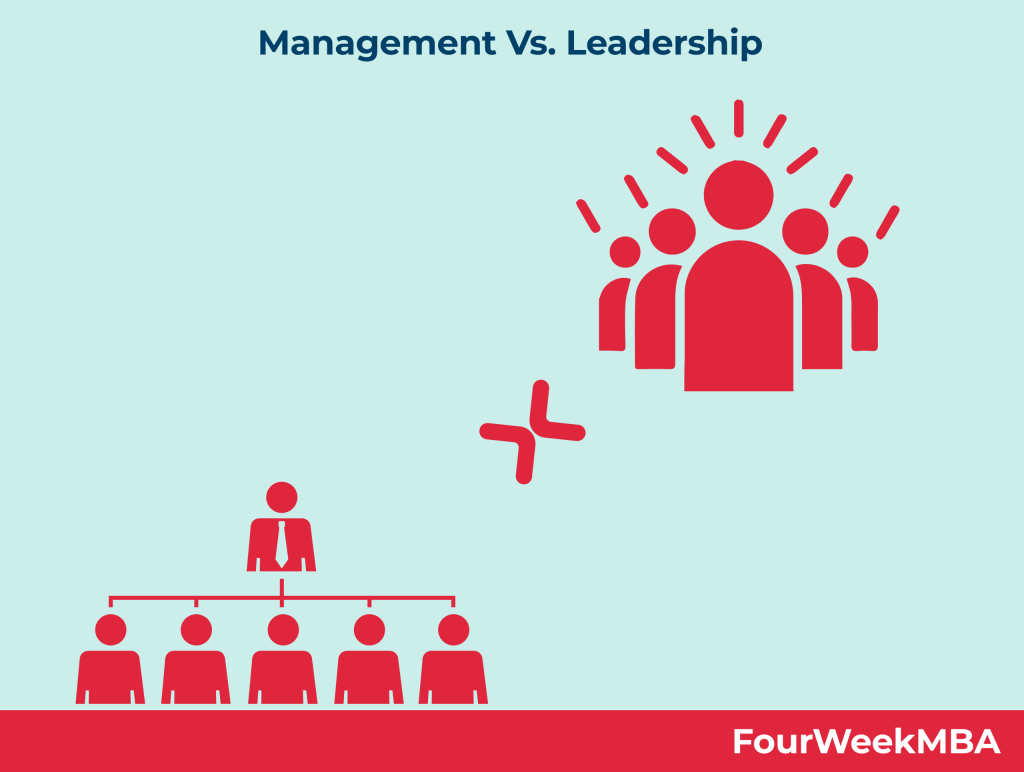
A leader is someone within an organization who possesses the ability to influence and lead others by example. Leaders inspire, support, and encourage those beneath them and work continuously to achieve objectives. A boss is someone within an organization who gives direct orders to subordinates, tends to be autocratic, and prefers to be in control at all times.
Situational leadership is based on situational leadership theory. Developed by authors Paul Hersey and Kenneth Blanchard in the late 1960s, the theory’s fundamental belief is that there is no single leadership style that is best for every situation. Situational leadership is based on the belief that no single leadership style is best. In other words, the best style depends on the situation at hand.
Succession planning is a process that involves the identification and development of future leaders across all levels within a company. In essence, succession planning is a way for businesses to prepare for the future. The process ensures that when a key employee decides to leave, the company has someone else in the pipeline to fill their position.
Fielder’s contingency model argues no style of leadership is superior to the rest evaluated against three measures of situational control, including leader-member relations, task structure, and leader power level. In Fiedler’s contingency model, task-oriented leaders perform best in highly favorable and unfavorable circumstances. Relationship-oriented leaders perform best in situations that are moderately favorable but can improve their position by using superior interpersonal skills.
In the context of an organization, cultural models are frameworks that define, shape, and influence corporate culture. Cultural models also provide some structure to a corporate culture that tends to be fluid and vulnerable to change. Once upon a time, most businesses utilized a hierarchical culture where various levels of management oversaw subordinates below them. Today, however, there exists a greater diversity in models as leaders realize the top-down approach is outdated in many industries and that success can be found elsewhere.
Action-centered leadership defines leadership in the context of three interlocking areas of responsibility and concern. This framework is used by leaders in the management of teams, groups, and organizations.
Developed in the 1960s and first published in 1973, action-centered leadership was revolutionary for its time because it believed leaders could learn the skills they needed to manage others effectively.
Adair believed that effective leadership was exemplified by three overlapping circles (responsibilities): achieve the task, build and maintain the team, and develop the individual.
High-performance coaches work with individuals in personal and professional contexts to enable them to reach their full potential. While these sorts of coaches are commonly associated with sports, it should be noted that the act of coaching is a specific type of behavior that is also useful in business and leadership.
When most people are asked to define power, they think about the power a leader possesses as a function of their responsibility for subordinates. Others may think that power comes from the title or position this individual holds.
Tipping Point Leadership is a low-cost means of achieving a strategic shift in an organization by focusing on extremes. Here, the extremes may refer to small groups of people, acts, and activities that exert a disproportionate influence over business performance.
The Vroom-Yetton decision model is a decision-making process based on situational leadership. According to this model, there are five decision-making styles guides group-based decision-making according to the situation at hand and the level of involvement of subordinates: Autocratic Type 1 (AI), Autocratic Type 2 (AII), Consultative Type 1 (CI), Consultative Type 2 (CII), Group-based Type 2 (GII).
Likert’s management systems were developed by American social psychologist Rensis Likert. Likert’s management systems are a series of leadership theories based on the study of various organizational dynamics and characteristics. Likert proposed four systems of management, which can also be thought of as leadership styles: Exploitative authoritative, Benevolent authoritative, Consultative, Participative.
Business modelinnovation is about increasing the success of an organization with existing products and technologies by crafting a compelling value proposition able to propel a new business model to scale up customers and create a lasting competitive advantage. And it all starts by mastering the key customers.
The innovation loop is a methodology/framework derived from the Bell Labs, which produced innovation at scale throughout the 20th century. They learned how to leverage a hybrid innovation management model based on science, invention, engineering, and manufacturing at scale. By leveraging individual genius, creativity, and small/large groups.
According to how well defined is the problem and how well defined the domain, we have four main types of innovations: basic research (problem and domain or not well defined); breakthrough innovation (domain is not well defined, the problem is well defined); sustaining innovation (both problem and domain are well defined); and disruptive innovation (domain is well defined, the problem is not well defined).
That is a process that requires a continuous feedback loop to develop a valuable product and build a viable business model. Continuous innovation is a mindset where products and services are designed and delivered to tune them around the customers’ problem and not the technical solution of its founders.
Disruptive innovation as a term was first described by Clayton M. Christensen, an American academic and business consultant whom The Economist called “the most influential management thinker of his time.” Disruptive innovation describes the process by which a product or service takes hold at the bottom of a market and eventually displaces established competitors, products, firms, or alliances.
In a business world driven by technology and digitalization, competition is much more fluid, as innovation becomes a bottom-up approach that can come from anywhere. Thus, making it much harder to define the boundaries of existing markets. Therefore, a proper business competition analysis looks at customer, technology, distribution, and financial model overlaps. While at the same time looking at future potential intersections among industries that in the short-term seem unrelated.
Technological modeling is a discipline to provide the basis for companies to sustain innovation, thus developing incremental products. While also looking at breakthrough innovative products that can pave the way for long-term success. In a sort of Barbell Strategy, technological modeling suggests having a two-sided approach, on the one hand, to keep sustaining continuous innovation as a core part of the business model. On the other hand, it places bets on future developments that have the potential to break through and take a leap forward.
Sociologist E.M Rogers developed the Diffusion of Innovation Theory in 1962 with the premise that with enough time, tech products are adopted by wider society as a whole. People adopting those technologies are divided according to their psychologic profiles in five groups: innovators, early adopters, early majority, late majority, and laggards.
In the TED talk entitled “creative problem-solving in the face of extreme limits” Navi Radjou defined frugal innovation as “the ability to create more economic and social value using fewer resources. Frugal innovation is not about making do; it’s about making things better.” Indian people call it Jugaad, a Hindi word that means finding inexpensive solutions based on existing scarce resources to solve problems smartly.
A consumer brand company like Procter & Gamble (P&G) defines “Constructive Disruption” as: a willingness to change, adapt, and create new trends and technologies that will shape our industry for the future. According to P&G, it moves around four pillars: lean innovation, brand building, supply chain, and digitalization & data analytics.
In the FourWeekMBA growth matrix, you can apply growth for existing customers by tackling the same problems (gain mode). Or by tackling existing problems, for new customers (expand mode). Or by tackling new problems for existing customers (extend mode). Or perhaps by tackling whole new problems for new customers (reinvent mode).
An innovation funnel is a tool or process ensuring only the best ideas are executed. In a metaphorical sense, the funnel screens innovative ideas for viability so that only the best products, processes, or business models are launched to the market. An innovation funnel provides a framework for the screening and testing of innovative ideas for viability.
Tim Brown, Executive Chair of IDEO, defined design thinking as “a human-centered approach to innovation that draws from the designer’s toolkit to integrate the needs of people, the possibilities of technology, and the requirements for business success.” Therefore, desirability, feasibility, and viability are balanced to solve critical problems.
Gennaro is the creator of FourWeekMBA, which reached about four million business people, comprising C-level executives, investors, analysts, product managers, and aspiring digital entrepreneurs in 2022 alone | He is also Director of Sales for a high-tech scaleup in the AI Industry | In 2012, Gennaro earned an International MBA with emphasis on Corporate Finance and Business Strategy.