

Goal-setting theory revolves around the idea that individuals are motivated to achieve specific objectives, and the process of setting and pursuing these goals plays a pivotal role in driving behavior and performance. Edwin A. Locke, one of the theory’s founders, defines a goal as “a target or objective that a person is trying to attain.” This definition underscores the importance of having a clear and concrete target.
Core Principles of Goal-Setting Theory:
- Clarity: Goals should be specific and unambiguous, leaving no room for misinterpretation. Clear goals provide a precise direction for action.
- Challenge: Goals should be challenging but attainable. Setting overly easy goals does not stimulate motivation, while excessively difficult goals may lead to frustration.
- Commitment: Individuals should be committed to their goals. When people are invested in their objectives, they are more likely to put in the effort required to achieve them.
- Feedback: Regular feedback and progress monitoring are essential for goal achievement. Feedback helps individuals make necessary adjustments to stay on track.
- Task Complexity: The complexity of a task can influence the effectiveness of goal setting. For simpler tasks, setting specific goals is more effective, while complex tasks may benefit from setting learning or process goals.
The Process of Goal Setting
Effective goal setting involves a systematic process that helps individuals define their objectives, plan their actions, and track their progress. The following steps outline this process:
1. Set Clear and Specific Goals:
Begin by identifying the specific goals you want to achieve. These goals should be well-defined and measurable. For example, rather than setting a vague goal like “lose weight,” a specific goal could be “lose 10 pounds in three months.”
2. Establish a Timeline:
Attach a time frame to your goals. Setting a deadline creates a sense of urgency and helps you stay focused. In the example above, the goal includes a timeline of three months.
3. Break Down Goals:
For larger or long-term goals, it’s beneficial to break them down into smaller, manageable steps. These sub-goals make the overall objective less daunting and provide a roadmap for progress.
4. Prioritize Goals:
Not all goals are equally important. Prioritize your goals based on their significance and relevance to your life or work.
5. Create an Action Plan:
Determine the specific actions and strategies required to achieve your goals. What steps will you take, and how will you execute them?
6. Monitor Progress:
Regularly track your progress toward your goals. Are you moving closer to your objectives? If not, consider adjustments to your plan.
7. Celebrate Achievements:
Recognize and celebrate your successes along the way. This positive reinforcement can enhance motivation.
Applications of Goal-Setting Theory
Goal-setting theory has found widespread application in various fields and aspects of life, contributing to improved performance and motivation. Here are some areas where goal-setting theory is particularly influential:
1. Education:
In educational settings, teachers often set clear learning objectives and goals for students. These goals help students focus their efforts, measure their progress, and stay motivated to excel academically.
2. Workplace Performance:
Goal setting is a fundamental component of performance management in organizations. Employees work toward achieving individual and team goals aligned with the company’s objectives. This approach enhances productivity and job satisfaction.
3. Sports and Athletics:
Athletes set specific performance goals, whether it’s improving their speed, endurance, or technical skills. These goals drive training regimens and competitive performance.
4. Health and Fitness:
Individuals pursuing fitness and health goals often set specific objectives, such as losing weight, building muscle, or running a marathon. Goal setting keeps them motivated and on track.
5. Personal Development:
People set personal development goals to enhance their skills, expand their knowledge, or achieve personal milestones. These goals drive self-improvement efforts.
6. Entrepreneurship:
Entrepreneurs set business goals to guide their startups and measure success. These goals are essential for strategic planning and resource allocation.
The Benefits of Goal Setting
Goal setting, when applied effectively, offers numerous benefits to individuals and organizations:
1. Motivation:
Setting clear and challenging goals provides motivation and a sense of purpose. Goals create a target to strive for, increasing enthusiasm and commitment.
2. Focus and Direction:
Goals provide a clear direction, helping individuals prioritize tasks and make decisions that align with their objectives.
3. Measurable Progress:
Goals are measurable, enabling individuals to track their progress and make data-driven adjustments.
4. Enhanced Performance:
Individuals who set and pursue goals tend to perform better, as goals drive effort and persistence.
5. Increased Self-Efficacy:
Achieving goals boosts self-confidence and self-efficacy, leading to a greater belief in one’s abilities.
6. Personal Satisfaction:
Goal achievement is often accompanied by a sense of accomplishment and personal satisfaction.
Critiques and Considerations
While goal-setting theory is widely accepted and practiced, it is not without its critiques and considerations:
1. Overemphasis on Achievement:
Some critics argue that an excessive focus on goal achievement can lead to stress, burnout, and a neglect of other important aspects of life.
2. Inflexibility:
Rigid adherence to goals may not account for changing circumstances or unforeseen challenges. Flexibility is crucial when pursuing goals.
3. External vs. Intrinsic Motivation:
The theory primarily addresses external motivation driven by goal attainment. It’s important to balance external rewards with intrinsic motivation driven by personal passion and interest.
4. Goal Setting and Well-Being:
The relationship between goal setting and overall well-being is complex. While achieving goals can boost well-being, the pursuit of unrealistic or incompatible goals may have adverse effects.
Conclusion
Goal-setting theory remains a cornerstone of motivation and achievement, with its principles applied across various aspects of life. Whether in education, the workplace, athletics, or personal development, the act of setting clear and challenging goals continues to drive individuals and organizations toward success. However, it is crucial to strike a balance between goal pursuit and overall well-being, allowing for flexibility and recognizing the importance of intrinsic motivation alongside external rewards. Ultimately, the power of goal setting lies in its ability to transform aspirations into tangible accomplishments.
Key Highlights:
- Definition: Goal setting involves defining clear, specific, and challenging objectives to guide actions and efforts toward desired outcomes.
- Core Principles of Goal-Setting Theory:
- Clarity
- Challenge
- Commitment
- Feedback
- Task Complexity
- The Process of Goal Setting:
- Set Clear and Specific Goals
- Establish a Timeline
- Break Down Goals
- Prioritize Goals
- Create an Action Plan
- Monitor Progress
- Celebrate Achievements
- Applications of Goal-Setting Theory:
- Education
- Workplace Performance
- Sports and Athletics
- Health and Fitness
- Personal Development
- Entrepreneurship
- The Benefits of Goal Setting:
- Motivation
- Focus and Direction
- Measurable Progress
- Enhanced Performance
- Increased Self-Efficacy
- Personal Satisfaction
- Critiques and Considerations:
- Overemphasis on Achievement
- Inflexibility
- External vs. Intrinsic Motivation
- Goal Setting and Well-Being
- Conclusion: Goal setting is a powerful tool for motivation and achievement, offering numerous benefits across various aspects of life. While it provides direction and drive, it’s important to balance goal pursuit with overall well-being and intrinsic motivation. Ultimately, goal setting transforms aspirations into tangible accomplishments, driving individuals and organizations toward success.
| Related Framework | Description | When to Apply |
|---|---|---|
| OKR (Objectives and Key Results) | – A goal-setting framework popularized by companies like Google, OKR involves setting ambitious objectives and measurable key results to track progress and drive alignment across teams. Objectives are ambitious, qualitative goals, while key results are specific, quantifiable outcomes that indicate progress towards achieving objectives. OKR fosters transparency, accountability, and focus on outcomes at both individual and organizational levels. | – Applicable in strategic planning, performance management, and organizational alignment where setting clear objectives, defining measurable outcomes, and cascading goals throughout the organization are essential for focusing efforts, aligning priorities, and driving performance towards strategic objectives and key results effectively and collaboratively across teams and departments. |
| SMART Goals | – An acronym that stands for Specific, Measurable, Achievable, Relevant, and Time-bound, SMART goals provide a framework for setting clear and actionable objectives. SMART goals help ensure that goals are well-defined, attainable, and aligned with organizational priorities. By specifying criteria for success, SMART goals facilitate effective goal setting, monitoring progress, and evaluating performance. | – Relevant in performance management, project planning, and personal development for ensuring that goals are specific, measurable, and achievable within a defined timeframe, aligning individual and team objectives with organizational priorities, and enhancing clarity, accountability, and motivation in pursuing goals and driving performance towards desired outcomes and results. |
| Theory of Constraints (TOC) | – A management philosophy that focuses on identifying and alleviating constraints or bottlenecks that limit an organization’s ability to achieve its goals. The Theory of Constraints helps organizations prioritize improvement efforts, optimize resource utilization, and align actions with overarching objectives by addressing systemic barriers that impede performance and throughput in critical processes or systems. | – Relevant in process optimization, supply chain management, and project management for identifying and addressing constraints that hinder goal attainment, streamlining operations, and improving productivity, efficiency, and flow in key processes, ensuring that resources are utilized effectively and constraints are managed proactively to achieve desired outcomes and maximize organizational performance and profitability. |
| Management by Objectives (MBO) | – A performance management approach that involves setting specific objectives collaboratively between managers and employees, establishing performance targets, and evaluating results against predetermined goals. MBO fosters employee involvement, goal alignment, and accountability by linking individual performance to organizational objectives and providing a framework for planning, monitoring, and rewarding performance. | – Applicable in performance appraisal, employee development, and strategic planning for aligning individual goals with organizational objectives, fostering employee engagement, and driving performance improvement through regular feedback, coaching, and recognition of achievements, ensuring that employees’ efforts contribute to organizational success and are in line with strategic priorities and performance expectations. |
| Goal Management Process (GMP) | – A systematic approach to setting, tracking, and achieving goals across individuals, teams, and organizations. The Goal Management Process involves defining clear goals, aligning goals with organizational priorities, tracking progress, and providing feedback and support to ensure goal attainment. GMP helps organizations improve goal visibility, accountability, and performance alignment throughout the goal cycle. | – Applicable in goal alignment, performance management, and organizational development for establishing a structured process for setting, tracking, and achieving goals at individual, team, and organizational levels, fostering transparency, accountability, and alignment with strategic priorities, and driving continuous improvement and performance excellence across the organization to achieve desired outcomes and results effectively and collaboratively. |
| Strategic Planning | – The process of defining an organization’s mission, vision, objectives, and strategies to achieve its goals and fulfill its purpose. Strategic planning involves assessing internal and external factors, setting priorities, allocating resources, and monitoring progress towards strategic objectives. Middle managers play a crucial role in translating strategic goals into actionable plans and initiatives. | – Applicable in strategic management, business planning, and performance management for aligning departmental activities, setting performance targets, and driving execution in line with organizational strategies, ensuring coherence, alignment, and effectiveness in pursuing strategic priorities and delivering value to stakeholders. |
| Behavioral Contracting | – A goal-setting technique that involves formalizing agreements or contracts between individuals and supervisors to achieve specific performance objectives. Behavioral contracting clarifies expectations, defines accountability, and reinforces commitment to achieving agreed-upon goals by establishing mutually agreed-upon rewards, consequences, and monitoring mechanisms. Behavioral contracts help enhance goal clarity, motivation, and performance accountability. | – Relevant in performance management, employee development, and behavioral change for setting clear expectations, defining performance objectives, and reinforcing accountability through formal agreements between employees and supervisors, ensuring alignment with organizational goals, enhancing motivation, and driving performance improvement in areas such as sales targets, project milestones, and skill development objectives. |
| Self-Determination Theory (SDT) | – A psychological theory that emphasizes intrinsic motivation and autonomy in driving goal pursuit and behavior change. Self-Determination Theory posits that individuals are motivated to achieve goals that satisfy their basic psychological needs for autonomy, competence, and relatedness. SDT highlights the importance of intrinsic motivation, goal alignment with personal values, and supportive environments in fostering sustained goal pursuit and well-being. | – Applicable in motivation management, employee engagement, and goal setting for aligning organizational goals with individual values, fostering autonomy, competence, and relatedness in goal pursuit, and creating supportive work environments that promote intrinsic motivation, commitment, and well-being among employees, enhancing job satisfaction, performance, and retention in the organization. |
| Performance Appraisal | – A formal process of evaluating and assessing an individual’s job performance against predetermined goals, expectations, and performance standards. Performance appraisals provide feedback on strengths and areas for improvement, identify training and development needs, and inform decisions related to promotions, rewards, and career development. Goal alignment is essential in performance appraisals to ensure that individual performance contributes to organizational goals. | – Relevant in talent management, career development, and performance improvement for aligning individual performance with organizational objectives, providing feedback on goal attainment, and supporting career advancement, skill development, and performance improvement efforts, ensuring that employees’ contributions align with organizational priorities and contribute to achieving desired outcomes and results. |
| Positive Psychology | – A branch of psychology that focuses on understanding and promoting human flourishing, well-being, and optimal functioning. Positive psychology emphasizes strengths, virtues, and positive emotions in promoting goal achievement, resilience, and subjective well-being. By fostering positive mindsets, goal engagement, and social support, positive psychology interventions can enhance motivation, goal progress, and overall life satisfaction. | – Applicable in motivation management, personal development, and workplace well-being for fostering positive attitudes, beliefs, and emotions that support goal pursuit, resilience, and well-being among individuals and teams, promoting a culture of positivity, engagement, and collaboration that enhances goal alignment, motivation, and performance in achieving personal and organizational goals effectively and sustainably. |
Read Next: Organizational Structure.
Types of Organizational Structures

Siloed Organizational Structures
Functional

Divisional

Open Organizational Structures
Matrix

Flat

Connected Business Frameworks


Nadler-Tushman Congruence Model

McKinsey’s Seven Degrees of Freedom


Organizational Structure Case Studies
OpenAI Organizational Structure

Airbnb Organizational Structure

Amazon Organizational Structure

Apple Organizational Structure

Coca-Cola Organizational Structure

Costco Organizational Structure


Facebook Organizational Structure

Goldman Sachs’ Organizational Structure

Google Organizational Structure


McDonald’s Organizational Structure

McKinsey Organizational Structure

Microsoft Organizational Structure

Nestlé Organizational Structure


Patagonia Organizational Structure

Samsung Organizational Structure

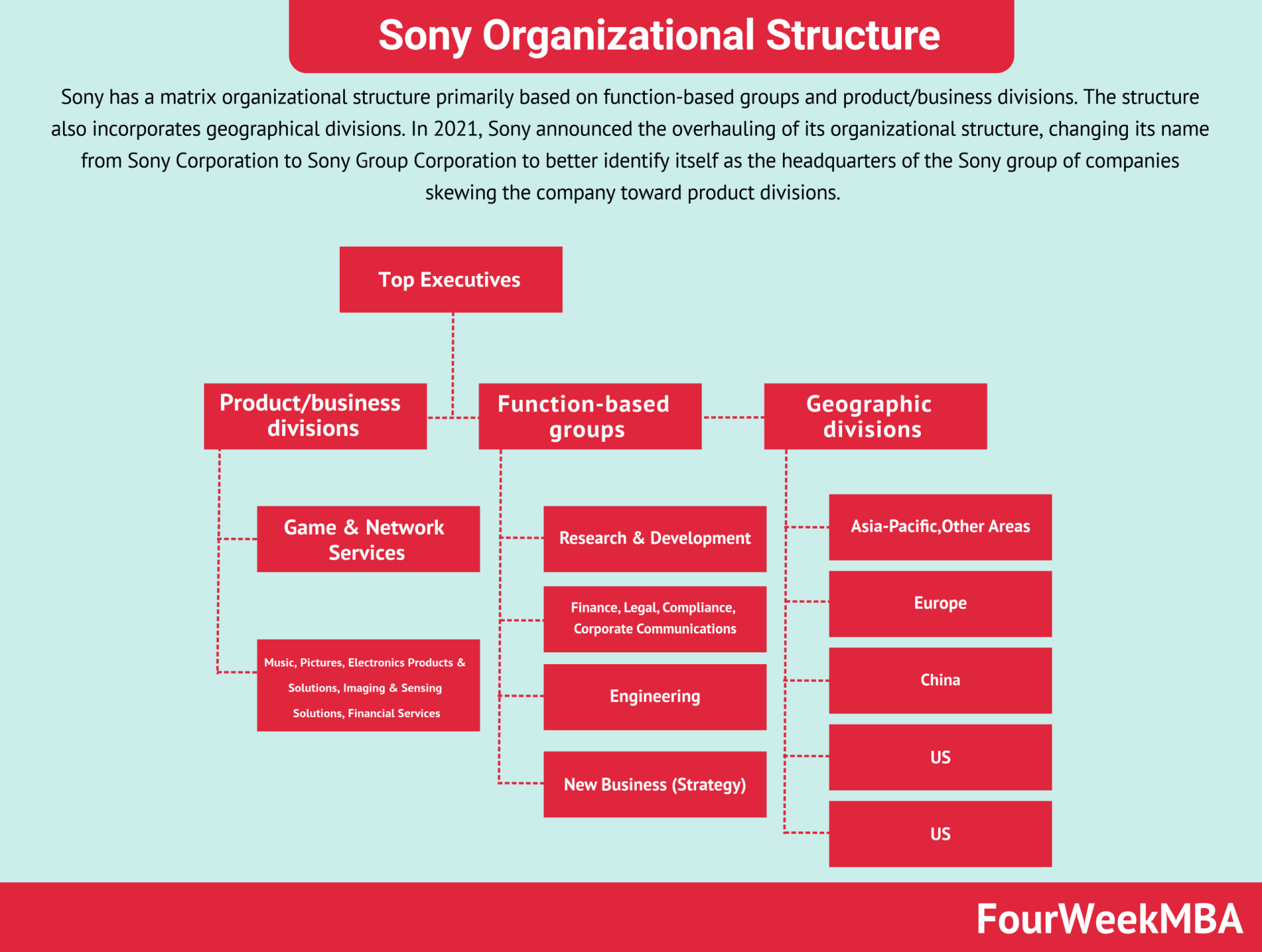
Starbucks Organizational Structure

Tesla Organizational Structure

Toyota Organizational Structure

Walmart Organizational Structure

Main Free Guides:
- Business Models
- Business Strategy
- Business Development
- Digital Business Models
- Distribution Channels
- Marketing Strategy
- Platform Business Models
- Revenue Models
- Tech Business Models


