Tesla and Nvidia will put 3.7 trillion won, about $2.8 billion, into Samsung Electro-Mechanics to build production lines for the chip substrates used in AI semiconductors, Maeil Business Newspaper reported on 22 October 2026, citing industry sources. On 22 October 2026 Newspim reported that some Samsung Electro-Mechanics capacitors now carry a 61-week standard lead time at the distributor DigiKey.
The two reports sit at different layers of the same AI server, and both are about the parts around the chip rather than the chip. A week earlier, on TSMC’s third-quarter call on 15 October 2026, chief executive C.C. Wei said: “Definitely, we have a little bit shortage on the back end.” In chipmaking, the back end is the packaging that joins chips, memory and substrate into one component.
Business Pill · LEAD TIME
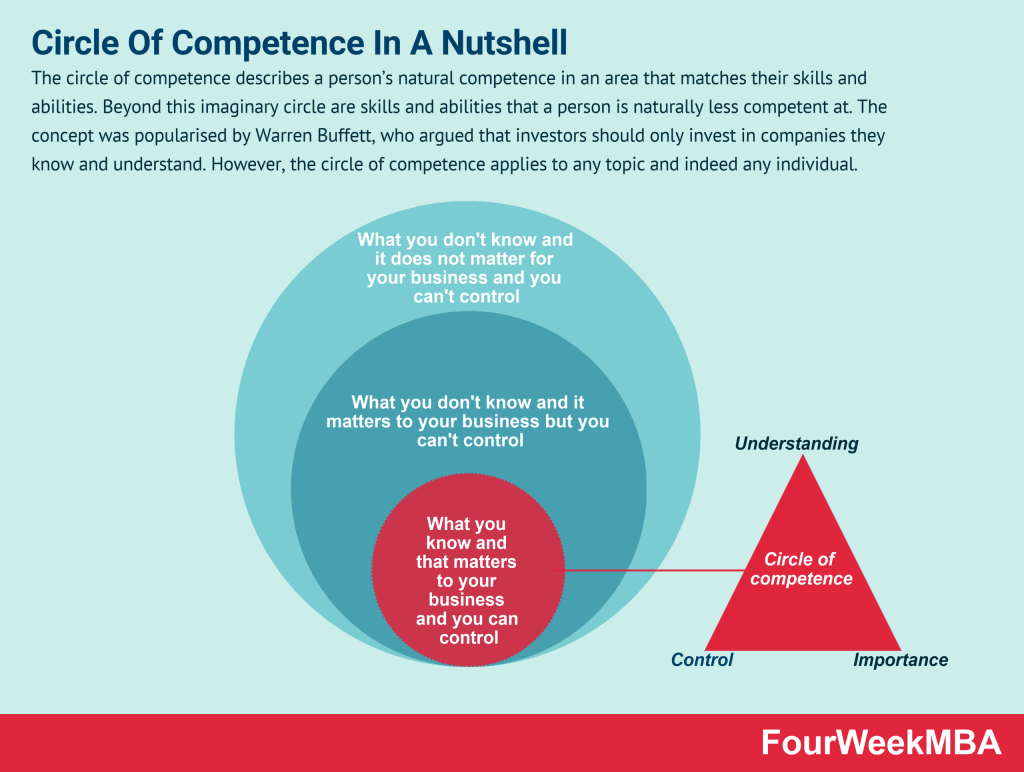
A short explainer on lead time: why the wait is part of the price. It teaches the general idea only and says nothing about TSMC, Nvidia or the reports in this piece.
The key insight: As we read it, the reports put the squeeze around the chip as well as in it: TSMC’s chief executive said “Definitely, we have a little bit shortage on the back end”, and the reported new capacity across the layers we tracked is dated from about Q2 2027 to the end of 2028.
Update (26 Oct): an AI-server PCB maker prices a $1.3 billion Hong Kong IPO. Suzhou Dongshan Precision Manufacturing, a Chinese printed circuit board maker that supplies parts used in AI servers, set its Hong Kong offer price at HK$86.80 a share, under the HK$93.80 cap, raising about HK$9.88 billion, Finimize reported. Bloomberg, as relayed by Techmeme, said the roughly $1.3 billion deal was Hong Kong’s biggest IPO in nearly two months, pricing the shares about 35% below their Friday Shenzhen close.
The South China Morning Post reported that the offering raised less than expected as investors weighed possible US trade restrictions on the company’s optical modules business; a week earlier it had been expected to raise up to $3 billion. The H shares start trading on 28 October.
Update (26 Oct): TrendForce says Nvidia is moving to lock up substrate capacity. In its Weekly Radar of 26 October, TrendForce said ABF substrates remain “one of the tightest links in the AI supply chain,” with lead times of 48 to 56 weeks against 12 weeks in a balanced market and “little near-term relief.” It said Nvidia plans to increase substrate capacity for its products by 2.5 times over the next three years with its supply chain partners.
TrendForce did not say in its free preview how that plan will be funded. The reported commitments already in this piece, the roughly $2.8 billion from Nvidia and Tesla for Samsung Electro-Mechanics substrate lines and the more than NT$100 billion in substrate prepayments reported for Intel, Nvidia and AMD, come from Korean and Taiwanese press reports, not from TrendForce.
Update (26 Oct): TSMC is set to shrink SRAM cells again with A14, a Korean report says. TSMC’s A14 process, targeted for mass production in 2028, will cut the high-density 6T SRAM bitcell to below 0.017 square micrometres, from about 0.021, where it has stayed for about eight years since the N5 process arrived in 2020, ETNews reported on 26 October, citing the industry. It said TSMC will present the research at the end of the year. ETNews describes SRAM as the high-speed cache inside CPU, GPU and AI accelerator chips, and says that when cache runs short, chips go to external memory more often (our translation).
According to TSMC, as cited in the report, A14 targets 10 to 15 percent more speed, 25 to 30 percent less power and about 20 percent more chip density than N2, and is on track for mass production in 2028. The report says yields, cost and customer adoption have not been disclosed. Jukan relayed the report on X.
Update (26 Oct): IDG leads the race for ASMPT’s circuit-board assembly unit. IDG Capital is the most advanced bidder for the surface mount technology (SMT) business of Hong Kong-listed ASMPT, in a deal that could value it at over $1 billion, Reuters reported, citing three people with knowledge of the matter. FountainVest Partners and Triton Partners have also held discussions, and two of the people said ASMPT is seeking about $1.5 billion.
The unit’s main end markets are AI servers, optical transceivers and electric vehicles; its first-half 2026 revenue rose 53.1% to HK$3.87 billion and bookings rose 87.8% to a record HK$6.98 billion, Reuters reported. ASMPT has said it wants to focus on its semiconductor solutions and chip packaging businesses. Terms are not final.
Update (26 Oct): Applied Materials is buying more of the packaging toolmaker. Applied Materials said on 26 October that it has agreed to increase its investment in BE Semiconductor Industries (Besi), the Amsterdam-listed maker of semiconductor assembly equipment, to approximately 20% of Besi’s outstanding shares, adding to the stake it first took in April 2025 (Applied Materials release). It has entered into an accelerated share purchase agreement, and delivery of the shares depends on the US antitrust (HSR Act) waiting period.
Applied says hybrid bonding and next-generation interconnects are becoming “increasingly critical enablers of energy-efficient AI compute performance”. The two companies’ collaboration now extends beyond hybrid bonding to 3D IC scaling, logic and memory integration, and thermo-compression bonding. Applied says it currently has no intention of going beyond about 20% and does not intend to seek board representation at Besi.
Wei made the remark while answering a question about TSMC’s recent deal with GlobalFoundries for silicon interposers, according to the call transcript published by The Motley Fool. “We designed a deal with GlobalFoundries, and this is part of our overall strategy in the back-end supply,” he said. TSMC wants to work with GlobalFoundries “so that both TSMC and GlobalFoundries can support TSMC’s customer for their product to be introduced with enough support on the capacity,” he added.
On demand overall, Wei said: “The gap between demand and supply are still quite big, and that is why we put all our strengths to increase the capacity.” He also told analysts that “the CoWoS is still the number one choice for our customer.” CoWoS is TSMC’s advanced packaging technology for AI accelerators.
The call transcript gives no CoWoS capacity figure. TrendForce, citing Economic Daily News, reported on 14 September 2026 that CoWoS capacity could double to 260,000 wafers per month by the end of 2028, from roughly 130,000 by the end of 2026. The ramp is expected to centre on the AP7 site in Taiwan and the Arizona campus.
Months from October 2026 to each layer’s reported new capacity or delivery date, counted by FourWeekMBA and rounded: CoWoS at about 260,000 wafers a month by end-2028 (about 26); Samsung Electro-Mechanics’ Sejong FC-BGA plant in September 2028 (about 23); an MLCC order at a 61-week lead time in December 2027 (about 14); Nvidia and SPIL optical engines at 15 times by mid-2027 (about 8); 8-high HBM4 from about Q2 2027 (about 6 to 8). Sources: Economic Daily News via TrendForce, Daehan Economic Daily, Newspim, SDxCentral, ZDNet Korea.
The Squeeze, Layer by Layer
We put the latest signal for each layer of the package in one table. Each row comes from a report or company document we have read and covered; the last column says whether the figure is official or reported.
Layer
Latest signal
Source and date
Status
Front-end wafers
Wei: “The gap between demand and supply are still quite big”
TSMC Q3 call, 15 Oct
Official
Advanced packaging (CoWoS)
Wei: “a little bit shortage on the back end”; GlobalFoundries interposer deal; capacity could reach about 260,000 wafers a month by end-2028
Nvidia’s Rubin page lists 19.2 TB/s of HBM4 bandwidth per GPU, down from 22 TB/s in August; 8-high HBM4 shipments from about Q2 2027
Nvidia product page, 26 Oct; ZDNet Korea, 26 Oct
Official / reported
Package substrates
Nvidia 2.6 trillion won and Tesla 1.1 trillion won for Samsung Electro-Mechanics substrate lines; Intel, Nvidia and AMD reportedly prepaid more than NT$100 billion for substrate capacity
Maeil Business, 22 Oct; Economic Daily, 24 Oct
Reported
Optical engines
Nvidia and SPIL plan to expand optical-engine capacity 15 times by mid-2027
SDxCentral from GTC Berlin, 21 Oct
Nvidia, as reported
Capacitors (MLCC)
Some Samsung Electro-Mechanics MLCCs at a 61-week DigiKey lead time, up from 39 to 49 weeks a month earlier
Newspim, 22 Oct
Reported (distributor listing)
Sources: TSMC Q3 2026 earnings call transcript (The Motley Fool); TrendForce News citing Economic Daily News; Nvidia Vera Rubin NVL72 page; ZDNet Korea; Maeil Business Newspaper via Reuters; Economic Daily; SDxCentral; Newspim. Compiled by FourWeekMBA from its coverage, 26 October 2026.
When the New Capacity Arrives
Each layer has a reported date for new capacity or delivery. We counted the months from October 2026 to each date; the counts are our arithmetic, rounded, and the dates are the sources’.
Layer
Reported date
Months from Oct 2026 (our count)
Source
CoWoS capacity at about 260,000 wafers a month
End of 2028
About 26
Economic Daily News via TrendForce, 14 Sep
Samsung Electro-Mechanics Sejong FC-BGA substrate plant mass production
September 2028
About 23
Daehan Economic Daily, 22 Oct
A new MLCC order at the 61-week DigiKey lead time arrives
End of December 2027
About 14
Newspim, 22 Oct
Nvidia and SPIL optical-engine capacity at 15 times
Mid-2027
About 8
SDxCentral, 21 Oct
8-high HBM4 shipments for Nvidia
About Q2 2027
About 6 to 8
ZDNet Korea, 26 Oct
Months counted by FourWeekMBA from October 2026 to the reported date; the sources do not give these counts.
TrendForce expects the parts shortage to peak in early 2027 as memory makers also stock up, Korea’s Financial Post reported on 24 October. The same report said one board of Nvidia’s next-generation Rubin GPU carries about 12,000 components.
Who Is Paying for Capacity
The money in the reports is going to the layers around the chip. Maeil Business Newspaper reported that Nvidia will put in 2.6 trillion won and Tesla 1.1 trillion won to build substrate lines in Sejong under a long-term contract; none of the three companies confirmed the amounts. Nvidia named Samsung Electro-Mechanics as a substrate partner at GTC Berlin without giving a figure.
In Taiwan, Economic Daily reported on 24 October that industry sources say Intel, Nvidia and AMD have paid deposits totalling more than NT$100 billion to reserve long-term high-end IC substrate capacity. The paper tied the reports to record spending at Taiwan’s substrate makers: Unimicron raised its 2026 capex to NT$53.7 billion, Kinsus approved NT$23.5 billion over three years for ABF substrate equipment, and Nan Ya PCB approved a NT$46.8 billion factory.
Samsung Electro-Mechanics has disclosed seven long-term supply contracts since May, worth about 4.3 trillion won in total, Dailian reported on 20 October. The customers were not named.
On 26 October we reported that Nvidia’s Rubin page now lists 19.2 TB/s of HBM4 bandwidth, in our Vera Rubin bandwidth piece, and that some Samsung Electro-Mechanics capacitors carry 61-week waits, in our piece on the capacitor waits. What is new here is the side-by-side view: TSMC’s own words on a back-end shortage, and a reported date for new capacity at each layer.
The Structural Read
As we read it, buyers are paying ahead: Maeil reports 2.6 trillion won from Nvidia for Samsung Electro-Mechanics substrate lines, and Economic Daily reports more than NT$100 billion of prepayments from Intel, Nvidia and AMD for substrate capacity; neither amount was confirmed.
As we read it, Nvidia appears at three of the six layers in the table: it is named in the reported substrate funding and prepayments, the optical-engine plan with SPIL, the HBM4 bandwidth change on its own page and the 8-high HBM4 shipment report.
As we read it, the dates are spread out: by our count, 8-high HBM4 shipments come about 6 to 8 months from October 2026, while CoWoS at about 260,000 wafers a month is reported for about 26 months out.
C.C. Wei, TSMC chairman and CEO, Q3 2026 earnings call, 15 October 2026
“The gap between demand and supply are still quite big, and that is why we put all our strengths to increase the capacity.”
Three Implications
FOR AI CHIP BUYERS Reported prepayments and funded lines, from 2.6 trillion won by Nvidia at Samsung Electro-Mechanics to more than NT$100 billion across Taiwanese substrate makers, tie capacity to customers before it exists; the amounts were not confirmed.
FOR MEMORY MAKERS Nvidia’s Rubin page now lists 19.2 TB/s of HBM4 bandwidth per GPU, and ZDNet Korea reports 8-high HBM4 shipments for Nvidia from about Q2 2027, citing anonymous sources.
FOR PARTS MAKERS Some Samsung Electro-Mechanics capacitors carry a 61-week DigiKey lead time, Newspim reported, and TrendForce expects the parts shortage to peak in early 2027, Financial Post reported.
The analysis puts it this way: “Reading the map well means knowing where the constraint currently lives and where it is rotating to next.”
As we read it, the reports gathered here place the constraint in the package and the parts around the chip: substrates, HBM, optical engines and capacitors. The analysis was published in June 2026 and does not discuss these October reports.
What Is Not Established
The substrate amounts from Maeil and the NT$100 billion prepayments rest on industry sources, and the per-company figures are estimates; the companies did not confirm them. The 61 weeks is a distributor-listed standard lead time for some products, not direct-contract terms. The 2028 CoWoS figure is a reported estimate, not TSMC guidance; the call transcript gives no CoWoS capacity figure. The 8-high HBM4 timing rests on anonymous sources. We did not contact TSMC, Nvidia, Samsung Electro-Mechanics, SPIL or the Taiwanese substrate makers.
This Week In The AI Supercycle
Execution Fault Lines, Concentrated Demand, and Geopolitical Firewalls
This week’s issue: the AI build is not short of demand for its parts. It is short of cheap money, and its end revenue rests on a narrow base of large, often venture-funded buyers.
TSMC’s chief executive said on 15 October that “we have a little bit shortage on the back end”. In the days since, reports put about $2.8 billion of Nvidia and Tesla money into Samsung substrate lines, more than NT$100 billion of reported prepayments into Taiwanese substrate capacity, and a 61-week distributor lead time on some Samsung capacitors. The reported dates for new capacity run from about Q2 2027 for 8-high HBM4 to the end of 2028 for CoWoS.
A note on sourcing. This is an original analysis that sets side by side reports FourWeekMBA has covered (linked above, each naming its original source) with TSMC’s 15 October 2026 earnings call transcript and a TrendForce News item. The month counts are our arithmetic. Reported figures rest on industry sources and were not confirmed by the companies. We did not contact TSMC, Nvidia, Samsung Electro-Mechanics, SPIL or the Taiwanese substrate makers.
Gennaro Cuofano is a CRO and tech executive who has worked in AI since late 2015, starting with bringing NLP, natural-language generation, voice and chatbot products to the marketing industry. His background is in law and finance: he holds a Master's degree in Law and an International MBA with an emphasis on corporate finance (LUISS Business School and the University of San Diego, 2012), and worked as a financial analyst at a real-estate investment firm in San Diego and as an assistant controller. His work focuses on business model strategy, business engineering and, more broadly, structural analysis: how companies make money, read from their own filings. He created FourWeekMBA and leads research there and at The Business Engineer, his newsletter on AI and business strategy, with over 95,000 subscribers and more than 1,000 published analyses. His writing has also appeared on Entrepreneur (for example, How to Digitize a Family Business in Europe) and HackerNoon. Find him on LinkedIn and Substack. See how we source.
Scroll to Top
Discover more from FourWeekMBA
Subscribe now to keep reading and get access to the full archive.