The RATER model was created in 1988 by psychologists Valarie Zeithaml, Leonard L. Berry, and A. Parasuraman and introduced in their 1990 book Delivering Quality Service. The RATER model is a way for businesses to measure customer satisfaction.
RATER Model
Key Elements
Analysis
Implications
Applications
Examples
Definition
The RATER Model is a framework used to evaluate and measure the quality of services based on five key dimensions: Reliability, Assurance, Tangibles, Empathy, and Responsiveness. It helps assess customers’ perceptions of service quality.
Analyzing the RATER Model involves understanding and evaluating each of its five dimensions to gauge the quality of a service. It requires collecting feedback from customers or users to assess how well a service meets their expectations in each dimension.
The RATER Model provides valuable insights into the strengths and weaknesses of a service, allowing organizations to identify areas for improvement. It helps in enhancing customer satisfaction, loyalty, and overall service performance.
The RATER Model is widely used in service industries such as hospitality, healthcare, banking, and customer support. Organizations use it to measure and improve the quality of their services and ensure they align with customer expectations.
– Conducting customer surveys to assess service quality and identify areas needing improvement. – Training and development programs for employees to enhance their ability to deliver high-quality service in all five dimensions. – Benchmarking against competitors and industry standards to maintain or achieve a competitive advantage.
Reliability
Reliability refers to the ability of a service provider to consistently deliver accurate, dependable, and error-free services. Customers expect services to be reliable and free from disruptions or inconsistencies.
Analyzing reliability involves assessing the consistency of service delivery, error rates, and the ability to meet commitments and promises. High reliability indicates that a service can be trusted and relied upon by customers.
Reliability is critical for building trust and confidence among customers. A lack of reliability can lead to customer dissatisfaction, lost business, and a damaged reputation. Organizations must prioritize reliability to meet customer expectations.
Reliability is essential in various service sectors, including transportation, healthcare, and technology support. It plays a significant role in retaining customers and earning their loyalty. Organizations focus on minimizing service interruptions and errors to enhance reliability.
– Ensuring that scheduled services are consistently provided on time and as promised. – Implementing quality control measures to reduce errors and defects in service delivery. – Monitoring and improving service performance to maintain a high level of reliability.
Assurance
Assurance pertains to the competence, courtesy, credibility, and professionalism exhibited by service providers. Customers seek assurance that service providers have the necessary skills and knowledge to meet their needs.
Analyzing assurance involves evaluating the qualifications, training, and behavior of service personnel. It also includes assessing the provider’s ability to convey trustworthiness and confidence to customers. Assurance helps build credibility and trust.
Assurance is crucial for instilling confidence in customers and ensuring they feel secure and valued during service interactions. Service providers should invest in employee training and professionalism to enhance assurance.
Assurance is especially significant in industries like healthcare, finance, and legal services, where customers rely on the expertise and trustworthiness of service providers. Organizations focus on training and developing employees to improve assurance.
– Providing employees with ongoing training and development opportunities to enhance their expertise and professionalism. – Implementing policies and practices that promote courtesy, respect, and effective communication with customers. – Building trust and credibility through transparent and ethical business practices.
Tangibles
Tangibles refer to the physical or tangible aspects of a service, such as facilities, equipment, appearance, and the overall presentation of service elements. Tangibles influence customers’ perceptions of service quality.
Analyzing tangibles involves assessing the physical environment, equipment quality, cleanliness, and the appearance of service facilities. High-quality tangibles contribute to positive perceptions of service quality and professionalism.
Tangibles play a role in creating a positive first impression and influencing overall customer satisfaction. Neglecting the physical aspects of service can lead to a negative perception of quality, even if the core service is excellent.
Tangibles are relevant in industries like hospitality, retail, and restaurants, where the physical environment and presentation significantly impact the customer experience. Organizations invest in improving tangibles to enhance customer perceptions.
– Regularly maintaining and upgrading facilities and equipment to ensure they are clean, modern, and in good working condition. – Training employees on maintaining a clean and organized environment. – Designing service facilities to be aesthetically pleasing and comfortable for customers.
Empathy
Empathy refers to the ability of service providers to understand, care for, and address customers’ individual needs and concerns. It involves showing genuine concern and interest in customers’ well-being.
Analyzing empathy involves evaluating how well service providers listen to customers, understand their unique needs, and provide personalized support. High empathy levels result in customers feeling valued and understood.
Empathy is essential for building strong customer relationships and loyalty. It helps create a customer-centric culture where customers believe their concerns and needs are genuinely cared for. Organizations must prioritize empathy in their service interactions.
Empathy is relevant in industries such as healthcare, customer service, and hospitality, where personalized care and attention to individual needs are critical. Organizations train employees to develop empathy and prioritize customer satisfaction.
– Providing training programs that emphasize active listening and the importance of addressing customer concerns empathetically. – Encouraging employees to establish rapport with customers and understand their unique preferences and requirements. – Implementing feedback mechanisms to gather customer input and improve empathy in service interactions.
Responsiveness
Responsiveness refers to the willingness and ability of service providers to promptly address customer inquiries, requests, and problems. It involves being accessible and proactive in assisting customers.
Analyzing responsiveness involves assessing the speed and effectiveness of service providers’ responses to customer inquiries, issues, or requests. Quick and helpful responses demonstrate a high level of responsiveness and customer focus.
Responsiveness is crucial for customer satisfaction, as customers expect timely assistance and solutions to their concerns. Service providers should prioritize prompt responses to enhance the customer experience and resolve issues efficiently.
Responsiveness is essential in various service sectors, including customer support, hospitality, and e-commerce, where timely assistance and problem resolution are critical for customer retention. Organizations implement efficient communication channels and response systems.
– Implementing multi-channel communication options for customers, such as phone, email, chat, and social media, to enhance accessibility. – Training employees to respond promptly and effectively to customer inquiries and concerns. – Establishing clear protocols for addressing and resolving customer issues in a timely manner.
The model comprises a five-point framework that clarifies how customers evaluate the service they receive and distinguishes between customer experience and expectation.
Businesses can evaluate each of the five points to determine where they are excelling and where there is still room for improvement.
What’s more, the RATER model can serve as a common reference point for staff across the organization and clarify best practices.
We will take a detailed look at the five areas in the next section below.
The five important areas of the RATER model
Reliability
Reliable businesses are those that consistently deliver services and quickly resolve issues as they arise.
Here are two ways reliability can be embodied in practice:
Honest explanation of what the business can and cannot do for the customer. This transparency is the foundation of reliability and manages customer expectations.
Reliable businesses do not make promises they are not 100% sure they can keep. Customers may find it unpleasant to have a request denied, but over the long term, they will come to value and trust the company’s honesty.
Assurance
Assurance is related to trust and a company’s ability to deliver what it says it will. How can trust be increased?
Understand the real needs of the customer and meet them at all times.
Build credibility with proven expertise in the product, service, or industry in question.
Maintain consistency standards. In other words, businesses must ensure that customers never hear different things from different people about them.
Tangibles
This dimension explores whether the business presents itself professionally across all customer touchpoints.
This includes physical and digital spaces and how customers respond to the environment the business creates.
How do customers get in touch? What steps did they have to perform? What could have impacted their mood or expectations? Medical businesses may apologize to customers for a long wait time, for example.
When businesses deal with customers in person, an open, friendly, and interested demeanor is vital. These elements are key contributors to a customer’s impression of a business and are expected as a bare minimum.
Bricks-and-mortar retailers such as Whole Foods Market offer tangible service elements such as clean restrooms, aisles that are free from clutter, and relaxing cafés where shoppers can rest.
Empathy
Empathy is one of the easiest RATER metrics to understand and revolves around whether customers feel the business cares about them.
To show empathy, businesses can:
Talk less, listen more, and ask effective questions to increase understanding.
Avoid platitudes such as “We apologise for the inconvenience”, and
Look out for and acknowledge customer emotions. To make the customer feel heard, it is also useful to reference their specific problem in correspondence and describe how it will be addressed.
Responsiveness
Responsiveness describes how quickly and effectively the business can respond to customers in channels they prefer to communicate in. Responsive businesses:
Acknowledge the receipt of complaints or inquiries immediately or as quickly as practicable.
Do not wait until they have the full solution in hand before making additional contact with a customer.
Provide realistic deadlines or timetables.
Manage multiple channels to handle customer service communications, and
Are perceived by customers as willing helpers.
Drawbacks of the RATER Model
Subjectivity
Assessments based on the RATER model can be subjective, as customers’ perceptions and expectations can vary widely.
Over-Simplification
The model may oversimplify the complexities of service quality, potentially overlooking other important factors.
Cultural Variations
Cultural differences can affect how customers perceive and value different aspects of service, which the RATER model might not fully capture.
Dynamic Nature of Service Quality
Customer expectations and standards of quality are constantly evolving, which may require more dynamic and adaptable measurement tools.
Potential Bias in Responses
Customer feedback, crucial for the RATER analysis, can be influenced by temporary factors or biases unrelated to the overall service quality.
When to Use the RATER Model
In Service Industry Evaluations
The RATER Model is particularly useful for businesses in the service industry looking to assess and improve their service quality.
For Customer Satisfaction Surveys
It provides a structured approach for designing customer satisfaction surveys and feedback forms.
During Service Quality Training
Organizations can use the RATER model to train employees on the key aspects of service quality.
In Continuous Quality Improvement
The model can guide ongoing efforts to improve service quality and customer satisfaction.
How to Implement the RATER Model
Gather Customer Feedback
Conduct surveys or gather feedback from customers focusing on the five dimensions of the RATER model.
Analyze Feedback
Analyze the feedback to identify strengths and weaknesses in each of the five areas.
Develop Improvement Plans
Based on the analysis, develop plans to improve service quality in areas that are lacking.
Train Staff
Provide training and resources to staff to enhance service quality, focusing on the areas identified in the RATER analysis.
Monitor Progress
Regularly monitor and evaluate the effectiveness of the improvements and make adjustments as needed.
What to Expect from Implementing the RATER Model
Enhanced Understanding of Service Quality
Gain a comprehensive understanding of how customers perceive the quality of service across multiple dimensions.
Improved Customer Satisfaction
Targeted improvements in service quality can lead to increased customer satisfaction and loyalty.
Focused Staff Training
The model provides clear areas for staff training and development in service delivery.
Better Service Differentiation
Implementing improvements based on the RATER model can help a business stand out in terms of service quality.
Continuous Improvement
Regular use of the RATER model encourages a culture of continuous improvement in customer service.
Key takeaways:
The RATER model is a way for businesses to measure customer satisfaction.
The RATER model is a five-point framework that clarifies how customers evaluate the service they receive. It also makes a point to differentiate between customer experience and customer expectation.
The five areas of the RATER framework include reliability, assurance, tangibles, empathy, and responsiveness.
Key Highlights:
Introduction to the RATER Model:
The RATER model was introduced by Valarie Zeithaml, Leonard L. Berry, and A. Parasuraman in their book “Delivering Quality Service” in 1990.
This model provides a five-point framework to measure customer satisfaction and differentiate between customer experience and expectation.
The Five Areas of the RATER Model:
Reliability: Focuses on consistent service delivery and prompt issue resolution. Transparent communication and avoiding unfulfilled promises are essential.
Assurance: Relates to building trust through understanding customer needs, demonstrating expertise, and maintaining consistent communication standards.
Tangibles: Involves the professionalism of business across physical and digital touchpoints, creating a positive environment for customers.
Empathy: Reflects the business’s care for customers’ emotions and concerns. Active listening, genuine responses, and acknowledgment of emotions are key.
Responsiveness: Addresses how quickly and effectively a business responds to customers through various communication channels. Quick acknowledgment, realistic deadlines, and willingness to help are vital.
Leadership styles encompass the behavioral qualities of a leader. These qualities are commonly used to direct, motivate, or manage groups of people. Some of the most recognized leadership styles include Autocratic, Democratic, or Laissez-Faire leadership styles.
Agile leadership is the embodiment of agile manifesto principles by a manager or management team. Agile leadership impacts two important levels of a business. The structural level defines the roles, responsibilities, and key performance indicators. The behavioral level describes the actions leaders exhibit to others based on agile principles.
Adaptive leadership is a model used by leaders to help individuals adapt to complex or rapidly changing environments. Adaptive leadership is defined by three core components (precious or expendable, experimentation and smart risks, disciplined assessment). Growth occurs when an organization discards ineffective ways of operating. Then, active leaders implement new initiatives and monitor their impact.
Authors and strategy experts Chan Kim and Renée Mauborgne developed the idea of blue ocean leadership. In the same way that Kim and Mauborgne’s blue ocean strategy enables companies to create uncontested market space, blue ocean leadership allows companies to benefit from unrealized employee talent and potential.
Developed by business consultants Kenneth Blanchard and Paul Hersey in the 1960s, delegative leadership is a leadership style where authority figures empower subordinates to exercise autonomy. For this reason, it is also called laissez-faire leadership. In some cases, this type of leadership can lead to increases in work quality and decision-making. In a few other cases, this type of leadership needs to be balanced out to prevent a lack of direction and cohesiveness of the team.
Distributed leadership is based on the premise that leadership responsibilities and accountability are shared by those with the relevant skills or expertise so that the shared responsibility and accountability of multiple individuals within a workplace, bulds up as a fluid and emergent property (not controlled or held by one individual). Distributed leadership is based on eight hallmarks, or principles: shared responsibility, shared power, synergy, leadership capacity, organizational learning, equitable and ethical climate, democratic and investigative culture, and macro-community engagement.
Ethical leaders adhere to certain values and beliefs irrespective of whether they are in the home or office. In essence, ethical leaders are motivated and guided by the inherent dignity and rights of other people.
Transformational leadership is a style of leadership that motivates, encourages, and inspires employees to contribute to company growth. Leadership expert James McGregor Burns first described the concept of transformational leadership in a 1978 book entitled Leadership. Although Burns’ research was focused on political leaders, the term is also applicable for businesses and organizational psychology.
Those who lead by example let their actions (and not their words) exemplify acceptable forms of behavior or conduct. In a manager-subordinate context, the intention of leading by example is for employees to emulate this behavior or conduct themselves.
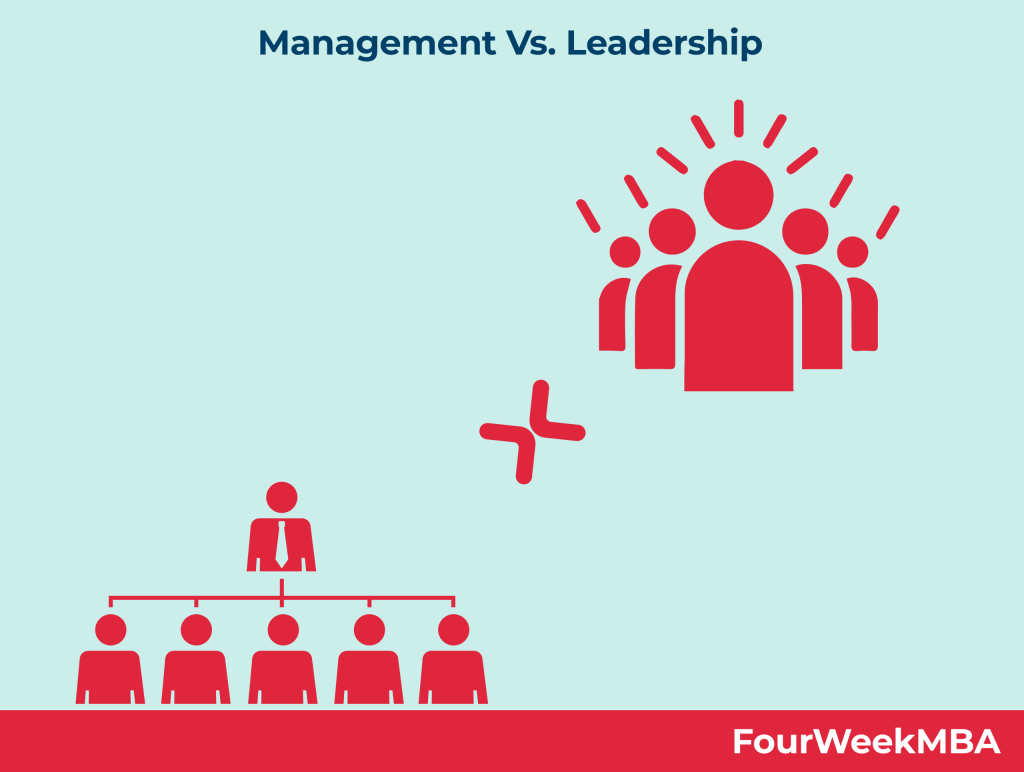
A leader is someone within an organization who possesses the ability to influence and lead others by example. Leaders inspire, support, and encourage those beneath them and work continuously to achieve objectives. A boss is someone within an organization who gives direct orders to subordinates, tends to be autocratic, and prefers to be in control at all times.
Situational leadership is based on situational leadership theory. Developed by authors Paul Hersey and Kenneth Blanchard in the late 1960s, the theory’s fundamental belief is that there is no single leadership style that is best for every situation. Situational leadership is based on the belief that no single leadership style is best. In other words, the best style depends on the situation at hand.
Succession planning is a process that involves the identification and development of future leaders across all levels within a company. In essence, succession planning is a way for businesses to prepare for the future. The process ensures that when a key employee decides to leave, the company has someone else in the pipeline to fill their position.
Fielder’s contingency model argues no style of leadership is superior to the rest evaluated against three measures of situational control, including leader-member relations, task structure, and leader power level. In Fiedler’s contingency model, task-oriented leaders perform best in highly favorable and unfavorable circumstances. Relationship-oriented leaders perform best in situations that are moderately favorable but can improve their position by using superior interpersonal skills.
In the context of an organization, cultural models are frameworks that define, shape, and influence corporate culture. Cultural models also provide some structure to a corporate culture that tends to be fluid and vulnerable to change. Once upon a time, most businesses utilized a hierarchical culture where various levels of management oversaw subordinates below them. Today, however, there exists a greater diversity in models as leaders realize the top-down approach is outdated in many industries and that success can be found elsewhere.
Action-centered leadership defines leadership in the context of three interlocking areas of responsibility and concern. This framework is used by leaders in the management of teams, groups, and organizations.
Developed in the 1960s and first published in 1973, action-centered leadership was revolutionary for its time because it believed leaders could learn the skills they needed to manage others effectively.
Adair believed that effective leadership was exemplified by three overlapping circles (responsibilities): achieve the task, build and maintain the team, and develop the individual.
High-performance coaches work with individuals in personal and professional contexts to enable them to reach their full potential. While these sorts of coaches are commonly associated with sports, it should be noted that the act of coaching is a specific type of behavior that is also useful in business and leadership.
When most people are asked to define power, they think about the power a leader possesses as a function of their responsibility for subordinates. Others may think that power comes from the title or position this individual holds.
Tipping Point Leadership is a low-cost means of achieving a strategic shift in an organization by focusing on extremes. Here, the extremes may refer to small groups of people, acts, and activities that exert a disproportionate influence over business performance.
The Vroom-Yetton decision model is a decision-making process based on situational leadership. According to this model, there are five decision-making styles guides group-based decision-making according to the situation at hand and the level of involvement of subordinates: Autocratic Type 1 (AI), Autocratic Type 2 (AII), Consultative Type 1 (CI), Consultative Type 2 (CII), Group-based Type 2 (GII).
Likert’s management systems were developed by American social psychologist Rensis Likert. Likert’s management systems are a series of leadership theories based on the study of various organizational dynamics and characteristics. Likert proposed four systems of management, which can also be thought of as leadership styles: Exploitative authoritative, Benevolent authoritative, Consultative, Participative.
Gennaro is the creator of FourWeekMBA, which reached about four million business people, comprising C-level executives, investors, analysts, product managers, and aspiring digital entrepreneurs in 2022 alone | He is also Director of Sales for a high-tech scaleup in the AI Industry | In 2012, Gennaro earned an International MBA with emphasis on Corporate Finance and Business Strategy.