Pricing Optimization involves strategies like competitive and value-based pricing, using techniques such as price elasticity analysis and machine learning. It impacts revenue growth, market share, and customer retention but faces challenges like data quality. It finds applications in e-commerce, hospitality, and SaaS industries, enhancing pricing strategies for better business outcomes.
Applications: Pricing tiers, usage-based pricing, and value-added features for subscription plans.
Case Studies
Dynamic Pricing in E-commerce:
Example: Online retailers like Amazon use dynamic pricing algorithms to adjust product prices based on factors such as demand, competitor pricing, and inventory levels.
Application: Maximizing revenue during peak shopping seasons, optimizing prices for perishable goods, and offering personalized discounts.
Value-Based Pricing in Luxury Fashion:
Example: Luxury fashion brands like Gucci and Louis Vuitton set high prices for their products to reflect their perceived value among affluent customers.
Application: Maintaining brand exclusivity, premium positioning, and preserving brand equity.
Penetration Pricing in Streaming Services:
Example: Streaming platforms like Netflix offer low introductory subscription prices to attract new customers, gradually increasing prices as subscribers become more loyal.
Application: Expanding market share, gaining a competitive edge, and encouraging long-term subscriptions.
A/B Testing for Online Subscriptions:
Example: A subscription-based software company conducts A/B tests with different pricing structures to determine which one yields higher conversion rates and revenue.
Application: Identifying the most effective pricing tiers, improving pricing page design, and optimizing subscription models.
Price Elasticity Analysis in Gasoline Retail:
Example: Gasoline retailers analyze price elasticity to adjust fuel prices in real-time, taking into account factors like oil prices, location, and consumer behavior.
Application: Maximizing profit margins, responding to market fluctuations, and attracting price-sensitive customers.
Machine Learning-Powered Hotel Pricing:
Example: Hotel chains employ machine learning models to predict demand and set room prices dynamically, optimizing rates for different room types and dates.
Application: Maximizing revenue per available room (RevPAR), minimizing vacancies, and offering competitive pricing.
Personalized Discounts in E-commerce:
Example: Online marketplaces like eBay use customer data and machine learning to offer personalized discounts and promotions based on individual shopping behavior.
Application: Increasing customer loyalty, boosting repeat purchases, and enhancing the overall shopping experience.
Value-Added Bundles in Telecom:
Example: Telecommunication providers bundle services like internet, TV, and phone into value-added packages, offering cost savings compared to purchasing individual services.
Application: Reducing customer churn, increasing average revenue per user (ARPU), and attracting new subscribers.
Surge Pricing for Rideshares:
Example: Rideshare platforms like Uber implement surge pricing during high-demand periods and events, encouraging more drivers to be available.
Application: Balancing supply and demand, ensuring timely rides, and incentivizing drivers.
Subscription Tiers in Streaming Music:
Example: Music streaming services like Spotify offer tiered pricing options, with free, premium, and family plans, catering to different user needs.
Application: Expanding user base, increasing revenue through premium subscriptions, and retaining families as customers.
Key Highlights
Objective: Pricing optimization aims to maximize revenue, market share, and customer satisfaction by finding the ideal balance between pricing strategies, customer value, and market dynamics.
Pricing Strategies: It encompasses various pricing strategies, including competitive pricing, value-based pricing, dynamic pricing, and penetration pricing, tailored to different business goals and market conditions.
Optimization Techniques: Pricing optimization relies on techniques such as price elasticity analysis, A/B testing, and machine learning models to refine pricing strategies and achieve optimal outcomes.
Impact: Effective pricing optimization can lead to significant impacts, including revenue growth, expanded market share, and improved customer retention.
Challenges: Implementing pricing optimization may face challenges such as data quality, competitor analysis, and the complexity of machine learning algorithms.
Real-World Applications: Pricing optimization finds practical applications in industries like e-commerce, hospitality, and software as a service (SaaS), enhancing pricing strategies and profitability.
Case Study
Context
Strategy
Outcome
Amazon
E-commerce giant.
Pricing Optimization: Used dynamic pricing algorithms to adjust prices based on demand, competition, and inventory levels.
Maximized revenue and sales volume, maintaining competitive edge and customer satisfaction.
Uber
Ride-sharing service.
Pricing Optimization: Implemented surge pricing to adjust fares based on real-time demand and supply.
Balanced supply and demand, increasing driver availability during peak times and maximizing revenue.
Netflix
Streaming service.
Pricing Optimization: Analyzed viewing data to offer personalized subscription recommendations and pricing plans.
Increased subscriber retention and revenue by tailoring plans to user preferences and usage patterns.
Airbnb
Accommodation platform.
Pricing Optimization: Provided hosts with pricing suggestions based on local demand, seasonality, and events.
Increased booking rates and host earnings, enhancing platform loyalty and usage.
Spotify
Music streaming service.
Pricing Optimization: Offered personalized discounts and promotions based on user listening habits and engagement.
Boosted conversion rates from free to premium subscriptions, increasing revenue.
Southwest Airlines
Low-cost airline.
Pricing Optimization: Used revenue management systems to adjust ticket prices based on booking patterns and market demand.
Maximized seat occupancy and revenue, maintaining profitability and market share.
Zara
Fast fashion retailer.
Pricing Optimization: Adjusted prices dynamically based on inventory levels, sales data, and market trends.
Reduced excess inventory and markdowns, increasing overall profitability and customer satisfaction.
Google Ads
Online advertising service.
Pricing Optimization: Used automated bidding strategies to maximize ad performance and ROI for advertisers.
Increased advertiser satisfaction and spending, enhancing Google’s ad revenue.
Marriott
Global hotel chain.
Pricing Optimization: Implemented revenue management systems to adjust room rates based on occupancy and local demand.
Improved room occupancy rates and revenue, maintaining competitive advantage.
Tesla
Electric vehicle manufacturer.
Pricing Optimization: Adjusted vehicle prices based on production costs, demand forecasts, and competitive landscape.
Maximized sales and profit margins, maintaining strong market presence.
Apple
Technology company.
Pricing Optimization: Used tiered pricing for different models and configurations based on consumer demand and production costs.
Increased overall sales and profit margins, leveraging brand loyalty and product differentiation.
Expedia
Online travel agency.
Pricing Optimization: Used machine learning algorithms to adjust pricing for travel packages based on demand and competition.
Increased booking rates and customer satisfaction, maximizing revenue.
Nike
Sportswear and apparel brand.
Pricing Optimization: Adjusted product prices based on demand, inventory levels, and market trends.
Increased sales and reduced markdowns, optimizing inventory management and profitability.
Adobe
Software company.
Pricing Optimization: Offered personalized pricing plans and discounts based on user engagement and usage patterns.
Increased subscription rates and customer retention, driving steady revenue growth.
Walmart
Retail giant.
Pricing Optimization: Used dynamic pricing strategies to adjust product prices in real-time based on competition and demand.
Maintained competitive pricing and maximized sales, enhancing customer loyalty.
Sephora
Beauty retailer.
Pricing Optimization: Implemented personalized promotions and discounts based on customer purchase history and preferences.
Increased customer engagement and sales, enhancing overall shopping experience and revenue.
Grubhub
Food delivery service.
Pricing Optimization: Adjusted delivery fees and promotions based on demand and restaurant locations.
Balanced supply and demand, increasing order volumes and customer satisfaction.
Microsoft Azure
Cloud computing service.
Pricing Optimization: Offered flexible pricing plans based on usage and demand, with personalized discounts for high-volume customers.
Increased adoption and revenue, maintaining competitive edge in the cloud services market.
Uber Eats
Food delivery service.
Pricing Optimization: Used dynamic pricing to adjust delivery fees based on demand, distance, and restaurant popularity.
Maximized revenue and delivery efficiency, improving customer and restaurant partner satisfaction.
Netflix – Original Content
Streaming service.
Pricing Optimization: Adjusted subscription prices based on content investment and regional market demand.
Increased revenue and subscriber base by aligning pricing with perceived value and content offering.
Expanded Pricing Strategies Explorer
Pricing Strategy
Description
Key Insights
Cost-Plus Pricing
Markup added to production cost for profit
Ensures costs are covered and provides a predictable profit margin.
Value-Based Pricing
Prices set based on perceived customer value
Aligns prices with what customers are willing to pay for the product or service.
Competitive Pricing
Pricing in line with competitors or undercutting
Helps maintain competitiveness and market share.
Dynamic Pricing
Prices adjusted based on real-time demand
Maximizes revenue by responding to changing market conditions.
Penetration Pricing
Low initial prices to gain market share
Attracts price-sensitive customers and establishes brand presence.
Price Skimming
High initial prices gradually lowered
Capitalizes on early adopters’ willingness to pay a premium.
Bundle Pricing
Multiple products or services as a package
Increases the perceived value and encourages upselling.
Psychological Pricing
Pricing strategies based on psychology
Leverages pricing cues like $9.99 instead of $10 for perceived savings.
Freemium Pricing
Free basic version with premium paid features
Attracts a wide user base and converts some to paying customers.
Subscription Pricing
Recurring fee for ongoing access or service
Creates predictable revenue and fosters customer loyalty.
Skimming and Scanning
Continually adjusting prices based on market dynamics
Adapts to changing market conditions and optimizes pricing.
Promotional Pricing
Temporarily lowering prices for promotions
Encourages short-term purchases and boosts sales volume.
Geographic Pricing
Adjusting prices based on geographic location
Accounts for variations in cost of living and local demand.
Anchor Pricing
High initial price as a reference point
Influences perception of value and makes other options seem more affordable.
Odd-Even Pricing
Prices just below round numbers (e.g., $19.99)
Creates a perception of lower cost and encourages purchases.
Loss Leader Pricing
Offering a product below cost to attract customers
Drives traffic and encourages additional purchases.
Prestige Pricing
High prices to convey exclusivity and quality
Appeals to premium or luxury markets and enhances brand image.
Value-Based Bundling
Combining complementary products for value
Encourages customers to buy more while receiving a perceived discount.
Decoy Pricing
Less attractive third option to influence choice
Guides customers toward a preferred option.
Pay What You Want (PWYW)
Customers choose the price they want to pay
Promotes customer goodwill and can lead to higher payments.
Dynamic Bundle Pricing
Prices for bundled products based on customer choices
Tailors bundles to customer preferences.
Segmented Pricing
Different prices for the same product by segments
Considers diverse customer groups and willingness to pay.
Target Pricing
Prices set based on a specific target margin
Ensures profitability based on specific financial goals.
Loss Aversion Pricing
Emphasizes potential losses averted by purchase
Encourages decision-making by highlighting potential losses.
Membership Pricing
Exclusive pricing for members of loyalty programs
Fosters customer loyalty and membership growth.
Seasonal Pricing
Price adjustments based on seasonal demand
Matches pricing to fluctuations in consumer behavior.
FOMO Pricing (Fear of Missing Out)
Limited-time discounts or deals
Creates urgency and encourages purchases.
Predatory Pricing
Low prices to deter competitors or drive them out
Strategic pricing to gain market dominance.
Price Discrimination
Different prices to different customer segments
Capitalizes on varying willingness to pay.
Price Lining
Different versions of a product at different prices
Catering to various customer preferences.
Quantity Discount
Discounts for bulk or volume purchases
Encourages larger orders and repeat business.
Early Bird Pricing
Lower prices for early adopters or advance buyers
Rewards early commitment and generates initial sales.
Late Payment Penalties
Additional fees for late payments
Encourages timely payments and revenue collection.
Bait-and-Switch Pricing
Attracting with a low-priced item, then upselling
Uses attractive deals to lure customers to higher-priced options.
Group Buying Discounts
Discounts for purchases made by a group or community
Encourages collective buying and customer loyalty.
Lease or Rent-to-Own Pricing
Lease with an option to purchase later
Provides flexibility and ownership choice for customers.
Bid Pricing
Customers bid on products or services
Prices determined by customer demand and willingness to pay.
Quantity Surcharge
Charging a fee for purchasing below a certain quantity
Encourages larger orders and higher sales.
Referral Pricing
Discounts or incentives for customer referrals
Leverages word-of-mouth marketing and customer networks.
Tiered Pricing
Multiple price levels based on features or benefits
Appeals to customers with varying needs and budgets.
Charity Pricing
Donating a portion of sales to a charitable cause
Aligns with corporate social responsibility and attracts conscious consumers.
Behavioral Pricing
Price adjustments based on customer behavior
Customizes pricing based on customer interactions and preferences.
Mystery Pricing
Prices hidden until the product is added to the cart
Encourages customer engagement and commitment.
Variable Cost Pricing
Prices adjusted based on variable production costs
Reflects cost changes and maintains profitability.
Demand-Based Pricing
Prices set based on demand patterns and peak periods
Maximizes revenue during high-demand periods.
Cost Leadership Pricing
Competing by offering the lowest prices in the market
Focuses on cost efficiencies and price competitiveness.
Asset Utilization Pricing
Pricing based on the utilization of assets
Optimizes revenue for assets like rental cars or hotel rooms.
Markup Pricing
Fixed percentage or dollar amount added as profit
Ensures consistent profit margins on products.
Value Pricing
Premium pricing for products with unique value
Attracts customers willing to pay more for exceptional features.
Sustainable Pricing
Pricing emphasizes environmental or ethical considerations
Appeals to conscious consumers and supports sustainability goals.
A Blockchain Business Model according to the FourWeekMBA framework is made of four main components: Value Model (Core Philosophy, Core Values and Value Propositions for the key stakeholders), Blockchain Model (Protocol Rules, Network Shape and Applications Layer/Ecosystem), Distribution Model (the key channels amplifying the protocol and its communities), and the Economic Model (the dynamics/incentives through which protocol players make money). Those elements coming together can serve as the basis to build and analyze a solid Blockchain Business Model.
In an asymmetric businessmodel, the organization doesn’t monetize the user directly, but it leverages the data users provide coupled with technology, thus have a key customer pay to sustain the core asset. For example, Google makes money by leveraging users’ data, combined with its algorithms sold to advertisers for visibility.
In a business world driven by technology and digitalization, competition is much more fluid, as innovation becomes a bottom-up approach that can come from anywhere. Thus, making it much harder to define the boundaries of existing markets. Therefore, a proper business competition analysis looks at customer, technology, distribution, and financial model overlaps. While at the same time looking at future potential intersections among industries that in the short-term seem unrelated.
Technological modeling is a discipline to provide the basis for companies to sustain innovation, thus developing incremental products. While also looking at breakthrough innovative products that can pave the way for long-term success. In a sort of Barbell Strategy, technological modeling suggests having a two-sided approach, on the one hand, to keep sustaining continuous innovation as a core part of the businessmodel. On the other hand, it places bets on future developments that have the potential to break through and take a leap forward.
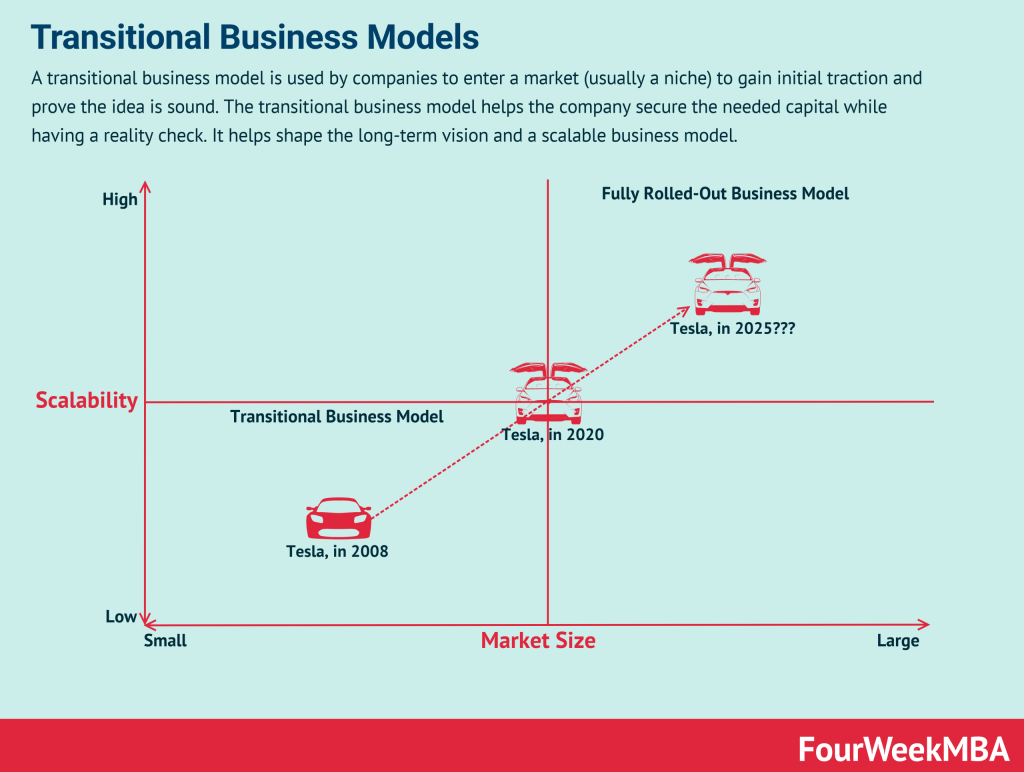
A transitional business model is used by companies to enter a market (usually a niche) to gain initial traction and prove the idea is sound. The transitional business model helps the company secure the needed capital while having a reality check. It helps shape the long-term vision and a scalable businessmodel.
The minimum viable audience (MVA) represents the smallest possible audience that can sustain your business as you get it started from a microniche (the smallest subset of a market). The main aspect of the MVA is to zoom into existing markets to find those people which needs are unmet by existing players.
Business scaling is the process of transformation of a business as the product is validated by wider and wider market segments. Business scaling is about creating traction for a product that fits a small market segment. As the product is validated it becomes critical to build a viable businessmodel. And as the product is offered at wider and wider market segments, it’s important to align product, businessmodel, and organizational design, to enable wider and wider scale.
The market expansion consists in providing a product or service to a broader portion of an existing market or perhaps expanding that market. Or yet, market expansions can be about creating a whole new market. At each step, as a result, a company scales together with the market covered.
In the FourWeekMBA growth matrix, you can apply growth for existing customers by tackling the same problems (gain mode). Or by tackling existing problems, for new customers (expand mode). Or by tackling new problems for existing customers (extend mode). Or perhaps by tackling whole new problems for new customers (reinvent mode).
In the FourWeekMBA Revenue Streams Matrix, revenue streams are classified according to the kind of interactions the business has with its key customers. The first dimension is the “Frequency” of interaction with the key customer. As the second dimension, there is the “Ownership” of the interaction with the key customer.
Revenue model patterns are a way for companies to monetize their business models. A revenue model pattern is a crucial building block of a business model because it informs how the company will generate short-term financial resources to invest back into the business. Thus, the way a company makes money will also influence its overall businessmodel.
A pricing strategy or model helps companies find the pricing formula in fit with their business models. Thus aligning the customer needs with the product type while trying to enable profitability for the company. A good pricing strategy aligns the customer with the company’s long term financial sustainability to build a solid business model.
Gennaro is the creator of FourWeekMBA, which reached about four million business people, comprising C-level executives, investors, analysts, product managers, and aspiring digital entrepreneurs in 2022 alone | He is also Director of Sales for a high-tech scaleup in the AI Industry | In 2012, Gennaro earned an International MBA with emphasis on Corporate Finance and Business Strategy.