

AIOps

Agile Methodology

Agile Project Management

Agile Modeling

Agile Business Analysis

Agile Leadership

Business Model Innovation

Continuous Innovation

Design Sprint

Design Thinking

DevOps

Dual Track Agile

Feature-Driven Development

eXtreme Programming

Lean vs. Agile

Lean Startup

Kanban

Rapid Application Development

Retrospective Analysis

Scaled Agile

Spotify Model
Test-Driven Development

Timeboxing

Scrum

Scrum Anti-Patterns

Scrum At Scale

Stretch Objectives

Key Highlights
- AIOps: AIOps stands for Artificial Intelligence for IT Operations. It involves the application of AI and machine learning to manage and optimize IT operations in modern digital-based organizations.
- Agile Methodology: Agile is a software development methodology based on continuous iteration and collaboration. The Agile Manifesto, created in 2001, defines the principles of Agile development.
- Agile Project Management (APM): APM breaks large projects into smaller iterations and focuses on completing each section with a project life cycle, from design to testing and quality assurance.
- Agile Modeling (AM): AM is a methodology for modeling and documenting software-based systems that supports the rapid and continuous delivery of software.
- Agile Business Analysis (AgileBA): AgileBA is a certification and training program for business analysts working in agile environments, helping them align agile projects with organizational missions and strategies.
- Agile Leadership: Agile leadership embodies the principles of the Agile Manifesto and impacts both the structural and behavioral levels of a business.
- Business Model Innovation: Business model innovation involves crafting a compelling value proposition to create a lasting competitive advantage and achieve success with existing products and technologies.
- Continuous Innovation: Continuous innovation is a process that involves a continuous feedback loop to develop valuable products and build viable business models centered around customers’ problems.
- Design Sprint: A design sprint is a five-day process for answering critical business questions through speedy design and prototyping, with a focus on end-users.
- Design Thinking: Design thinking is a human-centered approach to innovation, balancing desirability, feasibility, and viability to solve critical problems.
- DevOps: DevOps refers to practices that automate software development processes and promote seamless collaboration between development and operations teams.
- Lean vs. Agile: Lean and Agile are both process improvement methodologies that prioritize customer value and continuous improvement, but they have different approaches and origins.
- Lean Startup: Lean startup is a methodology for high-tech businesses focused on rapid innovation and growth through continuous improvement and viral loops.
- Kanban: Kanban is a lean manufacturing framework that visualizes work, identifies bottlenecks, and optimizes processes for efficient product development.
- Rapid Application Development (RAD): RAD is a software development methodology focused on delivering rapidly through continuous feedback and frequent iterations.
- Retrospective Analysis: Retrospective analyses are meetings held after projects or iterations to reflect on work performed, check the project team’s pulse, and plan for the next sprint cycle.
- Scaled Agile: Scaled Agile Lean Development (ScALeD) helps businesses transition to agile and respond to change by combining lean and agile values and practices.
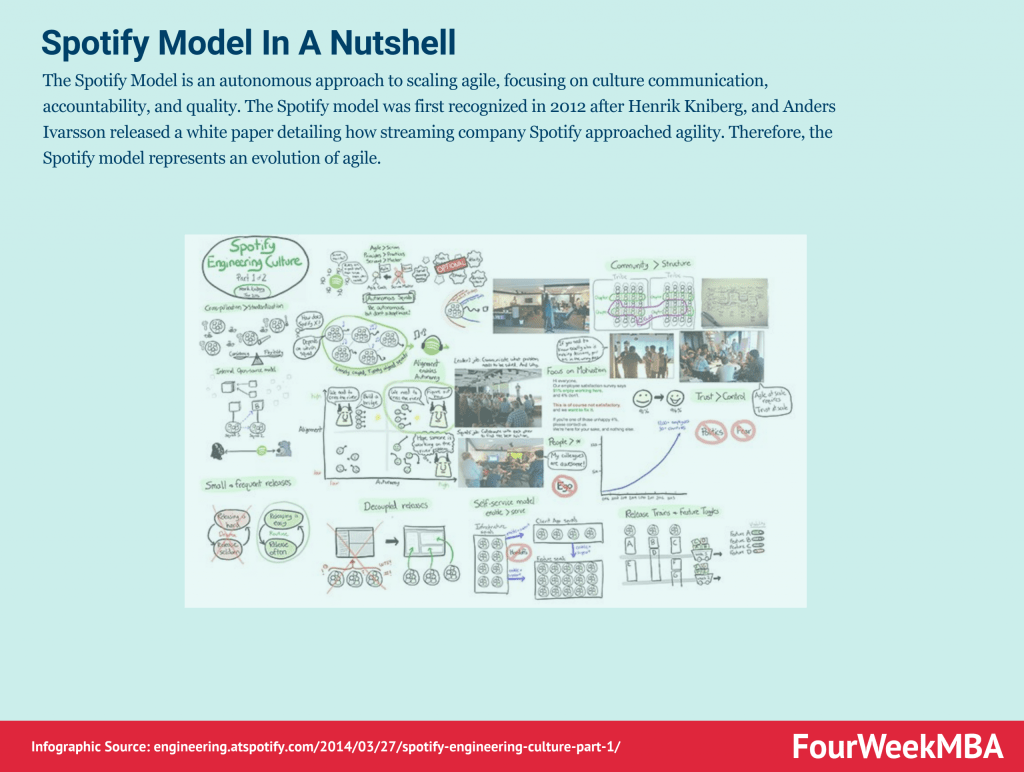
- Spotify Model: The Spotify model is an autonomous approach to scaling agile, focusing on culture, communication, accountability, and quality.
- Test-Driven Development (TDD): TDD is an approach where failing tests are written before writing any code, ensuring rapid and sustainable software development.
- Timeboxing: Timeboxing is a time-management technique that proactively schedules blocks of time for specific tasks.
- Scrum: Scrum is a methodology for effective team collaboration on complex products, primarily used in software development.
- Scrum Anti-Patterns: Scrum anti-patterns refer to attractive solutions that make problems worse, and they should be avoided in Scrum practices.
- Scrum At Scale: Scrum at Scale is a framework used to address complex problems and deliver high-value products in large organizations.
- Stretch Objectives: Stretch objectives are tasks that agile teams plan to complete but do not expressly commit to, typically used when capacity is uncertain.
Summary Table
| Concept/Methodology | Description | Key Elements | When to Use | Advantages | Drawbacks |
|---|---|---|---|---|---|
| 1. AIOps | AIOps is the application of artificial intelligence to IT operations, optimizing IT management in dynamic environments. | AI integration, IT operations, dynamic environments | IT management, incident resolution, efficiency | Improved IT performance, predictive analytics, automated tasks. | Dependency on data quality, complexity in AI implementation, potential job displacement. |
| 2. Agile Methodology | Agile methodology emphasizes iterative development, customer collaboration, and adaptability, fostering a flexible approach to software development. | Iterative development, customer collaboration, adaptability | Software development, project management | Rapid development, customer feedback, adaptability. | Resistance to change, lack of documentation, challenges in scaling. |
| 3. Agile Project Management | Agile project management divides projects into smaller iterations, allowing for flexibility and adaptation during project execution. | Iterations, flexibility, project life cycle | Complex project management, dynamic environments | Enhanced adaptability, early deliveries, improved collaboration. | Requires experienced team, potential scope creep, challenges in measuring progress. |
| 4. Agile Modeling | Agile Modeling focuses on lightweight modeling and documentation practices, enabling rapid and continuous software delivery. | Lightweight modeling, documentation, continuous delivery | Software modeling, project documentation | Efficient documentation, aligns with agile development, responsiveness to change. | May lack detailed documentation, requires experienced practitioners, potential inconsistency. |
| 5. Agile Business Analysis | Agile Business Analysis provides guidance and training for business analysts in agile environments, facilitating alignment with organizational strategies. | Business analysis, agile environment, alignment | Business analysis in agile projects | Better alignment with organizational goals, improved analysis skills, agile project success. | Certification process, learning curve, resistance to change. |
| 6. Agile Leadership | Agile leadership embodies agile principles at both structural and behavioral levels, fostering a culture of adaptability and collaboration. | Structural alignment, behavioral leadership | Organizational change, agile transformation | Cultural transformation, improved agility, employee engagement. | Requires leadership commitment, may disrupt existing hierarchies, behavioral changes may be challenging. |
| 7. Business Model Innovation | Business model innovation aims to enhance organizational success by crafting compelling value propositions and scalable business models. | Value proposition, scalability, customer focus | Strategic planning, market expansion | Sustainable competitive advantage, increased customer value, growth potential. | Risk of disruption, resource-intensive, requires market research. |
| 8. Continuous Innovation | Continuous innovation involves iterative development and customer-centric product design, focusing on customer problems rather than technical solutions. | Iterative development, customer-centric approach | Product development, market adaptation | Customer-focused solutions, rapid iterations, problem-solving mindset. | Resource-intensive, potential for feature creep, may require cultural shift. |
| 9. Design Sprint | Design sprint is a five-day process for rapid design and prototyping to answer critical business questions, emphasizing end-user needs. | Prototyping, end-user focus, rapid design process | Critical business questions, product design | Accelerated decision-making, user-centered solutions, rapid prototyping. | Requires dedicated team time, limited scope within a week, potential for biased outcomes. |
| 10. Design Thinking | Design thinking integrates human-centered design principles with technology and business considerations, balancing desirability, feasibility, and viability. | Human-centered design, multidisciplinary approach | Problem-solving, innovation | User-centric solutions, holistic problem-solving, collaboration. | Potential for vague outcomes, time-consuming, may require diverse skills. |
| 11. DevOps | DevOps bridges development and operations teams, promoting seamless product building, testing, and deployment through automation. | Development-operations integration, automation | Software development, deployment processes | Accelerated development, reduced manual errors, continuous delivery. | Cultural change required, complex implementation, potential for resistance. |
| 12. Dual Track Agile | Dual Track Agile integrates discovery and delivery tracks, ensuring that customer-loved products are built through effective product discovery and development. | Discovery track, delivery track, customer-centric | Product development, customer feedback | Improved product alignment, customer satisfaction, validated solutions. | Coordination challenges, resource allocation, may require separate teams. |
| 13. Feature-Driven Development | Feature-Driven Development is a client and architecture-centric agile model that organizes workflow based on feature development priorities. | Feature prioritization, client-centric approach | Agile software development, feature-driven projects | Clear feature focus, effective resource allocation, client satisfaction. | May require mature development practices, potential complexity, limited adaptability. |
| 14. eXtreme Programming | eXtreme Programming (XP) is a software development methodology that emphasizes software quality, adaptability, and customer responsiveness through iterative practices. | Software quality, adaptability, customer responsiveness | Agile software development, iterative practices | Improved software quality, enhanced customer satisfaction, rapid adaptation. | May require cultural shift, potential for scope changes, requires disciplined practices. |
| 15. Lean vs. Agile | Lean and Agile methodologies prioritize customer value, waste reduction, and continuous improvement but differ in their approach and focus areas. | Customer value, waste reduction, continuous improvement | Various business disciplines, process improvement | Customer-centric improvement, adaptable practices, waste reduction. | Varying focus areas, potential for confusion, need for tailored implementation. |
| 16. Lean Startup | Lean Startup applies lean principles to startups, emphasizing continuous innovation, built-in viral loops, and rapid growth through customer-driven strategies. | Continuous innovation, viral loops, customer-driven | Startup business models, growth strategies | Accelerated growth, sustainable business models, customer-centricity. | Uncertain outcomes, resource-intensive, potential for premature scaling. |
| 17. Kanban | Kanban is a lean manufacturing framework that visualizes work, identifies bottlenecks, and optimizes engineering processes through just-in-time manufacturing. | Work visualization, bottleneck identification | Manufacturing, process optimization | Visualized workflow, process optimization, efficiency improvement. | Requires discipline in maintaining the board, may not suit all processes, potential for bottlenecks. |
| 18. Rapid Application Development | Rapid Application Development (RAD) focuses on rapid delivery, continuous feedback, and frequent iterations to deliver high-quality software. | Rapid delivery, continuous feedback, frequent iterations | Software development, quality improvement | Speedy development, high-quality software, user feedback integration. | May require skilled practitioners, potential for scope changes, documentation challenges. |
| 19. Retrospective Analysis | Retrospective analysis assesses project performance and identifies improvements through team reflection and discussions, commonly used in Agile project management. | Team reflection, performance assessment | Agile project management, process improvement | Enhanced team communication, performance improvement, actionable insights. | Requires dedicated time, potential for resistance, may not lead to immediate change. |
| 20. Scaled Agile | Scaled Agile Lean Development (ScALeD) helps businesses address complex scaling challenges by applying lean and agile values through various frameworks and practices. | Lean and agile values, scalability, framework selection | Complex scaling projects, organizational change | Scalability, adaptability, improved alignment with lean and agile principles. | Complexity in implementation, potential for resistance, framework selection challenges. |
Read Next: MVP, Lean Canvas, Scrum, Design Thinking, VTDF Framework.
Main Free Guides:
- Business Models
- Business Strategy
- Business Development
- Digital Business Models
- Distribution Channels
- Marketing Strategy
- Platform Business Models
- Tech Business Model
- What Is Entrepreneurship
What is Summary Table?
Read Next : MVP , Lean Canvas , Scrum , Design Thinking , VTDF Framework .
What are the key components of 27 Lean Frameworks To Grow Your Business?
The key components of 27 Lean Frameworks To Grow Your Business include 1. AIOps, 2. Agile Methodology, 3. Agile Project Management, 4. Agile Modeling, 5. Agile Business Analysis. 1. AIOps: AIOps is the application of artificial intelligence to IT operations, optimizing IT management in dynamic environments.


