KFC, a popular fast food chain, operates on a business model focused on providing tasty and convenient food to fast food consumers. They offer unique flavors and recipes, emphasizing quick service and efficiency. KFC generates revenue through restaurant sales, franchise fees, and royalty/advertising fees. Their key activities include food preparation, restaurant operations, and brandmarketing. Key resources include secret recipes, a robust supply chain, and brand loyalty. KFC forms partnerships with franchisees, suppliers, and delivery service providers. Their cost structure includes food/ingredient costs, restaurant operations, marketing expenses, and franchise support/training.
Colonel Sanders: Leveraging the iconic image and story of Colonel Sanders to build a strong brand identity.
Advertising: Extensive use of TV, online, and print advertising to maintain brand visibility.
Menu Innovation:
Product Development: Continuously updating the menu with new items, flavors, and limited-time offers to keep the menu fresh and appealing.
Healthier Options: Introducing grilled chicken and salads to attract health-conscious consumers.
Global Expansion:
New Markets: Entering new international markets through franchise partnerships.
Localization: Adapting the menu to local tastes and preferences in different regions.
Distribution Strategy
KFC’s distributionstrategy involves a mix of franchise and company-owned stores, along with digital platforms.
Franchise Model:
Global Presence: The majority of KFC’s restaurants are franchised, which helps the brand expand rapidly with lower capital expenditure.
Support and Training: Providing franchisees with extensive support, training, and resources to maintain quality and brand consistency.
Company-Owned Stores:
Direct Management: Company-owned stores allow KFC to directly manage operations, ensuring adherence to brand standards and testing new products and strategies.
Digital and Delivery Channels:
Online Ordering: Offering online ordering through the KFC website and mobile app for both delivery and pickup.
Third-Party Delivery Services: Partnering with third-party delivery platforms to extend reach and convenience for customers.
Competitive Advantages
KFC’s competitive advantages lie in its strong brand equity, global presence, and continuous innovation.
Brand Equity:
Strong Legacy: KFC’s long history and association with Colonel Sanders provide a strong brand identity that resonates with consumers globally.
Trust and Quality: Consistency in product quality and service builds consumer trust and loyalty.
Global Presence:
Widespread Locations: A vast network of restaurants in over 150 countries ensures brand visibility and accessibility.
Adaptability: Ability to adapt menus to local tastes while maintaining core offerings ensures relevance in diverse markets.
Continuous Innovation:
Menu Development: Regular introduction of new and innovative menu items keeps the brand fresh and appealing.
Technology Integration: Investment in digital platforms and delivery services enhances customer convenience and engagement.
Organizational Structure:
KFC (Kentucky Fried Chicken) operates within a hierarchical organizational structure typical of large multinational fast-food chains.
Global Leadership:
CEO: The Chief Executive Officer is the top executive responsible for overall strategic direction and management of the company.
Senior Leadership Team: Comprising top executives overseeing various key functions such as operations, marketing, finance, and human resources.
Regional Management:
Regional Heads: KFC divides its operations into regions, each headed by a Regional President or Vice President. These regions can be based on geographic locations or specific markets.
Country Managers: Within each region, there are Country Managers or Directors responsible for overseeing KFC’s operations in individual countries or territories.
Corporate Functions:
Departments: KFC has various functional departments, including Operations, Marketing, Finance, Human Resources, Legal, and Supply Chain, among others.
Support Functions: These departments provide centralized support services, such as IT, Research and Development, and Quality Assurance.
Franchise Relations:
Franchise Development: Teams dedicated to recruiting new franchisees and expanding KFC’s franchise network.
Franchisee Support: Teams that offer training, operational support, and ongoing assistance to franchisees.
Restaurant-Level Organization:
Restaurant Management: Each KFC restaurant has its own management team, typically including a General Manager, Assistant Managers, and Shift Supervisors.
Staff: Restaurants employ front-line staff, including cooks, cashiers, and customer service representatives.
Leadership Style:
KFC’s leadership style is characterized by several key principles:
Customer-Centric Focus: KFC places a strong emphasis on meeting customer expectations by delivering quality food and service.
Operational Excellence: The company strives for operational efficiency and consistency across its global network of restaurants.
Innovation: KFC encourages innovation in menu offerings, marketing strategies, and restaurant operations to stay competitive in the fast-food industry.
Franchisee Collaboration: KFC maintains a collaborative relationship with its franchisees, valuing their contributions to the brand’s success.
Brand Loyalty: The leadership fosters brand loyalty by upholding KFC’s unique flavors, recipes, and traditions while adapting to changing consumer preferences.
Community Engagement: KFC engages with local communities through initiatives such as corporate social responsibility and philanthropy.
Global Perspective: KFC’s leadership recognizes the importance of understanding diverse market preferences and cultural nuances in different regions.
Key Highlights
Tasty and Convenient Food: KFC’s primary focus is on providing delicious and convenient food to fast food consumers.
Unique Flavors and Recipes: The brand is known for its unique flavors and secret recipes that set them apart in the fast food industry.
Quick Service and Efficiency: KFC emphasizes fast service and operational efficiency to cater to the needs of its customers.
Revenue Generation: KFC’s revenue comes from various sources, including restaurant sales, franchise fees from new outlets, and royalty/advertising fees from existing franchises.
Key Activities: The core activities of KFC involve food preparation, efficient restaurant operations, and strategic brandmarketing.
Secret Recipes: KFC’s closely guarded secret recipes contribute to its distinct taste and are a crucial asset for the brand.
Supply Chain: A well-established and robust supply chain helps ensure consistent sourcing of ingredients and supplies for its outlets.
Brand Loyalty: KFC has built a loyal customer base through its consistent quality and unique offerings.
Partnerships: The company collaborates with franchisees, suppliers, and delivery service providers to maintain its operational network.
Cost Structure: KFC’s cost structure includes expenses related to ingredient procurement, restaurant operations, marketing efforts, and support/training for franchisees.
Element
Description
Value Proposition
KFC offers the following value propositions for its customers: – Fried Chicken: Iconic and delicious fried chicken. – Variety of Flavors: Offering a range of flavors and spices. – Quick Service: Fast and convenient dining experience. – Affordability: Providing budget-friendly meal options. – Global Brand: Recognized and trusted worldwide. – Consistency: Maintaining the same taste and quality. – Innovation: Introducing new menu items and promotions. – Community Engagement: Involvement in local communities and charity.
Core Products/Services
Core products and services provided by KFC include: – Fried Chicken: Selling various chicken pieces and combos. – Sides and Fixings: Offering a range of sides like mashed potatoes and coleslaw. – Beverages: Providing soft drinks and other beverages. – Desserts: Offering desserts like cakes and pies. – Family Meals: Combo meals for families and groups. – Value Menus: Budget-friendly menu options. – Online Ordering: Online and mobile app ordering. – Delivery and Takeout: Delivery and takeout services.
Customer Segments
KFC targets various customer segments: – Individuals: Individuals seeking quick and tasty meals. – Families: Families looking for convenient dining options. – Students: Students on a budget. – Working Professionals: Busy professionals seeking quick lunches. – Food Enthusiasts: Customers who enjoy fried chicken. – Party Planners: Those ordering for events and gatherings. – Online Customers: Users of online ordering and delivery. – Community Supporters: Individuals who value community engagement.
Revenue Streams
KFC generates revenue through several revenue streams: – Menu Sales: Earnings from sales of menu items. – Combo Sales: Revenue from combo meal sales. – Beverage Sales: Income from beverage sales. – Dessert Sales: Earnings from dessert sales. – Delivery and Takeout Fees: Fees from delivery and takeout services. – Franchise Fees: Income from franchise operations. – Online Ordering Fees: Charges for online orders and delivery. – Marketing Partnerships: Income from marketing collaborations.
Distribution Strategy
The distribution strategy for KFC includes various channels: – Physical Locations: Operating a network of physical restaurant locations. – Drive-Thru Services: Offering drive-thru services for quick orders. – Delivery Services: Providing delivery options through own or third-party services. – Online and Mobile Apps: Offering online and mobile app ordering. – Marketing Campaigns: Promoting products through marketing channels. – Franchise Model: Partnering with franchisees for expansion. – Community Engagement: Involvement in local communities and charity efforts. – Global Presence: International restaurant presence.
The major institutional shareholders comprise The Vanguard Group (8.83%) and BlackRock (7.1%). Major individual shareholders include Kevin Ozan (Executive Vice President and Chief Financial Officer), Stephen Easterbrook (President and CEO), and John Rogers, Jr., an investor, philanthropist, and Ariel Capital Management founder. And a few other individual shareholders.
McDonald’s is a heavy-franchised businessmodel. In 2022, over 60% of the total revenues came from franchised restaurants. The company’s long-term goal is to transition toward 95% of franchised restaurants (by 2022, franchised restaurants were 94.7% of the total). The company generated over $23 billion in revenues in 2022, of which $8.75 billion was from owned restaurants and $14.1 billion from franchised restaurants.
Of over $23 billion in revenue in 2022, $8.74 came from company-operated stores, while $14.1 billion came from franchised restaurants. Of over $23 billion in revenue in 2021, McDonald’s generated almost ten billion dollars from company-operated restaurants, while it generated $13 billion from franchised restaurants.
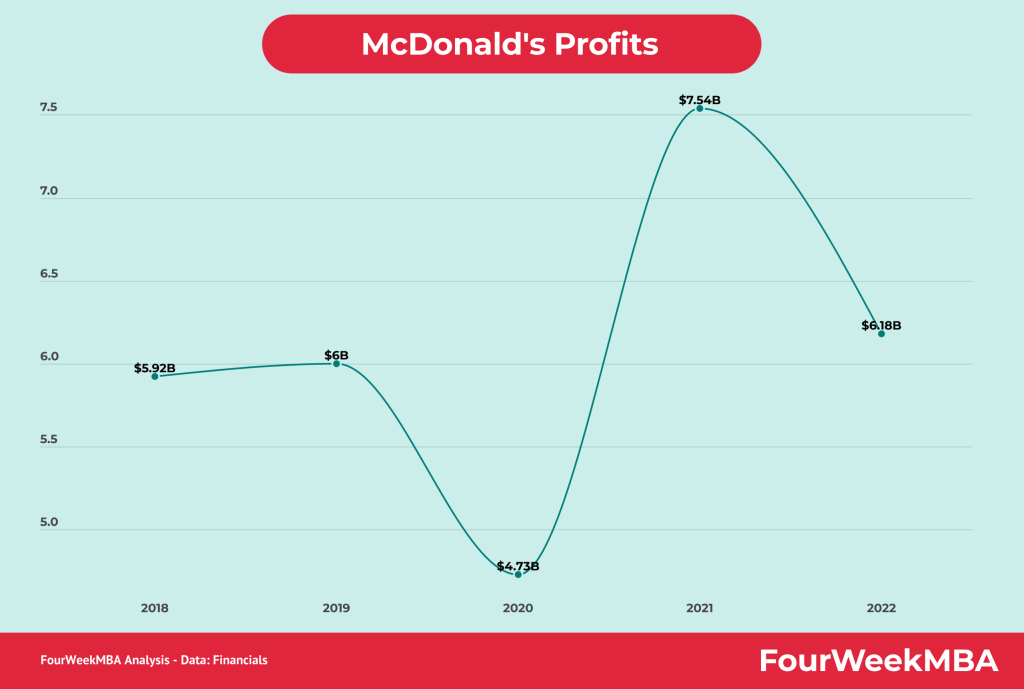
In 2022, McDonald’s generated $6.18 billion in net profits, compared to $7.54 billion in 2021. The company runs a heavily franchised businessmodel, where it has reached its target of 95% franchised restaurants worldwide.
McDonald’s finally transitioned to a heavily franchised business model in 2022, reaching its long-term objective of 95% of franchised restaurants vs. its total restaurants worldwide.
Approximately 95% of the restaurants at year-end 2022 were franchised, including 95% in the U.S., 89% in International Operated Markets, and 98% in the International Developmental Licensed Markets.
McDonald’s had 150,000 employees in 2022, compared to 200,000 employees in 2021 and the same in 2020. The company runs a heavily franchised businessmodel, where most stores are franchised restaurants vs. owned ones. In 2022, McDonald’s franchised locations employed over two million individuals.
McDonald’s runs a heavily franchised business model, where most of its margins come from franchised restaurants vs. operated ones. For instance, in 2022, franchised restaurants generated $11.75 billion in margins vs. its operated restaurants, which generated $1.37 billion in margins.
Burger King is an American multinational chain of fast-food restaurants that is headquartered in Miami, Florida. The first Burger King restaurant, then known as Insta-Burger King, was opened in Jacksonville, Florida, in 1953 by Keith Cramer and his stepfather Matthew Burns. Burger King Worldwide merged with the Canadian coffee chain Tim Hortons in 2014. This precipitated the formation of parent company Restaurant Brands International, which is part-owned by former Burger King owner 3G Capital.
McDonald’s has a divisional organizational structure where each division – based on geographical location – is assigned operational responsibilities and strategic objectives. The main geographical divisions are the US, internationally operated markets, and international developmental licensed markets. And on the other hand, the hierarchical leadership structure is organized around regional and functional divisions.
Franchising is a business model where the owner (franchisor) of a product, service, or method utilizes the distribution services of an affiliated dealer (franchisee). Usually, the franchisee pays a royalty to the franchisor to be using the brand, process, and product. And the franchisor instead supports the franchisee in starting up the activity and providing a set of services as part of the franchising agreement. Franchising models can be heavy-franchised, heavy-chained, or hybrid (franchained).
Coca-Cola follows a business strategy (implemented since 2006) where through its operating arm – the Bottling Investment Group – it invests initially in bottling partners operations. As they take off, Coca-Cola divests its equity stakes, and it establishes a franchising model, as long-term growth and distributionstrategy.
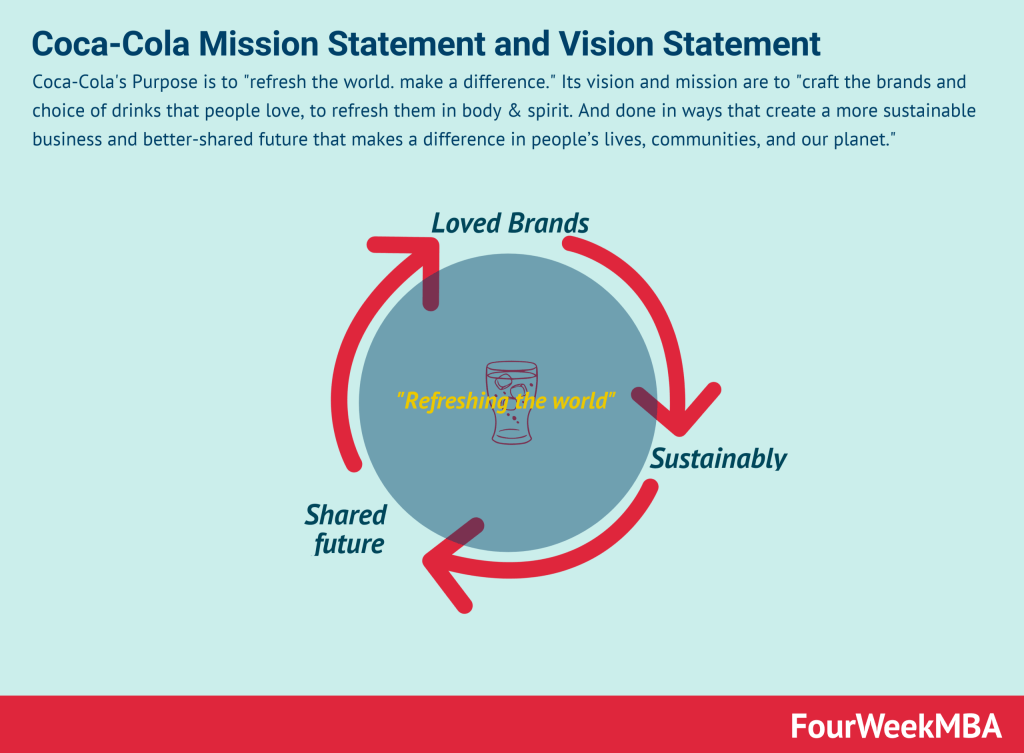
Coca-Cola’s Purpose is to “refresh the world. make a difference.” Its vision and mission are to “craft the brands and choice of drinks that people love, to refresh them in body & spirit. And done in ways that create a more sustainable business and better-shared future that makes a difference in people’s lives, communities, and our planet.”
Gennaro is the creator of FourWeekMBA, which reached about four million business people, comprising C-level executives, investors, analysts, product managers, and aspiring digital entrepreneurs in 2022 alone | He is also Director of Sales for a high-tech scaleup in the AI Industry | In 2012, Gennaro earned an International MBA with emphasis on Corporate Finance and Business Strategy.