

Interim leadership is a strategic approach that organizations adopt during times of change, transition, or crisis. It involves appointing temporary leaders who bring their expertise and experience to guide organizations through challenging periods.
Understanding Interim Leadership
Interim leadership refers to the appointment of experienced executives or professionals on a temporary basis to fulfill key leadership roles within organizations. This form of leadership is often utilized when organizations face specific challenges or transitions, such as the sudden departure of a CEO, a merger or acquisition, a turnaround situation, or the launch of a critical project.
Interim leaders are typically seasoned individuals with a track record of success in their respective fields. They are brought in to provide stability, expertise, and leadership during critical junctures. Interim leadership arrangements can vary in duration, from a few months to a year or more, depending on the nature and scope of the situation.
The Significance of Interim Leadership
Interim leadership plays a crucial role in various sectors and situations:
1. Organizational Stability:
- Interim leaders provide continuity and stability during leadership transitions, preventing disruptions in operations.
2. Expertise and Experience:
- Organizations benefit from the specialized skills and experience of interim leaders, often unavailable internally.
3. Crisis Management:
- Interim leaders excel in crisis situations, helping organizations navigate challenges effectively.
4. Strategic Initiatives:
- They drive critical projects and strategic initiatives that require specialized leadership.
5. Mergers and Acquisitions:
- During mergers or acquisitions, interim leaders facilitate the integration process and bridge leadership gaps.
6. Turnaround and Change Management:
- Interim leaders lead turnaround efforts and facilitate change management processes.
7. Time to Find Permanent Leadership:
- Interim leaders buy organizations time to conduct thorough searches for permanent leadership.
Roles of Interim Leaders
Interim leaders assume various roles based on the organization’s needs and the specific circumstances:
1. Stabilizer:
- Interim leaders provide stability during times of uncertainty and change.
2. Change Agent:
- They drive transformation and change initiatives, ensuring they are effectively executed.
3. Problem Solver:
- Interim leaders tackle complex challenges and devise solutions.
4. Project Manager:
- They oversee critical projects and ensure they stay on track.
5. Mentor and Coach:
- Interim leaders may mentor and coach existing leadership teams.
6. Strategic Advisor:
- They offer strategic guidance and insights to the organization’s board and executives.
7. Crisis Manager:
- In crisis situations, they take charge of crisis management efforts.
Benefits of Interim Leadership
Interim leadership offers numerous benefits to organizations:
1. Immediate Expertise:
- Organizations gain access to experienced leaders without the time-consuming process of recruitment.
2. Continuity:
- Leadership transitions are smoother, minimizing disruptions in operations.
3. Objective Perspective:
- Interim leaders bring an unbiased viewpoint and can make difficult decisions.
4. Specialized Skills:
- They possess the specific skills and knowledge required for the situation.
5. Cost-Effective:
- Interim leaders are often more cost-effective than hiring permanent executives.
6. Risk Mitigation:
- They mitigate risks associated with leadership gaps or crises.
7. Flexibility:
- Organizations can tailor the duration of the interim leadership arrangement to their needs.
Challenges and Considerations
Despite the advantages, interim leadership comes with its own set of challenges and considerations:
1. Integration and Buy-In:
- Interim leaders must quickly integrate into the organization and gain the trust of existing teams.
2. Short-Term Focus:
- Their temporary nature may lead to a short-term focus, potentially neglecting long-term planning.
3. Transition Challenges:
- The transition from interim to permanent leadership can be challenging if not managed effectively.
4. Limited Organizational Knowledge:
- Interim leaders may lack in-depth knowledge of the organization’s culture and history.
5. Resistance to Change:
- Existing employees may resist changes introduced by interim leaders.
6. Succession Planning:
- Organizations must plan for a smooth transition once the interim leadership period ends.
7. Dependency on Individuals:
- Relying heavily on interim leaders may create dependency on specific individuals.
Industries and Sectors Utilizing Interim Leadership
Interim leadership is prevalent in various industries and sectors:
1. Healthcare:
- Hospitals and healthcare organizations frequently utilize interim leaders for roles like hospital administration.
2. Education:
- Educational institutions bring in interim leaders for positions such as college deans or school principals.
3. Nonprofits:
- Nonprofit organizations hire interim leaders to manage transitional phases or lead change initiatives.
4. Manufacturing:
- Manufacturing companies may employ interim leaders to oversee plant operations or supply chain management.
5. Finance:
- Financial institutions use interim leaders for roles such as chief financial officers (CFOs) or risk managers.
6. Technology:
- Technology companies often bring in interim leaders to lead product launches or manage mergers.
7. Government:
- Government agencies use interim leaders in various capacities, including city managers and department heads.
The Future of Interim Leadership
The landscape of interim leadership is evolving with changing organizational dynamics:
1. Demand for Specialization:
- Organizations increasingly seek interim leaders with specialized skills and industry expertise.
2. Remote Interim Leadership:
- The rise of remote work has led to the emergence of remote interim leadership arrangements.
3. Hybrid Models:
- Some organizations are exploring hybrid models that combine interim and permanent leadership.
4. Diversity and Inclusion:
- There is a growing emphasis on diversity and inclusion among interim leaders.
5. Succession Planning:
- Organizations are placing greater importance on effective succession planning during interim leadership transitions.
6. Technology Integration:
- Technology tools are being leveraged to facilitate effective remote interim leadership.
Conclusion
Interim leadership is a dynamic and strategic approach that provides organizations with immediate access to experienced leaders during times of transition, crisis, or change. While it offers numerous benefits, it also presents challenges related to integration, short-term focus, and succession planning.
As organizations continue to face evolving challenges and opportunities, interim leadership will remain a valuable resource for ensuring stability, expertise, and effective leadership. By adapting to changing organizational dynamics and leveraging technology, interim leaders will play a crucial role in guiding organizations through their unique journeys.
Key Highlights
- Definition and Characteristics:
- Interim leadership involves appointing experienced professionals temporarily to fulfill key leadership roles during specific challenges or transitions.
- Interim leaders are seasoned individuals who provide stability, expertise, and leadership during critical periods.
- Significance:
- Provides organizational stability during transitions.
- Offers specialized skills and experience.
- Excels in crisis management and strategic initiatives.
- Facilitates mergers, acquisitions, and change management.
- Buys time for finding permanent leadership.
- Roles of Interim Leaders:
- Stabilizer during uncertain times.
- Change agent driving transformation.
- Problem solver addressing complex challenges.
- Project manager overseeing critical projects.
- Mentor and coach for existing teams.
- Strategic advisor offering guidance.
- Crisis manager in emergency situations.
- Benefits:
- Immediate access to expertise.
- Smooth transitions with minimal disruptions.
- Objective perspective and unbiased decisions.
- Cost-effective compared to permanent hires.
- Mitigates risks associated with leadership gaps.
- Flexible duration tailored to organizational needs.
- Challenges and Considerations:
- Integration and gaining buy-in quickly.
- Potential short-term focus neglecting long-term planning.
- Challenges transitioning from interim to permanent leadership.
- Limited organizational knowledge and resistance to change.
- Dependency on specific individuals and succession planning.
- Industries and Sectors Utilizing Interim Leadership:
- Healthcare, education, nonprofits, manufacturing, finance, technology, and government sectors.
- Future Trends:
- Demand for specialized interim leaders.
- Rise of remote interim leadership arrangements.
- Exploration of hybrid interim and permanent leadership models.
- Emphasis on diversity and inclusion.
- Focus on effective succession planning.
- Integration of technology tools for remote leadership.
- Conclusion:
- Interim leadership provides organizations with immediate access to experienced leaders during transitions and challenges.
- While offering benefits, it also presents challenges related to integration and succession planning.
- As organizations evolve, interim leadership will continue to play a crucial role in guiding them through transitions and change.
| Concept | Description | Implications |
|---|---|---|
| Interim Leadership | – Leadership role assumed temporarily to address a specific need or transition period within an organization. – Involves maintaining continuity, stability, and momentum during times of change or transition. – Leaders may be brought in from outside the organization or appointed from within. – Emphasizes adaptability, flexibility, and problem-solving skills. | – Maintaining continuity: Interim leadership ensures continuity and stability within the organization by providing leadership and direction during times of change or transition, ensuring that operations continue smoothly, and that strategic initiatives remain on track, fostering confidence, stability, and trust among employees, stakeholders, and customers that enhances organizational resilience and performance over time. – Managing change: Interim leadership plays a crucial role in managing change within the organization by identifying challenges, opportunities, and risks, and by developing and implementing strategies, plans, and initiatives to address them effectively, fostering a culture of adaptability, resilience, and innovation that enables the organization to navigate uncertainty and complexity with confidence and agility over time. – Facilitating transition: Interim leadership facilitates transition within the organization by providing support, guidance, and resources to employees, teams, and stakeholders to navigate changes, and by promoting open communication, collaboration, and engagement that fosters trust, alignment, and synergy in achieving shared goals and objectives, driving organizational success and impact in a dynamic and competitive business environment. – Driving performance: Interim leadership drives performance within the organization by setting clear expectations, priorities, and goals, and by providing direction, support, and accountability to employees, teams, and stakeholders to achieve them, fostering a culture of accountability, excellence, and continuous improvement that enhances employee engagement, satisfaction, and performance over time. |
| Change Leadership | – Leadership approach focused on driving and managing change within an organization. – Involves inspiring, motivating, and guiding individuals and teams through the change process. – Emphasizes communication, collaboration, and resilience. – Change leaders may be appointed or emerge organically within the organization. | – Inspiring and motivating: Change leadership inspires and motivates individuals and teams to embrace change by articulating a compelling vision, rationale, and benefits, and by providing support, guidance, and resources to help them navigate the transition, fostering a sense of purpose, engagement, and commitment that enhances employee morale, resilience, and performance over time. – Guiding and supporting: Change leadership guides and supports individuals and teams through the change process by providing clarity, direction, and encouragement, and by addressing their concerns, fears, and resistance, fostering trust, confidence, and collaboration that enables them to adapt, grow, and succeed in achieving shared goals and objectives, driving organizational success and impact in a rapidly changing and competitive business environment. – Communicating and collaborating: Change leadership promotes communication and collaboration by creating opportunities for dialogue, feedback, and participation, and by fostering a culture of openness, transparency, and inclusivity that encourages individuals and teams to share ideas, insights, and concerns, fostering innovation, creativity, and continuous improvement that enhances organizational agility, competitiveness, and relevance over time. – Building resilience and agility: Change leadership builds resilience and agility within the organization by fostering a culture of learning, experimentation, and adaptation that enables individuals and teams to respond effectively to changing circumstances, challenges, and opportunities, and to seize new possibilities and opportunities for growth and innovation, driving sustainable success and impact in a dynamic and uncertain business environment. |
| Transition Leadership | – Leadership approach focused on guiding individuals and organizations through periods of transition or change. – Involves providing support, direction, and resources to navigate the transition effectively. – Emphasizes communication, empathy, and resilience. – Transition leaders may be brought in from outside the organization or appointed from within. | – Providing support and direction: Transition leadership provides support and direction to individuals and organizations to navigate transitions effectively by offering guidance, resources, and assistance to address challenges, seize opportunities, and achieve desired outcomes, fostering confidence, resilience, and adaptability that enhances organizational performance and success over time. – Promoting communication and empathy: Transition leadership promotes communication and empathy by fostering open dialogue, active listening, and mutual understanding among stakeholders, and by addressing their concerns, fears, and aspirations with empathy, respect, and compassion, fostering trust, collaboration, and cooperation that enables individuals and teams to work together effectively in achieving shared goals and objectives, driving organizational effectiveness and impact in a rapidly changing and interconnected world. – Building resilience and agility: Transition leadership builds resilience and agility within the organization by fostering a culture of learning, experimentation, and adaptation that enables individuals and teams to respond effectively to changing circumstances, challenges, and opportunities, and to seize new possibilities and opportunities for growth and innovation, driving sustainable success and impact in a dynamic and uncertain business environment. – Driving transformation and growth: Transition leadership drives transformation and growth within the organization by articulating a compelling vision, strategy, and roadmap for change, and by mobilizing resources, capabilities, and stakeholders to execute plans and initiatives that deliver measurable results and impact, fostering a culture of accountability, excellence, and continuous improvement that propels the organization forward in achieving its mission and vision over time. |
| Strategic Leadership | – Leadership approach focused on setting direction, vision, and goals for an organization. – Involves aligning resources, capabilities, and stakeholders to achieve strategic objectives. – Emphasizes long-term planning, innovation, and adaptation. – Strategic leaders may be appointed from within the organization or brought in from outside. | – Setting direction and vision: Strategic leadership sets direction and vision for the organization by articulating clear goals, objectives, and priorities, and by aligning resources, capabilities, and stakeholders to achieve them, fostering alignment, engagement, and commitment that enhances organizational resilience and performance over time. – Aligning resources and capabilities: Strategic leadership aligns resources and capabilities to achieve strategic objectives by identifying and leveraging core strengths, competitive advantages, and opportunities for growth and innovation, and by reallocating resources, investing in capabilities, and forging partnerships that drive organizational success and impact in a rapidly changing and competitive business environment. – Fostering innovation and adaptation: Strategic leadership fosters innovation and adaptation by creating spaces, structures, and cultures that support creativity, experimentation, and learning, and by rewarding risk-taking, curiosity, and adaptability, fostering a culture of innovation, resilience, and continuous improvement that drives organizational competitiveness and relevance over time. – Driving performance and results: Strategic leadership drives performance and results by monitoring progress against strategic objectives, and by adjusting strategies, plans, and initiatives as needed to achieve desired outcomes, fostering a culture of accountability, excellence, and continuous improvement that enables the organization to achieve its mission and vision and deliver value to stakeholders over time. |
Read Next: Organizational Structure.
Types of Organizational Structures

Siloed Organizational Structures
Functional

Divisional

Open Organizational Structures
Matrix

Flat

Connected Business Frameworks


Nadler-Tushman Congruence Model

McKinsey’s Seven Degrees of Freedom


Organizational Structure Case Studies
OpenAI Organizational Structure

Airbnb Organizational Structure

Amazon Organizational Structure

Apple Organizational Structure

Coca-Cola Organizational Structure

Costco Organizational Structure


Facebook Organizational Structure

Goldman Sachs’ Organizational Structure

Google Organizational Structure


McDonald’s Organizational Structure

McKinsey Organizational Structure

Microsoft Organizational Structure

Nestlé Organizational Structure


Patagonia Organizational Structure

Samsung Organizational Structure

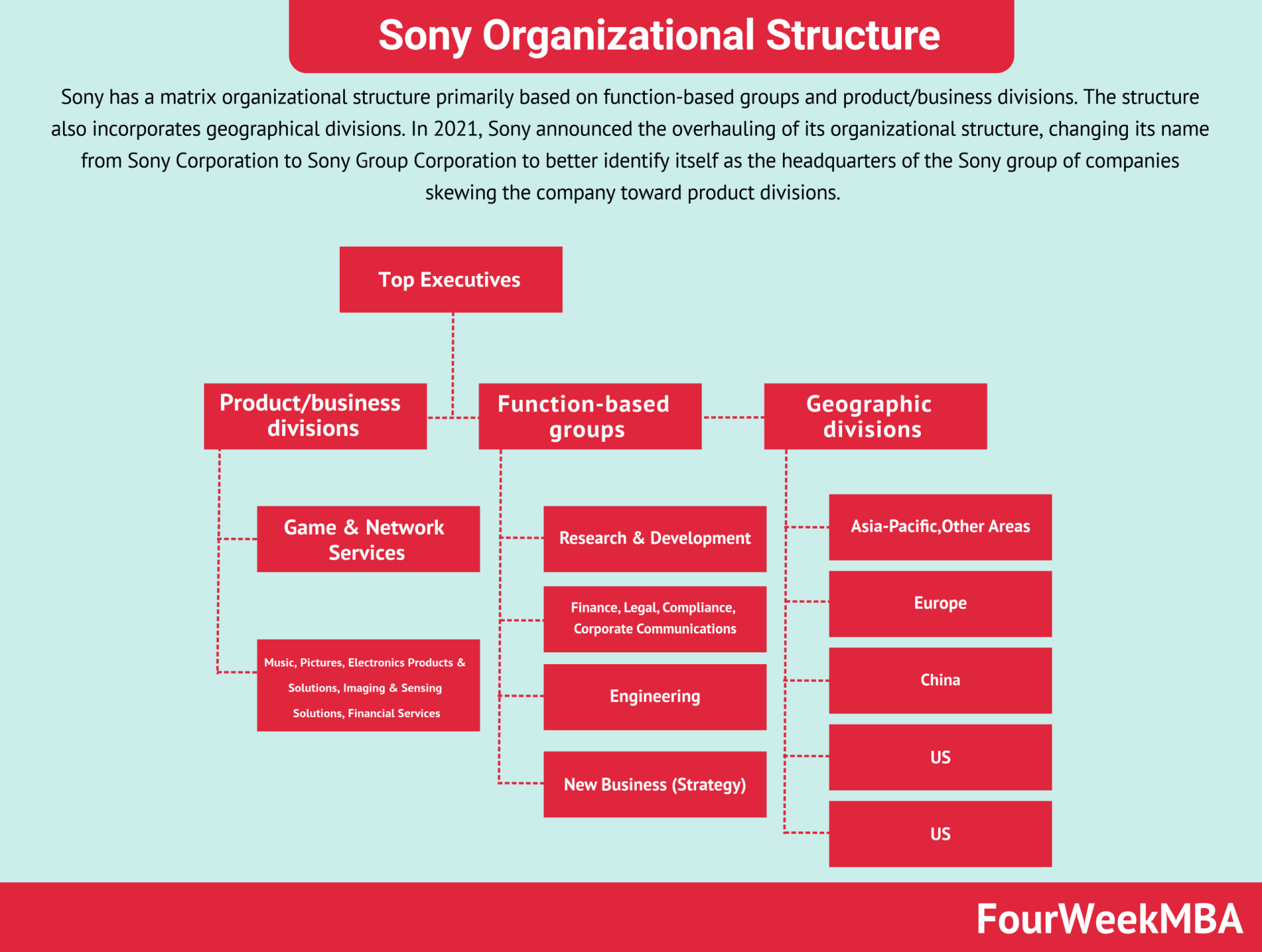
Starbucks Organizational Structure

Tesla Organizational Structure

Toyota Organizational Structure

Walmart Organizational Structure

Main Free Guides:
- Business Models
- Business Strategy
- Business Development
- Digital Business Models
- Distribution Channels
- Marketing Strategy
- Platform Business Models
- Revenue Models
- Tech Business Models


