Burger King offers a compelling value proposition to its customers, including: – Taste and Flavor: Providing flame-grilled burgers and a variety of flavorful me
Core Products/Services
Burger King’s core products and services include: – Burgers: Offering a range of flame-grilled burgers, including the Whopper. – Chicken: Serving chicken sandwi
Customer Segments
Burger King serves a diverse range of customer segments, including: – Fast-Food Enthusiasts: Attracting customers who enjoy fast-food offerings. – Families: App
Revenue Streams
Burger King generates revenue through various revenue streams: – Product Sales: Earnings from the sale of burgers, sandwiches, sides, and beverages. – Franchise
Distribution Strategy
Burger King employs a strategic distributionstrategy to reach its customers: – Franchise Model: Expanding its presence through franchising to local entrepreneu
Burger King runs a heavily franchised business model, where most restaurants are franchising operations, compared to the company-owned restaurants. For instance, in 2020, most of the revenue came from franchising operations.
Value Proposition:
Flame-Grilled Taste: Burger King’s signature flame-grilled cooking method sets it apart, offering a unique and savory taste that appeals to customers who enjoy the smoky flavor of grilled burgers.
Customization: Burger King’s “Have It Your Way” slogan emphasizes customization. Customers can often personalize their orders by choosing ingredients, toppings, and condiments to suit their preferences.
Affordability: Burger King positions itself as a fast-food restaurant that offers value for money. It often promotes value menus and deals to attract budget-conscious customers.
Customer Segments:
Fast Food Lovers: Burger King primarily targets consumers who enjoy fast-food dining experiences and are looking for quick, convenient, and satisfying meals.
Families: It also caters to families seeking affordable meal options that can accommodate both adult and child preferences.
Young Adults: Burger King’s marketing often appeals to young adults and millennials who are looking for customizable, on-the-go food options.
Distribution Strategy:
Franchising: As you mentioned, Burger King heavily relies on a franchising businessmodel. The majority of its restaurants are owned and operated by franchisees. This strategy allows Burger King to expand rapidly while reducing the burden of owning and operating individual locations.
Company-Owned Restaurants: While franchising is dominant, Burger King maintains some company-owned restaurants, often serving as flagship or high-profile locations.
Global Presence: Burger King’s distributionstrategy includes a global presence with restaurants in various countries worldwide. It adapts its menu to suit local tastes in different regions.
Marketing Strategy:
Iconic Menu Items: Burger King markets its iconic menu items, such as the Whopper, as core offerings. Advertising campaigns often focus on the unique taste and features of these items.
Advertising and Promotion: The brand engages in advertising and promotional efforts, including television commercials, digitalmarketing, and social media campaigns, to reach a broad audience.
Competitive Pricing: Burger King occasionally promotes competitive pricing strategies, offering discounts and deals to attract cost-conscious consumers.
Innovation: The brand invests in menu innovation by introducing new products and limited-time offerings. This keeps the menu fresh and entices customers to try new items.
Social Responsibility: Burger King may incorporate social responsibility initiatives into its marketingstrategy, addressing issues like sustainability, animal welfare, and community engagement.
Digital Presence: Like many fast-food chains, Burger King maintains a strong digital presence, offering mobile apps for convenient ordering, loyalty programs, and digital coupons.
Key Highlights
Franchised Business Model: Burger King heavily relies on franchising operations, with the majority of its revenue coming from franchisees.
Value Proposition:
Flame-Grilled Taste: Unique smoky flavor from the signature flame-grilled cooking method.
Customization: Emphasizes “Have It Your Way” for personalized orders.
Affordability: Offers value for money with value menus and deals.
Customer Segments:
Fast Food Lovers: Targets those seeking quick and convenient fast-food options.
Families: Offers affordable meal options for both adults and children.
Young Adults: Appeals to millennials with customizable on-the-go food.
Distribution Strategy:
Franchising: Majority of restaurants are owned and operated by franchisees.
Company-Owned Restaurants: Maintains company-owned locations for flagship and high-profile outlets.
Global Presence: Expands worldwide, adapting menus to suit local tastes.
Marketing Strategy:
Iconic Menu Items: Focuses on core offerings like the Whopper in advertising campaigns.
Advertising and Promotion: Engages in various marketing channels, including TV, digital, and social media.
Competitive Pricing: Offers discounts and deals to attract cost-conscious consumers.
Innovation: Introduces new products and limited-time offerings to keep the menu fresh.
Social Responsibility: May incorporate initiatives related to sustainability, animal welfare, and community engagement.
Digital Presence: Offers mobile apps, loyalty programs, and digital coupons for convenience in ordering.
Element
Description
Value Proposition
Burger King offers a compelling value proposition to its customers, including: – Taste and Flavor: Providing flame-grilled burgers and a variety of flavorful menu items. – Affordable Pricing: Offering value meals and promotions for budget-conscious customers. – Customization: Allowing customers to customize their orders with “Have It Your Way” options. – Quick Service: Ensuring fast and efficient service at drive-thrus and in-store. – Global Presence: Operating in multiple countries, making it accessible to a wide audience. – Innovation: Introducing new and unique menu items and limited-time promotions. – Sustainability: Commitment to sustainable practices and ingredient sourcing.
Core Products/Services
Burger King’s core products and services include: – Burgers: Offering a range of flame-grilled burgers, including the Whopper. – Chicken: Serving chicken sandwiches, nuggets, and tenders. – Breakfast: Providing breakfast items such as croissants, burritos, and coffee. – Sides: Offering a variety of sides like fries, onion rings, and salads. – Beverages: Featuring soft drinks, milkshakes, and coffee. – Desserts: Selling desserts like pies, sundaes, and soft-serve ice cream. – Drive-Thru: Providing drive-thru services for quick and convenient ordering. – Dine-In and Takeout: Offering dine-in and takeout options at restaurant locations.
Customer Segments
Burger King serves a diverse range of customer segments, including: – Fast-Food Enthusiasts: Attracting customers who enjoy fast-food offerings. – Families: Appealing to families looking for quick and affordable meal options. – Youth and Teens: Attracting young customers with budget-friendly meals and promotions. – Working Professionals: Providing convenient lunch and breakfast options for office-goers. – Late-Night Diners: Catering to customers seeking late-night snacks and meals. – Global Audience: Serving customers in various countries with localized menus. – Budget Shoppers: Offering value meals and discounts for cost-conscious consumers. – Drive-Thru Customers: Targeting customers looking for a quick meal on the go.
Revenue Streams
Burger King generates revenue through various revenue streams: – Product Sales: Earnings from the sale of burgers, sandwiches, sides, and beverages. – Franchise Fees: Revenue from franchisees who operate Burger King restaurants. – Licensing and Merchandise: Earnings from licensing its brand for merchandise and promotions. – Menu Innovation: Income from introducing new menu items and limited-time promotions. – Global Expansion: Revenue from opening new international locations. – Marketing and Advertising: Income from advertising partnerships and promotions. – Delivery Services: Earnings from partnerships with delivery platforms for home delivery. – Digital Channels: Revenue from online and mobile app orders.
Distribution Strategy
Burger King employs a strategic distribution strategy to reach its customers: – Franchise Model: Expanding its presence through franchising to local entrepreneurs. – Global Restaurant Network: Operating a vast network of restaurants worldwide. – Drive-Thru Service: Offering drive-thru lanes for quick and convenient ordering. – Dine-In and Takeout: Providing dine-in and takeout services at restaurant locations. – Delivery Partnerships: Partnering with food delivery platforms for home delivery. – Mobile App and Online Ordering: Allowing customers to place orders through the mobile app and website. – Marketing and Advertising: Utilizing marketing campaigns to promote new menu items and promotions. – Customer Feedback: Collecting feedback to improve service and offerings.
McDonald’s is a heavy-franchised businessmodel. In 2021, over 56% of the total revenues came from franchised restaurants. The company’s long-term goal is to transition toward 95% of franchised restaurants (in 2020, franchised restaurants were 93% of the total). The company generated over $23 billion in revenues in 2021, $9.78 billion from owned restaurants and $13 billion from franchised restaurants.
Burger King is an American multinational chain of fast-food restaurants that is headquartered in Miami, Florida. The first Burger King restaurant, then known as Insta-Burger King, was opened in Jacksonville, Florida, in 1953 by Keith Cramer and his stepfather Matthew Burns. Burger King Worldwide merged with the Canadian coffee chain Tim Hortons in 2014. This precipitated the formation of parent company Restaurant Brands International, which is part-owned by former Burger King owner 3G Capital.
McDonald’s has a divisional organizational structure where each division – based on geographical location – is assigned operational responsibilities and strategic objectives. The main geographical divisions are the US, internationally operated markets, and international developmental licensed markets. And on the other hand, the hierarchical leadership structure is organized around regional and functional divisions.
Franchising is a business model where the owner (franchisor) of a product, service, or method utilizes the distribution services of an affiliated dealer (franchisee). Usually, the franchisee pays a royalty to the franchisor to be using the brand, process, and product. And the franchisor instead supports the franchisee in starting up the activity and providing a set of services as part of the franchising agreement. Franchising models can be heavy-franchised, heavy-chained, or hybrid (franchained).
Coca-Cola follows a business strategy (implemented since 2006) where through its operating arm – the Bottling Investment Group – it invests initially in bottling partners operations. As they take off, Coca-Cola divests its equity stakes, and it establishes a franchising model, as long-term growth and distributionstrategy.
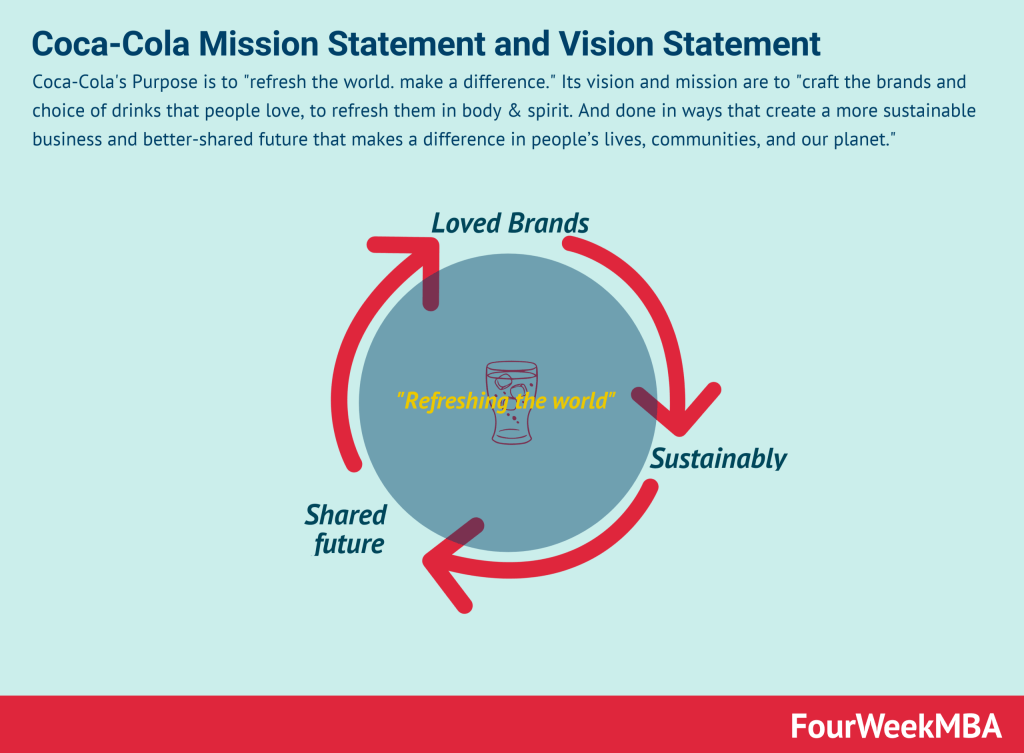
Coca-Cola’s Purpose is to “refresh the world. make a difference.” Its vision and mission are to “craft the brands and choice of drinks that people love, to refresh them in body & spirit. And done in ways that create a more sustainable business and better-shared future that makes a difference in people’s lives, communities, and our planet.”
Gennaro is the creator of FourWeekMBA, which reached about four million business people, comprising C-level executives, investors, analysts, product managers, and aspiring digital entrepreneurs in 2022 alone | He is also Director of Sales for a high-tech scaleup in the AI Industry | In 2012, Gennaro earned an International MBA with emphasis on Corporate Finance and Business Strategy.