Anthropic’s S-1 lists 88 risk factors in about 66,225 words of body text, by our count. The longest single one, at 4,066 words or 6.1%, is about the inputs behind compute: chips, electrical power and data-centre capacity.
Three of the 12 longest risk factors are about Anthropic’s own models: managing its AI-safety commitment, models acting in misaligned or autonomous ways, and liability for model harms. With the risk factor on misuse, those four total 7,616 words, 5.3 times the 1,440 words on competition, our arithmetic.
Business Pill · Grid Cost Allocation Explained
Short explainer · Anthropic’s S-1 in charts
A vertical news Short summarising this story. Figures come from Anthropic’s Form S-1; word counts and totals are our arithmetic.
A short explainer on who pays for new grid capacity. It teaches the general idea only and says nothing about Anthropic or its S-1.
The key insight: By our count, the S-1 spends more words on the chips, power and data-centre capacity behind compute than on any other single risk, while its own quarterly table shows compute falling from 251% to 48% of revenue.
Each phrase below is one risk factor, sized by how many words the S-1 gives it. Our short labels stand in for the filing’s full headings; the colour is the S-1’s own risk category.
Anthropic’s S-1 risk factors, each sized by the words the filing devotes to it (top 40 of 88). Word counts are our arithmetic on the Risk Factors text, headings excluded. Source: Anthropic PBC Form S-1, 26 October 2026.
The longest risk factor opens: “The compute necessary for training and deploying frontier models depends on a supply chain with multiple potential points of constraint or failure”. It names the supply of advanced chips, “the availability of sufficient electrical power” and data-centre capacity.
Word count measures space, not likelihood. This is a reading of where the filing spends its words, not of what Anthropic thinks is most likely.
Words devoted to each of the 12 longest risk factors and their share of all risk-factor words; red marks model safety, behaviour and harms. Our arithmetic on the S-1 Risk Factors text.
The compute-related risk factors together, covering securing compute, forecasting it, its critical inputs, reliance on cloud providers and building its own data centres, run to 8,868 words, or 13.4% of the section, our arithmetic.
Security breaches get 2,299 words, more than competition. Export controls and sanctions get 1,417 words, close to the 1,440 on competition.
Chart 3: Revenue Passed Compute Spend
Anthropic quarterly revenue vs compute and infrastructure expense, US$ millions, unaudited. Source: S-1 quarterly results.Animated chart: Anthropic quarterly revenue, Q1 2025 to Q2 2026, from the S-1 quarterly results (unaudited).
Quarterly revenue went from $376 million in the first quarter of 2025 to $11,555 million in the second quarter of 2026. Compute and infrastructure expense went from $944 million to $5,558 million over the same six quarters.
The first quarter of 2026 was the first in the table where revenue, at $4,731 million, was larger than compute expense, at $3,387 million. We reported that crossover when the S-1 was filed.
Chart 4: Compute Fell to 48% of Revenue
Compute and infrastructure expense as a percentage of revenue, by quarter, from the S-1’s own percentage table.
The S-1’s management discussion puts it directly: compute as a share of revenue “decreased from 251% to 48% over the same period”. It also reports “operating income of $1.0 billion for the three months ended June 30, 2026”.
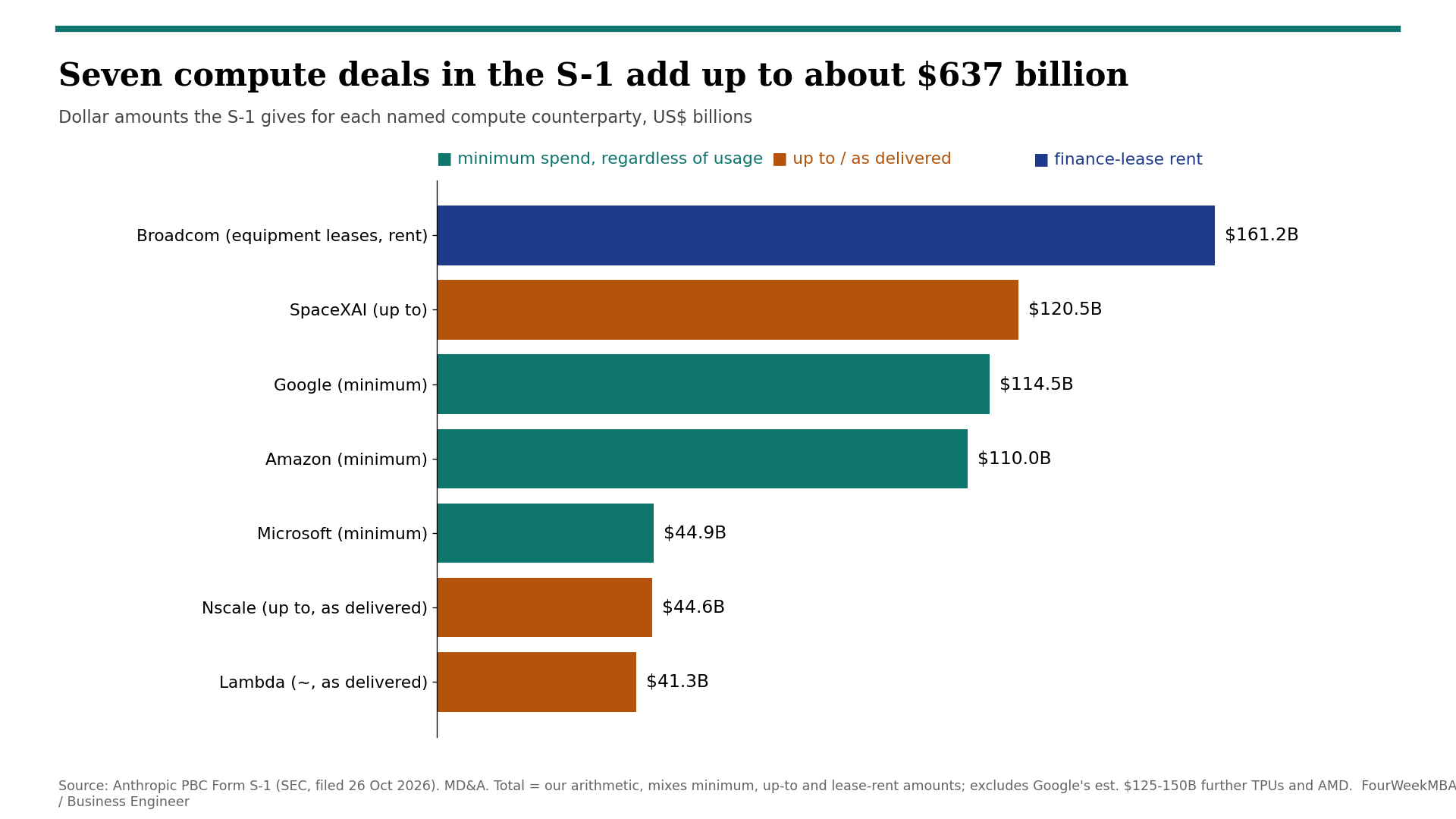
Chart 5: About $637 Billion of Named Compute Deals
Dollar amounts the S-1 gives for each named compute counterparty, US$ billions. The total of about $637 billion is our arithmetic and mixes minimum commitments, up-to amounts, as-delivered amounts and lease rent.
Seven counterparties have a dollar figure in the S-1. Rent on the Broadcom equipment leases is about $161.2 billion excluding interest. SpaceXAI is up to $120.5 billion, as we reported. Google is at least about $114.5 billion and Amazon at least $110.0 billion.
Microsoft is at least $44.9 billion, Nscale up to about $44.6 billion and Lambda about $41.3 billion. The Google, Amazon and Microsoft amounts apply “regardless of actual usage”. The S-1 separately estimates $125.0 billion to $150.0 billion of further Google TPU compute that is not in its commitments table; we left it out.
Chart 6: Top Five Customers, 36% to 21%
Share of quarterly revenue from Anthropic’s top five customers. The S-1 gives the share from outside the top five; 36% and 21% are our arithmetic.
The S-1 says about 79% of revenue in the third quarter of 2026 came from outside the top five customers, up from about 64% in the first quarter. That puts the top five at 21%, down from 36%, our arithmetic. The S-1 adds that revenue from each of the top five “reached a record high” in the third quarter.
The Business Lever: Where the Filing Spends Its Words
As we read the six charts together, the revenue and cost lines show compute becoming a smaller share of revenue, while the risk section gives its most words to securing the inputs behind that compute. For investors weighing the offering, both sit in the same document.
The Structural Read
As we read the risk section, the compute-related risk factors, at 8,868 words or 13.4% by our count, cover both getting enough compute and the cost of committing to too much.
As we read the safety-related risk factors, the S-1 gives more space to what its own models might do, 7,616 words by our count, than to competitors, 1,440 words.
As we read the counterparty amounts, about $637 billion by our arithmetic, they mix minimum commitments, up-to amounts and lease rent, so the total is a scale marker, not one obligation.
Anthropic Form S-1, Risk Factors
“The compute necessary for training and deploying frontier models depends on a supply chain with multiple potential points of constraint or failure”
Three Implications
FOR READING THE RISK SECTION The longest risk factor, 4,066 words by our count, names advanced chips, electrical power and data-centre capacity as constraints.
FOR READING THE MARGINS Compute and infrastructure expense fell from 251% of revenue in the first quarter of 2025 to 48% in the second quarter of 2026, per the S-1.
FOR READING CUSTOMER RISK The top five customers fell from 36% to 21% of quarterly revenue between the first and third quarters of 2026, by our arithmetic.
The framework states: “The structural bottleneck isn’t computing, it’s electrons.”
As we read it, Anthropic’s S-1 gives its longest risk factor to the same constraint, naming electrical power alongside chips and data-centre capacity. The framework is the owner’s argument and does not discuss Anthropic’s filing.
Word counts are our measure of emphasis; they say nothing about probability or severity. Our counts exclude headings and page markers and may differ slightly from other counts.
The S-1 leaves the price range blank, and the $637 billion total adds amounts of different kinds, so it is not a single committed figure. Quarterly figures are unaudited.
This Week In The AI Supercycle
Anthropic’s Reality Check, The Capital Squeeze, & The New World Order
This week’s issue: for two years the AI build-out was priced as a growthstory. This week it started being priced as a credit story.
Anthropic’s S-1 gives its longest risk factor, 4,066 words, to the chips, power and data-centre capacity behind compute, by our count. Its model-safety risk factors run to 5.3 times the words on competition, and compute expense fell from 251% to 48% of revenue.
A note on sourcing. All figures come from Anthropic’s Form S-1 as filed with the SEC on 26 October 2026. Risk-factor word counts, shares, the $637 billion total and the top-five shares are our arithmetic on the filing text. Quarterly figures are unaudited. This is not investment advice.
Gennaro Cuofano is a CRO and tech executive who has worked in AI since late 2015, starting with bringing NLP, natural-language generation, voice and chatbot products to the marketing industry. His background is in law and finance: he holds a Master's degree in Law and an International MBA with an emphasis on corporate finance (LUISS Business School and the University of San Diego, 2012), and worked as a financial analyst at a real-estate investment firm in San Diego and as an assistant controller. His work focuses on business model strategy, business engineering and, more broadly, structural analysis: how companies make money, read from their own filings. He created FourWeekMBA and leads research there and at The Business Engineer, his newsletter on AI and business strategy, with over 95,000 subscribers and more than 1,000 published analyses. His writing has also appeared on Entrepreneur (for example, How to Digitize a Family Business in Europe) and HackerNoon. Find him on LinkedIn and Substack. See how we source.