

Resource optimization is a critical strategic initiative for organizations across industries. It involves efficiently allocating and managing resources such as human capital, financial assets, technology, and time to achieve the organization’s objectives while minimizing waste and maximizing productivity. In today’s competitive business landscape, resource optimization is not just a cost-saving measure but a key driver of sustainable growth and success.
Understanding Resource Optimization
The Essence of Resource Optimization
Resource optimization is the process of strategically allocating and managing an organization’s resources to achieve its goals and objectives in the most efficient and effective way. It involves aligning resources with organizational priorities, ensuring that they are utilized to their fullest potential, and continuously improving resource allocation processes. Resource optimization encompasses various types of resources, including:
- Human Capital: Talent, skills, and workforce management.
- Financial Assets: Budgeting, cost control, and financial planning.
- Technology: Information systems, software, and infrastructure.
- Time: Project scheduling, task management, and time allocation.
Resource optimization is not a one-time effort but an ongoing practice that requires data-driven decision-making and adaptability to changing circumstances.
Characteristics of Resource Optimization
Several key characteristics distinguish resource optimization:
- Strategic Alignment: Resource allocation aligns with the organization’s strategic goals and priorities.
- Efficiency: Resources are used in a manner that minimizes waste and maximizes output.
- Data-Driven: Decisions are based on data, analytics, and performance metrics.
- Continuous Improvement: Resource allocation processes are regularly reviewed and improved.
- Flexibility: The ability to adapt to changing market conditions and business needs.
Advantages of Resource Optimization
Resource optimization offers several advantages for organizations:
1. Cost Reduction:
- Efficient resource allocation leads to cost savings and improved profitability.
2. Improved Productivity:
- Resources are used effectively, resulting in increased productivity and output.
3. Enhanced Quality:
- Better resource management can lead to higher-quality products and services.
4. Strategic Focus:
- Resources are directed toward strategic priorities, driving organizational success.
5. Competitive Advantage:
- Organizations that optimize resources are more agile and competitive.
Challenges of Resource Optimization
While resource optimization offers numerous benefits, it also comes with challenges:
1. Data Availability:
- Gathering accurate and timely data for decision-making can be a challenge.
2. Change Management:
- Implementing resource optimization may require a cultural shift within the organization.
3. Resistance to Change:
- Employees and stakeholders may resist changes in resource allocation processes.
4. Complexity:
- Optimizing resources in large organizations with diverse needs can be complex.
5. Balancing Act:
- Balancing short-term cost reductions with long-term strategic goals can be challenging.
Strategies for Resource Optimization
Effective resource optimization strategies include:
- Resource Allocation Models: Implement data-driven resource allocation models that consider factors like demand, performance, and strategic priorities.
- Technology Adoption: Utilize advanced technologies such as artificial intelligence and data analytics to optimize resource allocation and decision-making.
- Continuous Monitoring: Regularly monitor resource usage and adjust allocations based on real-time data and feedback.
- Cross-Functional Collaboration: Encourage collaboration between departments and teams to share resources and best practices.
- Employee Training: Invest in employee training and development to enhance skills and productivity.
Real-World Implications
Resource optimization has real-world implications across industries:
- Manufacturing: In manufacturing, optimizing production resources can lead to reduced waste, lower production costs, and improved product quality.
- Healthcare: In healthcare, optimizing staff scheduling, equipment utilization, and patient flow can enhance the quality of care and reduce operational costs.
- Finance: In the financial sector, optimizing financial assets and investment portfolios can lead to higher returns and reduced risk.
- Information Technology: In IT, optimizing software and hardware resources can improve system performance and reduce IT infrastructure costs.
- Retail: In retail, optimizing inventory management and supply chain operations can lead to lower carrying costs and improved customer satisfaction.
Navigating Resource Optimization
Effectively navigating resource optimization involves the following considerations:
- Strategic Alignment: Ensure that resource allocation aligns with the organization’s strategic goals and priorities.
- Data Collection and Analysis: Invest in data collection and analysis capabilities to make informed resource allocation decisions.
- Change Management: Address potential resistance to change by involving stakeholders and communicating the benefits of resource optimization.
- Technology Investment: Evaluate and adopt technology solutions that support resource optimization efforts.
- Continuous Improvement: Establish a culture of continuous improvement to refine resource allocation processes over time.
Conclusion
Resource optimization is a vital practice for organizations seeking to thrive in today’s competitive and dynamic business environment. By strategically allocating and managing resources such as human capital, financial assets, technology, and time, organizations can reduce costs, improve productivity, enhance quality, and gain a competitive advantage. Resource optimization is not a one-size-fits-all approach but a tailored strategy that requires data-driven decision-making, adaptability, and a commitment to continuous improvement. Embracing resource optimization as a core business practice can lead to sustainable growth, increased profitability, and long-term success in an ever-changing world.
Key Highlights:
- Definition: Resource optimization is the strategic allocation and management of an organization’s resources to achieve its goals efficiently and effectively, covering human capital, financial assets, technology, and time.
- Characteristics:
- Strategic Alignment
- Efficiency
- Data-Driven
- Continuous Improvement
- Flexibility
- Advantages:
- Cost Reduction
- Improved Productivity
- Enhanced Quality
- Strategic Focus
- Competitive Advantage
- Challenges:
- Data Availability
- Change Management
- Resistance to Change
- Complexity
- Balancing Act
- Strategies:
- Resource Allocation Models
- Technology Adoption
- Continuous Monitoring
- Cross-Functional Collaboration
- Employee Training
- Real-World Implications:
- Manufacturing
- Healthcare
- Finance
- Information Technology
- Retail
- Navigating Resource Optimization:
- Strategic Alignment
- Data Collection and Analysis
- Change Management
- Technology Investment
- Continuous Improvement
- Conclusion: Resource optimization is crucial for organizations to thrive in a competitive environment, leading to cost reduction, improved productivity, enhanced quality, and competitive advantage. It requires data-driven decision-making, adaptability, and a commitment to continuous improvement for sustainable growth and success.
| Related Framework | Description | When to Apply |
|---|---|---|
| Resource Allocation Models | – Models and methodologies for distributing resources, such as capital, manpower, and equipment, across different projects, activities, or departments within an organization. – Resource Allocation Models aim to optimize resource utilization, prioritize investments, and maximize the return on investment (ROI) for the organization. | Strategic planning processes, project portfolio management, budgeting and forecasting, resource planning and scheduling |
| Capacity Planning | – The process of determining the optimal capacity requirements and capabilities needed to meet current and future demand for products or services. – Capacity Planning involves analyzing production capacity, workforce capacity, and infrastructure to ensure efficient resource utilization and avoid bottlenecks or underutilization. | Production scheduling, workforce planning, facility expansion projects, new product introductions |
| Cost-Benefit Analysis (CBA) | – A systematic approach to evaluating the potential costs and benefits of a proposed project, investment, or decision. – Cost-Benefit Analysis compares the expected costs against the expected benefits to assess the feasibility, profitability, and desirability of undertaking the initiative. | Project evaluations, investment decisions, new product development, process improvement initiatives |
| Lean Manufacturing Principles | – Principles derived from the Lean methodology aimed at eliminating waste, optimizing processes, and maximizing value creation in manufacturing operations. – Lean Manufacturing Principles focus on streamlining operations, reducing cycle times, and enhancing productivity by eliminating non-value-added activities and improving workflow efficiency. | Production line optimization, inventory management, waste reduction initiatives, continuous improvement projects |
| Workforce Optimization Strategies | – Strategies and initiatives for aligning workforce capacity, skills, and deployment with organizational goals and objectives. – Workforce Optimization Strategies aim to match labor supply with demand, optimize labor costs, and enhance workforce productivity and engagement through effective workforce planning and management practices. | Workforce restructuring, talent management initiatives, skills development programs, contingent workforce management |
| Just-In-Time (JIT) Inventory Management | – An inventory management approach that aims to minimize inventory levels and associated costs by synchronizing production with customer demand. – Just-In-Time Inventory Management reduces inventory holding costs, improves cash flow, and enhances operational efficiency by ensuring that materials are procured and products are produced just in time for use or sale. | Supply chain optimization, inventory control systems, manufacturing process improvement, demand-driven production |
| Resource Leveling Techniques | – Techniques and strategies for smoothing out resource utilization and workload fluctuations to optimize resource allocation and project scheduling. – Resource Leveling Techniques aim to balance resource demand and supply, minimize resource conflicts, and maximize resource utilization across multiple projects or tasks. | Project scheduling, multi-project management, critical path analysis, resource-constrained project planning |
| Total Quality Management (TQM) | – A management approach that emphasizes continuous improvement, customer focus, and employee involvement to enhance product quality and organizational performance. – Total Quality Management integrates quality principles and practices into all aspects of operations, aiming to achieve customer satisfaction and operational excellence. | Quality improvement initiatives, process reengineering, customer service enhancements, employee empowerment programs |
| Technology Optimization Strategies | – Strategies and initiatives for leveraging technology to optimize business processes, improve efficiency, and achieve strategic objectives. – Technology Optimization Strategies involve selecting, implementing, and optimizing technology solutions to streamline operations, automate tasks, and enable innovation and digital transformation within the organization. | IT infrastructure upgrades, digital transformation projects, software integration initiatives, cybersecurity enhancements |
| Value Stream Mapping (VSM) | – A visual mapping technique used to analyze, identify, and optimize the flow of materials, information, and activities required to deliver value to customers. – Value Stream Mapping identifies waste, bottlenecks, and opportunities for improvement in processes to streamline operations, reduce lead times, and enhance overall value delivery. | Process improvement projects, lean manufacturing initiatives, supply chain optimization, service delivery enhancements |
Read Next: Organizational Structure.
Types of Organizational Structures

Siloed Organizational Structures
Functional

Divisional

Open Organizational Structures
Matrix

Flat

Connected Business Frameworks


Nadler-Tushman Congruence Model

McKinsey’s Seven Degrees of Freedom


Organizational Structure Case Studies
OpenAI Organizational Structure

Airbnb Organizational Structure

Amazon Organizational Structure

Apple Organizational Structure

Coca-Cola Organizational Structure

Costco Organizational Structure


Facebook Organizational Structure

Goldman Sachs’ Organizational Structure

Google Organizational Structure


McDonald’s Organizational Structure

McKinsey Organizational Structure

Microsoft Organizational Structure

Nestlé Organizational Structure


Patagonia Organizational Structure

Samsung Organizational Structure

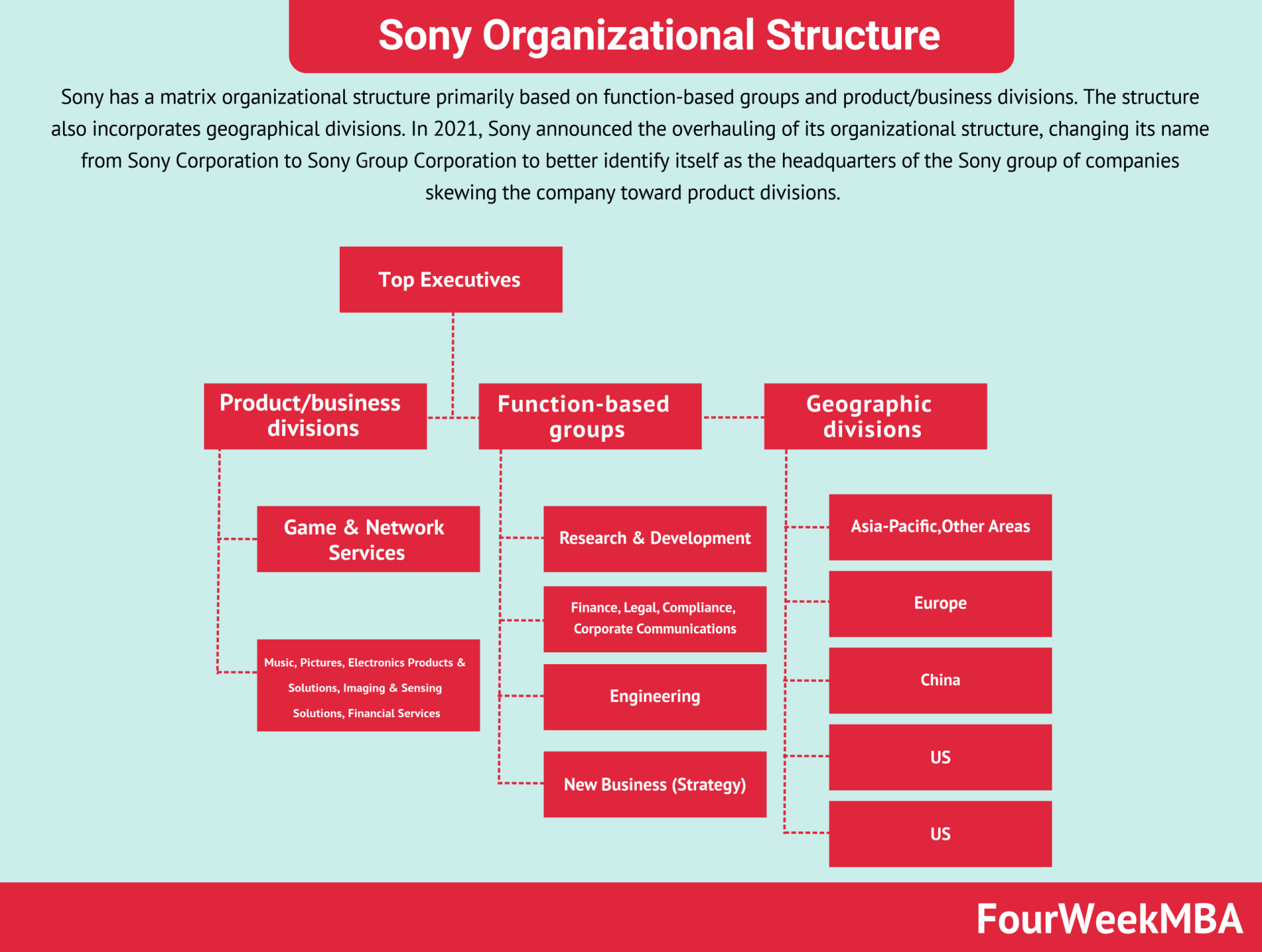
Starbucks Organizational Structure

Tesla Organizational Structure

Toyota Organizational Structure

Walmart Organizational Structure

Main Free Guides:


