

In finance, the capital asset pricing model (or CAPM) is a model or framework that helps theoretically assess the rate of return required for an asset to build a diversified portfolio able to give satisfactory returns.
| Aspect | Explanation |
|---|---|
| Concept Overview | The Capital Asset Pricing Model (CAPM) is a financial theory used to determine the expected return on an investment, particularly a stock or portfolio of stocks. It provides a framework for assessing the relationship between an asset’s risk and its expected return. CAPM is foundational in modern portfolio theory and helps investors make informed decisions about asset allocation and risk management. At its core, CAPM quantifies the trade-off between expected return and risk in a rational and systematic manner. |
| Key Principles | CAPM is guided by several key principles: 1. Risk and Return: Recognizing that investors expect a higher return for taking on higher levels of risk. 2. Risk-Free Rate: Incorporating the concept of a risk-free rate, typically represented by government bonds, as a baseline return for risk-free investment. 3. Systematic Risk: Emphasizing that the risk associated with an asset is the portion that cannot be eliminated through diversification. 4. Beta Coefficient: Introducing the concept of beta, a measure of an asset’s sensitivity to market movements. 5. Expected Return Formula: Utilizing the CAPM formula to calculate an asset’s expected return. |
| Components | CAPM comprises several key components: 1. Risk-Free Rate (Rf): The theoretical return on a risk-free investment, typically represented by government bonds. 2. Market Risk Premium (Rm – Rf): The additional return expected from investing in the overall market as opposed to a risk-free asset. 3. Beta (β): A measure of an asset’s systematic risk or sensitivity to market movements. 4. Expected Return (Re): The estimated return an investor should require for holding a specific asset, calculated using the CAPM formula. |
| CAPM Formula | The CAPM formula is a fundamental equation for calculating an asset’s expected return: Re = Rf + β(Rm – Rf) In this formula, Re represents the expected return, Rf is the risk-free rate, β is the beta coefficient, and Rm is the expected return of the market. |
| Applications | CAPM has practical applications in finance and investment: 1. Portfolio Construction: Investors use CAPM to construct diversified portfolios that balance risk and return. 2. Asset Valuation: Analysts apply CAPM to estimate the intrinsic value of assets, such as stocks and bonds. 3. Cost of Capital: Businesses use CAPM to calculate the cost of equity when making investment and financing decisions. 4. Risk Assessment: It helps assess the systematic risk associated with specific assets and evaluate their suitability for an investment portfolio. |
| Benefits and Impact | CAPM offers several benefits and impacts: 1. Quantifiable Risk-Return Trade-Off: Provides a systematic and quantifiable framework for evaluating the trade-off between risk and expected return. 2. Informed Investment Decisions: Assists investors and financial professionals in making informed investment choices based on risk and return expectations. 3. Portfolio Diversification: Supports the construction of diversified portfolios that balance risk and optimize return. 4. Cost of Capital: Helps businesses determine the cost of equity capital for investment projects. |
| Challenges and Critiques | Challenges in CAPM include the simplifying assumptions it relies on, such as the efficient market hypothesis and constant beta, which may not hold true in the real world. Critics argue that CAPM has limitations in explaining market anomalies and inaccuracy in estimating returns. Despite these critiques, CAPM remains a valuable tool for understanding risk and return relationships. |
CAPM assumptions
The CAPM or Capital Asset Pricing Model, although unrealistic, it is still the most used in financial analysis. The reason I say unrealistic is that the CAPM even assumes that financial markets are perfect and investors rational.
Besides the debate about CAPM’s ability to predict reality, I am going to show you in detail how it works. In this section, I will use a sort of reverse engineering approach.
Almost like a Quentin Tarantino’s movie that starts from the end and slowly unravels until the beginning of the story, I will start from the CAPM formula and reverse engineer it backward:

Don’t worry if it all looks nonsense right now. Just keep in mind that since returns are situated in the future, the purpose of this model is to compute the expected return of a security. Also, to do so, we will have to assess several factors. See below the meaning if the formula:

Now we can break down the formula. The expected return of an asset is given by the risk-free rate + the Beta of the asset in which we invested multiplied by what is called the market risk premium (provided by the expected return of the market portfolio minus the risk-free rate).
Fine, what now? To compute the expected return of an asset we have to assess three variables:
- Risk-free rate
- Beta
- The expected return of the market
Let me explain these variables further.
What is the risk-free rate?
In finance lingo, the risk-free rate is the % amount you will receive to invest in an asset that carries no risk. This means that you expected returns would be the same as your actual returns.
Unless you are in Wonderland, there is no such thing as an asset that carries no risk at all. In fact, after the financial crisis of 2008, we understood how interconnected is the whole world economy and how a butterfly flap in Mexico can cause a tornado in China.
This effect called butterfly effect, and it is used in chaos theory to explain how a tiny change in the initial state of a system can then have unpredictable consequences to its “final state.”
This happens, due to the complexity of the system. On the other hand, the risk-free rate will help us in determining the additional return we have to expect to decide whether that investment is worth undertaking.
In fact, assuming investors are rational, they will ask for an additional return for each level of additional risk. In other words, the risk-free rate works like a baseline or starting point from which we build our model. Practically speaking what a risk-free rate is?
For instance, the most known risk-free asset is the U.S. Treasury. In short, you buy a piece of the U.S. debt, and in exchange, they give you interests, plus the capital invested.
What is the time value of money?
What is the difference between a dollar today and a dollar tomorrow? You may argue that a dollar is a dollar and either you have it today or tomorrow is not going to make any difference.
Instead, the first principle that we learn in finance is that “A dollar today tomorrow” and this has nothing to do with inflation. In fact, assuming no inflation at all this principle still applies. Why?
Just because when you have the money available, it can be invested or it can earn interests. In finance, this concept is called the time value of money.
In fact, until you are not receiving the money, you are not earning interests, and in turn, you are losing many opportunities. You may wonder how do you determine whether an amount of money today is better than in the future.
To solve the mystery, we will have to explore two new concepts: present and future value.
What is the present value?
The present value tells you how much is worth today a sum of money that you will receive in the future. To compute the present value, we will have to take the amount of money we will receive in the future and divide it by (1 + r)^t.
We will call r the discount rate and t the number of years corresponding to when the money will be received.
For instance, let’ assume that you want to save money for your kids. In short, you want to create a fund so that you will be able to pay for their education.
Your target is to save $100k in 10 years. Assuming that the fund offers a 5% simple annual interest, how much do you have to invest today to have $100k in the future? Easy:
PV = Money in the future / (1 + discount rate)^Number of years in the future= 100,000 / (1+5%)^10 = $61,391
This means that if we want to receive $100k in ten years, we will have to invest $61,391 today!
What is the future value?
Imagine now the opposite scenario. You have $100k today, how much will it be worth in the future? To compute the present value we took the future amount and divided it by (1+r)^t.
To compute the future value, we will have to take the present amount and multiply it by (1+r)^t. Thus, assuming you want to know how much will $100k worth in 10 years, how do you do that? Assuming a risk-free rate of 5% simple annual interest:
FV = Money you have today * (1 + discount rate)^ number of years in the future =
100,000 * (1+5%)^10 = 162,889
For the principle that a dollar today is worth more than a dollar tomorrow, in ten years, at 5% simple annual interest, your $100K will be worth $162,889!
Now we covered the time value of money and thus how present and future value work, we can move forward and find out what Beta is.
What is the Beta in CAPM?
Regression analysis determines how an independent variable influences a dependent variable. Statistically speaking this means that we will collect a bunch of data to see the existing relationship between our stock and the market portfolio.
In fact, the objective here is to determine to what extent the stock we are analyzing is more or less risky compared to the market portfolio.
Thus, once collected the data they will appear on a graph that has two axes (x, y) and in that set of data, we will fit a line.
The Beta gives the slope of that line. In short, the higher the Beta, the higher will be the slope of the line and vice versa. In statistics, this kind of regression is also called linear regression.
Beta (CAPM) formula
The formula to compute our Beta is given by:

The covariance is a statistical measure that allows us to understand if two variables are positively or negatively correlated. For instance, a positive covariance means that two variables move in the same direction, and vice versa.
The variance instead is a statistical measure that shows how values move away from the mean. Thus, it shows how values are spread around the mean. In fact, when there are larger moves around the mean, this also makes the stock riskier.
*Together with the variance another significant measure of risk is the standard deviation (σ), which is the square root of the variance. When for instance, you see two stocks, A and B, where A has a σ of 20%, while B has a σ of 5%, A will be riskier than B. Furthermore, if you expect the same return between A and B, let’s say 10%, you will be better off to pick B. Why so? For the same level of return, you have a lower level of risk.
Going back to the Beta. Once we divide the covariance of the two variables (stock and market portfolio) and the variance of the market portfolio we will determine for each movement up or down of the market portfolio, what is the movement of the security we are analyzing.
That’s it!
Is CAPM reliable?
The CAPM assesses the cost of capital. Within the CAPM there is a variable called Beta.
Beta, in theory, measures the volatility of a stock, compared to a portfolio by using a standard measure called variance. There are two major drawbacks here.
First, to compute the Beta, we take the historic data of stocks and project it forward, as if, the past can predict the future.
In addition, measures like Beta, start from a distribution, which is called Gaussian, which assumes that we live in a linear world. Thus, generating a huge bias within this metric, and making it worthless, in some instances.
Third, the Beta is considered fixed for a certain period of time, however, the way assets “behave” on the market, and how they are correlated to each other, might change, quickly, and from time to time, according to the context of the market.
In other words, those who use CAPM, need to be aware of the major drawbacks this method brings with it. And CAPM is also used within WACC:

The problem is, though, that many financial experts, still use the WACC to create financial models, that evaluate companies.
Those financial models, eventually, have no real value, because the underlying method is very very biased.
Thus, it might be much more solid, and rigorous to use simpler metrics, like ratios, to evaluate companies, and the cost of capital, rather than relying on WACC, CAPM, and Beta.
What to read next?
- What is a financial option?
- What is risk in finance?
- What is a financial ratio?
- 13 financial ratios formulas
Example
- Risk-free rate (Rf): 3%
- Expected market return (Rm): 7%
- Beta (β) of the asset: 1.2
The CAPM formula is as follows:
[Expected Return (Re) = Rf + β(Rm – Rf)]
Substitute the values into the formula:
[Re = 0.03 + 1.2(0.07 – 0.03)]
Now, calculate the expected return:
[Re = 0.03 + 1.2(0.04)]
[Re = 0.03 + 0.048]
[Re = 0.078]
In this hypothetical calculation, the expected return (Re) for the asset is approximately 7.8%.
This means that, according to the CAPM, investors would require a return of 7.8% to invest in this asset, given the risk-free rate of 3%, the expected market return of 7%, and the asset’s beta of 1.2.
Key Highlights
- CAPM Overview:
- CAPM is a financial model used to assess the expected rate of return required for an asset within a diversified portfolio.
- It helps in determining the appropriate compensation for the risk associated with an asset.
- CAPM Assumptions:
- Reverse Engineering the CAPM Formula:
- The CAPM formula calculates the expected return of an asset.
- Expected Return = Risk-Free Rate + (Beta × Market Risk Premium)
- To use the formula, factors like risk-free rate, Beta, and market risk premium need to be determined.
- Risk-Free Rate:
- The risk-free rate is the rate of return an investor expects from an asset with no risk.
- It serves as a baseline for assessing the additional return required for undertaking risky investments.
- Time Value of Money:
- The principle that a dollar today is worth more than a dollar in the future due to investment opportunities.
- Present Value (PV) and Future Value (FV) calculations help assess the worth of money over time.
- Beta in CAPM:
- Beta measures the volatility of an asset compared to the market portfolio.
- It’s derived through regression analysis, representing the slope of a line that demonstrates the asset’s risk relative to the market.
- Calculating Beta:
- Beta = Covariance (Asset, Market) / Variance (Market)
- Covariance measures how asset and market movements are correlated, while variance shows the spread of values around the mean.
- Reliability of CAPM:
- CAPM has limitations due to its assumptions and reliance on historical data.
- It assumes that past data can predict future outcomes and relies on Gaussian distribution, which might not hold true in all cases.
- Beta is considered fixed, but market dynamics can change, affecting asset correlations.
- Use of CAPM in Financial Models:
- CAPM is often used within the Weighted Average Cost of Capital (WACC) formula to evaluate companies’ cost of capital.
- Some financial experts question the reliability of models relying on CAPM, suggesting simpler metrics like ratios might offer more accurate evaluations.
| Related Frameworks, Models, or Concepts | Description | When to Apply |
|---|---|---|
| Capital Asset Pricing Model (CAPM) | The Capital Asset Pricing Model (CAPM) is a financial model used to determine the expected return on an investment based on its systematic risk, as measured by beta, and the risk-free rate of return and market risk premium. CAPM provides a framework for calculating the required rate of return for an investment, taking into account its risk and return characteristics relative to the overall market. | Apply the Capital Asset Pricing Model (CAPM) to estimate the cost of equity capital for a company or investment opportunity. Use it to determine the expected return on equity investments based on their systematic risk, as measured by beta, and the risk-free rate of return and market risk premium, enabling better decision-making in investment appraisal, portfolio management, and capital budgeting. |
| Systematic Risk | Systematic Risk refers to the risk inherent in the overall market or economy that cannot be diversified away through portfolio diversification. It represents the fluctuations in asset prices caused by macroeconomic factors such as interest rates, inflation, and market sentiment. Systematic risk affects the entire market and is measured by beta in the CAPM, reflecting the sensitivity of an asset’s returns to changes in the market. | Apply the concept of Systematic Risk to assess the exposure of an investment to market fluctuations and economic conditions. Use it to understand the risk-return trade-off for different assets, analyze portfolio diversification benefits, and determine the appropriate risk premium and required rate of return for investments based on their systematic risk profile. |
| Beta Coefficient | The Beta Coefficient is a measure of systematic risk that indicates the sensitivity of an asset’s returns to changes in the overall market. Beta measures the extent to which an asset’s returns move in relation to the returns of the market index, such as the S&P 500. A beta of 1 indicates that the asset moves in line with the market, while a beta greater than 1 implies higher volatility, and a beta less than 1 suggests lower volatility than the market. | Apply the Beta Coefficient to assess the relative riskiness of an investment compared to the overall market. Use it as a key input in the Capital Asset Pricing Model (CAPM) to estimate the expected return on equity investments, adjust for systematic risk, and determine the appropriate risk premium and required rate of return for investment appraisal and portfolio management decisions. |
| Risk-Free Rate of Return | The Risk-Free Rate of Return is the expected return on an investment with zero risk of default, typically represented by the yield on government securities, such as treasury bills or bonds. It serves as a benchmark for determining the risk premium and required rate of return for other investments, including equity and debt securities. | Apply the Risk-Free Rate of Return as a key input in financial models and valuation techniques, such as the Capital Asset Pricing Model (CAPM), to estimate the cost of equity and discount rates for investment appraisal and valuation purposes. Use it as a reference point for assessing the risk and return characteristics of different investment opportunities and determining the appropriate compensation for risk-taking in financial decision-making. |
| Market Risk Premium | The Market Risk Premium is the excess return demanded by investors for bearing the systematic risk of investing in the overall market, over and above the risk-free rate of return. It reflects the compensation investors require for accepting market risk and serves as a key component in calculating the required rate of return for equity investments. | Apply the Market Risk Premium as a component of financial models, such as the Capital Asset Pricing Model (CAPM), to estimate the cost of equity and determine the appropriate risk premium for equity investments. Use it to assess the relative attractiveness of investing in stocks versus risk-free assets, adjust discount rates for investment appraisal and valuation purposes, and make informed decisions about portfolio allocation and asset pricing. |
| Expected Return | Expected Return is the anticipated yield or profit that an investor anticipates receiving from an investment over a specific period. It is calculated as the weighted average of the possible returns based on their probabilities of occurrence. Expected return represents the average outcome or value that an investor can expect to receive from holding an investment, taking into account both the potential gains and losses. | Apply the concept of Expected Return to evaluate the potential profitability and risk of an investment opportunity. Use it to estimate the average return that investors can expect to earn based on the probability distribution of possible outcomes, assess the attractiveness of investment alternatives, and make informed decisions about asset allocation, portfolio management, and risk management strategies. |
| Efficient Market Hypothesis (EMH) | The Efficient Market Hypothesis (EMH) is a financial theory that asserts that asset prices reflect all available information and are therefore accurately priced. According to EMH, it is impossible to consistently outperform the market by exploiting information or trading strategies, as asset prices adjust rapidly to new information, making it difficult to achieve above-average returns on a consistent basis. | Apply the Efficient Market Hypothesis (EMH) to understand the implications for asset pricing and investment decision-making. Use it to assess the efficiency of financial markets, analyze the impact of information dissemination and market participants’ behavior on asset prices, and develop investment strategies that align with market efficiency assumptions, such as passive indexing or asset allocation based on risk-return considerations. |
| Arbitrage Pricing Theory (APT) | Arbitrage Pricing Theory (APT) is an alternative asset pricing model that extends the Capital Asset Pricing Model (CAPM) by considering multiple risk factors that affect asset returns. APT suggests that the expected return on an asset is determined by its sensitivity to various macroeconomic factors or systematic risks, such as interest rates, inflation, and industry performance. Unlike CAPM, which relies on a single market risk factor (beta), APT incorporates multiple factors to explain asset pricing. | Apply Arbitrage Pricing Theory (APT) to analyze the factors influencing asset returns and pricing dynamics. Use it to assess the impact of macroeconomic variables and systematic risks on asset valuations, estimate the expected return on investments based on their exposure to different risk factors, and develop asset pricing models that capture the complexity of real-world market conditions and investor preferences. |
| Sharpe Ratio | The Sharpe Ratio is a measure of risk-adjusted return that calculates the excess return earned by an investment per unit of risk taken, typically measured as the standard deviation of returns. The Sharpe Ratio helps investors evaluate the efficiency of an investment portfolio or strategy by comparing the return earned above the risk-free rate to the volatility or risk of the investment. Higher Sharpe ratios indicate better risk-adjusted performance. | Apply the Sharpe Ratio to assess the risk-adjusted return of an investment or portfolio. Use it to compare the performance of different investments or strategies based on their risk-adjusted returns, evaluate the trade-off between risk and return, and identify opportunities for portfolio optimization and risk management to achieve better risk-adjusted outcomes. |
| Jensen’s Alpha | Jensen’s Alpha, also known as the Jensen Index or Jensen’s Measure, is a risk-adjusted performance metric that measures the excess return earned by an investment portfolio or asset manager above the expected return predicted by the Capital Asset Pricing Model (CAPM). Jensen’s Alpha evaluates the manager’s ability to generate positive risk-adjusted returns through active management or security selection, taking into account the systematic risk of the portfolio. Positive alpha indicates outperformance relative to the CAPM, while negative alpha suggests underperformance. | Apply Jensen’s Alpha to evaluate the performance of an investment manager or portfolio relative to the Capital Asset Pricing Model (CAPM). Use it to assess the manager’s skill in generating excess returns above the expected market return, adjust for risk factors and market conditions, and identify sources of alpha or value-added through active management strategies or security selection decisions. |
Connected Business Concepts
WACC

Financial Ratio

Financial Option

Double-Entry

Balance Sheet

Income Statement
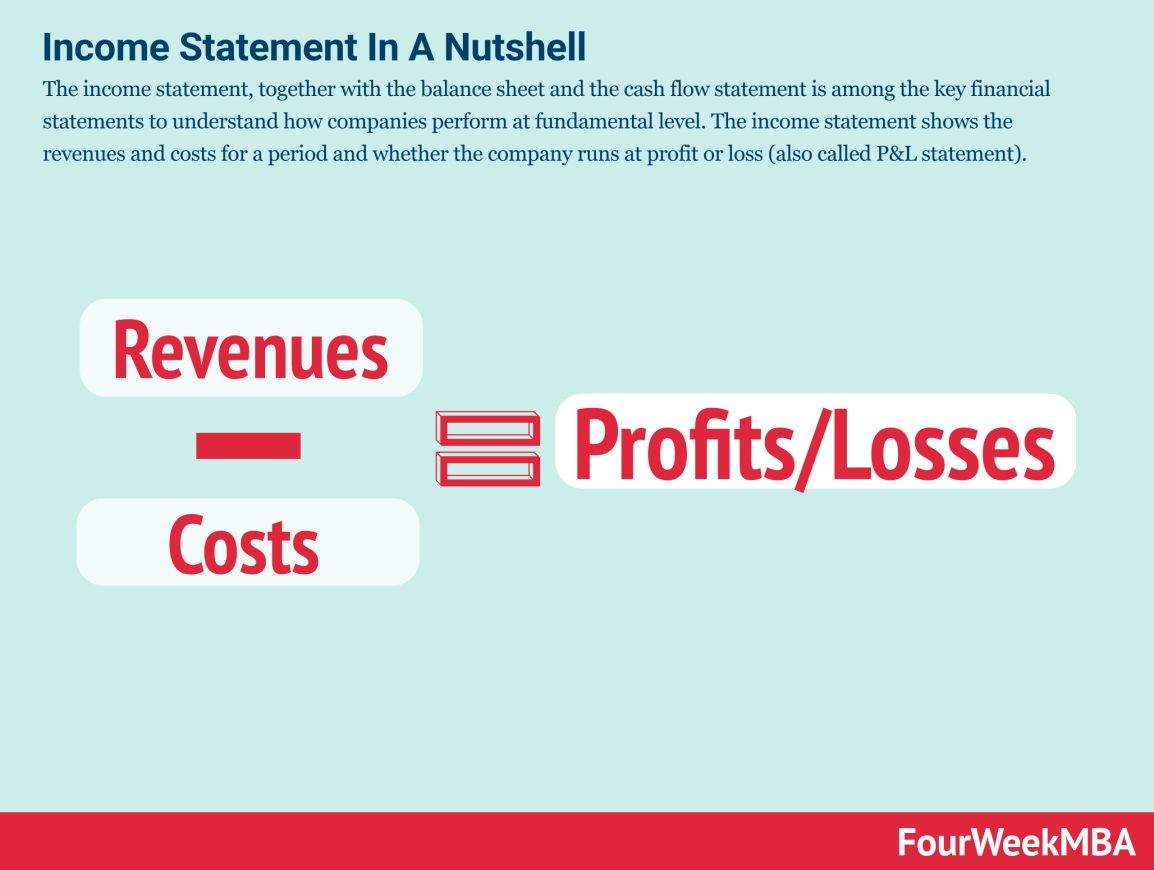
Cash Flow Statement

Capital Structure

Capital Expenditure

Financial Statements

Connected Video Lectures
Read next:
How To Read A Balance Sheet Like An Expert
Other business resources:
- Financial Ratio Guide
- Financial Options Guide
- Types of Business Models You Need to Know
- Business Strategy Examples
- Blitzscaling Business Model Innovation Canvas In A Nutshell
- What Is Market Segmentation? the Ultimate Guide to Market Segmentation
- Marketing Strategy: Definition, Types, And Examples
- What is Growth Hacking?
Other business resources:
- What Is Business Model Innovation
- What Is a Business Model
- What Is A Heuristic
- What Is Bounded Rationality
- What Is Business Development
- What Is Business Strategy
- What is Blitzscaling
- What Is a Value Proposition
- What Is a Lean Startup Canvas
- What Is Market Segmentation
- What Is a Marketing Strategy
- What is Growth Hacking


