Lula offers a compelling value proposition for its users, including: – Convenience: Providing an on-demand platform for car rentals. – Affordability: Offering c
Core Products/Services
Lula's core products and services encompass: – Car Rental Platform: Operating an online platform connecting car owners and renters. – Vehicle Listings: Allowing
Customer Segments
Lula serves a diverse range of customer segments, including: – Car Owners: Attracting individuals with idle vehicles looking to earn income. – Local Renters: Ta
Revenue Streams
Lula generates revenue through various revenue streams: – Service Fees: Earnings from service fees charged to car owners for each rental. – Insurance Premiums:
Distribution Strategy
Lula employs a strategic distributionstrategy to reach users: – Mobile App: Offering a mobile app for users to browse and book rentals. – Online Platform: Prov
The idea for Lula came after Gupta’s family-owned convenience store in New Jersey closed because of the pandemic. Gupta and Falzani tried unsuccessfully to get the store featured on delivery apps for a few weeks, but could not make it work.
The pair then realized there was a need in the market for an instant, scalable delivery service that did not require the micro-fulfillment centers that many such apps utilize.
In the following sections, we will delve into the business model of this exciting new startup which is currently run by a small team of just eight full-time and seven part-time employees.
Element
Description
Value Proposition
Lula offers a compelling value proposition for its users, including: – Convenience: Providing an on-demand platform for car rentals. – Affordability: Offering cost-effective rental options. – Variety: Providing a diverse fleet of vehicles to choose from. – Insurance Coverage: Including insurance for renters and car owners. – Ease of Use: Offering a user-friendly mobile app for booking. – Flexible Rental Terms: Allowing users to rent by the hour or day. – Community Aspect: Fostering a community of renters and car owners. – Eco-Friendly Options: Providing electric and fuel-efficient vehicles.
Core Products/Services
Lula’s core products and services encompass: – Car Rental Platform: Operating an online platform connecting car owners and renters. – Vehicle Listings: Allowing car owners to list their vehicles for rent. – Rental Bookings: Facilitating bookings, reservations, and payments. – Insurance Coverage: Providing insurance options for renters and car owners. – Mobile App: Offering a mobile app for users to browse and book rentals. – Community Features: Incorporating reviews, ratings, and feedback. – Fleet Management: Assisting car owners with managing their vehicles on the platform. – Customer Support: Delivering assistance and support to users. – Safety Measures: Implementing safety protocols and vehicle inspections.
Customer Segments
Lula serves a diverse range of customer segments, including: – Car Owners: Attracting individuals with idle vehicles looking to earn income. – Local Renters: Targeting residents in need of short-term vehicle rentals. – Travelers: Serving tourists and business travelers requiring transportation. – Students: Engaging with students seeking affordable rental options. – Eco-Conscious Consumers: Appealing to individuals interested in eco-friendly vehicles. – Event-Related Rentals: Providing cars for events and special occasions. – Businesses: Offering rental solutions for corporate and employee needs. – Insurance Seekers: Catering to users in need of rental insurance. – Global Audience: Expanding services to international markets.
Revenue Streams
Lula generates revenue through various revenue streams: – Service Fees: Earnings from service fees charged to car owners for each rental. – Insurance Premiums: Income from insurance premiums paid by renters. – Add-On Services: Revenue from additional services like delivery and cleaning. – Subscription Plans: Potential income from premium subscription plans. – Booking Fees: Earnings from fees associated with rental bookings. – Advertising and Promotions: Potential revenue from advertising partnerships. – Platform Upgrades: Income from premium features and services for users. – Global Expansion: Revenue from expanding services to new markets. – Insurance Partnerships: Earnings from partnerships with insurance providers.
Distribution Strategy
Lula employs a strategic distribution strategy to reach users: – Mobile App: Offering a mobile app for users to browse and book rentals. – Online Platform: Providing web-based access for desktop users. – Local Partnerships: Collaborating with local businesses and car owners. – Marketing and Advertising: Running marketing campaigns to attract renters and car owners. – Community Engagement: Fostering a community of renters and car enthusiasts. – Global Expansion: Expanding services to new cities and regions. – Customer Support: Providing assistance and support during rentals. – Safety Measures: Implementing safety checks and protocols. – Insurance Partnerships: Collaborating with insurance providers for coverage options.
Evolution of the Lula business model
The initial business model involved hiring local, eco-conscious drivers who owned carbon-neutral forms of transportation such as electric cars, scooters, and bikes.
This model was also focused on collecting a subscription fee from the customer.
The model then evolved with an app listing the inventory of local stores and orders fulfilled by third-party services such as Uber Eats, Postmates, and DoorDash.
Lula also sends each store sustainable packaging and a tablet to receive orders.
Note that Lula’s business model does not incorporate commissions.
Instead, local stores pay Lula a subscription fee of between $50 and $99 per location per month with each compensated for purchases made within the app. Aside from delivery, the app also takes care of account management, marketing, and customer service.
In essence, Lula is targeting smaller businesses such as convenience stores, gas stations, pharmacies, pet stores, liquor outlets, and even cannabis stores that were traditionally underserved by third-party delivery platforms. In an interview with TechCrunch in February 2022, Gupta believed there were 150,000 such stores in the United States alone.
Value Proposition:
Convenient Ride Booking: Lula offers a convenient and reliable platform for users to book rides quickly and easily. Whether users need transportation for their daily commute, errands, or special occasions, Lula provides a hassle-free booking experience, allowing them to request rides with just a few taps on their mobile devices.
Affordable Pricing: Lula offers competitive pricing for its ride services, making transportation accessible to a wide range of customers. By providing cost-effective alternatives to traditional taxis and rideshare services, Lula appeals to budget-conscious users seeking affordable transportation options without sacrificing quality or convenience.
Safety and Security: Lula prioritizes safety and security for both riders and drivers, implementing stringent safety measures and background checks to ensure a safe and comfortable ride experience. With features such as real-time GPS tracking, driver verification, and secure payment processing, Lula provides peace of mind to users, knowing that their safety is paramount.
Community Connection: Lula fosters a sense of community by connecting riders with local drivers in their area. By supporting local drivers and promoting community engagement, Lula builds trust and loyalty among users, creating a positive and supportive ride-sharing community where riders and drivers can connect and interact.
Revenue Model:
Commission Fees: Lula generates revenue by charging commission fees on each ride booked through its platform. The company takes a percentage of the total fare amount as a commission, allowing it to monetize its ride-sharing services and generate income from each transaction facilitated through the platform.
Subscription Plans: Lula offers subscription plans for frequent riders who use the platform regularly. These subscription plans provide users with benefits such as discounted fares, priority booking, and exclusive promotions in exchange for a recurring subscription fee. By offering subscription-based pricing models, Lula incentivizes repeat usage and secures recurring revenue streams from loyal customers.
Advertising and Partnerships: Lula partners with local businesses, advertisers, and brands to display targeted advertisements and promotions within its app. By monetizing its platform through advertising and sponsorship deals, Lula diversifies its revenue streams and generates additional income from third-party advertisers looking to reach its user base.
Distribution Strategy:
Local Store Partnerships: Lula’s core distributionstrategy revolves around forming partnerships with local convenience stores, gas stations, pharmacies, pet stores, liquor outlets, and cannabis stores. These partnerships enable these businesses to list their inventory for local delivery.
Third-Party Delivery Services: Lula collaborates with third-party delivery services like Uber Eats, Postmates, and DoorDash to fulfill orders. These services act as the last-mile delivery providers, ensuring that customers receive their orders promptly.
Inventory Listing App: Lula provides its partner stores with an app that allows them to list their inventory. This app is a key component of the distributionstrategy as it serves as the platform through which customers can place orders.
Sustainable Packaging and Tablets: Lula also supplies partner stores with sustainable packaging and tablets. These tools are essential for receiving and managing orders efficiently.
Subscription Model: The distributionmodel includes the sale of subscriptions to local stores. Stores pay a monthly subscription fee to access Lula’s platform, account management services, marketing support, and customer service.
Marketing Strategy:
Targeted Niche: Lula’s marketingstrategy focuses on targeting a specific niche of smaller, locally-owned businesses that were traditionally underserved by larger third-party delivery platforms. This niche approach helps Lula differentiate itself and resonate with potential partners.
Value Proposition: Lula’s marketing likely emphasizes its unique value proposition, which includes instant and scalable delivery without the need for micro-fulfillment centers. The promise of convenience and expanded delivery options for small stores is likely at the forefront of their messaging.
Local Outreach: Lula may engage in local outreach efforts to connect with convenience store owners and build partnerships. This could involve attending local business events, leveraging local networks, and conducting door-to-door outreach in target areas.
Online Presence: Maintaining a strong online presence through a professional website and active social media profiles is essential for marketing and brand awareness. Lula can use these platforms to showcase success stories, customer testimonials, and updates on its expansion.
Customer Acquisition: Lula’s marketingstrategy likely includes customer acquisition efforts to attract more local convenience stores to its platform. This could involve targeted advertising campaigns, referral programs, or incentives for store owners to join.
Organizational Structure:
Co-Founders: Adit Gupta and Tom Falzani are the co-founders of Lula, responsible for shaping the company’s vision, strategy, and overall leadership.
Product Development Team: This team focuses on developing and maintaining the Lula app, ensuring it meets the needs of both partner stores and customers.
Sales and Partnerships: Lula likely has a team responsible for forming partnerships with local stores. This team would handle negotiations, onboarding, and ongoing support for partner businesses.
Operations and Logistics: Managing the logistics of order fulfillment, sustainable packaging distribution, and tablet deployment would fall under this team’s responsibilities.
Customer Support: Lula’s customer support team assists partner stores and customers with inquiries, issues, and order-related matters.
Marketing and Outreach: This team is in charge of marketing strategies, both online and offline, to attract new partner stores and raise awareness about Lula’s services.
Finance and Administration: Overseeing financial aspects, including subscription fee collections, financial planning, and administrative tasks, is crucial for the company’s stability.
Expansion and Growth: As Lula expands into new states and explores international opportunities, a dedicated team may focus on expansion strategies and partnerships with convenience store chains.
Drexel University Hiring: Given the co-founders’ plan to hire Drexel University students, there may be a team responsible for recruiting and integrating student hires into the company.
The company is also in talks with convenience store chains in locations such as Europe and Mexico.
The seed round of funding will allow the company to make senior-level hires in the Philadelphia area where Lula began. Gupta and Falzani will also use the capital to hire Drexel University students, with both co-founders former Drexel students themselves.
Key takeaways:
Lula is a subscription delivery service that was founded by Adit Gupta and Tom Falzani. The company allows convenience store owners to list their inventory for local delivery by a third-party courier.
Lula operates under a subscription-based business model where it sells access to a business solution for small convenience stores. Third-party couriers take care of delivery, while Lula offers account management, marketing, and customer service.
Lula intends to serve the more than 150,000 convenience stores across the United States, a market traditionally overlooked by delivery platforms such as DoorDash, Uber Eats, and Postmates.
Key Highlights
Founding and Inspiration: Lula was inspired by Adit Gupta’s family-owned convenience store in New Jersey, which faced closure due to the pandemic. Frustrated by the inability to get the store featured on existing delivery apps, Gupta and Falzani recognized the need for an instant and scalable delivery solution without relying on micro-fulfillment centers.
Initial Model with Eco-Conscious Drivers: The initial model involved employing local drivers who owned environmentally friendly transportation options like electric cars, scooters, and bikes. The company collected subscription fees from customers.
Evolution of the Model: Lula’s model evolved to feature an app listing the inventory of local stores. Orders are fulfilled by third-party services such as Uber Eats, Postmates, and DoorDash. Lula provides stores with sustainable packaging and a tablet to receive orders.
Subscription-Based Revenue: Lula’s revenue comes from subscription fees paid by local convenience stores. These fees range from $50 to $99 per location per month. In return, Lula takes care of account management, marketing, and customer service.
Target Market: Lula primarily targets smaller businesses, including convenience stores, gas stations, pharmacies, pet stores, liquor outlets, and cannabis stores. This market segment was traditionally underserved by larger third-party delivery platforms.
Expansion Plans: Lula operates in 31 states and plans to expand to all 50 states. The company aims to acquire 2,000 new customers in 2022 and is also exploring opportunities with convenience store chains in international locations like Europe and Mexico.
Seed Funding and Growth: Lula recently raised $5.5 million in seed funding. The funding will be used to make senior-level hires and expand the team. Gupta and Falzani also plan to hire students from Drexel University, where they themselves were former students.
Deliveroo is a British online food delivery company founded by Greg Orlowski and Will Shu in 2013. Shu developed the platform in response to a lack of high-quality food delivery in London.
Deliveroo makes money by collecting 25-45% of every order it facilitates. It also charges delivery fees and onboarding fees for restaurants that wish to be featured on the platform.
Deliveroo for Business is a service designed for corporate clients needing to order food in bulk. The company also charges a higher commission to businesses that utilize a network of digital kitchens to process orders.
DoorDash is a platform business model that enables restaurants to set up at-no-cost delivery operations. At the same time, customers get their food at home, and dashers (delivery people) earn some extra money. DoorDash makes money by markup prices through delivery fees, memberships, and advertising for restaurants on the marketplace.
Glovo is a Spanish on-demand courier service that purchases and delivers products ordered through a mobile app. Founded in 2015 by Oscar Pierre and Sacha Michaud as a way to “uberize” local services. Glovo makes money via delivery fees, mini-supermarkets (fulfillment centers that Glovo operates in partnership with grocery store chains), and dark kitchens (enabling restaurants to increase their capacity).
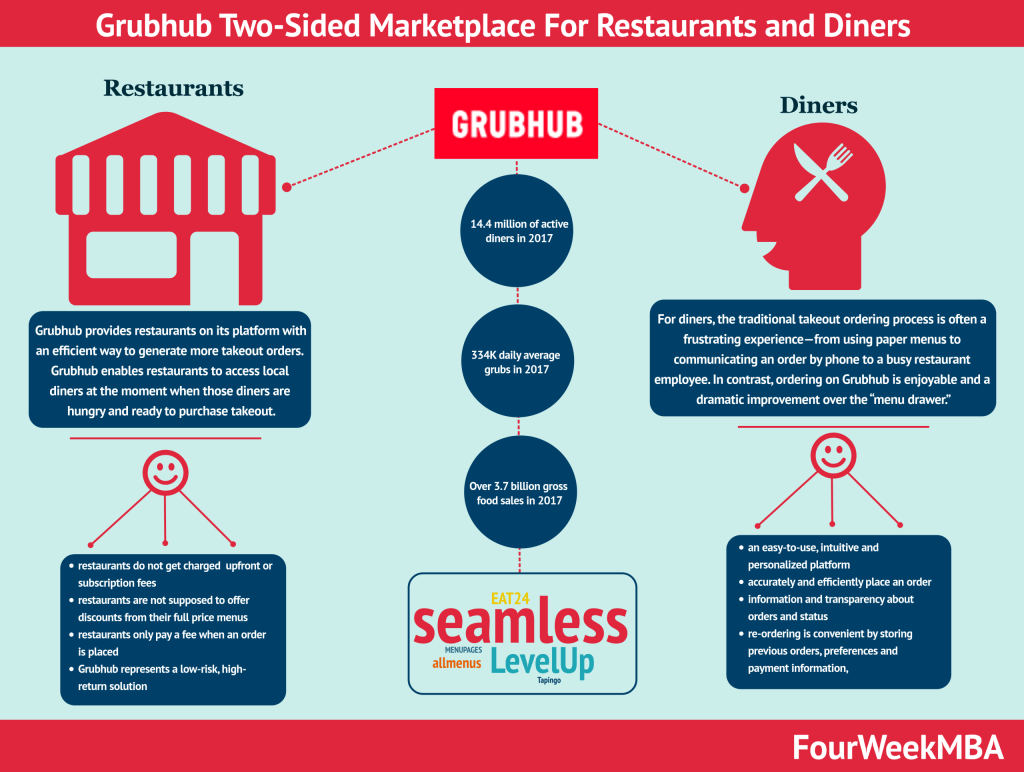
Grubhub is an online and mobile platform for restaurant pick-up and delivery orders. In 2018 the company connected 95,000 takeout restaurants in over 1,700 U.S. cities and London. The Grubhub portfolio of brands like Seamless, LevelUp, Eat24, AllMenus, MenuPages, and Tapingo. The company makes money primarily by charging restaurants a pre-order commission, and it generates revenues when diners place an order on its platform. Also, it charges restaurants that use Grubhub delivery services when diners pay for them.
Lyft is a transportation-as-a-service marketplace allowing riders to find a driver for a ride. Lyft has also expanded with a multimodal platform that gives more options like bike-sharing or electric scooters. Lyft primarily makes money by collecting fees from drivers that complete rides on the platform.
OpenTable is an American online restaurant reservation system founded by Chuck Templeton. During the late 90s, it provided one of the first automated, real-time reservation systems. The company was acquired by Booking Holding back in 2014 for $2.6 billion. Today OpenTable makes money via subscription plans, referral fees, and in-dining with its first restaurant, as an experiment in Miami, Florida.
Postmates is a food delivery service built as a last-mile delivery service platform connecting locals with shops. Postmates makes money by collecting fees (commission, delivery, service, cart, and cancellation fees). It also makes money via its subscription service (called Unlimted – $9.99/month or $99.99 annually), giving free delivery on orders of more than $12.
Uber Eats is a three-sided marketplace connecting a driver, a restaurant owner, and a customer with Uber Eats platform at the center. The three-sided marketplace moves around three players: Restaurants pay commission on the orders to Uber Eats; Customers pay small delivery charges and, at times, cancellation fees; Drivers earn through making reliable deliveries on time.
Gennaro is the creator of FourWeekMBA, which reached about four million business people, comprising C-level executives, investors, analysts, product managers, and aspiring digital entrepreneurs in 2022 alone | He is also Director of Sales for a high-tech scaleup in the AI Industry | In 2012, Gennaro earned an International MBA with emphasis on Corporate Finance and Business Strategy.