

E-shaped skills refer to a specialized and deep skill set in multiple areas, resembling the shape of the letter “E” with its three horizontal bars indicating proficiency across different domains. Individuals with E-shaped skills possess expertise in a core area (represented by the central vertical bar of the “E”) along with complementary skills in two or more related or unrelated fields (represented by the horizontal bars). This multidimensional skill profile enables them to excel in their primary domain while also being capable of collaborating across disciplines, fostering innovation, and solving complex problems that require interdisciplinary approaches.
Purpose and Scope
The purpose of E-shaped skills is to equip individuals with a specialized expertise in a core area along with complementary skills in related or unrelated fields. This multidimensional skill set enables individuals to excel in their primary domain while also being capable of collaborating across disciplines, fostering innovation, and addressing complex challenges that require interdisciplinary approaches.
Principal Concepts
- Specialized Expertise: Proficiency in a core area or domain of knowledge, represented by the central vertical bar of the “E.”
- Complementary Skills: Proficiency in two or more related or unrelated fields that complement the individual’s core expertise, represented by the horizontal bars of the “E.”
- Interdisciplinary Collaboration: Collaboration across disciplines or fields of expertise to solve complex problems and generate innovative solutions.
Theoretical Foundations of E-shaped Skills
The concept of E-shaped skills draws on various theories and frameworks:
- T-shaped Skills: E-shaped skills share similarities with T-shaped skills, which involve deep expertise in one area (the vertical bar of the T) and broader knowledge across multiple domains (the horizontal bar of the T).
- Boundary-Spanning: E-shaped skills are related to the concept of boundary-spanning, which involves bridging gaps between different departments, teams, or disciplines to facilitate collaboration and innovation.
Methods and Techniques for Developing E-shaped Skills
Developing E-shaped skills involves a combination of methods and techniques:
- Specialized Training: Acquiring specialized training and education in a core area of expertise to develop deep domain knowledge and proficiency.
- Cross-Disciplinary Learning: Engaging in cross-disciplinary learning experiences to develop complementary skills in related or unrelated fields that enhance the individual’s expertise.
- Interdisciplinary Projects: Participating in interdisciplinary projects or collaborations to apply E-shaped skills in solving real-world problems and generating innovative solutions.
Applications of E-shaped Skills
E-shaped skills have practical applications in various fields and industries:
- Research and Development: Researchers and scientists with E-shaped skills can leverage their deep expertise in a core area along with complementary skills in related fields to drive breakthrough discoveries and innovations.
- Product Development: Professionals involved in product development can apply E-shaped skills to design and create innovative products that address diverse user needs and preferences.
- Entrepreneurship: Entrepreneurs with E-shaped skills can identify market opportunities, develop novel business concepts, and build successful ventures by leveraging their specialized expertise and complementary skills.
Industries Influenced by E-shaped Skills
E-shaped skills have influenced a wide range of industries and sectors, including:
- Technology: In the technology industry, professionals with E-shaped skills are highly valued for their ability to innovate, collaborate, and solve complex technical challenges that require expertise across multiple domains.
- Healthcare: Healthcare professionals with E-shaped skills can collaborate across medical specialties, research disciplines, and healthcare domains to improve patient care, develop new treatments, and advance medical science.
- Design and Creativity: Professionals in design and creative fields can apply E-shaped skills to develop innovative solutions, products, and experiences that address diverse user needs and preferences.
Advantages of E-shaped Skills
- Deep Expertise: E-shaped skills enable individuals to develop deep expertise in a core area of knowledge, allowing them to excel in their primary domain and make significant contributions to their field.
- Interdisciplinary Collaboration: E-shaped skills facilitate interdisciplinary collaboration by enabling individuals to apply their specialized expertise and complementary skills to solve complex problems and generate innovative solutions.
- Innovation and Creativity: E-shaped skills foster innovation and creativity by bringing together insights, perspectives, and methodologies from different disciplines, sparking new ideas and approaches.
Challenges and Considerations in Developing E-shaped Skills
Despite its benefits, developing E-shaped skills presents some challenges:
- Specialization vs. Generalization: Balancing deep expertise in a core area with proficiency in complementary skills across multiple domains requires individuals to make strategic decisions about where to allocate their time and resources.
- Continuous Learning and Adaptation: Maintaining E-shaped skills requires a commitment to continuous learning, adaptation, and growth, as individuals must stay abreast of evolving trends, technologies, and practices in their field and related domains.
- Collaborative Competencies: Effectively leveraging E-shaped skills in interdisciplinary collaborations requires individuals to develop collaborative competencies, such as communication, teamwork, and conflict resolution, to ensure productive and successful outcomes.
Integration with Broader Career Development Strategies
To maximize the benefits of E-shaped skills, they should be integrated with broader career development strategies:
- Skills Assessment: Conducting a skills assessment to identify strengths, weaknesses, and areas for growth, informing targeted skill development efforts and career planning.
- Networking and Mentorship: Building a network of mentors, advisors, and peers across different disciplines to gain insights, advice, and opportunities for collaboration and learning.
- Professional Development: Investing in professional development opportunities, such as workshops, courses, and certifications, to enhance E-shaped skills and stay competitive in the job market.
Future Directions in E-shaped Skills
As workplaces and industries continue to evolve, future trends in E-shaped skills may include:
- Hybrid Roles: The emergence of hybrid roles that require expertise across multiple domains, such as data science and business analytics, where individuals with E-shaped skills can thrive.
- Remote and Distributed Work: The rise of remote and distributed work arrangements, which may require individuals to develop E-shaped skills to effectively collaborate and communicate across virtual teams and digital platforms.
- Lifelong Learning Ecosystems: The development of lifelong learning ecosystems that support continuous skill development and adaptation, enabling individuals to cultivate and leverage E-shaped skills throughout their careers.
Conclusion
E-shaped skills represent a specialized and deep skill set in multiple areas, enabling individuals to excel in their primary domain while also being capable of collaborating across disciplines, fostering innovation, and solving complex problems that require interdisciplinary approaches. By developing E-shaped skills, individuals can enhance their versatility, adaptability, and effectiveness in today’s dynamic and interconnected world, positioning themselves for success in their careers and endeavors. As organizations and individuals embrace the principles of E-shaped skills, the potential for fostering creativity, innovation, and collaboration across diverse domains and industries continues to expand.
Key Highlights:
- Definition: E-shaped skills represent expertise in three interconnected domains, emphasizing a multidimensional approach to skill development.
- Core Elements:
- Expertise in Three Areas
- Interdisciplinary Integration
- Significance in the Modern Workforce:
- Versatility and Adaptability
- Innovation and Creativity
- Collaboration and Communication
- Leadership Potential
- Adaptive Career Paths
- Developing E-Shaped Skills:
- Identify Your Domains
- Set Integration Goals
- Cross-Training
- Interdisciplinary Projects
- Mentorship and Networking
- Continuous Learning
- Problem-Solving Exercises
- Communication Skills
- Impact on Career Success:
- Career Advancement
- Innovation Leadership
- Entrepreneurship
- Global Perspectives
- Problem-Solving Excellence
- Challenges and Considerations:
- Time and Commitment
- Balance and Integration
- Changing Fields
- Staying Current
- Conclusion: E-shaped skills offer a unique pathway to career success, enabling professionals to excel in interdisciplinary collaboration, innovation, and problem-solving. While developing E-shaped skills requires dedication and effort, the rewards in terms of career advancement and adaptability are significant in the dynamic landscape of the modern workforce.
| Related Framework | Description | When to Apply |
|---|---|---|
| T-shaped Skills | – Describes a skill set characterized by depth in one specialized area (the vertical stroke of the “T”) complemented by a breadth of knowledge and skills across multiple disciplines (the horizontal stroke of the “T”). T-shaped skills emphasize the ability to collaborate across diverse domains, integrate knowledge from various fields, and communicate effectively with interdisciplinary teams. By combining depth and breadth, T-shaped skills foster innovation, creativity, and adaptability in complex problem-solving contexts. | – Applicable in team-based projects, cross-functional collaboration, and innovation initiatives where leveraging diverse expertise, perspectives, and skills is essential for addressing complex challenges, driving innovation, and achieving synergy and collective impact across multidisciplinary teams and organizations. |
| I-shaped Skills | – Represent a skill set characterized by deep expertise in one specialized area, typically denoted by the vertical stroke of the “I.” I-shaped skills emphasize mastery and depth of knowledge in a specific domain or discipline. While I-shaped skills are valuable for technical proficiency, they may lack versatility and adaptability in interdisciplinary contexts. | – Relevant in specialized technical roles, domain-specific research, and expert consulting where in-depth knowledge and expertise in a particular field are critical for achieving excellence, advancing knowledge, and providing specialized solutions and insights to address complex challenges and meet specific project requirements. |
| Pi-shaped Skills | – Builds on the T-shaped skills model by incorporating a second vertical stroke, forming the shape of the Greek letter pi (π). Pi-shaped skills represent deep expertise in two specialized areas, complemented by a breadth of knowledge and skills across multiple disciplines. Pi-shaped skills emphasize the ability to integrate insights, methodologies, and approaches from two distinct domains to tackle complex problems and generate innovative solutions. By combining depth in multiple areas, Pi-shaped skills enhance individuals’ capacity for interdisciplinary collaboration and creative synthesis. | – Applicable in interdisciplinary research, cross-sector partnerships, and innovation ecosystems where addressing complex, multifaceted challenges requires expertise from multiple domains and the ability to bridge disciplinary boundaries, integrate diverse perspectives, and leverage synergies and complementarities across specialized fields to drive breakthrough innovations and advance collective goals and impact. |
| M-shaped Skills | – Represents a skill set characterized by expertise in multiple specialized areas, denoted by the multiple vertical strokes of the letter M. M-shaped skills combine depth in several domains with the ability to navigate and connect across diverse disciplines. M-shaped skills emphasize versatility, adaptability, and the capacity to transition between different roles, projects, and contexts seamlessly. By cultivating expertise in multiple areas, M-shaped skills enable individuals to tackle complex challenges from multiple angles and contribute effectively across various domains. | – Relevant in multidisciplinary research, entrepreneurship, and portfolio careers where individuals engage in diverse projects, ventures, and initiatives that require expertise across multiple domains and the ability to pivot, learn quickly, and apply insights from different fields to address evolving challenges and opportunities effectively and creatively. |
| Comb-shaped Skills | – Extends the concept of T-shaped skills by incorporating multiple horizontal strokes, forming the shape of a comb. Comb-shaped skills emphasize deep expertise in one specialized area, complemented by a breadth of knowledge and skills across multiple domains, represented by the teeth of the comb. Comb-shaped skills highlight the ability to engage with diverse perspectives, methods, and tools while maintaining a strong foundation in a core discipline. By integrating expertise from various fields, comb-shaped skills enhance individuals’ capacity for interdisciplinary collaboration and innovative problem-solving. | – Applicable in cross-disciplinary research, design education, and complex project management where navigating diverse knowledge domains, methodologies, and stakeholder perspectives is essential for addressing multifaceted challenges, fostering innovation, and achieving project success and impact through interdisciplinary collaboration, integration, and synthesis. |
Read Next: Organizational Structure.
Types of Organizational Structures

Siloed Organizational Structures
Functional

Divisional

Open Organizational Structures
Matrix

Flat

Connected Business Frameworks


Nadler-Tushman Congruence Model

McKinsey’s Seven Degrees of Freedom


Organizational Structure Case Studies
OpenAI Organizational Structure

Airbnb Organizational Structure

Amazon Organizational Structure

Apple Organizational Structure

Coca-Cola Organizational Structure

Costco Organizational Structure


Facebook Organizational Structure

Goldman Sachs’ Organizational Structure

Google Organizational Structure


McDonald’s Organizational Structure

McKinsey Organizational Structure

Microsoft Organizational Structure

Nestlé Organizational Structure


Patagonia Organizational Structure

Samsung Organizational Structure

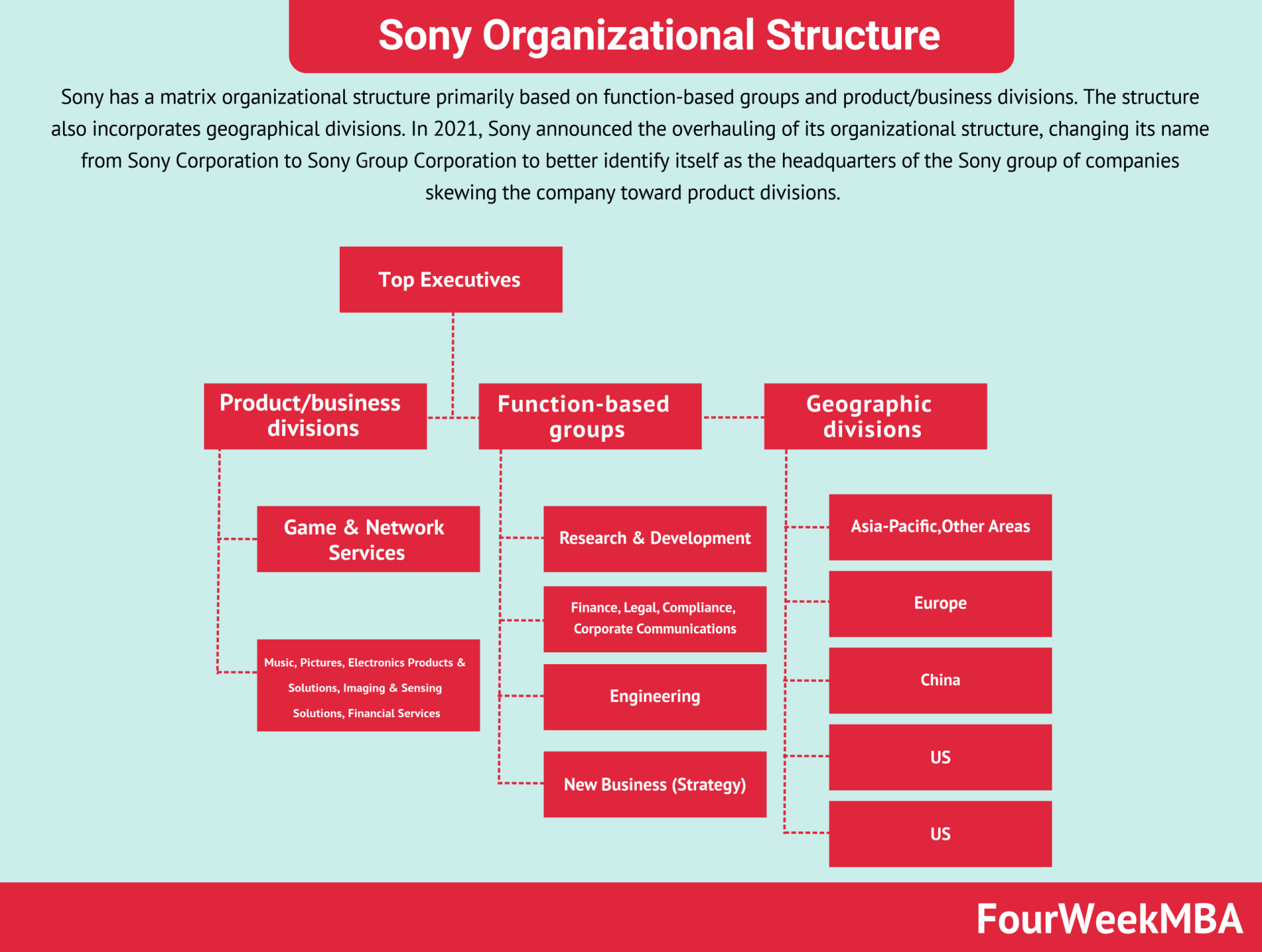
Starbucks Organizational Structure

Tesla Organizational Structure

Toyota Organizational Structure

Walmart Organizational Structure

Main Free Guides:


