

The Stacey Matrix is a valuable framework for understanding and navigating complexity in projects, tasks, and decision-making processes. Developed by Ralph D. Stacey, a British organizational theorist, the matrix offers a way to categorize situations based on their level of complexity and the appropriate management or leadership approaches needed.
Understanding the Stacey Matrix
What is the Stacey Matrix?
The Stacey Matrix is a visual tool that helps individuals and teams assess the complexity of a given situation or problem. It was created by Ralph D. Stacey in the context of organizational management and leadership but has since found applications in various fields, including project management, product development, and decision-making.
The matrix consists of four quadrants, each representing a different level of complexity:
- Simple (Clear): Situations in this quadrant are characterized by clear cause-and-effect relationships. The problem is well-defined, and there is a straightforward solution. Standard operating procedures and established rules can often address these situations effectively.
- Complicated (Complicated): In this quadrant, problems are more complex than in the simple category but are still solvable with expertise and analysis. Cause-and-effect relationships exist, but they may require a deeper understanding and specialized knowledge to unravel.
- Complex (Complex): Complex situations involve multiple interrelated factors, and cause-and-effect relationships are not always clear. These situations require experimentation, adaptability, and continuous learning. There is no single right answer, and solutions emerge through exploration.
- Chaotic (Chaos): The chaotic quadrant represents situations where there is no apparent cause-and-effect relationship, and events are unpredictable. In such cases, immediate action is required to establish stability. Once stability is achieved, the situation can move into one of the other quadrants for further analysis and resolution.
Key Principles of the Stacey Matrix:
- Context Matters: The Stacey Matrix emphasizes the importance of considering the specific context of a situation when determining its complexity. What may be simple in one context can be complex in another.
- Adaptive Approaches: Complex and chaotic situations require adaptive approaches that involve experimentation, learning, and a willingness to adjust strategies based on emerging insights.
- No One-Size-Fits-All: The matrix rejects the idea of a one-size-fits-all approach to management or leadership. Instead, it encourages flexibility and the selection of appropriate approaches based on the level of complexity.
- Dynamic Nature: Situations can evolve and move between quadrants over time, and it is essential to continuously assess and adapt management or leadership approaches accordingly.
Real-World Applications of the Stacey Matrix
The Stacey Matrix has practical applications in various domains:
1. Project Management:
- Project managers use the matrix to assess the complexity of their projects and determine the most suitable project management methodologies. For example, simple projects may benefit from traditional approaches like Waterfall, while complex projects may require Agile or Scrum.
2. Organizational Change:
- Organizations use the matrix to evaluate the complexity of proposed changes. Understanding the complexity level helps leaders choose change management strategies that align with the situation.
3. Product Development:
- Product development teams apply the matrix to determine the complexity of new product designs. Complex products may involve iterative prototyping and testing, while simple products can follow a more straightforward development process.
4. Decision-Making:
- Leaders and decision-makers use the matrix to assess the complexity of strategic decisions. Complex decisions may require scenario planning, while simple decisions can be made using established criteria.
5. Crisis Management:
- During crises, such as natural disasters or cybersecurity breaches, organizations can quickly assess the situation’s complexity using the matrix to determine the appropriate response and recovery strategies.
6. Innovation:
- Innovators and entrepreneurs apply the matrix to gauge the complexity of innovative ideas. Complex innovations often require experimentation and iteration.
Strategies for Using the Stacey Matrix
Effectively using the Stacey Matrix involves several strategies:
1. Assessment and Contextual Understanding:
- Begin by assessing the situation and understanding its unique context. Consider the factors contributing to complexity and whether they are internal or external.
2. Quadrant Placement:
- Determine which quadrant of the Stacey Matrix best represents the situation. Be open to the possibility that a situation may move between quadrants as circumstances change.
3. Appropriate Approaches:
- Choose management or leadership approaches that align with the identified quadrant. For example, a simple situation may require a directive leadership style, while a complex one may benefit from a facilitative or adaptive leadership approach.
4. Iterative Evaluation:
- Continuously reassess the situation’s complexity as it evolves. Adjust strategies and approaches accordingly.
5. Experimentation and Learning:
- In complex situations, embrace experimentation and learning. Encourage teams to try new approaches, gather feedback, and adapt their strategies based on insights gained.
6. Clear Communication:
- Communicate the chosen approach and its rationale to team members and stakeholders. Clarity helps everyone understand the context and expected behaviors.
7. Resilience:
- Acknowledge that complex and chaotic situations can be challenging. Build resilience and the capacity to manage ambiguity and uncertainty.
Benefits and Impact of the Stacey Matrix
Embracing the Stacey Matrix offers several benefits and impacts:
1. Improved Decision-Making:
- The matrix provides a structured framework for decision-makers to assess complexity and choose appropriate strategies, resulting in more effective decisions.
2. Enhanced Adaptability:
- Organizations and teams become more adaptable by recognizing the dynamic nature of complexity and adjusting their approaches accordingly.
3. Innovation and Creativity:
- Complex situations stimulate innovation and creativity, as they encourage experimentation and the exploration of new ideas and solutions.
4. Risk Mitigation:
- Understanding complexity helps identify potential risks and allows for proactive risk mitigation strategies.
5. Effective Project Management:
- Project managers can tailor project management methodologies to the complexity level, leading to improved project outcomes.
6. Change Management Success:
- Organizations increase the success rate of change initiatives by aligning change management strategies with the complexity of the change.
Challenges and Considerations
While the Stacey Matrix is a valuable tool, it is not without challenges and considerations:
1. Subjectivity:
- Assessing the complexity of a situation can be subjective, as different individuals may interpret the same context differently.
2. Dynamic Nature:
- Complexity levels can change over time, requiring ongoing assessment and adaptation of strategies.
3. Misclassification:
- Misclassifying a situation can lead to inappropriate approaches. Careful analysis is essential to avoid misclassification.
4. Balancing Act:
- Balancing the need for flexibility in complex situations with the need for structure and clarity in simple ones can be challenging.
Conclusion
The Stacey Matrix is a valuable tool for understanding and navigating complexity in projects, tasks, and decision-making. By assessing the unique context of a situation and placing it within one of the matrix’s quadrants, individuals and organizations can choose management and leadership approaches that align with the level of complexity. Embracing this framework fosters adaptability, enhances decision-making, stimulates innovation, and ultimately leads to more effective outcomes in an ever-changing world where complexity is a constant companion.
Key Highlights
- Definition and Origin:
- The Stacey Matrix is a framework developed by Ralph D. Stacey for assessing complexity in organizational management, project management, and decision-making.
- It categorizes situations into four quadrants based on their complexity levels: Simple, Complicated, Complex, and Chaotic.
- Quadrants and Characteristics:
- Simple: Clear cause-and-effect relationships with straightforward solutions.
- Complicated: More complex than simple, requiring expertise and analysis.
- Complex: Involves multiple interrelated factors with unclear cause-and-effect relationships, requiring experimentation and adaptability.
- Chaotic: Unpredictable events with no apparent cause-and-effect relationship, requiring immediate action for stabilization.
- Key Principles:
- Context Matters: Complexity is relative to the specific context of the situation.
- Adaptive Approaches: Complex and chaotic situations require adaptive strategies and continuous learning.
- No One-Size-Fits-All: There’s no universal approach to managing complexity; strategies should be tailored to the situation.
- Dynamic Nature: Situations can evolve and move between quadrants over time, necessitating continuous assessment and adjustment.
- Real-World Applications:
- Project Management: Assessing project complexity to determine suitable methodologies.
- Organizational Change: Evaluating the complexity of proposed changes to align change management strategies.
- Product Development: Gauging the complexity of new product designs to tailor development processes.
- Decision-Making: Assessing the complexity of strategic decisions to inform decision-making approaches.
- Crisis Management: Quickly assessing the complexity of crises to determine appropriate response strategies.
- Innovation: Evaluating the complexity of innovative ideas to guide experimentation and iteration.
- Strategies for Use:
- Assessment and Contextual Understanding: Understanding the unique context of a situation.
- Quadrant Placement: Placing the situation within the appropriate quadrant.
- Appropriate Approaches: Choosing management or leadership approaches aligned with the complexity level.
- Iterative Evaluation: Continuously reassessing complexity and adjusting strategies accordingly.
- Experimentation and Learning: Encouraging experimentation and learning in complex situations.
- Clear Communication: Communicating chosen approaches and rationale to stakeholders.
- Resilience: Building resilience to manage ambiguity and uncertainty in complex and chaotic situations.
- Benefits and Impact:
- Improved Decision-Making: Structured framework for more effective decision-making.
- Enhanced Adaptability: Recognition of complexity’s dynamic nature fosters adaptability.
- Innovation and Creativity: Complex situations stimulate innovation and creativity.
- Risk Mitigation: Identification of potential risks and proactive mitigation strategies.
- Effective Project Management: Tailoring project management methodologies to complexity level.
- Change Management Success: Increased success rate of change initiatives by aligning strategies with complexity.
- Challenges and Considerations:
- Subjectivity: Assessing complexity can be subjective.
- Dynamic Nature: Complexity levels can change over time.
- Misclassification: Misclassifying a situation can lead to inappropriate approaches.
- Balancing Act: Balancing flexibility with structure can be challenging.
- Conclusion:
- The Stacey Matrix is a valuable tool for understanding and managing complexity, fostering adaptability, enhancing decision-making, and stimulating innovation in an ever-changing environment.
| Related Framework | Description | When to Apply |
|---|---|---|
| Cynefin Framework | – A decision-making framework that categorizes problems into five distinct domains: simple, complicated, complex, chaotic, and disorder. This helps leaders identify the context they are operating in so they can make appropriate decisions. | – Best used to understand problem contexts and to determine the most effective approach to decision-making. |
| VUCA (Volatility, Uncertainty, Complexity, Ambiguity) | – Describes the challenging nature of organizational environments, emphasizing the need for agility and adaptability in strategies due to unpredictable and dynamic factors. | – Useful in rapidly changing environments where traditional planning methods fall short. |
| OODA Loop (Observe, Orient, Decide, Act) | – A strategic decision-making tool, emphasizing a continuous iterative process to stay one step ahead of the competition. The framework enhances responsiveness through a cyclic process of observing, orienting, deciding, and acting. | – Applicable in competitive or conflict scenarios, such as military operations, sports, and business strategy. |
| PESTLE Analysis | – Helps in analyzing and monitoring the macro-environmental factors that may have a profound impact on an organization’s performance. This includes Political, Economic, Social, Technological, Legal, and Environmental aspects. | – Ideal for strategic planning and understanding external influences on an organization. |
| SWOT Analysis | – Identifies and analyzes the internal and external factors that can affect the viability of a project or business venture. The framework divides factors into Strengths, Weaknesses, Opportunities, and Threats. | – Often used to evaluate a company or project’s competitive position before strategic decision-making. |
| Scenario Planning | – Involves creating detailed and plausible views of different futures to anticipate risks and opportunities. Helps organizations strategically prepare for possible future scenarios to mitigate potential risks. | – Recommended for long-term strategic planning in industries facing significant uncertainty. |
| Tame Problems Framework | – Addresses problems that are clearly defined and separated from others, often with known solutions that can be systematically implemented. These are predictable and as such, are easier to manage using conventional methods. | – Useful in situations that are stable and well-understood, allowing for routine and straightforward management approaches. |
| Wicked Problems Framework | – Tackles issues that are difficult to clearly define and are interconnected with other problems, often with no opportunity for simple solutions. These problems are typically complex and ambiguous. | – Best applied in circumstances where traditional problem-solving methods are ineffective, requiring innovative and flexible strategies. |
| Ansoff Matrix | – A strategic tool used to devise growth strategies by matching products with markets using a matrix divided into existing and new products, and existing and new markets. Helps companies decide their product and market growth strategy. | – Useful for determining business development strategies, particularly in marketing and product management. |
| Balanced Scorecard | – Integrates strategic management and measurement by balancing financial and non-financial performance metrics across four perspectives: financial, customer, internal processes, and learning and growth. This holistic view aids in aligning strategic objectives with tangible actions and outcomes. | – Employed for comprehensive performance evaluation to ensure that the strategic goals of an organization are effectively met through operational actions. |
Read Next: Organizational Structure.
Types of Organizational Structures

Siloed Organizational Structures
Functional

Divisional

Open Organizational Structures
Matrix

Flat

Connected Business Frameworks


Nadler-Tushman Congruence Model

McKinsey’s Seven Degrees of Freedom


Organizational Structure Case Studies
OpenAI Organizational Structure

Airbnb Organizational Structure

Amazon Organizational Structure

Apple Organizational Structure

Coca-Cola Organizational Structure

Costco Organizational Structure


Facebook Organizational Structure

Goldman Sachs’ Organizational Structure

Google Organizational Structure


McDonald’s Organizational Structure

McKinsey Organizational Structure

Microsoft Organizational Structure

Nestlé Organizational Structure


Patagonia Organizational Structure

Samsung Organizational Structure

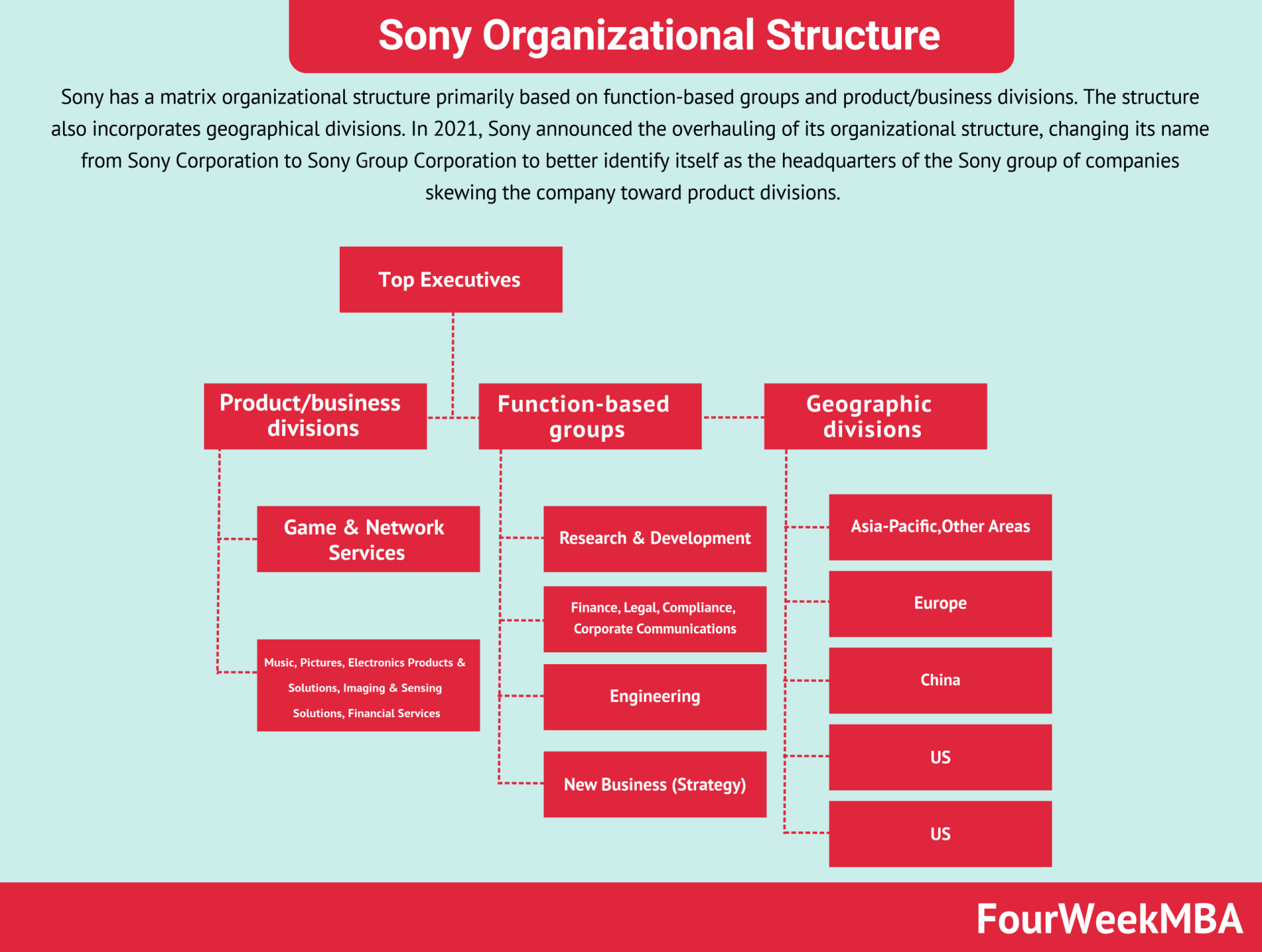
Starbucks Organizational Structure

Tesla Organizational Structure

Toyota Organizational Structure

Walmart Organizational Structure

Main Free Guides:
- Business Models
- Business Strategy
- Business Development
- Digital Business Models
- Distribution Channels
- Marketing Strategy
- Platform Business Models
- Revenue Models
- Tech Business Models


