

The product-based organizational structure, also known as the product-oriented structure, organizes a company’s divisions or units around its product lines or offerings. Each product line becomes a distinct entity within the organization, often with its own dedicated team, resources, and decision-making authority. This structure allows companies to focus on the unique requirements, strategies, and challenges associated with each product or product group.
Key characteristics of the product-based organizational structure include:
- Product Divisions: The organization is divided into divisions or units, each responsible for a specific product line or category.
- Product-Centric Leadership: Each product division typically has its own leadership team, including a product manager or director.
- Resource Allocation: Resources, including budgets, human resources, and assets, are allocated to product divisions based on their strategic importance and growth potential.
- Cross-Functional Teams: Teams within each product division may consist of professionals from various functions, such as marketing, engineering, sales, and customer support, all focused on the success of that product.
- Innovation and Responsiveness: The structure encourages innovation and responsiveness to market changes, as teams can quickly adapt strategies to address specific product needs.
- Clear Accountability: Product managers or directors have clear accountability for the performance and success of their product lines.
Advantages of a Product-Based Organizational Structure
Implementing a product-based organizational structure offers several advantages:
- Product Focus: The structure allows for a deep product focus, ensuring that each product line receives dedicated attention and resources.
- Innovation: Cross-functional teams within each product division can collaborate more effectively on product development and innovation.
- Customer-Centric: It enables a customer-centric approach, as teams can tailor products and services to meet specific customer needs and preferences.
- Accountability: Product managers or directors have clear accountability for their product’s performance, facilitating decision-making and strategic planning.
- Market Responsiveness: The structure enhances the organization’s ability to respond quickly to market changes and evolving customer demands.
- Brand Differentiation: Companies can create distinct brand identities for each product line, catering to diverse market segments and niches.
Implementing a Product-Based Organizational Structure
Implementing a product-based organizational structure involves several strategic steps:
- Product Assessment: Evaluate the organization’s product portfolio to identify product lines or categories that warrant dedicated focus and resources.
- Divisional Structure: Create separate divisions or units for each product line or category, each with its own leadership team.
- Resource Allocation: Allocate resources, including budgets, personnel, and technology, to each product division based on its strategic importance and growth potential.
- Cross-Functional Teams: Assemble cross-functional teams within each product division, ensuring that they have the expertise and skills needed to drive the product’s success.
- Leadership Roles: Appoint product managers or directors responsible for overseeing the development, marketing, and overall performance of their respective products.
- Communication Channels: Establish clear communication channels between product divisions and the central management team to ensure alignment with corporate objectives.
- Performance Metrics: Define key performance indicators (KPIs) that measure the success of each product line, and regularly assess and adjust strategies based on these metrics.
Real-World Examples of Product-Based Organizational Structures
Several well-known companies have successfully adopted product-based organizational structures:
- Apple Inc.: Apple is famous for its product-based organizational structure. It divides the company into product divisions, such as iPhone, Mac, and Services, each with its own dedicated team and leadership. This structure allows Apple to focus on product innovation and differentiation.
- General Electric (GE): GE also utilizes a product-based structure, organizing its operations around product divisions like Aviation, Healthcare, and Renewable Energy. Each division operates as a self-contained business unit with its own leadership and resources.
- Procter & Gamble (P&G): P&G, a consumer goods conglomerate, uses a product-based structure to manage its diverse product portfolio. Divisions are organized around product categories like Beauty, Grooming, and Health, enabling P&G to tailor its products to specific consumer needs.
- Johnson & Johnson: Johnson & Johnson’s organizational structure includes distinct divisions for Pharmaceuticals, Medical Devices, and Consumer Health. This product-based approach allows the company to address the unique demands of each product category.
- Ford Motor Company: Ford employs a product-based structure, with divisions dedicated to different vehicle types, such as SUVs, trucks, and electric vehicles. This structure supports product-specific development and marketing efforts.
Challenges of a Product-Based Organizational Structure
While the product-based organizational structure offers numerous advantages, it also presents certain challenges:
- Coordination: Coordinating activities and ensuring alignment between product divisions and the central management team can be complex.
- Resource Allocation: Deciding how to allocate limited resources among various product divisions can lead to conflicts and resource shortages.
- Duplication of Functions: There may be redundancy in functions like marketing, sales, and administration across different product divisions.
- Leadership Requirements: Finding and developing effective leaders for each product division is crucial but can be resource-intensive.
- Brand Management: Maintaining a consistent brand identity across multiple product lines while allowing for differentiation can be challenging.
- Strategic Consistency: Ensuring that each product division’s strategy aligns with the overall corporate strategy is essential for success.
Conclusion
The product-based organizational structure is a powerful approach for companies with diverse product portfolios or those seeking to prioritize product-focused innovation and customer satisfaction. By structuring the organization around individual product lines, companies can foster innovation, enhance responsiveness to market changes, and create a customer-centric approach. However, implementing and managing this structure require careful planning, resource allocation, and coordination to ensure that the benefits outweigh the challenges. Real-world examples like Apple, GE, P&G, Johnson & Johnson, and Ford demonstrate the effectiveness of this approach in various industries.
Key Highlights
- Introduction:
- The product-based organizational structure focuses on dedicated product divisions, enhancing innovation and market responsiveness.
- Key Characteristics:
- Product divisions, product-centric leadership, resource allocation, cross-functional teams, innovation focus, and clear accountability define this structure.
- Advantages:
- Product focus, innovation, customer-centricity, accountability, market responsiveness, and brand differentiation are key benefits.
- Implementing a Product-Based Structure:
- Product assessment, divisional structure creation, resource allocation, cross-functional teams establishment, leadership roles, communication channels, and performance metrics definition are essential steps.
- Real-World Examples:
- Apple, General Electric (GE), Procter & Gamble (P&G), Johnson & Johnson, and Ford exemplify successful adoption of the product-based organizational structure.
- Challenges:
- Coordination complexity, resource allocation dilemmas, duplication of functions, leadership requirements, brand management, and strategic consistency pose challenges.
- Conclusion:
- The product-based organizational structure enhances innovation and customer satisfaction but requires careful planning and coordination. Real-world examples demonstrate its effectiveness across diverse industries.
| Case Study | Strategy | Outcome |
|---|---|---|
| Procter & Gamble | Product-Based Organization: Structured around major product categories like beauty, grooming, and health care. | Enhanced focus on product innovation and marketing, driving strong brand loyalty and market share growth. |
| Apple | Product-Based Organization: Divided into product lines such as iPhone, iPad, Mac, and Services. | Increased focus on product development and customer experience, driving high sales growth and market leadership. |
| Google (Alphabet Inc.) | Product-Based Organization: Structured into product areas like Search, YouTube, Cloud, and Hardware. | Fostered innovation and strategic focus, driving significant growth and diversification across multiple markets. |
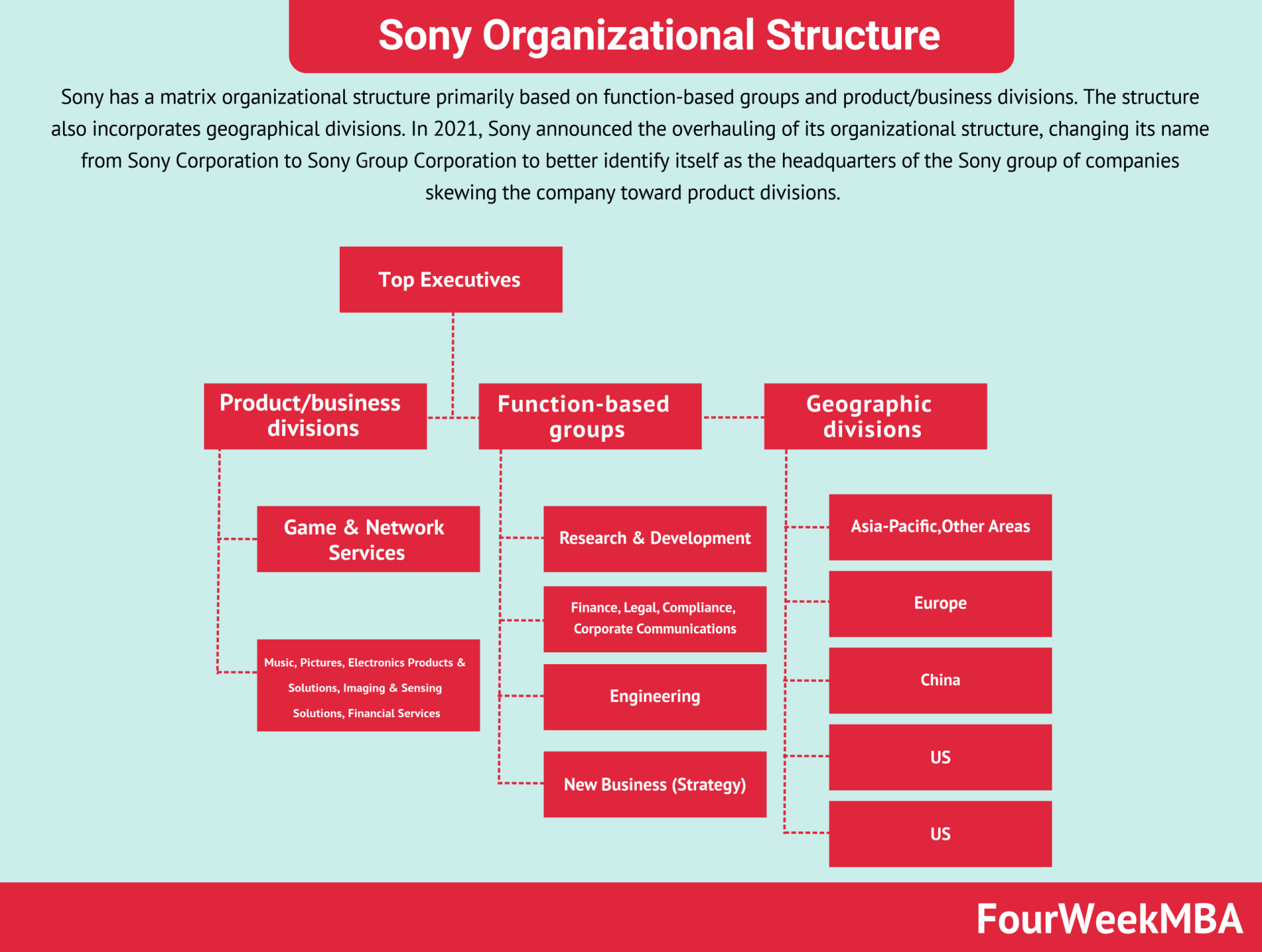
| Sony | Product-Based Organization: Divided into segments like Electronics, Gaming, and Entertainment. | Enhanced focus on innovation and market-specific strategies, driving strong performance across diverse product lines. |
| General Electric (GE) | Product-Based Organization: Divided into business units like Aviation, Healthcare, and Renewable Energy. | Increased operational efficiency and market responsiveness, driving growth and innovation in various industries. |
| Microsoft | Product-Based Organization: Divided into segments like Office, Windows, Azure, and Xbox. | Enhanced product focus and innovation, driving strong market presence and revenue growth in each segment. |
| Johnson & Johnson | Product-Based Organization: Divided into segments like Pharmaceuticals, Medical Devices, and Consumer Health Products. | Increased innovation and market responsiveness, driving growth and maintaining high standards of quality. |
| Nestlé | Product-Based Organization: Structured around product categories like Beverages, Dairy, and Nutrition. | Enhanced focus on product innovation and marketing, driving strong brand loyalty and market share growth. |
| Samsung | Product-Based Organization: Divided into segments like Mobile Communications, Consumer Electronics, and Semiconductors. | Increased focus on product innovation and market-specific strategies, driving strong performance and market leadership. |
| IBM | Product-Based Organization: Divided into segments like Cloud & Cognitive Software, Global Business Services, and Systems. | Enhanced focus on product development and customer solutions, driving growth and competitiveness in technology markets. |
| PepsiCo | Product-Based Organization: Structured around product categories like Beverages, Snacks, and Nutrition. | Enhanced focus on product innovation and marketing, driving strong brand loyalty and market share growth. |
| 3M | Product-Based Organization: Divided into segments like Industrial, Health Care, and Consumer Products. | Increased focus on product innovation and market-specific strategies, driving strong performance and market leadership. |
| Unilever | Product-Based Organization: Structured around major product categories like Foods, Home Care, and Personal Care. | Enhanced focus on product innovation and marketing, driving strong brand loyalty and market share growth. |
| Ford Motor Company | Product-Based Organization: Divided into segments like Trucks, SUVs, and Electric Vehicles. | Increased focus on product development and market-specific strategies, driving strong performance and market leadership. |
| Nike | Product-Based Organization: Divided into segments like Footwear, Apparel, and Equipment. | Enhanced focus on product innovation and marketing, driving strong brand loyalty and market share growth. |
| L’Oréal | Product-Based Organization: Structured around product categories like Skincare, Haircare, and Makeup. | Enhanced focus on product innovation and marketing, driving strong brand loyalty and market share growth. |
| Intel | Product-Based Organization: Divided into segments like Client Computing, Data Center, and Internet of Things. | Increased focus on product development and market-specific strategies, driving strong performance and market leadership. |
| Cisco Systems | Product-Based Organization: Divided into segments like Networking, Security, and Collaboration. | Enhanced focus on product innovation and market-specific strategies, driving strong performance and market leadership. |
| Philips | Product-Based Organization: Structured around segments like Personal Health, Diagnosis & Treatment, and Connected Care. | Increased focus on product development and customer solutions, driving growth and competitiveness in health technology markets. |
| Amazon | Product-Based Organization: Divided into segments like E-commerce, AWS (Amazon Web Services), and Devices. | Enhanced focus on product innovation and customer experience, driving strong market presence and revenue growth across diverse segments. |
| Related Organizational Structures | Description | Implications |
|---|---|---|
| Product-Based Organizational Structure | A Product-Based Organizational Structure organizes the organization around its products or product lines. In this structure, each product or product line has its own dedicated team, resources, and decision-making authority, allowing for focused attention on product development, marketing, and sales. Product-based structures enable organizations to prioritize product innovation, differentiation, and market penetration effectively. They foster accountability, ownership, and alignment within product teams, enabling organizations to optimize product performance and competitiveness. | Product-Based Organizational Structures offer several benefits, including product focus, innovation, and alignment. By organizing the organization around its products or product lines, product-based structures enable organizations to prioritize product development, marketing, and sales effectively. Product-based structures foster accountability, ownership, and alignment within product teams, empowering them to optimize product performance and competitiveness. However, product-based structures may also pose challenges related to coordination, integration, and resource allocation. To maximize the benefits of product-based structures, organizations need to establish clear product strategies, communication channels, and cross-functional collaboration mechanisms, ensuring alignment and collaboration across different product teams and functions to deliver innovative and competitive products to the market. |
| Divisional Organizational Structure | A Divisional Organizational Structure divides the organization into semi-autonomous divisions, each responsible for its own products, services, or markets. In a divisional structure, each division operates as a separate profit center, with its own resources, goals, and decision-making authority, tailored to its specific business needs and objectives. Divisional structures enable organizations to focus on different products, markets, or customer segments effectively, fostering specialization, innovation, and market responsiveness within each division. | Divisional Organizational Structures share similarities with Product-Based Structures in their focus on divisional autonomy and market specialization. By organizing the organization into semi-autonomous divisions, divisional structures enable organizations to focus on different products, markets, or customer segments effectively. Both models foster specialization, innovation, and market responsiveness within each division while still benefiting from centralized resources, expertise, and governance. However, divisional structures may also require effective coordination, communication, and alignment to ensure consistency and effectiveness across different divisions and products. To maximize the benefits of divisional structures, organizations need to establish clear divisional goals, performance metrics, and communication channels, ensuring alignment and collaboration across different divisions and products to deliver value to customers and stakeholders. |
| Brand-Centric Organizational Structure | A Brand-Centric Organizational Structure is similar to a product-based structure but focuses specifically on brands or brand portfolios. In a brand-centric structure, each brand or brand portfolio has its own dedicated team, resources, and decision-making authority, allowing for focused attention on brand development, marketing, and management. Brand-centric structures enable organizations to prioritize brand differentiation, positioning, and equity effectively, fostering brand loyalty and customer engagement across different markets and segments. | Brand-Centric Organizational Structures share similarities with Product-Based Structures in their focus on brand specialization and market differentiation. By organizing the organization around brands or brand portfolios, brand-centric structures enable organizations to prioritize brand development, marketing, and management effectively. Both models foster accountability, ownership, and alignment within brand teams, empowering them to optimize brand performance and competitiveness. However, brand-centric structures may also pose challenges related to coordination, integration, and resource allocation. To maximize the benefits of brand-centric structures, organizations need to establish clear brand strategies, communication channels, and cross-functional collaboration mechanisms, ensuring alignment and collaboration across different brand teams and functions to build strong and differentiated brands in the market. |
Read Next: Organizational Structure.
Types of Organizational Structures

Siloed Organizational Structures
Functional

Divisional

Open Organizational Structures
Matrix

Flat

Connected Business Frameworks


Nadler-Tushman Congruence Model

McKinsey’s Seven Degrees of Freedom


Organizational Structure Case Studies
OpenAI Organizational Structure

Airbnb Organizational Structure

Amazon Organizational Structure

Apple Organizational Structure

Coca-Cola Organizational Structure

Costco Organizational Structure


Facebook Organizational Structure

Goldman Sachs’ Organizational Structure

Google Organizational Structure


McDonald’s Organizational Structure

McKinsey Organizational Structure

Microsoft Organizational Structure

Nestlé Organizational Structure


Patagonia Organizational Structure

Samsung Organizational Structure

Starbucks Organizational Structure

Tesla Organizational Structure

Toyota Organizational Structure

Walmart Organizational Structure

Main Free Guides:
- Business Models
- Business Strategy
- Business Development
- Digital Business Models
- Distribution Channels
- Marketing Strategy
- Platform Business Models
- Revenue Models
- Tech Business Models


