

The federated organizational structure is a method of organizing a company or institution as a network of semi-autonomous units or entities, each with its own degree of decision-making authority and operational independence. This structure emphasizes decentralized decision-making, allowing individual units to tailor their strategies and operations to local needs while maintaining a connection to a central governing body. In this comprehensive guide, we will explore the strategies, benefits, implementation approaches, and real-world examples of the federated organizational structure.
Understanding the Federated Organizational Structure
The federated organizational structure, also known as a federated model, is characterized by the following key attributes:
- Decentralization: The structure disperses decision-making authority and operational control across semi-autonomous units or entities.
- Local Autonomy: Individual units within the organization have a degree of autonomy and independence, allowing them to adapt to local market conditions and unique requirements.
- Central Governance: While units operate independently to some extent, they remain connected to a central governing body or headquarters, which provides overarching guidance, sets common standards, and coordinates activities.
- Networked Approach: The organization functions as a network, with communication and collaboration between units facilitated to achieve collective goals.
- Varying Degrees of Independence: Units within the federation may have varying levels of independence, depending on the organization’s overall strategy and objectives.
Advantages of a Federated Organizational Structure
Implementing a federated organizational structure offers several advantages:
- Flexibility: Units can adapt to local market conditions and customer preferences more effectively, leading to increased agility and responsiveness.
- Innovation: Decentralization encourages innovation at the local level, as units can experiment with new ideas and approaches.
- Market Focus: Units can tailor their strategies and offerings to specific regional or market demands, enhancing customer satisfaction.
- Resource Allocation: Resources are allocated based on local needs and priorities, optimizing resource utilization.
- Risk Mitigation: Decentralization can help mitigate risks by limiting the impact of issues in one unit on the entire organization.
- Local Talent Development: Units have the freedom to nurture and develop local talent, fostering a sense of ownership and commitment.
Implementing a Federated Organizational Structure
Implementing a federated organizational structure involves several strategic steps:
- Define the Central Governance: Clearly define the role and responsibilities of the central governing body or headquarters. This includes setting common standards, establishing communication channels, and outlining the decision-making framework.
- Identify Units: Identify the units or entities that will form the federated network. Consider factors such as geographic locations, customer segments, or business functions.
- Degree of Autonomy: Determine the level of autonomy each unit will have. Some units may require more independence than others based on their roles and responsibilities.
- Communication and Collaboration: Implement robust communication and collaboration mechanisms to ensure units can effectively work together to achieve common objectives.
- Performance Metrics: Develop key performance indicators (KPIs) that align with the organization’s overall goals and objectives. Units should be evaluated based on their contributions to these metrics.
- Governance Structure: Establish a governance structure that includes representatives from each unit, ensuring their voices are heard in decision-making processes.
- Technology Infrastructure: Invest in the technology infrastructure necessary to support communication, data sharing, and collaboration across the federated organization.
Real-World Examples of Federated Organizational Structures
Several well-known organizations have successfully adopted federated organizational structures:
- The United Nations: The UN operates as a federated organization with multiple semi-autonomous agencies, programs, and entities. Each agency focuses on specific global issues, such as health, education, or humanitarian assistance, while adhering to common principles and goals set by the UN’s central governing body.
- McDonald’s: McDonald’s, the global fast-food chain, operates its restaurants using a federated structure. Individual franchisees have a significant degree of autonomy in managing their locations, allowing them to adapt menu items and operational practices to local tastes and preferences.
- Higher Education Institutions: Many universities and colleges adopt a federated structure, with individual faculties or schools having significant autonomy in curriculum development, student affairs, and faculty hiring. The central administration sets overarching policies and standards.
- Global Corporations: Multinational corporations often adopt a federated structure to accommodate regional variations in market conditions and regulations. Local subsidiaries have some independence in decision-making, while adhering to corporate guidelines and standards.
- Religious Organizations: Some religious institutions, such as the Roman Catholic Church, have a federated structure with local dioceses or parishes operating semi-autonomously while following central religious doctrines and leadership.
Challenges and Considerations
While the federated organizational structure offers numerous benefits, it also presents challenges and considerations:
- Coordination Complexity: Effective communication and collaboration between units can be challenging, especially when units have varying degrees of autonomy.
- Consistency: Maintaining consistency in brand identity, quality standards, and customer experience across diverse units requires careful oversight.
- Resource Allocation: Balancing resource allocation across units to ensure fairness and optimal performance can be a delicate task.
- Central Control vs. Autonomy: Striking the right balance between central control and local autonomy is an ongoing challenge.
- Cultural Differences: Units in different regions may have distinct cultures, which can lead to differences in operational practices and values.
- Performance Evaluation: Developing fair and meaningful performance metrics that account for variations in unit responsibilities and markets can be complex.
Conclusion
The federated organizational structure offers a flexible and adaptable approach to managing complex organizations. By allowing semi-autonomous units to operate independently within a broader network, organizations can tap into local expertise, respond to market dynamics, and foster innovation. However, the successful implementation of a federated structure requires careful planning, robust governance, and a commitment to effective communication and collaboration. When executed thoughtfully, the federated model can lead to increased agility, improved customer satisfaction, and enhanced overall performance, making it a valuable strategy for a wide range of organizations.
Key Highlights
- Introduction:
- The federated organizational structure disperses decision-making authority across semi-autonomous units while maintaining central governance.
- Key Characteristics:
- Decentralization, local autonomy, central governance, a networked approach, and varying degrees of independence define the federated model.
- Advantages:
- Flexibility, innovation, market focus, resource allocation, risk mitigation, and local talent development are key benefits.
- Implementing a Federated Structure:
- Define central governance, identify units, determine autonomy levels, establish communication/collaboration mechanisms, set performance metrics, create a governance structure, and invest in technology infrastructure.
- Real-World Examples:
- The United Nations, McDonald’s, higher education institutions, global corporations, and religious organizations exemplify successful adoption of the federated structure.
- Challenges and Considerations:
- Coordination complexity, consistency, resource allocation, balancing central control and autonomy, cultural differences, and performance evaluation pose challenges.
- Conclusion:
- The federated organizational structure offers flexibility and adaptability but requires careful planning and governance. When implemented effectively, it can lead to increased agility, customer satisfaction, and overall performance.
| Case Study | Strategy | Outcome |
|---|---|---|
| Unilever | Federated Organization: Operated semi-autonomous business units for different product categories and regions. | Enhanced responsiveness to local markets, driving innovation and growth across diverse product lines. |
| Johnson & Johnson | Federated Organization: Decentralized structure with semi-autonomous operating companies. | Increased innovation and market responsiveness, maintaining high standards of quality and profitability. |
| GE (General Electric) | Federated Organization: Managed diverse businesses through semi-autonomous units with centralized strategic oversight. | Achieved growth and innovation across various industries, leveraging centralized resources for efficiency. |
| PepsiCo | Federated Organization: Operated semi-autonomous divisions for beverages, snacks, and nutrition. | Increased agility and market responsiveness, driving growth and innovation in distinct product categories. |
| LVMH | Federated Organization: Managed a portfolio of luxury brands through semi-autonomous subsidiaries. | Maintained brand uniqueness and market agility, driving growth and profitability in luxury segments. |
| Siemens | Federated Organization: Operated independent business units for different industry sectors. | Enhanced innovation and market responsiveness, leveraging centralized support for efficiency and growth. |
| Novartis | Federated Organization: Operated through semi-autonomous divisions focused on different therapeutic areas. | Increased innovation and market responsiveness, driving growth and maintaining high standards of quality. |
| Berkshire Hathaway | Federated Organization: Managed a portfolio of independently operated businesses. | Achieved growth and profitability across diverse industries, leveraging decentralized management for agility. |
| Procter & Gamble | Federated Organization: Managed a diverse portfolio of brands through semi-autonomous business units. | Enhanced brand management and market responsiveness, driving innovation and growth. |
| Philips | Federated Organization: Operated semi-autonomous divisions focused on different health technology sectors. | Increased agility and market responsiveness, driving innovation and growth in health technology. |
| ABB Group | Federated Organization: Managed independent business units for different industry sectors. | Enhanced innovation and market responsiveness, leveraging centralized support for efficiency and growth. |
| Nestlé | Federated Organization: Operated semi-autonomous business units for different product categories and regions. | Enhanced responsiveness to local markets, driving innovation and growth across diverse product lines. |
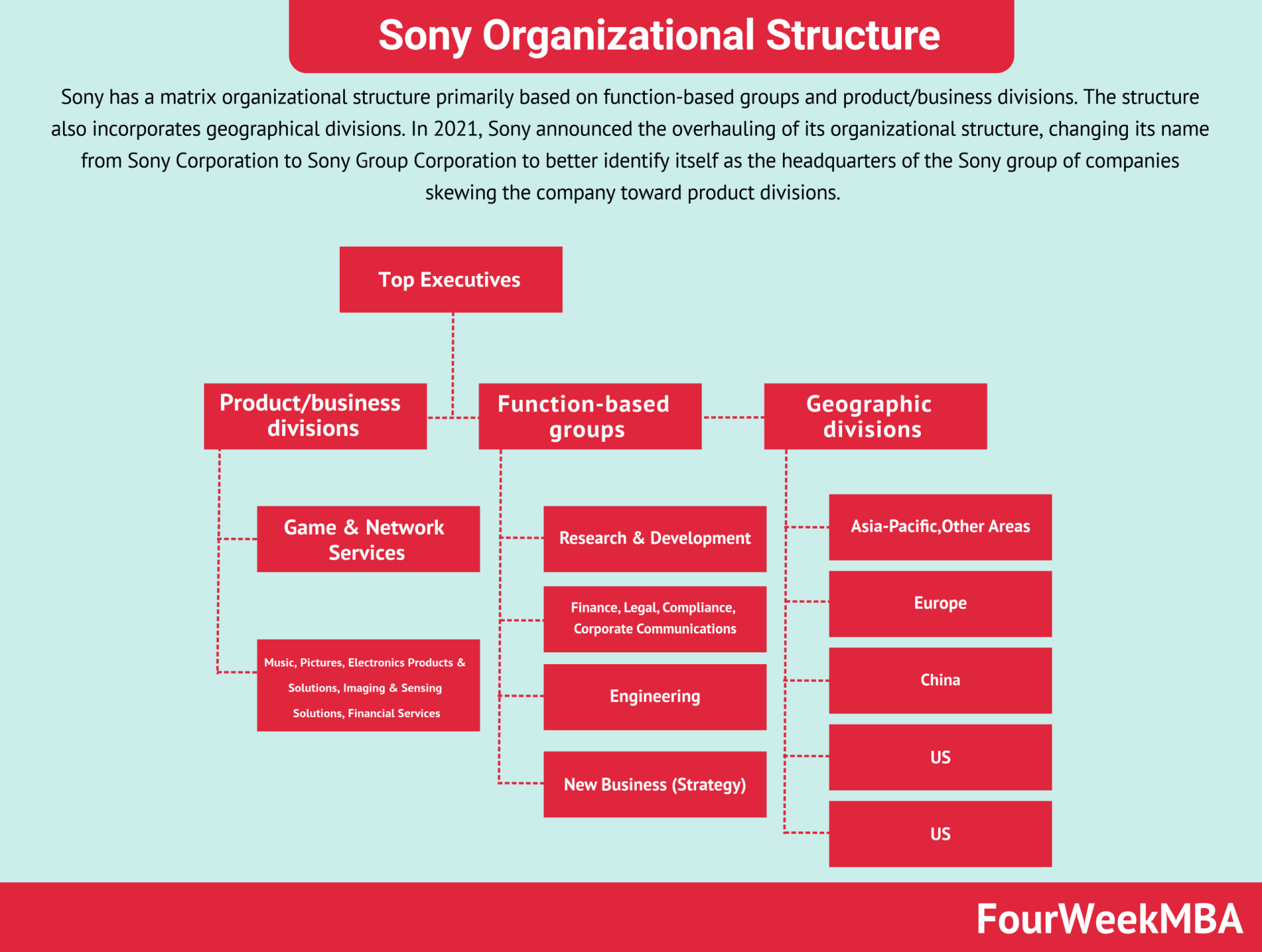
| Sony | Federated Organization: Managed semi-autonomous divisions for electronics, gaming, and entertainment. | Increased innovation and market responsiveness, driving growth and maintaining high standards of quality. |
| IBM | Federated Organization: Operated through semi-autonomous divisions focused on different technology sectors. | Enhanced innovation and market responsiveness, driving growth and maintaining high standards of quality. |
| Danaher Corporation | Federated Organization: Managed a portfolio of independent operating companies in different industries. | Achieved growth and profitability across diverse sectors, leveraging decentralized management for agility. |
| Mars, Incorporated | Federated Organization: Operated through semi-autonomous business units for different product categories. | Enhanced innovation and market responsiveness, driving growth and maintaining high standards of quality. |
| Schneider Electric | Federated Organization: Operated independent business units for different industry sectors. | Increased innovation and market responsiveness, leveraging centralized support for efficiency and growth. |
| 3M | Federated Organization: Managed a portfolio of semi-autonomous divisions focused on different technology sectors. | Enhanced innovation and market responsiveness, driving growth and maintaining high standards of quality. |
| Samsung | Federated Organization: Operated semi-autonomous divisions for electronics, semiconductors, and appliances. | Increased innovation and market responsiveness, driving growth and maintaining high standards of quality. |
| ABB | Federated Organization: Managed a portfolio of semi-autonomous business units focused on different technology sectors. | Enhanced innovation and market responsiveness, driving growth and maintaining high standards of quality. |
| Concept | Description | Implications |
|---|---|---|
| Federated Organizational Structure | A Federated Organizational Structure is characterized by a decentralized model where semi-autonomous units or entities operate independently while still being part of a larger organization. Federated structures allow subsidiaries, divisions, or affiliates to retain a degree of autonomy and decision-making authority while benefiting from shared resources, brand equity, and strategic alignment with the parent organization. Federated structures enable organizations to scale globally, adapt to local market conditions, and leverage specialized expertise or capabilities within different units or regions. | Federated Organizational Structures offer several benefits, including flexibility, agility, and local responsiveness. By decentralizing decision-making and empowering semi-autonomous units, federated structures enable organizations to adapt to diverse market conditions, customer preferences, and regulatory environments. Federated structures promote innovation, entrepreneurship, and accountability at the local level, fostering a culture of ownership, agility, and customer focus. However, federated structures may also pose challenges related to coordination, alignment, and governance. To maximize the benefits of federated structures, organizations need to establish clear goals, communication channels, and performance metrics, ensuring alignment and collaboration across different units and regions. |
| Decentralized Organizational Structure | A Decentralized Organizational Structure is similar to a federated structure but typically involves less autonomy and independence among organizational units. Decentralized structures delegate decision-making authority and operational responsibilities to lower levels of the organization while maintaining centralized control over key strategic decisions, resources, and policies. Decentralized structures enable organizations to empower frontline employees, foster innovation, and respond quickly to local needs or opportunities while still benefiting from centralized resources, expertise, and governance. | Decentralized Organizational Structures share similarities with Federated Structures in their focus on empowering lower levels of the organization and promoting local responsiveness. By delegating decision-making authority and operational responsibilities, decentralized structures enable organizations to adapt quickly to local market conditions, customer preferences, and competitive dynamics. Both models foster innovation, accountability, and customer focus at the local level while still benefiting from centralized resources, expertise, and governance. However, decentralized structures may also require clear guidelines, communication channels, and performance metrics to ensure alignment and coordination across different units and regions. |
| Multi-Divisional Organizational Structure | A Multi-Divisional Organizational Structure is a common form of federated structure where the organization is divided into semi-autonomous divisions or business units, each responsible for its own operations, resources, and performance. Multi-divisional structures enable organizations to focus on different products, markets, or customer segments while still benefiting from shared resources, brand equity, and strategic direction from the corporate headquarters. Multi-divisional structures promote accountability, specialization, and performance optimization within each division while facilitating coordination, collaboration, and synergy across divisions. | Multi-Divisional Organizational Structures share similarities with Federated Structures in their focus on decentralization, specialization, and collaboration. By organizing the organization into semi-autonomous divisions or business units, multi-divisional structures enable organizations to focus on different products, markets, or customer segments while still benefiting from centralized resources, expertise, and governance. Both models promote accountability, innovation, and performance optimization within each division while facilitating coordination, collaboration, and synergy across divisions. However, multi-divisional structures may also require effective governance mechanisms, performance metrics, and communication channels to ensure alignment and coordination across different divisions and regions. |
Read Next: Organizational Structure.
Types of Organizational Structures

Siloed Organizational Structures
Functional

Divisional

Open Organizational Structures
Matrix

Flat

Connected Business Frameworks


Nadler-Tushman Congruence Model

McKinsey’s Seven Degrees of Freedom


Organizational Structure Case Studies
OpenAI Organizational Structure

Airbnb Organizational Structure

Amazon Organizational Structure

Apple Organizational Structure

Coca-Cola Organizational Structure

Costco Organizational Structure


Facebook Organizational Structure

Goldman Sachs’ Organizational Structure

Google Organizational Structure


McDonald’s Organizational Structure

McKinsey Organizational Structure

Microsoft Organizational Structure

Nestlé Organizational Structure


Patagonia Organizational Structure

Samsung Organizational Structure

Starbucks Organizational Structure

Tesla Organizational Structure

Toyota Organizational Structure

Walmart Organizational Structure

Main Free Guides:
- Business Models
- Business Strategy
- Business Development
- Digital Business Models
- Distribution Channels
- Marketing Strategy
- Platform Business Models
- Revenue Models
- Tech Business Models


