Cultural convergence is the process by which different cultures become more alike as they come into contact through trade, migration, media and technology, sharing foods, languages, products, habits and values. It is a standard term in human geography and the opposite of cultural divergence. Research on values, such as Ronald Inglehart and Wayne Baker‘s study of the World Values Surveys (2000), finds that cultures change with modernisation but keep distinct traditions, so convergence is partial rather than total.
People meet other cultures through goods, screens, travel and migration. Each channel makes a foreign product, sound or idea familiar.
02
Some elements spread faster
Consumer goods, entertainment and technology cross borders quickly; religion, family norms and core values move more slowly, as the World Values Surveys show.
03
Local adaptation
What arrives is usually reshaped: a global format with a local language, a local menu, local rules. That is why convergence and diversity can grow at the same time.
04
Push-back
Fear of losing identity can trigger resistance, from language-protection laws to cultural quotas, which pulls the other way towards divergence.
Where you see it today
Streaming runs both ways
Global platforms spread content from many countries, not only the US. Netflix reported that more than one-third of viewing in the first half of 2025 came from non-English titles, and South Korea’s Squid Game drew 231M views across its three seasons in that period.
AI models with one cultural accent
A study of five OpenAI models (Tao et al., 2024, PNAS Nexus) found their answers to values questions resembled English-speaking and Protestant European countries. Billions of AI-assisted texts could pull writing and opinions towards that profile unless users or builders correct for it.
Change without full convergence
Analysis of World Values Survey data across dozens of societies (Inglehart and Baker, 2000) found large cultural change linked to economic development, but also the persistence of distinct traditions shaped by religious and historical heritage.
Rules to protect diversity
UNESCO’s 2005 Convention on the Protection and Promotion of the Diversity of Cultural Expressions lets states support their own cultural industries, an explicit counterweight to one-way convergence.
Cultural convergence vs related ideas
Cultural convergence
What happensCultures become more alike through contact
ExampleShared global brands and formats
Cultural divergence
What happensCultures grow apart
ExampleLanguage revival policies
Cultural diffusion
What happensA trait spreads from one place to others
ExampleYoga practised worldwide
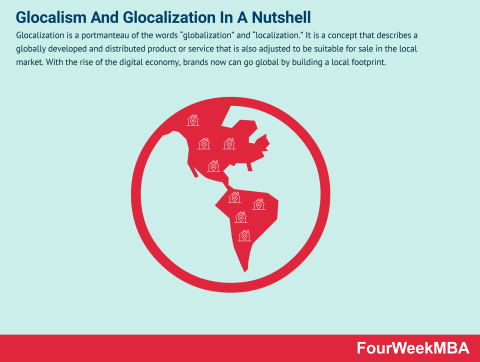
Glocalization
What happensGlobal product adapted to local tastes
ExampleLocal menus in global chains
Cultural hybridity
What happensElements blend into something new
ExampleFusion cuisine
How to use it
Separate surface convergence (products, formats) from deep values when you enter a new market; adapt for the second.
Test AI-written copy in each target market: models can default to an English-speaking cultural voice.
Use cultural prompting or local reviewers to align AI output with local norms.
Look for content and products from outside your home market that are travelling well; demand is no longer one-directional.
Track local protection rules, from content quotas to language laws, before scaling a global format.
The Business Engineer lens
AI models are a new and powerful channel of cultural convergence, because the same few systems now draft text for people in every market. The Business Engineer view: firms that localise values, not just language, will hold trust as AI flattens the default voice.
It is the process by which cultures become more alike through contact, trade, migration, media and technology.
What is the opposite of cultural convergence?
Cultural divergence, where cultures that once shared traits grow apart.
Is globalisation making all cultures the same?
Not fully. World Values Survey research finds large change alongside the persistence of distinct traditions.
How does AI affect cultural convergence?
Research found widely used language models reflect values close to English-speaking and Protestant European countries, which could nudge users towards those norms.
The complete explainer, cleaned up and reformatted for mobile.
Cultural convergence is a phenomenon that has gained significant prominence in today’s interconnected world. It refers to the process by which different cultures come into contact, interact, and share ideas, practices, and values, leading to the blending and fusion of cultural elements.
FourWeekMBABusiness EngineerAt a glance
Advancements in communication technologies, particularly the internet and social media, have enabled people from different parts of the world to connect and share ideas instantaneously.
Cultural convergence leads to the creation of hybrid cultures that incorporate elements from multiple traditions.
Cultural Appropriation: Cultural convergence can sometimes lead to cultural appropriation, where elements from a marginalized culture are adopted by a dominant culture without proper acknowledgment or respect.
Cultural convergence is a dynamic and multidimensional process driven by globalization, communication, trade, travel, and the exchange of ideas.
Layout refreshed 6 October 2026. The article text below is unchanged.
Why it mattersFrom the article
While cultural convergence promotes diversity and hybridity, it also raises concerns about cultural homogenization—the loss of distinct cultural identities as elements from dominant cultures spread globally.
Cultural convergence can also lead to conflicts and resistance when individuals or groups perceive their cultural traditions as threatened or undermined by external influences.
Embracing cultural convergence as a means of celebrating diversity and fostering creativity while respecting cultural authenticity and addressing issues of appropriation and homogenization is a complex challenge for individuals, communities, and societies in our ever-globalizing world.
Understanding Cultural Convergence
Key Concepts
To grasp the concept of cultural convergence fully, it is essential to understand the key concepts associated with it:
Culture: Culture encompasses the shared beliefs, customs, traditions, language, arts, and values of a particular group or society. It shapes the way people perceive and interact with the world.
Convergence: Convergence refers to the process of coming together or merging. In the context of cultural convergence, it denotes the blending of diverse cultural elements.
Globalization: Globalization is the interconnectedness of societies and economies on a global scale. It facilitates the exchange of goods, information, and ideas among cultures.
Common Form
The concept of cultural convergence can be summarized in a common form:
Interaction and Exchange: Cultural convergence occurs when different cultures interact and exchange ideas, practices, and values.
Blending and Fusion: Through this interaction, cultural elements from different societies blend and fuse, creating a synthesis of traditions and beliefs.
Impact on Culture: Cultural convergence can influence and transform the culture of one or both participating societies.
Driving Forces of Cultural Convergence
Cultural convergence is driven by various factors, including:
1. Global Communication:
Advancements in communication technologies, particularly the internet and social media, have enabled people from different parts of the world to connect and share ideas instantaneously. This ease of communication accelerates cultural convergence.
2. International Trade:
The exchange of goods and services across borders introduces people to products and practices from other cultures. This exposure can lead to the adoption of foreign customs and preferences.
3. Travel and Migration:
Increased travel and migration allow individuals to experience different cultures firsthand. Immigrants often bring their cultural traditions with them, contributing to cultural diversity and convergence in their new homes.
4. Media and Entertainment:
Global media, including movies, television shows, music, and video games, often reflect a blend of cultural elements from various regions. Audiences worldwide are exposed to these cultural amalgamations, influencing their perceptions and preferences.
5. Education:
International educational exchanges and the dissemination of knowledge through academic institutions promote the sharing of ideas and values among cultures.
Impact of Cultural Convergence
Cultural convergence has far-reaching consequences for societies, individuals, and the world at large:
1. Cultural Hybridity:
Cultural convergence leads to the creation of hybrid cultures that incorporate elements from multiple traditions. These hybrid cultures reflect the diversity and complexity of contemporary societies.
Example: Fusion cuisine, which combines ingredients and cooking techniques from different culinary traditions, is a culinary expression of cultural hybridity.
2. Cultural Diffusion:
Cultural convergence facilitates the diffusion of cultural practices, beliefs, and technologies across borders. This diffusion can lead to the adoption of new customs and the abandonment of traditional ones.
Example: The global popularity of yoga, originally from India, is a result of cultural diffusion. Yoga practices and philosophies have been embraced worldwide.
3. Cultural Homogenization:
While cultural convergence promotes diversity and hybridity, it also raises concerns about cultural homogenization—the loss of distinct cultural identities as elements from dominant cultures spread globally.
Example: The prevalence of English as a global lingua franca can lead to the marginalization of indigenous languages in some regions.
4. Cultural Innovation:
The blending of cultural elements can foster innovation and creativity as individuals and societies draw inspiration from diverse sources.
Example: Contemporary art often incorporates elements from various cultures, leading to innovative and thought-provoking works.
5. Conflict and Resistance:
Cultural convergence can also lead to conflicts and resistance when individuals or groups perceive their cultural traditions as threatened or undermined by external influences.
Example: The spread of Western fashion and values has led to debates and resistance in some conservative societies.
Real-World Examples of Cultural Convergence
Cultural convergence can be observed in various aspects of modern life. Here are some real-world examples:
1. Food and Cuisine:
Culinary traditions from around the world have blended to create diverse and innovative cuisines. Sushi burritos, a fusion of Japanese sushi and Mexican burritos, are a prime example of culinary cultural convergence.
2. Language and Communication:
The adoption of English as a global lingua franca has led to the infusion of English words and expressions into numerous languages. This linguistic convergence is particularly prevalent in business, technology, and popular culture.
3. Music:
Musical genres often incorporate elements from different cultures. For instance, reggaeton combines Caribbean and Latin American rhythms with hip-hop and electronic music influences.
4. Fashion and Clothing:
Fashion designers draw inspiration from various cultures, resulting in clothing that blends styles and motifs from different regions. Bohemian fashion, for example, often combines elements of Eastern and Western fashion.
5. Architecture and Design:
Modern architecture frequently incorporates elements from different cultural traditions. The design of buildings, homes, and public spaces often reflects a fusion of architectural styles and influences.
Cultural convergence is not without its critiques and controversies:
Cultural Appropriation: Cultural convergence can sometimes lead to cultural appropriation, where elements from a marginalized culture are adopted by a dominant culture without proper acknowledgment or respect. This can perpetuate power imbalances and disrespect cultural traditions.
Loss of Authenticity: Critics argue that cultural convergence can dilute the authenticity of cultural practices and expressions. As traditions blend and change, some argue that they lose their genuine character.
Homogenization Concerns: Concerns persist regarding the potential for cultural homogenization, where dominant cultures overpower and erase smaller, distinct cultural identities. This can lead to a loss of cultural diversity.
Conflict and Resistance: As mentioned earlier, cultural convergence can lead to conflicts and resistance when individuals or groups perceive their cultural traditions as threatened.
Conclusion
Cultural convergence is a dynamic and multidimensional process driven by globalization, communication, trade, travel, and the exchange of ideas. It fosters cultural hybridity, diffusion, innovation, and, at times, conflicts and resistance. As societies continue to interconnect and share cultural elements, understanding the complexities and implications of cultural convergence becomes increasingly important.
Embracing cultural convergence as a means of celebrating diversity and fostering creativity while respecting cultural authenticity and addressing issues of appropriation and homogenization is a complex challenge for individuals, communities, and societies in our ever-globalizing world. Balancing the benefits and challenges of cultural convergence is an ongoing endeavor that requires thoughtful consideration and dialogue among cultures and nations
Connected · Cultural Convergence
Where to go next from Cultural Convergence
Picked for this page by topic. Every link checked live.
Gennaro Cuofano is a CRO and tech executive who has worked in AI since late 2015, starting with bringing NLP, natural-language generation, voice and chatbot products to the marketing industry. His background is in law and finance: he holds a Master's degree in Law and an International MBA with an emphasis on corporate finance (LUISS Business School and the University of San Diego, 2012), and worked as a financial analyst at a real-estate investment firm in San Diego and as an assistant controller. His work focuses on business model strategy, business engineering and, more broadly, structural analysis: how companies make money, read from their own filings. He created FourWeekMBA and leads research there and at The Business Engineer, his newsletter on AI and business strategy, with over 95,000 subscribers and more than 1,000 published analyses. His writing has also appeared on Entrepreneur (for example, How to Digitize a Family Business in Europe) and HackerNoon. Find him on LinkedIn and Substack. See how we source.



 The Business Engineer readItalian Brain Rot: AI-Generated Culture, Platform Economics, & the Future of Digital MediaIf you have a kid in the family, you might have noticed a very weird trend, of a bunch of AI-generated characters with weird, Italian-sounding names.Read on businessengineer.ai →