Peer-to-peer learning is a student-centric approach where participants actively engage with one another to acquire knowledge, skills, and insights. This collaborative learning process can take various forms, including group discussions, peer teaching, collaborative projects, and problem-solving activities.
Key characteristics of peer-to-peer learning include:
Active Participation: Participants take an active role in their learning, rather than passively receiving information from instructors.
Knowledge Sharing: Peer-to-peer learning encourages individuals to share their expertise, experiences, and perspectives with their peers.
Collaborative Problem Solving: Learners work together to solve problems, fostering critical thinking and teamwork skills.
Diverse Perspectives: Participants bring diverse backgrounds and viewpoints to the learning experience, enriching discussions and insights.
To fully understand the significance of peer-to-peer learning, it’s essential to recognize its key characteristics:
Equality: In P2P learning, all participants are considered equals. There is no traditional hierarchy of teacher and student.
Active Engagement: Learners actively engage in the learning process by discussing, questioning, and sharing their knowledge.
Cooperation: Collaboration and cooperation among participants are essential elements of peer-to-peer learning.
Problem-Centered: Learning often revolves around real-world problems, scenarios, or challenges, making it practical and applicable.
Diverse Learning Styles: P2P learning accommodates different learning styles and preferences, allowing participants to learn in ways that suit them best.
Social Interaction: Peer-to-peer learning encourages social interaction and the development of interpersonal skills.
Significance of Peer-to-Peer Learning
Peer-to-peer learning has a profound impact on education and personal development. Understanding its significance can help educators, students, and lifelong learners appreciate the value of collaborative learning experiences. Here are some key aspects of its significance:
Active Engagement
Peer-to-peer learning promotes active engagement, encouraging participants to take ownership of their learning journey. This active participation leads to a deeper understanding of the subject matter.
Enhanced Critical Thinking
Collaborative learning fosters critical thinking skills as participants analyze, discuss, and evaluate ideas and concepts. It encourages them to think critically and make informed decisions.
Diverse Perspectives
P2P learning brings together individuals with diverse backgrounds, experiences, and viewpoints. This diversity enriches discussions and broadens participants’ perspectives.
Learning from peers can improve information retention. Explaining concepts to others solidifies one’s understanding of the material.
Preparation for Real-Life Situations
Collaborative learning mirrors real-life situations where individuals often work in teams, solve problems collectively, and share knowledge.
Building a Supportive Learning Community
Peer-to-peer learning fosters a sense of community among participants, creating a supportive environment for learning.
Applications of Peer-to-Peer Learning
Peer-to-peer learning is a versatile approach that finds applications in various educational settings and beyond. Here are examples of how P2P learning is applied in different contexts:
Classroom Education
In traditional classroom settings, peer-to-peer learning can take the form of group discussions, peer teaching, and collaborative projects. It supplements teacher-led instruction.
Online Learning
In online courses and e-learning platforms, peer-to-peer learning is facilitated through discussion forums, collaborative assignments, and virtual group work.
Professional Development
In workplace training and professional development programs, employees often engage in peer-to-peer learning to acquire new skills and knowledge.
Mentorship Programs
Mentorship programs involve experienced individuals (mentors) sharing their expertise and guidance with less experienced participants (mentees).
Study Groups
Students often form study groups to collaborate on assignments, review course material, and prepare for exams.
Problem-Based Learning
Problem-based learning (PBL) is an educational approach where learners work collaboratively to solve complex problems or scenarios.
Language Exchange
Language learners often engage in language exchange partnerships to practice speaking with native speakers of the language they are learning.
Community Learning
Community organizations and local groups often organize peer-led workshops and skill-sharing events to benefit their members.
Implementing Peer-to-Peer Learning
To effectively implement peer-to-peer learning experiences, educators, trainers, and facilitators can follow these practical guidelines:
For Educators:
Set Clear Learning Objectives: Define clear learning objectives and outcomes for peer-to-peer activities to ensure alignment with the curriculum.
Create a Supportive Environment: Foster a safe and inclusive learning environment where participants feel comfortable sharing ideas and asking questions.
Provide Structure: Design structured activities or assignments that guide participants in their collaborative learning journey.
Facilitate Discussions: Facilitate group discussions and activities, ensuring that everyone has an opportunity to contribute.
Assessment and Feedback: Develop assessment criteria and provide constructive feedback to help participants improve.
Encourage Reflection: Encourage participants to reflect on their learning experiences and the skills they have developed.
For Learners:
Actively Participate: Take an active role in discussions and activities. Engage with peers by asking questions and offering insights.
Listen and Empathize: Be a good listener and show empathy toward your peers’ perspectives and experiences.
Respect Differences: Respect the diverse backgrounds and viewpoints of your peers. Create an inclusive and respectful learning environment.
Collaborate Effectively: Learn to work collaboratively with others, share responsibilities, and contribute to group goals.
Provide Constructive Feedback: When providing feedback to peers, be constructive and specific. Highlight strengths and suggest areas for improvement.
Reflect on Learning: Reflect on what you have learned from your peers and how it has contributed to your personal and professional growth.
Conclusion
Peer-to-peer learning is a transformative approach to education and personal development that harnesses the power of collaboration, active engagement, and diverse perspectives. Its significance lies in its ability to foster critical thinking, enhance knowledge retention, and develop essential life skills. By understanding the value of peer-to-peer learning and following effective implementation practices, educators, students, and lifelong learners can harness its potential to create a more interactive, inclusive, and enriching learning experience. Peer-to-peer learning is not just a method; it is a philosophy that empowers individuals to learn, grow, and thrive together in an increasingly interconnected and knowledge-driven world.
fixed mindset believes their intelligence and talents are fixed traits that cannot be developed. The two mindsets were developed by American psychologist Carol Dweck while studying human motivation.
Both mindsets are comprised of conscious and subconscious thought patterns established at a very young age. In adult life, they have profound implications for personal and professional success.
Individuals with a growthmindset devote more time and effort to achieving difficult goals and by extension, are less concerned with the opinions or abilities of others. Individuals with a fixed mindset are sensitive to criticism and may be preoccupied with proving their talents to others.
Constructive feedback is supportive in nature and designed to help employees improve or correct their performance or behavior. Note that the intention of such feedback is to achieve a positive outcome for the employee based on comments, advice, or suggestions.
High-performance coaches work with individuals in personal and professional contexts to enable them to reach their full potential. While these sorts of coaches are commonly associated with sports, it should be noted that the act of coaching is a specific type of behavior that is also useful in business and leadership.
The training of trainers model seeks to engage master instructors in coaching new, less experienced instructors with a particular topic or skill. The training of trainers (ToT) model is a framework used by master instructors to train new instructors, enabling them to subsequently train other people in their organization.
Active listening is the process of listening attentively while someone speaks and displaying understanding through verbal and non-verbal techniques. Active listening is a fundamental part of good communication, fostering a positive connection and building trust between individuals.
Active recall enables the practitioner to remember information by moving it from short-term to long-term memory, where it can be easily retrieved. The technique is also known as active retrieval or practice testing. With active recall, the process is reversed since learning occurs when the student retrieves information from the brain.
The phrase “baptism by fire” originates from the Bible in Matthew 3:11. In Christianity, the phrase was associated with personal trials and tribulations and was also used to describe the martyrdom of an individual. Many years later, it was associated with a soldier going to war for the first time. Here, the baptism was the battle itself. “Baptism by fire” is a phrase used to describe the process of an employee learning something the hard way with great difficulty.
The Dreyfus model of skill acquisition was developed by brothers Hubert and Stuart Dreyfus at the University of California, Berkeley, in 1980. The Dreyfus model of skill acquisition is a learning progression framework. It argues that as one learns a new skill via external instruction, they pass through five stages of development: novice, advanced beginner, competent, proficient, and expert.
The Kolb reflective cycle was created by American educational theorist David Kolb. In 1984, Kolb created the Experiential Learning Theory (ELT) based on the premise that learning is facilitated by direct experience. In other words, the individual learns through action. The Kolb reflective cycle is a holistic learning and development process based on the reflection of active experiences.
The Method of Loci is a mnemonic strategy for memorizing information. The Method of Loci gets its name from the word “loci”, which is the plural of locus – meaning location or place. It is a form of memorization where an individual places information they want to remember along with points of an imaginary journey. By retracing the same route through the journey, the individual can recall the information in a specific order. For this reason, many consider this memory tool a location-based mnemonic.
The Experience Curve argues that the more experience a business has in manufacturing a product, the more it can lower costs. As a company gains un know-how, it also gains in terms of labor efficiency, technology-driven learning, product efficiency, and shared experience, to reduce the cost per unit as the cumulative volume of production increases.
The Feynman Technique is a mental model and strategy for learning something new and committing it to memory. It is often used in exam preparation and for understanding difficult concepts. Physicist Richard Feynman elaborated this method, and it’s a powerful technique to explain anything.
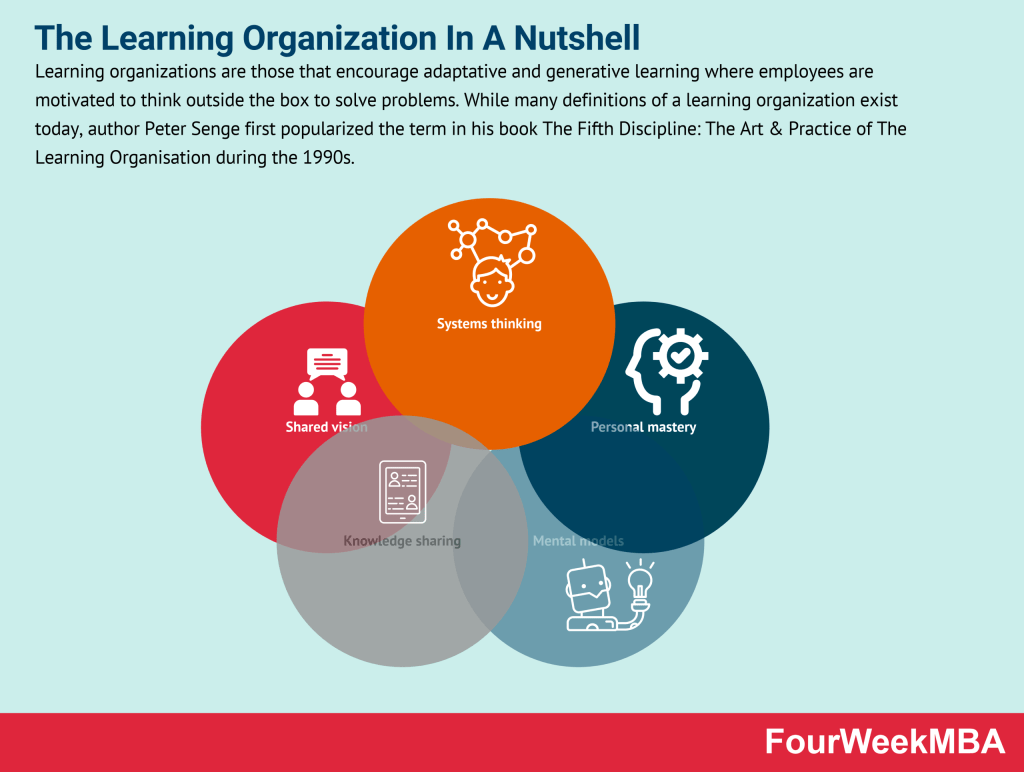
Learning organizations are those that encourage adaptative and generative learning where employees are motivated to think outside the box to solve problems. While many definitions of a learning organization exist today, author Peter Senge first popularized the term in his book The Fifth Discipline: The Art & Practice of The Learning Organisation during the 1990s.
The forgetting curve was first proposed in 1885 by Hermann Ebbinghaus, a German psychologist and pioneer of experimental research into memory. The forgetting curve illustrates the rate at which information is lost over time if the individual does not make effort to retain it.
Instructor-led training is a more traditional, top-down, teacher-oriented approach to learning that occurs in online or offline classroom environments. The approach connects instructors with students to encourage discussion and interaction in a group or individual context, with many enjoying ILT over other methods as they can seek direct clarification on a topic from the source. Instructor-led training (ILT), therefore, encompasses any form of training provided by an instructor in an online or offline classroom setting.
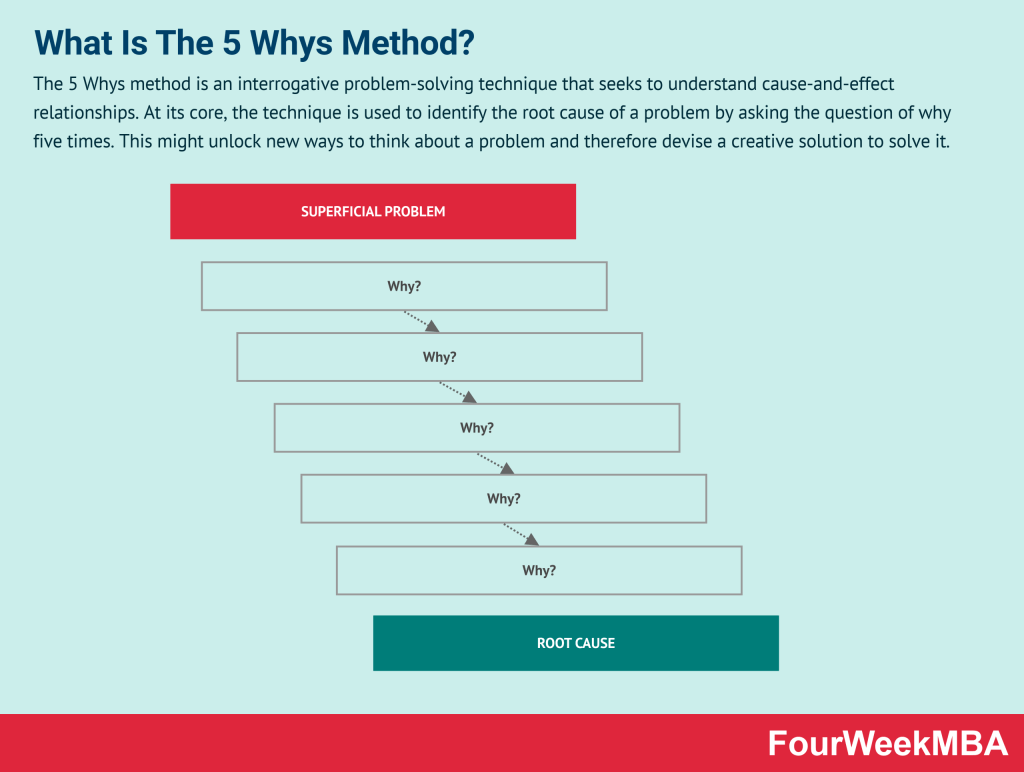
The 5 Whys method is an interrogative problem-solving technique that seeks to understand cause-and-effect relationships. At its core, the technique is used to identify the root cause of a problem by asking the question of why five times. This might unlock new ways to think about a problem and therefore devise a creative solution to solve it.
Single-loop learning was developed by Dr. Chris Argyris, a well-respected author and Harvard Business School professor in the area of metacognitive thinking. He defined single-loop learning as “learning that changes strategies of action (i.e. the how) in ways that leave the values of a theory of action unchanged (i.e. the why).” Single-loop learning is a learning process where people, groups, or organizations modify their actions based on the difference between expected and actual outcomes.
Spaced repetition is a technique where individuals review lessons at increasing intervals to memorize information. Spaced repetition is based on the premise that the brain learns more effectively when the individual “spaces out” the learning process. Thus, it can be used as a mnemonic technique to transform short-term memory into long-term memory.
Blended learning is a broad and imprecise field that makes it difficult to define. However, in most cases, it is considered to be a form of hybrid learning that combines online and offline instructional methods.
The term lessons learned refers to the various experiences project team members have while participating in a project. Lessons are shared in a review session which usually occurs once the project has been completed, with any improvements or best practices incorporated into subsequent projects.
Post-mortem analyses review projects from start to finish to determine process improvements and ensure that inefficiencies are not repeated in the future. In the Project Management Book of Knowledge (PMBOK), this process is referred to as “lessons learned”.
Instructor-led training is a more traditional, top-down, teacher-oriented approach to learning that occurs in online or offline classroom environments. The approach connects instructors with students to encourage discussion and interaction in a group or individual context, with many enjoying ILT over other methods as they can seek direct clarification on a topic from the source. Instructor-led training (ILT), therefore, encompasses any form of training provided by an instructor in an online or offline classroom setting.
The 5E Instructional Model is a framework for improving teaching practices through discussion, observation, critique, and reflection. Teachers and students move through each phase linearly, but some may need to be repeated or cycled through several times to ensure effective learning. This is a form of inquiry-based learning where students are encouraged to discover information and formulate new insights themselves.
Gennaro is the creator of FourWeekMBA, which reached about four million business people, comprising C-level executives, investors, analysts, product managers, and aspiring digital entrepreneurs in 2022 alone | He is also Director of Sales for a high-tech scaleup in the AI Industry | In 2012, Gennaro earned an International MBA with emphasis on Corporate Finance and Business Strategy.