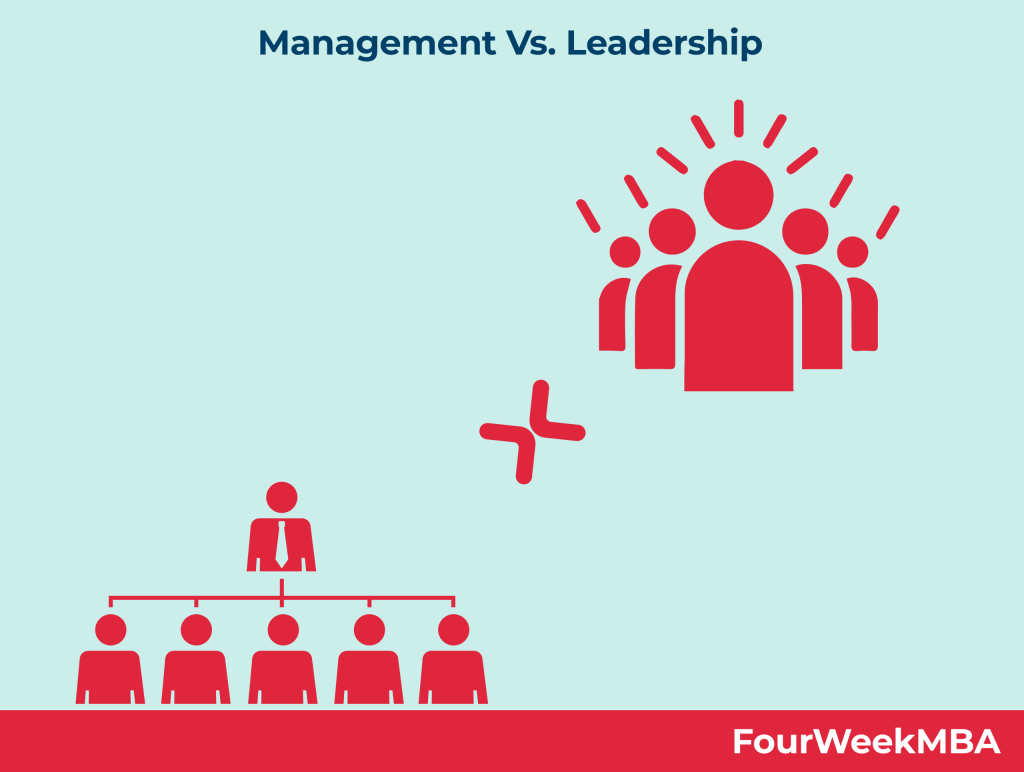
Autocratic leadership comprises centralized decision-making, clear direction, and limited team involvement. Characteristics of autocratic leadership emphasizing control, hierarchy, and minimal team participation in decision-making and collaboration.
Making Decisions Without Involving Others: Autocratic leaders make decisions unilaterally, without seeking input or feedback from team members.
Exercising Authority and Control Over Subordinates: They assert authority and control over subordinates, with a top-down approach to leadership.
Restricting Input and Feedback from Team Members: Autocratic leaders limit the input and feedback from team members, maintaining decision-making power.
Enforcing Strict Adherence to Rules and Procedures: They enforce strict adherence to established rules and procedures, often without room for flexibility.
Clear Direction
Providing Clear Instructions and Expectations: Autocratic leaders provide clear and specific instructions and expectations for tasks and projects.
Supervising and Monitoring Work Closely: They closely supervise and monitor the work of team members to ensure compliance with directives.
Emphasizing Task Completion Over Individual Autonomy: Task completion is prioritized over granting individual autonomy or decision-making authority.
Maintaining a Hierarchical Organizational Structure: Autocratic leaders maintain a hierarchical organizational structure with a clear chain of command.
Limited Team Involvement
Minimizing Team Members’ Involvement in Decision-Making: Autocratic leaders minimize the involvement of team members in the decision-making process.
Communication Flowing Predominantly from Leaders to Subordinates: Communication tends to flow predominantly from leaders to subordinates, with limited input from team members.
Limited Collaboration and Teamwork Among Team Members: There is limited collaboration and teamwork among team members, as decisions are often made by the leader alone.
Excessive Monitoring and Control of Tasks and Processes: Autocratic leaders exercise excessive monitoring and control over tasks and processes to ensure compliance with directives.
Key Highlights
Autocratic leadership is characterized by centralized decision-making, clear direction, and limited team involvement.
It involves making decisions without involving others, exercising authority and control, and restricting input from team members.
Clear direction includes providing specific instructions, close supervision, and emphasizing task completion over individual autonomy.
Limited team involvement minimizes participation in decision-making, communication predominantly from leaders to subordinates, and limited collaboration among team members.
Autocratic leaders often maintain a hierarchical organizational structure and exercise excessive monitoring and control of tasks and processes.
Related Concepts
Description
Implications
Autocratic Leadership
– Leadership style characterized by centralized control and decision-making by the leader. – Involves limited participation from team members in decision-making processes. – Autocratic leaders make decisions independently and expect strict adherence to their directives. – Emphasizes authority, discipline, and top-down communication.
– Efficient decision-making: Autocratic leadership facilitates quick decision-making processes as decisions are made by the leader without extensive consultation or deliberation, enabling swift responses to challenges and opportunities in the organization. – Clear direction and accountability: Autocratic leaders provide clear direction and expectations to team members, reducing ambiguity and confusion about roles, tasks, and responsibilities, which can enhance productivity and performance in the short term. – Maintaining order and stability: Autocratic leadership can help maintain order and stability in situations where rapid or decisive action is needed, such as in crisis situations or emergencies, ensuring that tasks are completed efficiently and objectives are achieved effectively. – Potential for resentment and disengagement: Autocratic leadership may lead to resentment and disengagement among team members who feel marginalized or undervalued in decision-making processes, resulting in decreased morale, motivation, and commitment over time.
Transactional Leadership
– Leadership approach focused on exchanges between leaders and followers to achieve goals. – Involves setting clear expectations, providing rewards for performance, and imposing consequences for non-compliance. – Transactional leaders emphasize structure, order, and compliance with established rules and procedures. – Emphasizes transactional exchanges, such as rewards for performance or disciplinary actions for non-performance.
– Clarity of expectations: Transactional leadership provides clarity of expectations to team members through clear communication of goals, objectives, and performance standards, reducing ambiguity and uncertainty about role requirements and expectations, which can enhance productivity and performance in the short term. – Rewarding performance and enforcing compliance: Transactional leadership rewards performance and enforces compliance with established rules and procedures through incentives, recognition, and disciplinary actions, motivating individuals to achieve goals and meet expectations, and maintaining order and discipline in the organization over time. – Limited innovation and creativity: Transactional leadership may limit innovation and creativity among team members by emphasizing adherence to established norms and procedures over exploration of new ideas and approaches, hindering organizational adaptability and competitiveness in a rapidly changing business environment. – Risk of transactional exchanges: Transactional leadership may lead to transactional exchanges that prioritize short-term gains over long-term growth, such as focusing on achieving targets or meeting quotas at the expense of employee development or organizational innovation, which can undermine organizational sustainability and resilience in the long run.
Bureaucratic Leadership
– Leadership approach characterized by rigid adherence to rules, regulations, and procedures. – Involves hierarchical structures, formalized processes, and standardized practices. – Bureaucratic leaders emphasize adherence to established norms and routines. – Emphasizes consistency, predictability, and stability in organizational operations.
– Consistency and predictability: Bureaucratic leadership promotes consistency and predictability in organizational operations by standardizing processes, procedures, and practices, reducing variability and uncertainty in performance and outcomes, which can enhance efficiency and reliability in delivering products or services to customers over time. – Clear roles and responsibilities: Bureaucratic leadership clarifies roles and responsibilities through formalized structures and processes, minimizing confusion and ambiguity about authority, tasks, and accountability, which can enhance coordination and cooperation among team members in achieving organizational objectives over time. – Resistance to change and innovation: Bureaucratic leadership may resist change and innovation by maintaining rigid adherence to established rules and procedures, inhibiting experimentation, adaptation, and creativity in response to changing market conditions or emerging opportunities, which can limit organizational agility and competitiveness in dynamic and uncertain business environments. – Risk of bureaucracy and inefficiency: Bureaucratic leadership may lead to bureaucracy and inefficiency by prioritizing adherence to rules and procedures over responsiveness, flexibility, and customer focus, resulting in delays, bottlenecks, and inefficiencies in decision-making and execution, which can undermine organizational performance and customer satisfaction in the long run.
Command and Control
– Leadership approach characterized by centralized authority, hierarchical structures, and top-down communication. – Involves strict supervision, direction, and control over subordinate activities. – Command and control leaders make decisions independently and expect obedience and compliance from subordinates. – Emphasizes discipline, order, and accountability.
– Clear direction and accountability: Command and control leadership provides clear direction and accountability to subordinates through explicit instructions, expectations, and performance standards, minimizing ambiguity and confusion about roles, tasks, and responsibilities, which can enhance productivity and performance in the short term. – Maintaining order and discipline: Command and control leadership maintains order and discipline in organizational operations through strict supervision, direction, and control over subordinate activities, ensuring compliance with established rules, procedures, and standards, which can enhance efficiency and reliability in delivering products or services to customers over time. – Limited autonomy and initiative: Command and control leadership may limit autonomy and initiative among subordinates by centralizing decision-making authority and tightly controlling activities and resources, discouraging creativity, innovation, and ownership in solving problems or pursuing opportunities, which can hinder organizational adaptability and competitiveness in a rapidly changing business environment. – Risk of resistance and disengagement: Command and control leadership may lead to resistance and disengagement among subordinates who feel micromanaged or undervalued in decision-making processes, resulting in decreased morale, motivation, and commitment over time.
Leadership styles encompass the behavioral qualities of a leader. These qualities are commonly used to direct, motivate, or manage groups of people. Some of the most recognized leadership styles include Autocratic, Democratic, or Laissez-Faire leadership styles.
Agile leadership is the embodiment of agile manifesto principles by a manager or management team. Agile leadership impacts two important levels of a business. The structural level defines the roles, responsibilities, and key performance indicators. The behavioral level describes the actions leaders exhibit to others based on agile principles.
Adaptive leadership is a model used by leaders to help individuals adapt to complex or rapidly changing environments. Adaptive leadership is defined by three core components (precious or expendable, experimentation and smart risks, disciplined assessment). Growth occurs when an organization discards ineffective ways of operating. Then, active leaders implement new initiatives and monitor their impact.
Authors and strategy experts Chan Kim and Renée Mauborgne developed the idea of blue ocean leadership. In the same way that Kim and Mauborgne’s blue ocean strategy enables companies to create uncontested market space, blue ocean leadership allows companies to benefit from unrealized employee talent and potential.
Developed by business consultants Kenneth Blanchard and Paul Hersey in the 1960s, delegative leadership is a leadership style where authority figures empower subordinates to exercise autonomy. For this reason, it is also called laissez-faire leadership. In some cases, this type of leadership can lead to increases in work quality and decision-making. In a few other cases, this type of leadership needs to be balanced out to prevent a lack of direction and cohesiveness of the team.
Distributed leadership is based on the premise that leadership responsibilities and accountability are shared by those with the relevant skills or expertise so that the shared responsibility and accountability of multiple individuals within a workplace, bulds up as a fluid and emergent property (not controlled or held by one individual). Distributed leadership is based on eight hallmarks, or principles: shared responsibility, shared power, synergy, leadership capacity, organizational learning, equitable and ethical climate, democratic and investigative culture, and macro-community engagement.
Ethical leaders adhere to certain values and beliefs irrespective of whether they are in the home or office. In essence, ethical leaders are motivated and guided by the inherent dignity and rights of other people.
Transformational leadership is a style of leadership that motivates, encourages, and inspires employees to contribute to company growth. Leadership expert James McGregor Burns first described the concept of transformational leadership in a 1978 book entitled Leadership. Although Burns’ research was focused on political leaders, the term is also applicable for businesses and organizational psychology.
Those who lead by example let their actions (and not their words) exemplify acceptable forms of behavior or conduct. In a manager-subordinate context, the intention of leading by example is for employees to emulate this behavior or conduct themselves.
A leader is someone within an organization who possesses the ability to influence and lead others by example. Leaders inspire, support, and encourage those beneath them and work continuously to achieve objectives. A boss is someone within an organization who gives direct orders to subordinates, tends to be autocratic, and prefers to be in control at all times.
Situational leadership is based on situational leadership theory. Developed by authors Paul Hersey and Kenneth Blanchard in the late 1960s, the theory’s fundamental belief is that there is no single leadership style that is best for every situation. Situational leadership is based on the belief that no single leadership style is best. In other words, the best style depends on the situation at hand.
Succession planning is a process that involves the identification and development of future leaders across all levels within a company. In essence, succession planning is a way for businesses to prepare for the future. The process ensures that when a key employee decides to leave, the company has someone else in the pipeline to fill their position.
Fielder’s contingency model argues no style of leadership is superior to the rest evaluated against three measures of situational control, including leader-member relations, task structure, and leader power level. In Fiedler’s contingency model, task-oriented leaders perform best in highly favorable and unfavorable circumstances. Relationship-oriented leaders perform best in situations that are moderately favorable but can improve their position by using superior interpersonal skills.
In the context of an organization, cultural models are frameworks that define, shape, and influence corporate culture. Cultural models also provide some structure to a corporate culture that tends to be fluid and vulnerable to change. Once upon a time, most businesses utilized a hierarchical culture where various levels of management oversaw subordinates below them. Today, however, there exists a greater diversity in models as leaders realize the top-down approach is outdated in many industries and that success can be found elsewhere.
Action-centered leadership defines leadership in the context of three interlocking areas of responsibility and concern. This framework is used by leaders in the management of teams, groups, and organizations.
Developed in the 1960s and first published in 1973, action-centered leadership was revolutionary for its time because it believed leaders could learn the skills they needed to manage others effectively.
Adair believed that effective leadership was exemplified by three overlapping circles (responsibilities): achieve the task, build and maintain the team, and develop the individual.
High-performance coaches work with individuals in personal and professional contexts to enable them to reach their full potential. While these sorts of coaches are commonly associated with sports, it should be noted that the act of coaching is a specific type of behavior that is also useful in business and leadership.
When most people are asked to define power, they think about the power a leader possesses as a function of their responsibility for subordinates. Others may think that power comes from the title or position this individual holds.
Tipping Point Leadership is a low-cost means of achieving a strategic shift in an organization by focusing on extremes. Here, the extremes may refer to small groups of people, acts, and activities that exert a disproportionate influence over business performance.
The Vroom-Yetton decision model is a decision-making process based on situational leadership. According to this model, there are five decision-making styles guides group-based decision-making according to the situation at hand and the level of involvement of subordinates: Autocratic Type 1 (AI), Autocratic Type 2 (AII), Consultative Type 1 (CI), Consultative Type 2 (CII), Group-based Type 2 (GII).
Likert’s management systems were developed by American social psychologist Rensis Likert. Likert’s management systems are a series of leadership theories based on the study of various organizational dynamics and characteristics. Likert proposed four systems of management, which can also be thought of as leadership styles: Exploitative authoritative, Benevolent authoritative, Consultative, Participative.
Gennaro is the creator of FourWeekMBA, which reached about four million business people, comprising C-level executives, investors, analysts, product managers, and aspiring digital entrepreneurs in 2022 alone | He is also Director of Sales for a high-tech scaleup in the AI Industry | In 2012, Gennaro earned an International MBA with emphasis on Corporate Finance and Business Strategy.