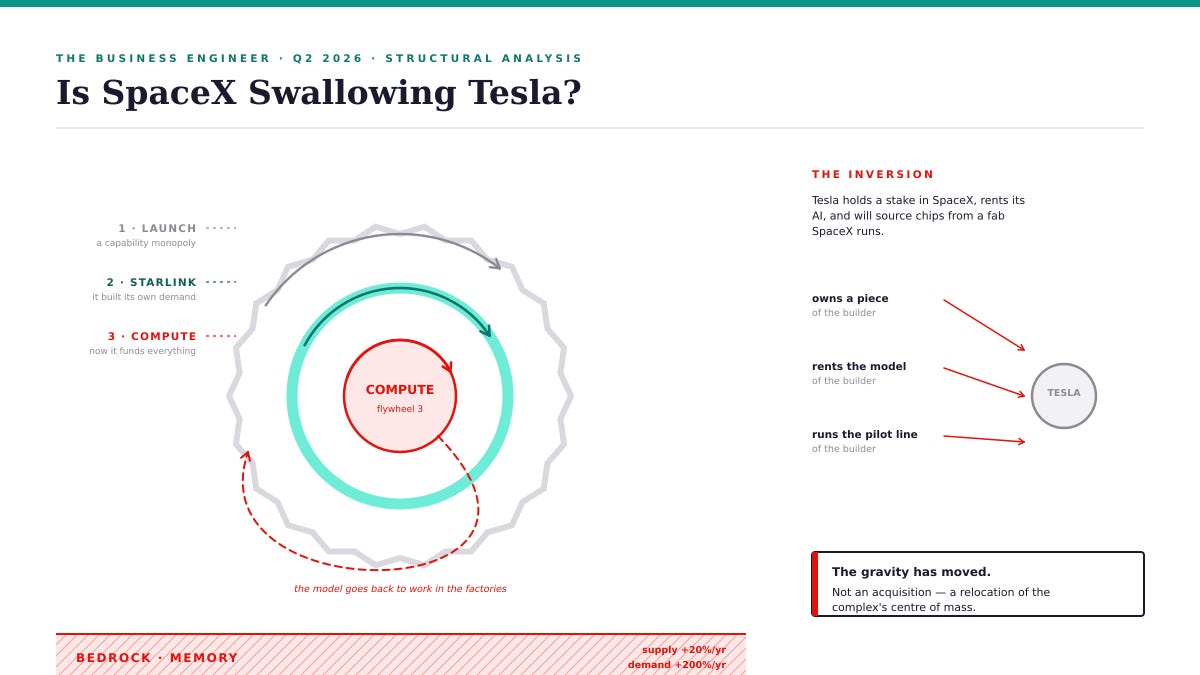
SpaceX’s record-breaking $135-per-share IPO price reveals something uncomfortable: Elon Musk has built two companies that increasingly compete for the same resources, talent, and his own attention. The $270 billion valuation suggests investors are betting on synergies, but the business model reality tells a different story.
Most multi-company founders solve the conflict early—they exit one business or create clear operational separation. Musk’s approach is different: he’s running two manufacturing-intensive companies that both demand his direct involvement for major decisions, similar talent pools, and increasingly overlapping technological needs.
Tesla’s business model depends on Musk as the primary product evangelist and technical decision-maker. SpaceX’s model similarly relies on his aerospace engineering judgment and risk tolerance. Unlike software companies where founders can step back, both require hands-on manufacturing expertise that doesn’t scale across multiple organizations.
Resource Competition Already Shows
The talent arbitrage is real. SpaceX’s Raptor engine team shares expertise with Tesla’s battery engineering group, but both companies are hiring from the same MIT and Stanford programs. When Tesla needed manufacturing expertise for the Cybertruck production ramp, several SpaceX production engineers moved internally—creating temporary gaps in Starship development.
More concerning for investors: both companies’ business models assume unlimited access to Musk’s technical decision-making. Tesla’s Full Self-Driving development requires his neural network architecture choices. SpaceX’s Mars mission planning needs his spacecraft design approvals. There’s no documented succession planning for either company’s core technical decisions.
The Bezos Comparison Reveals the Alternative
Jeff Bezos’s approach with Blue Origin shows the alternative model. After stepping back from Amazon’s day-to-day operations, Bezos could focus entirely on aerospace without resource conflicts. His $12B investment in Prometheus (building “artificial general engineers”) suggests he’s learned from watching Musk juggle competing priorities.
Amazon’s business model never required Bezos’s personal involvement in technical decisions after reaching scale. AWS runs independently, retail operations are systematized, and new ventures get separate leadership. This allows Bezos to treat Blue Origin as his primary focus rather than splitting attention.
SpaceX’s IPO Creates New Pressure
Public markets will now demand quarterly communication from SpaceX leadership, just as Tesla requires. The business model challenge intensifies: Musk must satisfy two sets of public shareholders with potentially conflicting timeline demands.
If Teslaneeds a manufacturing push for new vehicle launches while SpaceX faces Starlink deployment pressure, which gets priority? The IPO structure doesn’t resolve this—it amplifies it by adding fiduciary duties to both shareholder bases.
Framework: The Founder Bandwidth Business Model
SpaceX’s valuation assumes what we might call a “Founder Bandwidth Business Model”—where company value depends on unlimited access to the founder’s specific expertise. This works for single companies but creates systematic risk across multiple ventures.
Compare this to the “Founder Vision Business Model” where the founder sets direction but systems execute (like Microsoft under Satya Nadella). SpaceX and Tesla both still require Musk’s bandwidth for execution decisions, not just vision.
The $135 IPO price suggests investors believe Musk can scale his bandwidth indefinitely. History suggests otherwise—every founder eventually hits limits, and running two manufacturing companies simultaneously may have found his.
Ready for more business model insights? Subscribe to our weekly newsletter for deep dives into how the world’s most interesting companies actually make money. We cut through the headlines to analyze the business model shifts that matter.
FourWeekMBA AI Business Intelligence — strategic analysis of the moves that matter.
Gennaro is the creator of FourWeekMBA, which reached about four million business people, comprising C-level executives, investors, analysts, product managers, and aspiring digital entrepreneurs in 2022 alone | He is also Director of Sales for a high-tech scaleup in the AI Industry | In 2012, Gennaro earned an International MBA with emphasis on Corporate Finance and Business Strategy.
Scroll to Top
Discover more from FourWeekMBA
Subscribe now to keep reading and get access to the full archive.