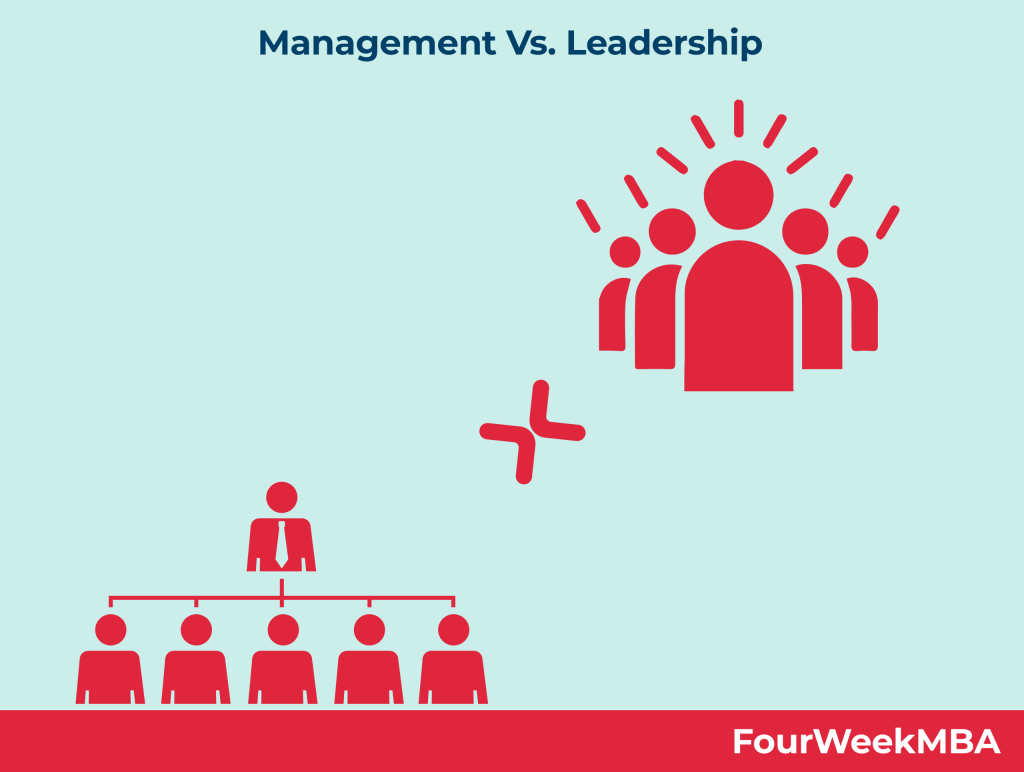
Tribal Leadership is a management philosophy introduced by Dave Logan, John King, and Halee Fischer-Wright. It focuses on the relationships and cultural dynamics within an organization to foster a stronger, more cohesive workplace. The theory categorizes the corporate tribes — groups of 20-150 people — into five evolutionary stages, with the goal of advancing them to optimize performance and collaboration.
Purpose and Scope: The primary goal of Tribal Leadership is to improve organizational culture by focusing on its informal groups or tribes, recognizing that these tribes are more powerful than teams, departments, or company edicts at influencing behavior.
Principal Concepts: Tribal Leadership centers on understanding and evolving the tribal stages from undermining individual effectiveness to elevating the entire organization’s performance.
The philosophy is built on the sociology of groups and leadership studies. It recognizes that people naturally form tribes, and the leader’s role is to diagnose the stage of the tribe and lead them to the next level.
Stages of Tribal Culture: From Stage 1 (alienated, “life sucks”) to Stage 5 (innovative, “life is great”), each stage describes the tribe’s mindset and cohesiveness.
Leadership Engagement: Leaders are tasked with moving their tribes through the stages by changing the tribal language and behavior through strategic relationships and upgraded cultural values.
Methods and Techniques in Tribal Leadership
Implementing Tribal Leadership involves several specific strategies:
Identifying Tribal Stages: Recognizing the current stage of each tribe within the organization to tailor leadership approaches accordingly.
Building Triadic Relationships: Encouraging relationships among three people to foster stability and mutual respect, enhancing collaboration.
Leveraging Core Values: Aligning the tribe’s perceived values and behaviors with desired organizational outcomes.
Applications of Tribal Leadership
Tribal Leadership has broad applications across various types of organizations:
Corporate Organizations: Enhancing collaboration and culture in businesses to improve performance and employee satisfaction.
Non-profits: Strengthening mission-driven focus and community among staff and volunteers.
Educational Institutions: Building a supportive and collaborative culture among faculty and administration to benefit student outcomes.
Industries Influenced by Tribal Leadership
Healthcare: Hospitals and healthcare organizations apply Tribal Leadership to improve patient care through better team dynamics.
Technology: Tech companies use tribal stages to innovate and push the envelope by cultivating a Stage 5 culture.
Advantages of Using Tribal Leadership
Tribal Leadership offers significant benefits:
Enhanced Organizational Culture: Elevates the overall work environment, leading to increased employee engagement and job satisfaction.
Improved Collaboration and Innovation: By advancing to higher stages, tribes become more collaborative and innovative.
Stronger Leadership: Provides a framework for leaders to effectively influence and advance their organizational culture.
Challenges and Considerations in Tribal Leadership
However, implementing Tribal Leadership effectively requires navigating several challenges:
Complexity in Diagnosis and Transition: Accurately diagnosing tribal stages and transitioning them forward can be complex and requires deep insight into human behavior and organizational dynamics.
Time and Effort: Moving an entire tribe from one stage to another can be time-consuming and requires consistent effort and strategic leadership.
Integration with Broader Business Strategies
To maximize its effectiveness, Tribal Leadership should be integrated into the organization’s broader strategic planning:
Comprehensive Training: Training leaders at all levels to recognize and influence tribal stages effectively.
Continuous Monitoring: Regularly assessing the tribal culture and its impact on business performance to ensure alignment with strategic goals.
Future Directions in Tribal Leadership
As organizational dynamics evolve, so too will the applications and methodologies of Tribal Leadership:
Digital Tools and AI: Leveraging technology to better analyze and manage tribal dynamics and stages within larger organizations.
Global Applications: Adapting Tribal Leadership principles to diverse cultural contexts in global organizations.
Conclusion and Strategic Recommendations
Tribal Leadership provides a powerful framework for enhancing leadership effectiveness and organizational culture:
Focus on Leadership Development: Invest in developing leaders who can effectively transform tribal stages and cultivate a high-performing culture.
Encourage Cultural Coherence: Foster an organizational culture that supports movement towards higher tribal stages.
Leadership styles encompass the behavioral qualities of a leader. These qualities are commonly used to direct, motivate, or manage groups of people. Some of the most recognized leadership styles include Autocratic, Democratic, or Laissez-Faire leadership styles.
Agile leadership is the embodiment of agile manifesto principles by a manager or management team. Agile leadership impacts two important levels of a business. The structural level defines the roles, responsibilities, and key performance indicators. The behavioral level describes the actions leaders exhibit to others based on agile principles.
Adaptive leadership is a model used by leaders to help individuals adapt to complex or rapidly changing environments. Adaptive leadership is defined by three core components (precious or expendable, experimentation and smart risks, disciplined assessment). Growth occurs when an organization discards ineffective ways of operating. Then, active leaders implement new initiatives and monitor their impact.
Authors and strategy experts Chan Kim and Renée Mauborgne developed the idea of blue ocean leadership. In the same way that Kim and Mauborgne’s blue ocean strategy enables companies to create uncontested market space, blue ocean leadership allows companies to benefit from unrealized employee talent and potential.
Developed by business consultants Kenneth Blanchard and Paul Hersey in the 1960s, delegative leadership is a leadership style where authority figures empower subordinates to exercise autonomy. For this reason, it is also called laissez-faire leadership. In some cases, this type of leadership can lead to increases in work quality and decision-making. In a few other cases, this type of leadership needs to be balanced out to prevent a lack of direction and cohesiveness of the team.
Distributed leadership is based on the premise that leadership responsibilities and accountability are shared by those with the relevant skills or expertise so that the shared responsibility and accountability of multiple individuals within a workplace, bulds up as a fluid and emergent property (not controlled or held by one individual). Distributed leadership is based on eight hallmarks, or principles: shared responsibility, shared power, synergy, leadership capacity, organizational learning, equitable and ethical climate, democratic and investigative culture, and macro-community engagement.
Ethical leaders adhere to certain values and beliefs irrespective of whether they are in the home or office. In essence, ethical leaders are motivated and guided by the inherent dignity and rights of other people.
Transformational leadership is a style of leadership that motivates, encourages, and inspires employees to contribute to company growth. Leadership expert James McGregor Burns first described the concept of transformational leadership in a 1978 book entitled Leadership. Although Burns’ research was focused on political leaders, the term is also applicable for businesses and organizational psychology.
Those who lead by example let their actions (and not their words) exemplify acceptable forms of behavior or conduct. In a manager-subordinate context, the intention of leading by example is for employees to emulate this behavior or conduct themselves.
A leader is someone within an organization who possesses the ability to influence and lead others by example. Leaders inspire, support, and encourage those beneath them and work continuously to achieve objectives. A boss is someone within an organization who gives direct orders to subordinates, tends to be autocratic, and prefers to be in control at all times.
Situational leadership is based on situational leadership theory. Developed by authors Paul Hersey and Kenneth Blanchard in the late 1960s, the theory’s fundamental belief is that there is no single leadership style that is best for every situation. Situational leadership is based on the belief that no single leadership style is best. In other words, the best style depends on the situation at hand.
Succession planning is a process that involves the identification and development of future leaders across all levels within a company. In essence, succession planning is a way for businesses to prepare for the future. The process ensures that when a key employee decides to leave, the company has someone else in the pipeline to fill their position.
Fielder’s contingency model argues no style of leadership is superior to the rest evaluated against three measures of situational control, including leader-member relations, task structure, and leader power level. In Fiedler’s contingency model, task-oriented leaders perform best in highly favorable and unfavorable circumstances. Relationship-oriented leaders perform best in situations that are moderately favorable but can improve their position by using superior interpersonal skills.
In the context of an organization, cultural models are frameworks that define, shape, and influence corporate culture. Cultural models also provide some structure to a corporate culture that tends to be fluid and vulnerable to change. Once upon a time, most businesses utilized a hierarchical culture where various levels of management oversaw subordinates below them. Today, however, there exists a greater diversity in models as leaders realize the top-down approach is outdated in many industries and that success can be found elsewhere.
Action-centered leadership defines leadership in the context of three interlocking areas of responsibility and concern. This framework is used by leaders in the management of teams, groups, and organizations.
Developed in the 1960s and first published in 1973, action-centered leadership was revolutionary for its time because it believed leaders could learn the skills they needed to manage others effectively.
Adair believed that effective leadership was exemplified by three overlapping circles (responsibilities): achieve the task, build and maintain the team, and develop the individual.
High-performance coaches work with individuals in personal and professional contexts to enable them to reach their full potential. While these sorts of coaches are commonly associated with sports, it should be noted that the act of coaching is a specific type of behavior that is also useful in business and leadership.
When most people are asked to define power, they think about the power a leader possesses as a function of their responsibility for subordinates. Others may think that power comes from the title or position this individual holds.
Tipping Point Leadership is a low-cost means of achieving a strategic shift in an organization by focusing on extremes. Here, the extremes may refer to small groups of people, acts, and activities that exert a disproportionate influence over business performance.
The Vroom-Yetton decision model is a decision-making process based on situational leadership. According to this model, there are five decision-making styles guides group-based decision-making according to the situation at hand and the level of involvement of subordinates: Autocratic Type 1 (AI), Autocratic Type 2 (AII), Consultative Type 1 (CI), Consultative Type 2 (CII), Group-based Type 2 (GII).
Likert’s management systems were developed by American social psychologist Rensis Likert. Likert’s management systems are a series of leadership theories based on the study of various organizational dynamics and characteristics. Likert proposed four systems of management, which can also be thought of as leadership styles: Exploitative authoritative, Benevolent authoritative, Consultative, Participative.
Gennaro is the creator of FourWeekMBA, which reached about four million business people, comprising C-level executives, investors, analysts, product managers, and aspiring digital entrepreneurs in 2022 alone | He is also Director of Sales for a high-tech scaleup in the AI Industry | In 2012, Gennaro earned an International MBA with emphasis on Corporate Finance and Business Strategy.